Today I'm looking at another book by Gregory Maguire, who seems to have a definite niche of twice-told tales and doing different interpretations of stories we've all heard before. As I rather liked Wicked and Confessions of an Ugly Stepsister I decided that listening to Mirror Mirror, Maguire's reinterpretation of the story of Snow White, would be an interesting book to listen to. Unfortunately what struck me about this book most of all was that it felt unfinished or underdeveloped, especially compared to his other books. A lot of time passes in the book without terribly much happening at all, it raises a lot of questions about the book's universe that aren't really answered, and ends rather abruptly. I honestly was left disappointed and I can see why this is one of the less popular of his books.
The story is set in sixteenth-century Italy with Cesare and Lucrezia Borgia playing major roles in the story. Snow White in this case is Bianca de Nevada whose father, Vincente, is sent on a quest to find a limb from the tree in the Garden of Eden to help save Cesare from syphilis. Bianca spends a few years without her father until Lucrezia decides she wants Bianca dead, apparently out of insane jealousy more than anything else despite Bianca being barely eleven, and Bianca is taken into the forest where she stumbles into the dwarves' cave and sleeps for a number of years before waking up. Lucrezia finds out Bianca is still alive and tries to kill her multiple times before succeeding in putting her in a deep sleep that Bianca remains in for another number of years. Meanwhile her father, upon finding the monastery where the limb from the tree in the Garden of Eden, gets caught by the monks there and thrown into a dungeon, where he remains for several years before being rescued by a dwarf who followed him to retrieve their mirror.
Do you see what I mean about this being confusing and yet underdeveloped? Two of the main characters spend a majority of time the book is set effectively out of action. Bianca is asleep and Vincente is locked up in a dungeon, spending time remembering things rather than doing things. Because, well, locked up in a dungeon. This is to say nothing of Lucrezia, Cesare, and the dwarves who also spend a lot of time remembering things. Or everyone just thinks about things. I got the feeling while listening to this book that it was trying really hard to be deep and insightful but it just honestly came across as pretentious more than anything else. Or like it was trying really hard for a literary award of some sort.
And Maguire seems to spend a lot of effort in creating an interesting world and multiple plot-lines which could be woven together to an interesting finale. There's the mirror created by the dwarves in a quest to be more human, which I feel like we never really get to explore more. They mention a desire to be more human before meeting Bianca, but it's also implied that their shift to a more human existence is also caused by the arrival and presence of Bianca. There also seems to be a theme of the magic slowly going away from the world, especially with a scene between the huntsman and a unicorn, at least what I suppose is supposed to be an actual unicorn because it's described as such in the book. To say nothing of the existence of apples apparently from the actual Garden of Eden. It feels like there were a lot of different avenues that Maguire was interested in exploring and developing, and for whatever reason he kept the book short and just didn't explore them fully.
Overall I think Mirror Mirror almost feels like a rough draft or outline for a book that Maguire meant to flesh out but just never got around to developing further. I was a little curious as to whether this was his first book or not and was a little confused to find out it actually came after his earlier ones. It feels like there was potential to be really interesting, but it just never got to where it needed to be substance-wise.
- Kalpar
Showing posts with label Gregory Maguire. Show all posts
Thursday, February 2, 2017
Tuesday, December 13, 2016
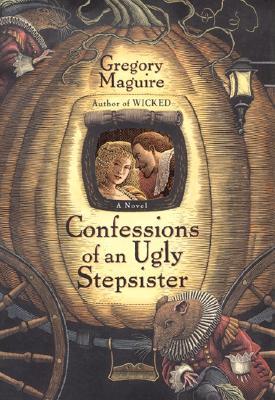
Confessions of an Ugly Stepsister, by Gregory Maguire
This week I'm taking a look at a book I'm actually calling more historical fiction than fantasy, Confessions of an Ugly Stepsister. Much like how Maguire's more famous work, Wicked is a retelling of The Wizard of Oz from the perspective of the villain, Confessions of an Ugly Stepsister is a retelling of the classic story of Cinderella from the perspective of the stepsisters who in many adaptations have very little characterization and are just antagonists to Cinderella. Maguire also takes an interesting approach by making the story completely mundane by excising all of the magic, which makes this book feel a lot more like a historical fiction novel than a fantasy novel, even if it's inspired by a fairy tale.
The story is framed by the reminisces of Ruth, one of the two stepsisters who has discovered that children have begun telling the story of Cinderella, albeit in a far more fanciful and edited form than the family scandal that Ruth remembers. The majority of the story is told from the perspective of Iris, the other stepsister who is described as fairly plain but very intelligent and talented at art, while Ruth struggles with an intellectual disability. The book is set in the early seventeenth century with Ruth and Iris forced to flee England with their mother to Holland after their father was killed by a mob. They first spend time working for a master painter, who with his apprentice Capsar remain good friends with Iris and Ruth, and later Iris is recruited to be a friend for Clara, the only child of a prosperous tulip merchant family who is sheltered in the extreme from the world by her mother. As for the rest of the story, well you can probably guess. Maguire stays faithful to the structure of the story, while putting his own twist on it and keeping the story well grounded in the mundane world.
I think ultimately the most interesting things were the decisions Maguire made to make the story different from the original that we all know by heart. There's some debate as to how wicked Ruth and Iris's mother is, although in my opinion she seems kind of a bad person rather than just morally ambiguous. Maguire does emphasize how physically ugly Ruth and Iris are, which I have to admit gets really repetitive after a while and it made me say, ''No wonder the two of them have such low self-esteem!'' However, they both come across as decent people who are just trying to do their best to survive in the world. Which is an almost total inversion of the ''attractive in body but ugly in spirit'' interpretation which has become common in many modern portrayals.
What's also interesting is the approach to Clara. While in practically all versions Cinderella is portrayed as a gentle and kind-hearted girl, in the book she's portrayed as really a spoiled brat. She's described as incredibly beautiful and since her family is wealthy she's had the luxury of never having to help her family or work to survive, opposed to Ruth and Iris. In addition, thanks to her mother she's incredibly coddled to the point of not being allowed to leave the house, which has definitely stunted her emotional development despite her being well into her teens. Although Clara has her good aspects, she comes across as an incredibly frustrating character as well. Overall Maguire does a pretty good job of showing people as not all good or all bad, even if he inverts the major characters the most.
The setting of early seventeenth century Holland is also interesting and the tulip mania actually plays a slight role in the story which makes it much more interesting. I actually spent some time wondering if there had been a made-for-tv movie adaptation that I only half-remembered until I could finally get to a computer and look it up. (Short answer, yes, there was a tv movie and I'm not crazy, at least not for that reason.) It's very distinct from any of the other interpretations of Cinderella that have been produced through the years and gives the book a distinct flavor which I appreciated.
The biggest weakness for this book is I think it kind of dragged at various points. We have the disadvantage in this story of knowing how the story ends so a lot of the suspense is either gone or tied up in ''how do we get from this point that's unfamiliar to the familiar point?'' And once we start venturing into familiar territory I just felt like we were just killing time until the climax, which made the story feel much longer than it probably was.
Overall I think this book is interesting. I honestly was a little disappointed to find it was strongly mundane and there were almost no fantasy elements whatsoever, but it's an interesting approach. Portraying the story of Cinderella as an old family scandal that became town gossip and then faded into memory as myth is an interesting and somewhat plausible origin story. Overall, I liked the book, even if I felt it dragged in the middle. Although it doesn't have magic if you like fairy tales this might be worth your effort.
- Kalpar
The story is framed by the reminisces of Ruth, one of the two stepsisters who has discovered that children have begun telling the story of Cinderella, albeit in a far more fanciful and edited form than the family scandal that Ruth remembers. The majority of the story is told from the perspective of Iris, the other stepsister who is described as fairly plain but very intelligent and talented at art, while Ruth struggles with an intellectual disability. The book is set in the early seventeenth century with Ruth and Iris forced to flee England with their mother to Holland after their father was killed by a mob. They first spend time working for a master painter, who with his apprentice Capsar remain good friends with Iris and Ruth, and later Iris is recruited to be a friend for Clara, the only child of a prosperous tulip merchant family who is sheltered in the extreme from the world by her mother. As for the rest of the story, well you can probably guess. Maguire stays faithful to the structure of the story, while putting his own twist on it and keeping the story well grounded in the mundane world.
I think ultimately the most interesting things were the decisions Maguire made to make the story different from the original that we all know by heart. There's some debate as to how wicked Ruth and Iris's mother is, although in my opinion she seems kind of a bad person rather than just morally ambiguous. Maguire does emphasize how physically ugly Ruth and Iris are, which I have to admit gets really repetitive after a while and it made me say, ''No wonder the two of them have such low self-esteem!'' However, they both come across as decent people who are just trying to do their best to survive in the world. Which is an almost total inversion of the ''attractive in body but ugly in spirit'' interpretation which has become common in many modern portrayals.
What's also interesting is the approach to Clara. While in practically all versions Cinderella is portrayed as a gentle and kind-hearted girl, in the book she's portrayed as really a spoiled brat. She's described as incredibly beautiful and since her family is wealthy she's had the luxury of never having to help her family or work to survive, opposed to Ruth and Iris. In addition, thanks to her mother she's incredibly coddled to the point of not being allowed to leave the house, which has definitely stunted her emotional development despite her being well into her teens. Although Clara has her good aspects, she comes across as an incredibly frustrating character as well. Overall Maguire does a pretty good job of showing people as not all good or all bad, even if he inverts the major characters the most.
The setting of early seventeenth century Holland is also interesting and the tulip mania actually plays a slight role in the story which makes it much more interesting. I actually spent some time wondering if there had been a made-for-tv movie adaptation that I only half-remembered until I could finally get to a computer and look it up. (Short answer, yes, there was a tv movie and I'm not crazy, at least not for that reason.) It's very distinct from any of the other interpretations of Cinderella that have been produced through the years and gives the book a distinct flavor which I appreciated.
The biggest weakness for this book is I think it kind of dragged at various points. We have the disadvantage in this story of knowing how the story ends so a lot of the suspense is either gone or tied up in ''how do we get from this point that's unfamiliar to the familiar point?'' And once we start venturing into familiar territory I just felt like we were just killing time until the climax, which made the story feel much longer than it probably was.
Overall I think this book is interesting. I honestly was a little disappointed to find it was strongly mundane and there were almost no fantasy elements whatsoever, but it's an interesting approach. Portraying the story of Cinderella as an old family scandal that became town gossip and then faded into memory as myth is an interesting and somewhat plausible origin story. Overall, I liked the book, even if I felt it dragged in the middle. Although it doesn't have magic if you like fairy tales this might be worth your effort.
- Kalpar
Subscribe to:
Posts (Atom)