Okay, I'm just going to be honest and admit that I didn't like this book, and I think it was a combination of things not making much sense, everything feeling rather rushed, not being able to care about the characters to the point I was rooting for them to die, and some poor writing choices. The combination is a book that feels like a mess trying to cash in on the craze for dystopian science-fiction novels that have been all the rage for the past few years. There were some opportunities for good plots in this book but ultimately the result was a mess that in my opinion, isn't worth your time.
The plot of Humans, Bow Down, is that ten years ago robots rose up against humanity in the Great War and managed to vanquish all of humanity within three days. Now we live in a topsy-turvy world where humans are enslaved by robots and must do tedious calculations and spot-weld automobiles before being donated to an inner-city school. Okay, not quite that, but you get the point. Resistance, humans revolt, et cetera, et cetera, the dance hasn't changed, only the music.
The problem is this book starts off confusing and just never quite makes sense after that. Leading the robot overlords are the hu-bots, humanoid robots that look like humans but are insanely strong and lack the capacity for empathy and emotions. The robots conclude this makes them more evolved than the barbaric humans and gives them the right to lord over humanity. Except, within the first few chapters of the book we see the robots doing things which make no sense for evolved overlords to be doing. For example the robots go to church. And not robot church, they go to ordinary human churches but attended and administered by robots. It's never really explained in detail, but presumably the robots just appropriated human religion. If robots were trying to be more human, this would at least make sense in a cargo cult sort of way. But if they're so superior to humans because they aren't bound by human emotions, then why would they involve themselves with religion? Which is inherently an emotional experience.
The same goes for robots eating for pleasure. It's established that the robots gain absolutely no material benefit from eating food. They're powered entirely by electricity so the food only has to be extracted later. And eating for pleasure is, again, an emotional experience and the robots are superior to humans because they don't have emotions. So...why are they even bothering to eat in the first place? It makes no sense to me. Even the title of the book gets incorporated into this nonsense where robots do things for emotional reasons, despite them explicitly not having emotions.
At several points in the book, the robots announce, ''Humans, bow down.'' at which point the humans are expected to grovel on their hands and knees for their robot overlords. The first time this is done is when a general of the robot forces stops in a market square. At which point he surveys the kneeling humans, says something to the effect of how good it is to see humans on their knees, and then drives off. I'm sorry, but what the heck was the point of that? Because as far as I can tell all it did was briefly stoke the ego of some robot guy who, again, isn't supposed to have emotions. It just makes the robots come across as kind of stupid.
The other big problem is that there's simply too much going on in this book. The chapters are all incredibly short and for a book barely over four hundred pages it manages to have over seventy different chapters. And the authors push in all sorts of plotlines with the result being it feels like they were trying to check off every trope possible and shove them into the book, never mind if the plots aren't well developed or even coherent. We have humans imprisoned for minor offences and paraded like animals in a zoo as a lesson to the other humans. We have human characters stealing a sports car, prompting a robot investigation. We have a quantum computer capable of emulating brain patterns and storing memories. We have humans pushed into reservations where their interest largely extends to where they're getting their next high from more than anything else. We have a robot who is apparently transsexual (I say that because the robot in question is biologically male but chooses to dress and appear female. Like everything else in this book the authors dedicate far too little time to it for it to be developed.) and also afflicted with a glitch that makes them feel *gasp* emotions! And we have robots being reprogrammed by both sides in the war between humans and robots, which as far as I'm concerned raises some interesting ethical questions but those are never brought up in the book.
So as you can see, there's so much going on in this book that there simply isn't enough time for the authors to adequately talk about everything. As I usually say in these situations, if they had stuck to one or two threads instead of going all over the place, it would have been a better chance for the plot to develop in interesting ways. Instead, we end up with a storyline with absolutely everything including the kitchen sink tossed in for good measure. The result is the book just doesn't work at all and I think it's not worth spending the time to read it as a result.
- Kalpar
Showing posts with label Dystopia Fiction. Show all posts
Thursday, February 15, 2018
Thursday, April 17, 2014
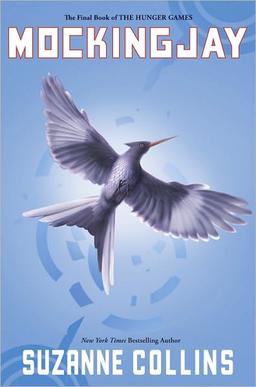
Mockingjay, by Suzanne Collins
This week shall conclude my tour through the Hunger Games series with the final novel, Mockingjay. When I had begun this endeavor I had contemplated taking an extra week to talk about this series overall and dedicate the entire month of April to this. Unfortunately, dear and gentle readers, I found myself greatly dissatisfied with how the series ended and its failure to address important issues with a distracting romance plot, as well as frustrations with Katniss, the main character. For whatever reason this series gets less interesting the more it continues and I'm left thinking perhaps you're better off reading just the first book instead of the entire series.
Once again, dear and gentle readers, I must mention spoilers to adequately address this novel. As such you have been advised and utilize your own judgement.
Mockingjay follows the second war between the Districts and the Capitol from its very early stages to its ultimate conclusion, although I find myself asking why such a revolution takes so long in the first place. The reason I say this is because District 11 is the district which focuses on agriculture and is a source of much of Panem's food supply. Granted, District 10 provides meat and District 4 seafood to the bottomless stomachs of the Capitol, but much of the other sustenance seems to come entirely from District 11, one of the first Districts to end up in rebel control. Even with stockpiling and hoarding, the Capitol simply cannot feed itself and would not be able to survive a protracted siege, which by my estimate would make it fall in a matter of weeks, months at the most. Yet, for some reason, the war drags out and the rebels are determined to take the Capitol block by block with a heavy toll in both military and civilian casualties.
This leads into my second point, the fact that you're constantly questioning whether the rebels are really that much better than the people in the Capitol. I feel like this certainly was the point of the author in many respects, showing how both sides in the war aren't all that different, but it left me feeling rather hopeless about the eventual outcome. There was simply no place for free will or individualism in the structured organization of District 13, and if they're left in charge it seems likely they may enforce their lifestyle on everyone else as well. It left me wondering what was the point of this struggle if the new regime is just as bad as the old one? Was it really worth all the bloodshed and sacrifice?
My frustrations with Katniss stem from the fact the book focuses almost entirely on her emotional turmoil, much of which is brought about by the love triangle that ultimately swallows the end of the book. I understand that she's seventeen years old and thrown into this revolution which she's the face of and all this other really emotional stuff, but a lot of it seems to boil down to her debating, "Do I want Gale or Peeta?" There are more important things at stake here! Like the fate of a continent! Plus Katniss realizes she doesn't really believe in anything beyond her own survival and it makes you wonder why you care about a character that isn't motivated beyond something greater than herself. Maybe it's just me but I prefer my heroes having a motivation beyond, "I want to stay alive."
There was a lot of potential here in exploring how the revolution would end and ultimately how it would change the face of Panem and its consequences but we unfortunately don't really get to explore that because the focus remained entirely on just Katniss who realizes she's been little more than a pawn or figurehead in a lot of other people's plans. This book could have been a lot better by widening the focus and exploring the consequences of the war a lot better rather than sticking on just Katniss. Strangely, I find myself saying that perhaps this should have just been one book. The Hunger Games set up a rich world with profound social, economic, and political structures and the sequels could have done a lot more to explore that structure and its frailty. Instead, the focus remains on Katniss, merely one part of a much larger series of events, and as a result we don't get to explore that world on a deeper level. Whatever promise The Hunger Games had for me, it failed to deliver with Catching Fire and Mockingjay.
- Kalpar
Once again, dear and gentle readers, I must mention spoilers to adequately address this novel. As such you have been advised and utilize your own judgement.
Mockingjay follows the second war between the Districts and the Capitol from its very early stages to its ultimate conclusion, although I find myself asking why such a revolution takes so long in the first place. The reason I say this is because District 11 is the district which focuses on agriculture and is a source of much of Panem's food supply. Granted, District 10 provides meat and District 4 seafood to the bottomless stomachs of the Capitol, but much of the other sustenance seems to come entirely from District 11, one of the first Districts to end up in rebel control. Even with stockpiling and hoarding, the Capitol simply cannot feed itself and would not be able to survive a protracted siege, which by my estimate would make it fall in a matter of weeks, months at the most. Yet, for some reason, the war drags out and the rebels are determined to take the Capitol block by block with a heavy toll in both military and civilian casualties.
This leads into my second point, the fact that you're constantly questioning whether the rebels are really that much better than the people in the Capitol. I feel like this certainly was the point of the author in many respects, showing how both sides in the war aren't all that different, but it left me feeling rather hopeless about the eventual outcome. There was simply no place for free will or individualism in the structured organization of District 13, and if they're left in charge it seems likely they may enforce their lifestyle on everyone else as well. It left me wondering what was the point of this struggle if the new regime is just as bad as the old one? Was it really worth all the bloodshed and sacrifice?
My frustrations with Katniss stem from the fact the book focuses almost entirely on her emotional turmoil, much of which is brought about by the love triangle that ultimately swallows the end of the book. I understand that she's seventeen years old and thrown into this revolution which she's the face of and all this other really emotional stuff, but a lot of it seems to boil down to her debating, "Do I want Gale or Peeta?" There are more important things at stake here! Like the fate of a continent! Plus Katniss realizes she doesn't really believe in anything beyond her own survival and it makes you wonder why you care about a character that isn't motivated beyond something greater than herself. Maybe it's just me but I prefer my heroes having a motivation beyond, "I want to stay alive."
There was a lot of potential here in exploring how the revolution would end and ultimately how it would change the face of Panem and its consequences but we unfortunately don't really get to explore that because the focus remained entirely on just Katniss who realizes she's been little more than a pawn or figurehead in a lot of other people's plans. This book could have been a lot better by widening the focus and exploring the consequences of the war a lot better rather than sticking on just Katniss. Strangely, I find myself saying that perhaps this should have just been one book. The Hunger Games set up a rich world with profound social, economic, and political structures and the sequels could have done a lot more to explore that structure and its frailty. Instead, the focus remains on Katniss, merely one part of a much larger series of events, and as a result we don't get to explore that world on a deeper level. Whatever promise The Hunger Games had for me, it failed to deliver with Catching Fire and Mockingjay.
- Kalpar
Thursday, April 10, 2014
Catching Fire, by Suzanne Collins
In continuing with this month's Hunger Games theme I have read the second book in the trilogy, Catching Fire. Now, I have heard mixed things about this book and upon completing it I can see how people might be dissatisfied with this novel. Overall, however, I thought it was fairly interesting and at competent as a second act, at least until the ending, but more on that later.
Warning to my kind and gentle readers: As this book is, of course, part of a trilogy, I may mention some spoilers during my review. If you're completely adverse to this please just take my word that it's worth your time and go read it. Otherwise you have been warned, but I shall endeavor to avoid spoilers as much as possible.
After the furor over the seventy-fourth Hunger Games, Katniss has returned to District Twelve, trying to return to the life she had before. But, of course, the Games have changed her irrevocably and she simply cannot go back to the way things were, as much as she'd like to. In addition, Katniss's actions inside, as well as outside, the arena have inadvertently provided a spark for the ready tinder of rebellion throughout the districts. (Have you noticed fire gets used a lot as a symbol in this series?) Ultimately Katniss finds herself once again being used as a piece in the power games of Panem's political players and becoming far more important than she could have ever imagined.
What I really liked about this book in the series is that you get a very strong sense of desperation from the political leaders in the Capitol. As I mentioned in last week's post, the socio-economic framework of Panem is incredibly fragile and it doesn't take a lot to threaten its total collapse. The Hunger Games are, of course, an incredibly useful tool for the Capitol in keeping the Districts in line, so long as it remains effective. Katniss's actions, though, have severely undermined the efficacy of the Games and has begun providing a means for the people of the Districts to unite against the Capitol, a truly dangerous prospect. As a result the Capitol resorts to more direct and brutal measures, crushing any sign of rebellion beneath an iron heel, in an attempt to reassert control upon the Districts. While this is certainly bad for the Districts, and creates a great deal of despair and frustration, you get the sense that Capitol can only keep pushing these people around for so long before some of them decide to start pushing back, and hard.
I will admit that the middle to later part of the book becomes a little less interesting because we once again must go through the ritual of a Hunger Games, although in this case there is the change of it being a Quarter Quell with changed rules to remind the Districts of the Capitol's authority, rather than the more regular Games. However, I got the feeling that even the author was tired of writing about the games because the whole thing happens in a very abbreviated fashion. "Twenty-four people, fight to the death, do your best to stay alive, blah blah blah." Somehow something so horrific and terrifying the first time around has become positively mundane. There are at least some new characters to make it more interesting, but it still feels rather tedious.
The biggest weakness of this novel, and again, this is probably part of it being the second in a three-part series, is that it just sort of...ends, rather anticlimactically. There's a lot of emotional buildup and the book gives us quite a few emotional sucker-punches throughout, so you're thinking it's going to end with this really big finish setting up the third act but instead it just peters out. "Oh yes. Important things happened while you were asleep. We'll get to them in the next book." I can see how people could be really frustrated with the ending, especially if they had to wait for the third novel to get written.
Despite its weaknesses, I feel like Catching Fire is worth reading, especially the first third or so that really shows you how desperate things are getting for the Capitol. The other parts are necessary at least for setting up the third novel, which hopefully will provide a meaningful resolution to the series.
- Kalpar
Warning to my kind and gentle readers: As this book is, of course, part of a trilogy, I may mention some spoilers during my review. If you're completely adverse to this please just take my word that it's worth your time and go read it. Otherwise you have been warned, but I shall endeavor to avoid spoilers as much as possible.
After the furor over the seventy-fourth Hunger Games, Katniss has returned to District Twelve, trying to return to the life she had before. But, of course, the Games have changed her irrevocably and she simply cannot go back to the way things were, as much as she'd like to. In addition, Katniss's actions inside, as well as outside, the arena have inadvertently provided a spark for the ready tinder of rebellion throughout the districts. (Have you noticed fire gets used a lot as a symbol in this series?) Ultimately Katniss finds herself once again being used as a piece in the power games of Panem's political players and becoming far more important than she could have ever imagined.
What I really liked about this book in the series is that you get a very strong sense of desperation from the political leaders in the Capitol. As I mentioned in last week's post, the socio-economic framework of Panem is incredibly fragile and it doesn't take a lot to threaten its total collapse. The Hunger Games are, of course, an incredibly useful tool for the Capitol in keeping the Districts in line, so long as it remains effective. Katniss's actions, though, have severely undermined the efficacy of the Games and has begun providing a means for the people of the Districts to unite against the Capitol, a truly dangerous prospect. As a result the Capitol resorts to more direct and brutal measures, crushing any sign of rebellion beneath an iron heel, in an attempt to reassert control upon the Districts. While this is certainly bad for the Districts, and creates a great deal of despair and frustration, you get the sense that Capitol can only keep pushing these people around for so long before some of them decide to start pushing back, and hard.
I will admit that the middle to later part of the book becomes a little less interesting because we once again must go through the ritual of a Hunger Games, although in this case there is the change of it being a Quarter Quell with changed rules to remind the Districts of the Capitol's authority, rather than the more regular Games. However, I got the feeling that even the author was tired of writing about the games because the whole thing happens in a very abbreviated fashion. "Twenty-four people, fight to the death, do your best to stay alive, blah blah blah." Somehow something so horrific and terrifying the first time around has become positively mundane. There are at least some new characters to make it more interesting, but it still feels rather tedious.
The biggest weakness of this novel, and again, this is probably part of it being the second in a three-part series, is that it just sort of...ends, rather anticlimactically. There's a lot of emotional buildup and the book gives us quite a few emotional sucker-punches throughout, so you're thinking it's going to end with this really big finish setting up the third act but instead it just peters out. "Oh yes. Important things happened while you were asleep. We'll get to them in the next book." I can see how people could be really frustrated with the ending, especially if they had to wait for the third novel to get written.
Despite its weaknesses, I feel like Catching Fire is worth reading, especially the first third or so that really shows you how desperate things are getting for the Capitol. The other parts are necessary at least for setting up the third novel, which hopefully will provide a meaningful resolution to the series.
- Kalpar
Thursday, April 3, 2014
The Hunger Games, by Suzanne Collins
This week starts a month of Hunger Games as I've decided to read Suzanne Collins's trilogy of young adult dystopian science fiction. I am of course aware that I'm coming to the party fairly late, reading this well after the first and second movies have come out and the furor has died down somewhat. I had been aware that this book had very strong dystopian element and for a while I just haven't wanted to sit through that, but recently I decided I'd be able to stomach the grimness. Overall I was very satisfied with this novel and shall be continuing talking about this series all through the month.
If you've been living under a rock these past three years or so, The Hunger Games takes place in a distant future where much of North America is ruled by a country known as Panem. In the Rocky Mountains the Capitol is the center of government for Panem where the citizens live a life of luxury and ease. Surrounding the Capitol are its twelve Districts, all of which specialize in a particular industry. Some Districts, such as the ones that specialize in luxury goods consumed by the Capitol, are fairly wealthy while those that specialize in more basic needs like agriculture are much poorer. Uniting all of these districts is the tradition of the Hunger Games, a tradition that began out of a rebellion that occurred over seventy years ago. According to the history we're revealed in the first book (and the characters admit there's probably more to history that the Capitol isn't admitting) there used to be a thirteenth District, which lead a rebellion against the Capitol, resulting in a terrible war. Eventually the Capitol won and obliterated District Thirteen as an example to the other twelve. And as an annual reminder of the supremacy of the Capitol each district is required to sacrifice one boy and one girl, between the ages of twelve and eighteen, as tribute for the titular Hunger Games where the children all fight to the death until only one is left as champion.
What I really liked about this novel was the amount of psychology that went into designing the entire social structure of Panem. To me it appears to be a very fragile structure (I will talk more about that at the end of this month in a special poost) and the Capitol is very aware of how fragile it is. A few people I've known after just reading the first book, or seeing the first movie, find themselves asking why the people of the District don't just rise up against the Capitol. The answer, quite simply, is the Hunger Games, which are a brilliant combination of several empire-building tactics.
First with a demonstration of the power of the Capitol to the citizens of the Districts. The Capitol can take their children away, make them fight for sport, and there isn't a thing the people of the Districts can do about it. I assume after the rebellion had been crushed and the Hunger Games began, the people of the Districts simply weren't in a position to rise up against the forces of the Capitol. Now most of the districts are so desperately poor they still aren't in a position to rise up; and those that could revolt are more closely allied with the Capitol because of the rewards the Capitol doles out to its favorites. The people are so broken that they simply believe there is nothing they can do to fight against the oppression of the Capitol and that makes them powerless.
A second brilliant element to the Hunger Games is the divide and conquer aspect. As there can be only one winner, all Twelve districts will be rooting for their own tributes and hoping that they succeed. Furthermore, the district that wins the Hunger Games is given food and other rewards from the Capitol all throughout the year, all of which serves to pit the districts against each other and make cooperation among them all but impossible, which is further strengthened by the lack of communication between districts, again engineered by the Capitol. The division goes even further down, however, within the Districts themselves with the poor having a much higher chance of getting selected for the Hunger Games than the rich through the institution of tesserae. Basically you can get additional food for your family if you consent to having your name added to the drawings for the Hunger Games more times. Obviously people with enough to eat will not take out tesserae, but the poor often have to rely upon it as a means to survive, making their chances of losing their children even more likely. As a result there is a great deal of institutional resentment between the rich and the poor, making it difficult to cooperate even within a district.
So rebellion is clearly not an option for the Districts, but what about the citizens of the Capitol? Could not a restless population in the seat of government cause trouble for the establishment? It's certainly happened before. This is where the Capitol's excellent use of bread and circuses comes into play. The people of the Capitol are well fed and have all sorts of luxuries available to them; you're far less likely to rebel when you stand to lose something from a change in the social order. The Hunger Games themselves provide an excellent distraction for the people of the Capitol, guaranteeing generally at least a month of entertainment every year and it is carefully designed to keep the viewers interested throughout the games. In addition, there is a great deal of audience participation in the games by permitting extensive betting on the tributes as to who will emerge victorious, and the participation of sponsors in providing supplies to the tributes within the games to make it more likely their tribute will win. Add victory tours and the option of visiting historic Hunger Games arenas and reenacting their favorite parts of past Hunger Games and you create an entire culture obsessed with nothing but the games, and little incentive to worry about anything else.
On top of all this great psychology, Katniss is a really great character who is not only trying to keep herself alive, but also play a dangerous game of subtle rebellion against the Capitol. Plus you have people with real depth behind them such as Cinna and Haymitch and I'm really hoping to explore those characters more in the next two novels. I will admit that the writing was a little weird at times. (I don't know of anyone who'd think about how their boots are molded to their feet when they get dressed in the morning.) And I don't know if the thoughts Katniss has are really accurate to someone fourteen years old, but writing children realistically can be difficult and Collins at least makes a very good attempt.
Definitely an excellent book I'd recommend reading with any teenagers you may know. Come back next week for my review of Catching Fire.
- Kalpar
If you've been living under a rock these past three years or so, The Hunger Games takes place in a distant future where much of North America is ruled by a country known as Panem. In the Rocky Mountains the Capitol is the center of government for Panem where the citizens live a life of luxury and ease. Surrounding the Capitol are its twelve Districts, all of which specialize in a particular industry. Some Districts, such as the ones that specialize in luxury goods consumed by the Capitol, are fairly wealthy while those that specialize in more basic needs like agriculture are much poorer. Uniting all of these districts is the tradition of the Hunger Games, a tradition that began out of a rebellion that occurred over seventy years ago. According to the history we're revealed in the first book (and the characters admit there's probably more to history that the Capitol isn't admitting) there used to be a thirteenth District, which lead a rebellion against the Capitol, resulting in a terrible war. Eventually the Capitol won and obliterated District Thirteen as an example to the other twelve. And as an annual reminder of the supremacy of the Capitol each district is required to sacrifice one boy and one girl, between the ages of twelve and eighteen, as tribute for the titular Hunger Games where the children all fight to the death until only one is left as champion.
What I really liked about this novel was the amount of psychology that went into designing the entire social structure of Panem. To me it appears to be a very fragile structure (I will talk more about that at the end of this month in a special poost) and the Capitol is very aware of how fragile it is. A few people I've known after just reading the first book, or seeing the first movie, find themselves asking why the people of the District don't just rise up against the Capitol. The answer, quite simply, is the Hunger Games, which are a brilliant combination of several empire-building tactics.
First with a demonstration of the power of the Capitol to the citizens of the Districts. The Capitol can take their children away, make them fight for sport, and there isn't a thing the people of the Districts can do about it. I assume after the rebellion had been crushed and the Hunger Games began, the people of the Districts simply weren't in a position to rise up against the forces of the Capitol. Now most of the districts are so desperately poor they still aren't in a position to rise up; and those that could revolt are more closely allied with the Capitol because of the rewards the Capitol doles out to its favorites. The people are so broken that they simply believe there is nothing they can do to fight against the oppression of the Capitol and that makes them powerless.
A second brilliant element to the Hunger Games is the divide and conquer aspect. As there can be only one winner, all Twelve districts will be rooting for their own tributes and hoping that they succeed. Furthermore, the district that wins the Hunger Games is given food and other rewards from the Capitol all throughout the year, all of which serves to pit the districts against each other and make cooperation among them all but impossible, which is further strengthened by the lack of communication between districts, again engineered by the Capitol. The division goes even further down, however, within the Districts themselves with the poor having a much higher chance of getting selected for the Hunger Games than the rich through the institution of tesserae. Basically you can get additional food for your family if you consent to having your name added to the drawings for the Hunger Games more times. Obviously people with enough to eat will not take out tesserae, but the poor often have to rely upon it as a means to survive, making their chances of losing their children even more likely. As a result there is a great deal of institutional resentment between the rich and the poor, making it difficult to cooperate even within a district.
So rebellion is clearly not an option for the Districts, but what about the citizens of the Capitol? Could not a restless population in the seat of government cause trouble for the establishment? It's certainly happened before. This is where the Capitol's excellent use of bread and circuses comes into play. The people of the Capitol are well fed and have all sorts of luxuries available to them; you're far less likely to rebel when you stand to lose something from a change in the social order. The Hunger Games themselves provide an excellent distraction for the people of the Capitol, guaranteeing generally at least a month of entertainment every year and it is carefully designed to keep the viewers interested throughout the games. In addition, there is a great deal of audience participation in the games by permitting extensive betting on the tributes as to who will emerge victorious, and the participation of sponsors in providing supplies to the tributes within the games to make it more likely their tribute will win. Add victory tours and the option of visiting historic Hunger Games arenas and reenacting their favorite parts of past Hunger Games and you create an entire culture obsessed with nothing but the games, and little incentive to worry about anything else.
On top of all this great psychology, Katniss is a really great character who is not only trying to keep herself alive, but also play a dangerous game of subtle rebellion against the Capitol. Plus you have people with real depth behind them such as Cinna and Haymitch and I'm really hoping to explore those characters more in the next two novels. I will admit that the writing was a little weird at times. (I don't know of anyone who'd think about how their boots are molded to their feet when they get dressed in the morning.) And I don't know if the thoughts Katniss has are really accurate to someone fourteen years old, but writing children realistically can be difficult and Collins at least makes a very good attempt.
Definitely an excellent book I'd recommend reading with any teenagers you may know. Come back next week for my review of Catching Fire.
- Kalpar
Subscribe to:
Posts (Atom)