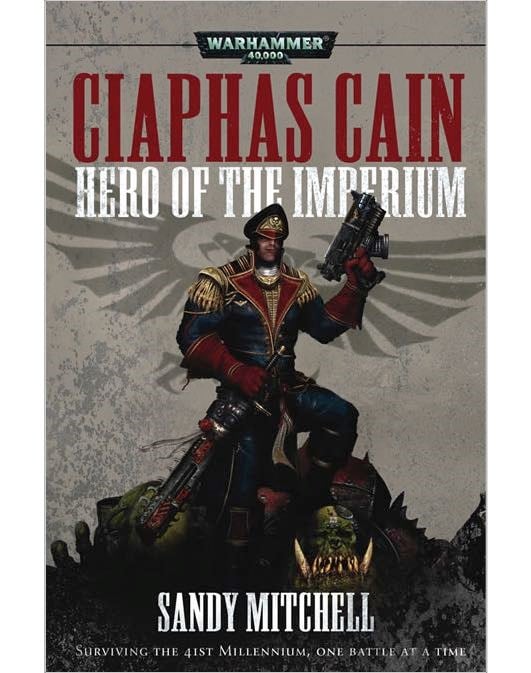
Behold, the might and power of the Imperial Guard!
 |
| Don't fuck with Polish Lancers |
Okay, okay, so this article isn't about the Imperial Guard of Napoleon I, even though they were pretty kick-ass. This article is part of my ongoing attempt to introduce people to the various factions of the Warhammer 40,000 universe. I've already done articles about the heroic Space Marines and the crazy-awesome Orks so this week I'm going to talk about the Imperial Guard which makes up the bulk of humanity's military forces.
 |
| The 8th Cadian |
The Space Marines represent the pinnacle of human genetic engineering and technological advancement. Stuffed with nearly twenty extra organs and armed with the best weapons and armor, the Space Marines are a potent military force and rightly feared by the enemies of humanity. However despite their centuries of military experience the total number of Space Marines across the galaxy-spanning Imperium numbers about a million. That means there is less than one Marine for every world in the Imperium and while a single Marine is a fearsome warrior he cannot defend an entire planet against the Imperium's enemies, much less take the fight to them. While the Space Marines remain a sort of special-response force for the Imperium, attacking specific targets or defending against extraordinary threats, the billions of men and women of the Imperial Guard shoulder the majority of the Imperium's military needs. Whether defending critical planets or reclaiming Chaos-held worlds in sector-wide crusades the Imperial Guard makes the Emperor's will known.
Before I get into the fluff of the Guard, I want to talk briefly about them on the tabletop. For many years the Imperial Guard has suffered as an army because guardsmen are good at dying and...that's about it. Guard armies come with fairly low points costs so while a large Space Marine army might reach forty men, Guard armies can easily reach the triple digits in models alone. Fortunately with great numbers comes an insane number of ranged attacks and while most enemies can shrug off a direct hit from a lasgun, shrugging off sixty hits from a lasgun might just kill you. Plus, while their infantry may be sub-par the latest Imperial Guard codex lets them field some of the best tanks in the game, and from my own personal experience you do
not want to be on the receiving end of a plasma barrage from a Leman Russ Executioner. The Guard remains a popular army for its tanks, as well as the fact that it's an army made of ordinary people like you and me. While a Space Marine only vaguely remembers what it's like to be afraid or an Ork sees the world as a hilarious pub brawl, an Imperial Guardsman remains an ordinary human and gives us a familiar lens through which to see the world of the forty-first millennium.
 |
| Catachan Jungle Fighters |
The Imperial Guard, in one form or another, has served the Imperium of Man from the beginning. The Emperor may have created the peerless Space Marines, but he still needed ordinary people to help fight his wars as well. Uncounted numbers of people have served in the Guard, and even today no one knows how many people are in service. On any given day the losses from casualties and the gains from recruitment can number somewhere in the millions and Imperial records are sometimes centuries out of date so not even the Lord Commander Militant has any idea. However, having such a vast pool of manpower comes with plenty of benefits. The thousands of Guard regiments come with a wide range of specializations and allow the Guard to meet virtually every tactical situation. Need to secure a landing zone from orbit? Send in the Elysian Drop Troops. Need to reclaim a desert planet? Call on the Tallarn Rough Riders. Want to outmaneuver your enemy with an armored assault? Armageddon Steel Legion can do the job. With their sheer numbers of men, materiel, and combat experience the forces of the Imperial Guard can pound all but the toughest enemies into submission.
The basic building-block of the Imperial Guard is the regiment. Usually a regiment will consist of soldiers from a single world and will be commanded by a colonel (or colonel-equivalent). However the equipment, organization, and even the size of a regiment will vary from planet to planet. Generally a regiment will fall into a general category giving you a rough idea of their capabilities: light infantry are good at hit-and-run, scouting, and infiltration, heavy infantry are well-armed and armored and are best for shock attacks, and armored regiments contain the fighting vehicles of the Guard. While some regiments make use of transports and vehicle support, you can usually expect an infantry regiment to contain no tanks whatsoever while an armored regiment contains nothing but tanks. Imperial Guard commanders will then combine several different regiments into a combined-arms force to achieve military objectives. (Ostensibly what you field in a 40k game.) Sometimes the collaboration works extremely well and the Guard achieves great victories. Sometimes the many officers involved disagree intensely and get their regiments killed. But so long as the Imperium emerges triumphant the brass really can't be bothered to care too much.
 |
| Vostroyan Firstborn |
Over the years Games Workshop and Forge World have released a number of different Imperial Guard models based on historic armies. Sadly many of these models are fairly limited, and in some cases no longer available. While you can still find Valhallan Ice Warriors, Mordian Iron Guard, and members of the Armageddon Steel Legion, there are currently three armies produced by Games Workshop and another two armies produced by Forge World. (Well, if you have the money to get the models from Britain.) So while I could go over the hundreds of Imperial Guard regiments I'm going to stick with talking about four, the three available from Games Workshop and my favorite regiment, the Death Korps.
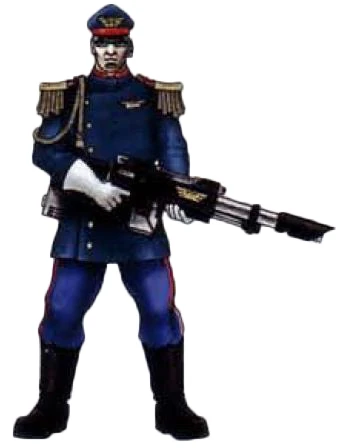
Cadian Shock Troopers: The Cadians are actually not based on any historical army and instead have a sort of futuristic look to them like the soldiers from
Starship Troopers or
Aliens. Cadia itself is an important world for the Imperium because it sits on the only safe means of passage into the Eye of Terror, a galactic anomaly where many of the forces of Chaos hide. As a result Cadia has been declared a Guard Fortress World and the entire population of Cadia is conscripted when they come of age. At any given point somewhere around 70% of Cadia's population is serving in a military capacity of one form or another and all of their cities, called kasrs, are highly fortified. The Cadian regiments that leave their homeworld are considered some of the finest line infantry in the Imperium and many other regiments have copied their equipment and organizational methods.
Catachan Jungle Fighters: Raised from the jungle planet of Catachan where reaching adulthood is considered an achievement, Catachan Jungle Fighters are extremely tough but undisciplined. Catachan troops are extremely skilled at jungle warfare and adept at setting ambushes and traps for enemy troops. Catachan soldiers will even make use of a planet's venomous wildlife to add an extra sting to their knives. Despite their fighting abilities, Catachans do not respond well to authority and will frequently arrange "accidents" for commissars attached to their regiments. (Commissars are political officers attached to Guard regiment to ensure loyalty and enforce Imperial mandates.) Although excellent fighters, Catachans can be a constant headache for superior officers. The Catachan army is modeled on American soldiers in the Vietnam War.
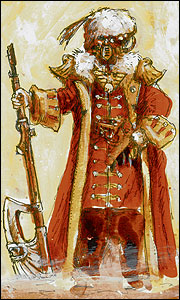
Vostroyan Firstborn: During the Horus Heresy the Vostroyans refused to supply soldiers to the Emperor of Mankind, instead preferring to keep their men for factory work. As punishment for their insubordination during the Heresy, the Vostroyans are required to send every firstborn son to the regiments. As a result the Vostroyan regiments have a constant supply of new recruits and many regiments have existed for thousands of years, creating a proud warrior brotherhood among the regiments. Vostroyan regiments are loosely based on Tsarist Russian soldiers and are experts at winter and urban combat.
 |
| Death Korps of Krieg |
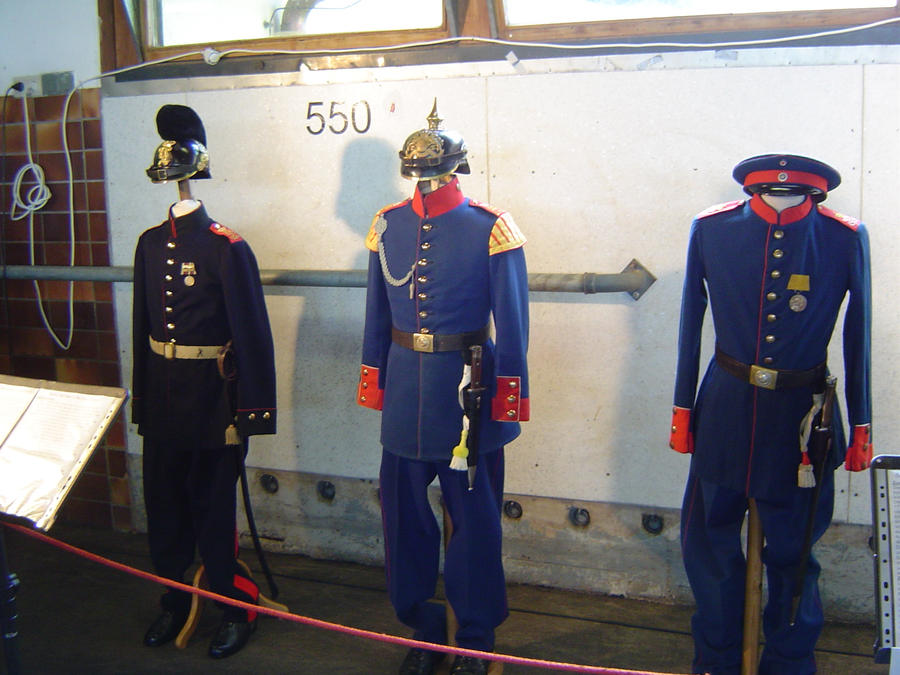
Death Korps of Krieg: Krieg was originally a populous Hive World, but when the planet's leaders tried to secede from the Imperium Colonel Jurten of the Krieg 83rd launched a thermo-nuclear holocaust that blasted most of Krieg into a wasteland. Over the next five centuries the loyalists gradually reclaimed their planet and have remained loyal to the Emperor. The Death Korps is based mostly off of the German armies of World War I and as a result they are experts at siege and trench warfare. Death Korps troopers are almost never seen without their gas-masks and are known for their unwavering discipline and loyalty to the Emperor. (As well as their overall grim outlook on life.) Due to the large number of troops in the Death Korps and the fairly small population of Krieg it is suspected that many Krieg troops are actually clones. Despite their overall dark nature they remain my favorite Guard regiment.
Over the years the regiments of the Imperial Guard have remained an important baseline for us, the fans. We get a glimpse of what life would be like for ordinary people in the forty-first millennium and how an unremarkable man might hope to survive fighting Orks or Tyranids or the forces of Chaos. We've seen the range of personalities from the outright sociopathy of Lijah Cuu, to the honorable father figure of Colm Corbec, to the downright honesty and affability of Try-Again Bragg. In a way Guard characters serve as a mirror, reflecting humanity at its best and also at its worst in a space-opera setting.
I would definitely recommend my readers to check out a couple Imperial Guard novels because they serve as an excellent introduction to the 40k universe. Of the books that I've read I would definitely recommend either
Rebel Winter by Steve Parker, or
The Founding omnibus by Dan Abnett. Both are extremely well-written and remain among my favorites.
Also if you have any other questions about the Guard please feel free to leave them in the comments. I didn't want to make this article run longer than it already has.
- Kalpar