Today I'm looking at a biography of Napoleon Bonaparte, a man whose ambitions took him from the shores of Corsica to the deserts of Egypt to the fields of Austerlitz to the ashes of Moscow. It is impossible to understand Europe in the nineteenth century without talking about Napoleon. With such a figure it is difficult to put them within historical context and look at them as a person rather than an idea. To the French Napoleon is often idolized, the glorious general-statesman who made French arms victorious across Europe. To the British Napoleon is a war-mongering monster who burned Europe to feed his ceaseless ambition. Ultimately the truth about Napoleon the man, rather than Napoleon the idea, will be somewhere in the middle.
Roberts pulls on a variety of resources, including the voluminous documents available at this time period and letters by Napoleon that were not previously available. The result is a book that feels very well-researched but I'll admit at the beginning I was a little concerned about this being a little hagiographic. Because there is so much acrimony surrounding Napoleon I can understand Roberts's efforts to dispel the opprobrium surrounding him, but I was worried at times that Roberts went a little too far in the other direction. I will admit that there are things Napoleon did which were net positives, such as the reform of the French civil code which has influenced legal codes in countless countries today. But there are some simple facts, like Napoleon's decision to overthrow the French Directorate and get declared consul, then consul for life, then emperor reflect badly on him. I'm aware this is very much my American-ness coming out with the example of George Washington an exceedingly rare example of a man who could have become king if he wanted (and in fact some people thought about making him king) but instead chose to step down from political power and created a precedent of peaceful transfer of power for two centuries.
However, Roberts does point out numerous mistakes Napoleon made, especially later in his reign, and takes Napoleon to task for these mistakes. Examples include the invasion of Russia which was a logistical nightmare and the point where the Grand Armee's hubris became a weakness rather than an advantage. On top of that was the continuation of the Peninsular campaign, a drain of troops and resources that Napoleon could ill afford as Russian troops continued to batter his main force. Napoleon also trusted people he definitely shouldn't have, such as Talleyrand. Napoleon had already caught Talleyrand playing both sides against each other for his own advantage. Napoleon did briefly remove Talleyrand from positions of influence, but later found himself relying on Talleyrand which would prove to be Napoleon's undoing. So I think Roberts's opinion of Napoleon for the whole of the book is fairly balanced. And like most people Napoleon is a mix of good and bad so it comes out complicated in the end.
Overall I think this book did a pretty good job of talking about Napoleon. Roberts uses a variety of sources and while he gushes about Napoleon at some points, he is equally hard on Napoleon at later points as well. It's a long book with a lot of information, but well worth the read to gain insight into the most influential figure at the start of the nineteenth century.
- Kalpar
Showing posts with label Napoleonic Wars. Show all posts
Tuesday, July 31, 2018
Thursday, June 21, 2018
Tongues of Serpents, by Naomi Novik
Today I'm looking at the sixth book in the Temeraire series, Tongues of Serpents. I'll say from the start that this book seem to mostly be more of the same in the previous five books, but with a change in setting. In this case our characters are in distant Australia, after Laurence's sentence for treason against the United Kingdom was commuted from execution to life transportation to Botany Bay. Laurence hopes to spend at least some time living with Temeraire in obscurity, but a rebellion in Australia deposed the local governor, the infamous Captain Bligh (events which actually happened, by the way, so that's neat). Laurence is once again placed into an awkward situation because of Temeraire. Bligh is eager to offer Laurence a pardon in exchange for his help to reestablish Bligh as governor. The leaders of the rebellion, by contrast, are willing to offer Laurence material benefits such as land and influence within the colony for his help to secure their control of the colony.
Faced with an unpalatable choice, Laurence takes a third option offered by one of the rebel leaders. Laurence, Temeraire, and the rest of the dragons will take a band of convicts to build a cattle road into the mountains surrounding Sydney and help expand the colony into Australia's interior. Tharkay has also been charged with the East India Company with discovering the source of the many smuggled Chinese goods found in Sydney, and he believes that the smugglers are sending the goods overland. Discovery of porcelain in the Australian interior confirms this hypothesis, and soon Laurence, Temeraire, and company are racing across the Outback.
In some ways this feels a lot like parts of Blackpowder War because of the vast sections of travelling, but instead of following the Silk Road from China to Istanbul, our characters are crossing all of Australia from south to north. The result can be a little tedious because they're basically flying through an enormous desert, although some of the challenges they encounter are interesting. But I think the parts towards the beginning and and end of the book are the most worthwhile.
This isn't to say that there aren't redeeming parts to this book. I think my favorite thing out of this book was the dragon Kulingile. When he first hatches he's so malformed that most of the experienced aeronauts don't expect Kulingile to live and want to mercy-kill him. However Demane, one of the African boys who joined Laurence's entourage, adopts Kulingile and much to everyone's surprise it turns out that Kulingile will not only live, but will grow to be larger than even a Regal Copper, probably reaching some twenty-four tons. Despite all this, Kulingile is such a kind character that I ended up cheering for him, especially when he ends up becoming a balloon dragon. So I'm looking forward to more of him in the last few books.
I also liked the development of the trade network between native Australians, Pacific Islanders, and the Chinese which use dragons as a means of transportation. Granted I'm a sucker for stories about transportation so seeing a trade network develop is fun for me, but maybe not as much fun for other people.
Overall I thought this book was fine, if mostly more of the same. But I'm finding I say that about a lot of this series. I don't know if there's anything specific in any of the books that stand out and make it seem like a fantastic series to me, but it's still a good series. Novik is an incredibly competent writer and her books in the series have always been enjoyable and very easy to read or listen to. They're solid mid-grade fiction worth your time if it piques your interest.
- Kalpar
Faced with an unpalatable choice, Laurence takes a third option offered by one of the rebel leaders. Laurence, Temeraire, and the rest of the dragons will take a band of convicts to build a cattle road into the mountains surrounding Sydney and help expand the colony into Australia's interior. Tharkay has also been charged with the East India Company with discovering the source of the many smuggled Chinese goods found in Sydney, and he believes that the smugglers are sending the goods overland. Discovery of porcelain in the Australian interior confirms this hypothesis, and soon Laurence, Temeraire, and company are racing across the Outback.
In some ways this feels a lot like parts of Blackpowder War because of the vast sections of travelling, but instead of following the Silk Road from China to Istanbul, our characters are crossing all of Australia from south to north. The result can be a little tedious because they're basically flying through an enormous desert, although some of the challenges they encounter are interesting. But I think the parts towards the beginning and and end of the book are the most worthwhile.
This isn't to say that there aren't redeeming parts to this book. I think my favorite thing out of this book was the dragon Kulingile. When he first hatches he's so malformed that most of the experienced aeronauts don't expect Kulingile to live and want to mercy-kill him. However Demane, one of the African boys who joined Laurence's entourage, adopts Kulingile and much to everyone's surprise it turns out that Kulingile will not only live, but will grow to be larger than even a Regal Copper, probably reaching some twenty-four tons. Despite all this, Kulingile is such a kind character that I ended up cheering for him, especially when he ends up becoming a balloon dragon. So I'm looking forward to more of him in the last few books.
I also liked the development of the trade network between native Australians, Pacific Islanders, and the Chinese which use dragons as a means of transportation. Granted I'm a sucker for stories about transportation so seeing a trade network develop is fun for me, but maybe not as much fun for other people.
Overall I thought this book was fine, if mostly more of the same. But I'm finding I say that about a lot of this series. I don't know if there's anything specific in any of the books that stand out and make it seem like a fantastic series to me, but it's still a good series. Novik is an incredibly competent writer and her books in the series have always been enjoyable and very easy to read or listen to. They're solid mid-grade fiction worth your time if it piques your interest.
- Kalpar
Thursday, June 7, 2018
Victory of Eagles, by Naomi Novik
Today I've reached the halfway point in the Temeraire series with the fifth book, Victory of Eagles. I will say that my first impression of this book is that it's providing more of the same that we've seen in the previous four books. That being said, I do like what Novik's been doing with this series so I don't mind terribly much that the books feel fairly similar in structure, if not in particulars.
This book picks up some months after the ending of Empire of Ivory, with Laurence convicted a traitor and his sentence of death commuted until such time as the government can be certain Temeraire won't attack Britain. Laurence has been imprisoned in a British ship of the line while Temeraire has been relegated to the breeding grounds. Temeraire has been having a frustrating time because there is very little to do within the breeding grounds other than eat, sleep, and breed, leaving him starved for intellectual stimulation. Temeraire starts introducing the dragons to concepts such as personal property when news comes that Napoleon has landed in Britain.
Laurence the ship he's imprisoned in caught in the first battle of Napoleon's invasion of England and only through great luck and skill manages to survive the sinking of the ship and make it safely back to Dover. Due to the extremity of the situation Laurence is ordered to gather Temeraire and help drive back the French invasion. This is made more complicated when it turns out that Temeraire has just...disappeared, and with a large number of dragons with him.
I think what I liked most about this book was following Temeraire and his scratch company of dragons which achieves official military status when, due to an assumption by military command, Temeraire receives a commission as a colonel. There're also some interesting dragon characters such as Minnow and Perscitia who I came to like just as much as I liked Temeraire and Iskierka who were by far the most developed dragon characters within the series. I also like the developments of integrated human and dragon forces in the military and the innovations that Temeraire and company use to help fight Napoleon.
I don't know how I feel about the ending of this book because despite their efforts, Laurence and Temeraire are transported to Australia. Personally I dislike this because I wanted Laurence and Temeraire to stay and help fight Napoleon, and I wanted to see more land battles with dragons and infantry squares and artillery. Largely because I like the Napoleonic wars. The books have definitely spent far more time travelling outside of Britain exploring locations like China, Turkey, and sub-Saharan Africa. Now that Laurence and Temeraire are banished to Australia it looks like we'll be spending even more time exploring distant lands. I just feel like this series promised Napoleonic Wars with Dragons and I'd have liked to see more of that but I guess it was wrong of me to expect that.
All my issues aside, I did enjoy this book, much like I enjoyed the other four books, and I intend to keep following the series as I can get them from the library.
- Kalpar
This book picks up some months after the ending of Empire of Ivory, with Laurence convicted a traitor and his sentence of death commuted until such time as the government can be certain Temeraire won't attack Britain. Laurence has been imprisoned in a British ship of the line while Temeraire has been relegated to the breeding grounds. Temeraire has been having a frustrating time because there is very little to do within the breeding grounds other than eat, sleep, and breed, leaving him starved for intellectual stimulation. Temeraire starts introducing the dragons to concepts such as personal property when news comes that Napoleon has landed in Britain.
Laurence the ship he's imprisoned in caught in the first battle of Napoleon's invasion of England and only through great luck and skill manages to survive the sinking of the ship and make it safely back to Dover. Due to the extremity of the situation Laurence is ordered to gather Temeraire and help drive back the French invasion. This is made more complicated when it turns out that Temeraire has just...disappeared, and with a large number of dragons with him.
I think what I liked most about this book was following Temeraire and his scratch company of dragons which achieves official military status when, due to an assumption by military command, Temeraire receives a commission as a colonel. There're also some interesting dragon characters such as Minnow and Perscitia who I came to like just as much as I liked Temeraire and Iskierka who were by far the most developed dragon characters within the series. I also like the developments of integrated human and dragon forces in the military and the innovations that Temeraire and company use to help fight Napoleon.
I don't know how I feel about the ending of this book because despite their efforts, Laurence and Temeraire are transported to Australia. Personally I dislike this because I wanted Laurence and Temeraire to stay and help fight Napoleon, and I wanted to see more land battles with dragons and infantry squares and artillery. Largely because I like the Napoleonic wars. The books have definitely spent far more time travelling outside of Britain exploring locations like China, Turkey, and sub-Saharan Africa. Now that Laurence and Temeraire are banished to Australia it looks like we'll be spending even more time exploring distant lands. I just feel like this series promised Napoleonic Wars with Dragons and I'd have liked to see more of that but I guess it was wrong of me to expect that.
All my issues aside, I did enjoy this book, much like I enjoyed the other four books, and I intend to keep following the series as I can get them from the library.
- Kalpar
Tuesday, May 22, 2018
Empire of Ivory, by Naomi Novik
Today I'm looking at the fourth book of the Temeraire series, Empire of Ivory. When we left off Captain Laurence and Temeraire were helping to evacuate remnants of the Prussian army from the besieged city of Danzig. When we rejoin our heroes they're making a mad dash for the coast of England pursued by French dragons. Despite firing signal flares it's only a shore battery that manages to keep the French dragons at bay and allow Temeraire, Iskierka, and the feral dragons to land safely in England.
Understandably they're perplexed by this situation and much to their dismay that the dragons of England have been struck down by a mysterious plague. Many of the dragons have been sick for a year or more and Britain faces the very real possibility of losing all its dragons. The strategic considerations are gravely concerning, but it's emotionally terrifying for the aerial corps as well because of the deep emotional attachment between the dragons and their crews. Temeraire, Iskierka, and the feral dragons have to protect the shores of England from invasion. When Temeraire accidentally gets exposed to infected dragons Laurence braces for the worst...until Temeraire fails to get sick. It appears Temeraire already had the illness during their trip to China and something, whether the environment of Cape Town or something he ate, fought the illness. Temeraire and his ill friends are packed back back up onto the Allegiance and dispatched back to Cape Town to find a cure.
The thing I liked most about this book was the result of the expedition to Cape Town and their search for the pungent mushroom which is the cure for the dragons' illness. As it was established previously in other books, expeditions into Africa's interior had disappeared without a trace leaving the interior of the continent a vast unknown. The assumption is that feral dragons are in such large populations that any expedition is simply killed. What our characters discover is that the interior is ruled by an organized empire, very similar to the Zulu nation, with the support of dragons who the Africans revere as reincarnations of their honored ancestors. The Africans have been willing to tolerate European interlopers, despite the ongoing slave trade, but with the arrival of European dragons the Africans assume the Europeans are making a serious bid for settlement. In response the Africans launch successful attacks not only against Cape Town, but all the major slave-trading ports up and down the African coast.
I liked this development in particular because it shows an advanced civilization in Africa, as well as a reference to an Incan empire in the Americas that kept Spanish colonialism at bay and the state of Mysore that has used their dragons to keep Britain at bay in India. With the Chinese culture which we saw in Throne of Jade, we see how multiple cultures, with the aid of dragons, have managed to curtail European encroachment, something that took off in the nineteenth century but the seeds of which were sewn in the eighteenth and seventeenth centuries. Granted, these are oversimplified versions of various global cultures, but it's not necessarily something I expected from a fantasy series. (Incidentally I also find it somewhat ironic that the deadly dragon-killing disease came from North America and infected European dragons in an inversion of the historical smallpox epidemic which killed upwards of 90% of the Native American population.)
Another theme that's been growing ever since at least the second book is Laurence and other people seeing dragons as people with rational minds, rather than highly intelligent animals. European cultures, at least, think of dragons as highly sophisticated animals that need to be tamed but you can't expect to reason with them. This is in decided contrast with China where dragons are practically equal members of society, and in Africa where dragons are leaders and advisers. As the series goes on the Europeans are going to be increasingly faced with the fact their dragons are just as intelligent, or perhaps more so, than their human companions.
Overall this was a good installment in the series and I look forward to more.
- Kalpar
Understandably they're perplexed by this situation and much to their dismay that the dragons of England have been struck down by a mysterious plague. Many of the dragons have been sick for a year or more and Britain faces the very real possibility of losing all its dragons. The strategic considerations are gravely concerning, but it's emotionally terrifying for the aerial corps as well because of the deep emotional attachment between the dragons and their crews. Temeraire, Iskierka, and the feral dragons have to protect the shores of England from invasion. When Temeraire accidentally gets exposed to infected dragons Laurence braces for the worst...until Temeraire fails to get sick. It appears Temeraire already had the illness during their trip to China and something, whether the environment of Cape Town or something he ate, fought the illness. Temeraire and his ill friends are packed back back up onto the Allegiance and dispatched back to Cape Town to find a cure.
The thing I liked most about this book was the result of the expedition to Cape Town and their search for the pungent mushroom which is the cure for the dragons' illness. As it was established previously in other books, expeditions into Africa's interior had disappeared without a trace leaving the interior of the continent a vast unknown. The assumption is that feral dragons are in such large populations that any expedition is simply killed. What our characters discover is that the interior is ruled by an organized empire, very similar to the Zulu nation, with the support of dragons who the Africans revere as reincarnations of their honored ancestors. The Africans have been willing to tolerate European interlopers, despite the ongoing slave trade, but with the arrival of European dragons the Africans assume the Europeans are making a serious bid for settlement. In response the Africans launch successful attacks not only against Cape Town, but all the major slave-trading ports up and down the African coast.
I liked this development in particular because it shows an advanced civilization in Africa, as well as a reference to an Incan empire in the Americas that kept Spanish colonialism at bay and the state of Mysore that has used their dragons to keep Britain at bay in India. With the Chinese culture which we saw in Throne of Jade, we see how multiple cultures, with the aid of dragons, have managed to curtail European encroachment, something that took off in the nineteenth century but the seeds of which were sewn in the eighteenth and seventeenth centuries. Granted, these are oversimplified versions of various global cultures, but it's not necessarily something I expected from a fantasy series. (Incidentally I also find it somewhat ironic that the deadly dragon-killing disease came from North America and infected European dragons in an inversion of the historical smallpox epidemic which killed upwards of 90% of the Native American population.)
Another theme that's been growing ever since at least the second book is Laurence and other people seeing dragons as people with rational minds, rather than highly intelligent animals. European cultures, at least, think of dragons as highly sophisticated animals that need to be tamed but you can't expect to reason with them. This is in decided contrast with China where dragons are practically equal members of society, and in Africa where dragons are leaders and advisers. As the series goes on the Europeans are going to be increasingly faced with the fact their dragons are just as intelligent, or perhaps more so, than their human companions.
Overall this was a good installment in the series and I look forward to more.
- Kalpar
Thursday, May 10, 2018
Black Powder War, by Naomi Novik
Today I'm looking at the third book in the Temeraire series, Black Powder War. The book begins where Throne of Jade left off, with Temeraire, Captain Will Laurence, and still in China. The crew are planning to travel with the dragon carrier Allegiance back to Britain via the Cape of Good Hope when an emergency message from the admiralty arrives from overland. Temeraire and Laurence are ordered to head directly for Istanbul and take possession of three dragon eggs and return them to Scotland post haste. Considering our heroes are halfway around the world and there should be British dragons in the Mediterranean, they find these orders rather curious and it implies the military situation back home has deteriorated in the year since they left. After some wrangling, the crew decide to head back overland, hoping to shave at least some time off by avoiding waiting for repairs for the Allegiance and taking a more direct route.
A pretty significant chunk of the book is spent on getting Temeraire, Laurence, and company from China across the center of Asia and finally to Istanbul. Considering the terrain they have to cover includes some of the world's larger deserts this is hardly a simple task and our heroes have to face the challenges of feeding and watering a dragon when logistics are hardly easy, as well as fighting off brigands and feral dragons.
The last half of the book brings our characters out of the wilderness and back into the struggle of European politics. Arriving in Istanbul our protagonists find the British ambassador dead, his staff gone, and all requests for information regarding the purchase of dragon eggs blocked by a byzantine network of pashas and advisers. Eventually our heroes have to take matters into their own hands. Under the logic that the eggs have already been paid for and therefore are British property, the crew breaks out of the sultan's palace and absconds with the eggs. Unfortunately they lose one of the eggs during their escape, but more concerning still the egg of a valuable fire-breathing species is mere weeks away from hatching.
The final part of the book is probably what I enjoyed the most, and that's because Laurence and Temeraire head for the relatively safe harbor of Prussia. (My people). The Prussians have decided to bring their much-vaunted military against Napoleon and expect an easy victory. If you're a student of history like myself, then you realize that this is just a prelude to the Battle of Jena-Auerstedt where the Prussians were crushed by the modernized French forces, prompting a flurry of civil and military reforms in Prussia that enabled it to become a key player in the victorious Sixth Coalition. However Novik manages to capture the stunning overconfidence of the Prussians prior to their thrashing at Jena-Auerstedt and makes even me shake my head at the poor deluded fools. Despite their need to get back home to Britain, Laurence and Temeraire find themselves dragooned into Prussian service and if not unable, at least unwilling to leave the Prussians in the lurch. Apparently the British promised the Prussians the support of a wing of twenty dragons, but those dragons never arrived. This raises more questions about the situation back home in Britain and perhaps things have gotten worse while our characters have been away. Hopefully we'll get some answers in the next book.
Another thing I really enjoyed is when Iskierka, the dragon close to hatching finally does hatch. Appropriate for a fire-breathing dragon she is an absolute firecracker and from the moment she hatches she's ready to go into a fight with the French. I found her absolutely hilarious and I'm hoping to see more of her in the later books.
Overall, I think this was pretty good. There are some funny bits and I feel like Novik is at least incorporating dragons into Napoleonic Wars in a way that makes it plausible. As I said in my last review, if you like dragons and you like the Napoleonic Era, this is a book worth reading.
- Kalpar
A pretty significant chunk of the book is spent on getting Temeraire, Laurence, and company from China across the center of Asia and finally to Istanbul. Considering the terrain they have to cover includes some of the world's larger deserts this is hardly a simple task and our heroes have to face the challenges of feeding and watering a dragon when logistics are hardly easy, as well as fighting off brigands and feral dragons.
The last half of the book brings our characters out of the wilderness and back into the struggle of European politics. Arriving in Istanbul our protagonists find the British ambassador dead, his staff gone, and all requests for information regarding the purchase of dragon eggs blocked by a byzantine network of pashas and advisers. Eventually our heroes have to take matters into their own hands. Under the logic that the eggs have already been paid for and therefore are British property, the crew breaks out of the sultan's palace and absconds with the eggs. Unfortunately they lose one of the eggs during their escape, but more concerning still the egg of a valuable fire-breathing species is mere weeks away from hatching.
The final part of the book is probably what I enjoyed the most, and that's because Laurence and Temeraire head for the relatively safe harbor of Prussia. (My people). The Prussians have decided to bring their much-vaunted military against Napoleon and expect an easy victory. If you're a student of history like myself, then you realize that this is just a prelude to the Battle of Jena-Auerstedt where the Prussians were crushed by the modernized French forces, prompting a flurry of civil and military reforms in Prussia that enabled it to become a key player in the victorious Sixth Coalition. However Novik manages to capture the stunning overconfidence of the Prussians prior to their thrashing at Jena-Auerstedt and makes even me shake my head at the poor deluded fools. Despite their need to get back home to Britain, Laurence and Temeraire find themselves dragooned into Prussian service and if not unable, at least unwilling to leave the Prussians in the lurch. Apparently the British promised the Prussians the support of a wing of twenty dragons, but those dragons never arrived. This raises more questions about the situation back home in Britain and perhaps things have gotten worse while our characters have been away. Hopefully we'll get some answers in the next book.
Another thing I really enjoyed is when Iskierka, the dragon close to hatching finally does hatch. Appropriate for a fire-breathing dragon she is an absolute firecracker and from the moment she hatches she's ready to go into a fight with the French. I found her absolutely hilarious and I'm hoping to see more of her in the later books.
Overall, I think this was pretty good. There are some funny bits and I feel like Novik is at least incorporating dragons into Napoleonic Wars in a way that makes it plausible. As I said in my last review, if you like dragons and you like the Napoleonic Era, this is a book worth reading.
- Kalpar
Tuesday, April 24, 2018
His Majesty's Dragon & Throne of Jade, by Naomi Novik
Today I'm looking at the first two books of the Temeraire Series by Naomi Novik. I was loaned the first book, His Majesty's Dragon, by a friend some time ago but I didn't write a review because I realized there were nine books in the series and since I've got a to-read pile about a mile high at this point I decided to let it go. ...and then I realized that the library had at least some of the books in the series available as audiobooks that I could listen to at work so then I started Throne of Jade. Which means this will be a combined review of the first two books and then I'll start taking the books one at a time as I get to them.
These books are a combination of fantasy and historical fiction sort of like Jonathan Strange & Mr. Norrell, although I think I make the comparison because this book is also set during the Napoleonic Wars. These books were basically described to me as ''Napoleonic Wars but with DRAGONS!'' And Novik really does take that concept and run with it, going so far as to create biological treatises on dragons as supplemental material for her universe which makes it all the more believable.
Our book begins with Captain Will Laurence, commander of the HMS Relaint, intercepts a French ship in the Atlantic. After a battle and boarding action Laurence and his crew discover the French had been carrying a dragon egg of an unknown species back to France and it's about to hatch. Laurence and his crew prepare the best they can but everyone's surprised when the dragon chooses Laurence for his companion. Laurence then receives an unexpected career shift from the Royal Navy to the Aerial Corps and the rest of the book is Laurence and Temeraire learning about their new life.
Obviously having dragons as an air force in the last great era of linear tactics can have dramatic shifts in how the Napoleonic Wars turned out, but I think Novik manages to put in enough explanation for why the Napoleonic Wars are still going. First the number of dragons, at least in Western Europe, is fairly small and they don't breed quickly so there's an incredibly finite supply of dragons. Secondly, within that number of dragons there are an even smaller number that have projectile weapons like fire or acid so the dragons don't make as large an air force as they might like. In fact, because a lot of the combat dragons are so freaking big the standard European practice is to have riflemen and bombadiers ride the dragon. The result is the dragons tend to fight each other and act as raiders rather than a strict air force.
The climax of the first book involves Temeraire and Laurence successfully foiling an aerial invasion of Britain by Napoleon, as well as discovering that Temeraire is in fact a Celestial Dragon, one of the rarest and exalted of the Chinese dragon breeds. The second book begins when a Chinese embassy arrives in Britain and is rather keen on getting Temeraire back. What follows is an expedition across the globe on the British dragon carrier H.M.S. Allegiance to reach China. China provides an extreme contrast because while dragons are rare in Europe, they are far more common in China to the point where dragons share cities with humans and even participate in civil examinations. This puts strain on Laurence's and Temeraire's relationship because dragons have so many more freedoms in China than in Europe. However Temeraire is ultimately attached to Laurence and to his adopted homeland of Britain and the war in Europe.
As I said, the concept is interesting although I do wonder about how my countrymen, the Prussians, adapt to the dragon situation and I'm hoping we'll see more of that in later books. If you like dragons and like the Napoleonic Wars, I think this is definitely a worthwhile choice.
- Kalpar
These books are a combination of fantasy and historical fiction sort of like Jonathan Strange & Mr. Norrell, although I think I make the comparison because this book is also set during the Napoleonic Wars. These books were basically described to me as ''Napoleonic Wars but with DRAGONS!'' And Novik really does take that concept and run with it, going so far as to create biological treatises on dragons as supplemental material for her universe which makes it all the more believable.
Our book begins with Captain Will Laurence, commander of the HMS Relaint, intercepts a French ship in the Atlantic. After a battle and boarding action Laurence and his crew discover the French had been carrying a dragon egg of an unknown species back to France and it's about to hatch. Laurence and his crew prepare the best they can but everyone's surprised when the dragon chooses Laurence for his companion. Laurence then receives an unexpected career shift from the Royal Navy to the Aerial Corps and the rest of the book is Laurence and Temeraire learning about their new life.
Obviously having dragons as an air force in the last great era of linear tactics can have dramatic shifts in how the Napoleonic Wars turned out, but I think Novik manages to put in enough explanation for why the Napoleonic Wars are still going. First the number of dragons, at least in Western Europe, is fairly small and they don't breed quickly so there's an incredibly finite supply of dragons. Secondly, within that number of dragons there are an even smaller number that have projectile weapons like fire or acid so the dragons don't make as large an air force as they might like. In fact, because a lot of the combat dragons are so freaking big the standard European practice is to have riflemen and bombadiers ride the dragon. The result is the dragons tend to fight each other and act as raiders rather than a strict air force.
The climax of the first book involves Temeraire and Laurence successfully foiling an aerial invasion of Britain by Napoleon, as well as discovering that Temeraire is in fact a Celestial Dragon, one of the rarest and exalted of the Chinese dragon breeds. The second book begins when a Chinese embassy arrives in Britain and is rather keen on getting Temeraire back. What follows is an expedition across the globe on the British dragon carrier H.M.S. Allegiance to reach China. China provides an extreme contrast because while dragons are rare in Europe, they are far more common in China to the point where dragons share cities with humans and even participate in civil examinations. This puts strain on Laurence's and Temeraire's relationship because dragons have so many more freedoms in China than in Europe. However Temeraire is ultimately attached to Laurence and to his adopted homeland of Britain and the war in Europe.
As I said, the concept is interesting although I do wonder about how my countrymen, the Prussians, adapt to the dragon situation and I'm hoping we'll see more of that in later books. If you like dragons and like the Napoleonic Wars, I think this is definitely a worthwhile choice.
- Kalpar
Thursday, November 23, 2017
Sharpe's Escape, by Bernard Cornwell
Today I'm looking at another book in the Sharpe series, Sharpe's Escape. This book picks up shortly after Sharpe's Gold with the British and Portuguese making a fighting retreat against the invading French armies on the road to Lisbon. The Lines of Torres Vedras have been finished and now Wellington is just trying to get every scrap of food out of French reach and get his army safely behind the lines. Sharpe meanwhile has rejoined the South Essex as the captain of its light company, a position which has been made more difficult by the addition of Lieutenant Slingsby, an in-law of Colonel Lawford whose career is in need of a boost. Sharpe also runs afoul of a Portuguese crime boss called Ferragus when he prevents Ferragus from selling food to the French. Eventually Sharpe, Sergeant Harper, and Captain Vincente from a previous adventure, get separated from the South Essex and have to make their way through French-occupied territory to the British lines.
I'm not sure what to say about this book because I kind of find myself thinking the same things about it compared to the other books. This book was definitely less egregious in having Sharpe be responsible for everything important that ever happened in the Napoleonic Wars ever. Sharpe spends most of this book just trying to survive instead of saving the entire British army. So in some ways I appreciate that Sharpe is kind of being a regular guy in this book.
Like quite a few other books, Sharpe's kind of on a secret mission again, although in this case it's because he's trapped behind enemy lines rather than because he has to do something to save Britain. But it's different enough that it managed to keep me interested and keep me reading.
Otherwise, I'll be frankly honest, this book is the same as the rest, but the location's changed a little. There's a new woman for Sharpe to fall in love with and who we may or may not see by the time we get to the next book. If you liked Sharpe so far you'll probably enjoy this book. And if you're not into this series, it's not going to have anything to entice you.
- Kalpar
I'm not sure what to say about this book because I kind of find myself thinking the same things about it compared to the other books. This book was definitely less egregious in having Sharpe be responsible for everything important that ever happened in the Napoleonic Wars ever. Sharpe spends most of this book just trying to survive instead of saving the entire British army. So in some ways I appreciate that Sharpe is kind of being a regular guy in this book.
Like quite a few other books, Sharpe's kind of on a secret mission again, although in this case it's because he's trapped behind enemy lines rather than because he has to do something to save Britain. But it's different enough that it managed to keep me interested and keep me reading.
Otherwise, I'll be frankly honest, this book is the same as the rest, but the location's changed a little. There's a new woman for Sharpe to fall in love with and who we may or may not see by the time we get to the next book. If you liked Sharpe so far you'll probably enjoy this book. And if you're not into this series, it's not going to have anything to entice you.
- Kalpar
Thursday, September 28, 2017
Sharpe's Gold, by Bernard Cornwell
Today I'm looking at what's probably the most fictional of the Sharpe series. Obviously the Sharpe books play a little fast and loose with history since Sharpe has to have something to do, but the only historical event that comes into play in this book is the siege of Almeida. Although it's not quite accurate to call it a siege because after the Coalition magazine exploded, taking a sizeable chunk of the town and its defenses with it, it was basically impossible for the Coalition to hold the town against the French. And of course, Sharpe has something to do with the magazine exploding. Otherwise this book is very heavily fictionalized.
At the star of this book, Sharpe has a meeting with his old acquaintance Wellington who is now in charge of the British armies in the Iberian Peninsula. Wellington orders Sharpe to take his light company and head off with an exploring officer to retrieve a cache of Spanish gold. Officially, the gold is supposed to be sent to the Spanish junta who are Britain's allies, but Wellington informs Sharpe that the gold absolutely must come to the British army and British victory or defeat is entirely dependent on if they can get that gold or not.
Sharpe and company head off once again into enemy territory and soon find themselves in a complex situation. The town where the gold is located is occupied by two troops of French cavalry and they're engaged in a running battle with the local Spanish partisans and guerilla fighters. Even if they can get the French out of the town, it doesn't seem likely that the Spanish will just let Sharpe walk away with the gold. Plus Sharpe knows it's only a matter of time before the French advance cuts off any chance he has of successfully getting back to the British army.
Overall I feel like this book could be safely skipped by the more casual readers of the series. Sharpe does meet Teresa who, thanks to a short story, I know he marries later, but in the book she doesn't stand out much beyond the other eight women he's fallen in love with in pretty much every previous book. Seriously, it's like: Sharpe's in a new book? Sharpe gets a new woman. Maybe Teresa will be developed more but she doesn't seem all that different from all the other women across Europe who seem to be swooning for Sharpe.
Otherwise, since it's so divorced from real events it's kind of hard to justify this book beyond, ''Sharpe has to get some gold for Wellington.'' As I said, there's the explosion of the magazine at Almeida, and Sharpe has a hand in that, but I think you could safely say the French shells were mostly responsible for the destruction. Otherwise he's chasing gold that didn't exist, fighting a partisan leader who didn't exist, to help Wellington build the Lines outside Lisbon which would stop the French army from conquering all of the Peninsula and let the British go back on the offensive.
I do enjoy these books, even if they're pretty formulaic in the extreme. But I think if you really wanted to skip this book, you wouldn't be missing out on a whole heck of a lot.
- Kalpar
At the star of this book, Sharpe has a meeting with his old acquaintance Wellington who is now in charge of the British armies in the Iberian Peninsula. Wellington orders Sharpe to take his light company and head off with an exploring officer to retrieve a cache of Spanish gold. Officially, the gold is supposed to be sent to the Spanish junta who are Britain's allies, but Wellington informs Sharpe that the gold absolutely must come to the British army and British victory or defeat is entirely dependent on if they can get that gold or not.
Sharpe and company head off once again into enemy territory and soon find themselves in a complex situation. The town where the gold is located is occupied by two troops of French cavalry and they're engaged in a running battle with the local Spanish partisans and guerilla fighters. Even if they can get the French out of the town, it doesn't seem likely that the Spanish will just let Sharpe walk away with the gold. Plus Sharpe knows it's only a matter of time before the French advance cuts off any chance he has of successfully getting back to the British army.
Overall I feel like this book could be safely skipped by the more casual readers of the series. Sharpe does meet Teresa who, thanks to a short story, I know he marries later, but in the book she doesn't stand out much beyond the other eight women he's fallen in love with in pretty much every previous book. Seriously, it's like: Sharpe's in a new book? Sharpe gets a new woman. Maybe Teresa will be developed more but she doesn't seem all that different from all the other women across Europe who seem to be swooning for Sharpe.
Otherwise, since it's so divorced from real events it's kind of hard to justify this book beyond, ''Sharpe has to get some gold for Wellington.'' As I said, there's the explosion of the magazine at Almeida, and Sharpe has a hand in that, but I think you could safely say the French shells were mostly responsible for the destruction. Otherwise he's chasing gold that didn't exist, fighting a partisan leader who didn't exist, to help Wellington build the Lines outside Lisbon which would stop the French army from conquering all of the Peninsula and let the British go back on the offensive.
I do enjoy these books, even if they're pretty formulaic in the extreme. But I think if you really wanted to skip this book, you wouldn't be missing out on a whole heck of a lot.
- Kalpar
Thursday, April 6, 2017
Sharpe's Eagle, by Bernard Cornwell
Today I'm looking at what is the eighth book chronologically in the Sharpe series but was actually the first book published, Shape's Eagle, which focuses on events leading up to and concluding in the Battle of Talavera. In this book Sharpe and his platoon of thirty-odd riflemen are sent with Captain Hogan of the engineers to blow up a bridge along the British planned line of advance. As part of alliance politics a Spanish regiment and the fictional South Essex Regiment are sent along as an escort. What is supposed to be a nice, boring assignment turns into a disaster when the South Essex, led by an armchair colonel, gets badly beaten and loses one of their regimental colors to the French. The only way Sharpe can hope to regain the regiment's honor, and incidentally rescue his career, is to capture those most cherished of tokens: a French eagle, presented to the unit by Napoleon himself.
Honestly I haven't got a lot to say about this book because after eight books they're starting to feel all the same. This series has a formula and it works. Sharpe is usually put in a very difficult situation, and with pluck, determination, a huge dose of luck, and his willingness to kill anyone who gets in his way Sharpe manages to carry the day and things work out. Maybe not a lot better than last time, but at least no worse. And of course there's a girl that Sharpe falls for, instantly and hard, but alas his relationship is doomed because of his penchant to pine after women from the noble classes who he simply can't afford to support. Which makes her woman number six or seven Sharpe's fallen for by this point in the series.
Since this was the first book published I can see patterns which Cornwell basically kept with as he wrote this series across some twenty-odd stories and since this is the eighth one I'm reading it feels like very well-worn and familiar ground. So if you're looking for something new and engaging and different, I hate to say it but this book hardly provides that. There's nothing in this book that hasn't been done in the seven I've read previously and I fully expect the next dozen or so books to have pretty much the same plots. Cornwell does meticulous research and includes lots of detail about life in Napoleonic armies, but in terms of variation of plot there's a lot to be desired.
I honestly think I read these books as popcorn entertainment. There's not a lot of substance to them plot-wise, and Sharpe is kind of scary as a character, but I enjoy reading these books. So if you enjoy these sorts of adventures then you'll like this one as well, but if you're not interested in Sharpe you're not really missing anything.
- Kalpar
Honestly I haven't got a lot to say about this book because after eight books they're starting to feel all the same. This series has a formula and it works. Sharpe is usually put in a very difficult situation, and with pluck, determination, a huge dose of luck, and his willingness to kill anyone who gets in his way Sharpe manages to carry the day and things work out. Maybe not a lot better than last time, but at least no worse. And of course there's a girl that Sharpe falls for, instantly and hard, but alas his relationship is doomed because of his penchant to pine after women from the noble classes who he simply can't afford to support. Which makes her woman number six or seven Sharpe's fallen for by this point in the series.
Since this was the first book published I can see patterns which Cornwell basically kept with as he wrote this series across some twenty-odd stories and since this is the eighth one I'm reading it feels like very well-worn and familiar ground. So if you're looking for something new and engaging and different, I hate to say it but this book hardly provides that. There's nothing in this book that hasn't been done in the seven I've read previously and I fully expect the next dozen or so books to have pretty much the same plots. Cornwell does meticulous research and includes lots of detail about life in Napoleonic armies, but in terms of variation of plot there's a lot to be desired.
I honestly think I read these books as popcorn entertainment. There's not a lot of substance to them plot-wise, and Sharpe is kind of scary as a character, but I enjoy reading these books. So if you enjoy these sorts of adventures then you'll like this one as well, but if you're not interested in Sharpe you're not really missing anything.
- Kalpar
Thursday, December 15, 2016
Sharpe's Havoc, by Bernard Cornwell
This week I'm looking at yet another book in the Sharpe series, Sharpe's Havoc, and I honestly hate to say it but I feel like this is another one of those books where we're in between waiting for things to happen. In the last book, Sharpe ended up, somewhat accidentally, in command of what was left of his company of the 95th Rifles, trying to make their way back to British lines in Portugal while evading the seemingly endless hordes of Frenchmen. Sharpe and his two dozen or so riflemen are still in Portugal, despite all of the 95th being safely back home in Britain at the moment, having spent the intervening time protecting a British military engineer who's been mapping Portugal. Very soon Wellington arrives to take command of the British forces in Portugal and Marshal Soult, who looked like he'd have an easy march to Lisbon, is now on the run and trying to extricate his army to Spain.
As Cornwell himself says, Sharpe has no business being in Portugal at the time because nobody of the 95th Rifles were in Portugal at that point. Sharpe's in an ad hoc situation only loosely attached to the army and spends a considerable portion of the book trapped behind enemy lines which puts him outside the British chain of command and forces Sharpe to rely on his own best judgment. I will say seeing Sharpe make himself a royal nuisance for the French is definitely more interesting than him sitting around the barracks in Britain so I can't say I blame the author for giving him something to do, even if it stretches the bounds of historical authenticity.
Plot-wise Sharpe is tasked with keeping an eye on Colonel Christopher, a man from the Foreign Office sent to gauge popular opinion in Portugal and to see if it's really worth Britain's time and effort to send troops to fight the French. Out of deference to his position in the Foreign Office, Christopher has been brevetted to the rank of Lieutenant Colonel, despite having no military experience whatsoever. For his own reasons, Christopher is not thrilled at the prospect of having Sharpe and his ragamuffin band of riflemen following him around the Portuguese countryside and is determined to get rid of Sharpe as soon a possible. It is only the winds of war that keep the two from going their separate ways.
Honestly, I feel like this book is just killing time. Wellington's arrival marks a turning point in the Peninsular campaign, but they're far from driving the French back across the Pyrenees. It's like Cornwell had some time for Sharpe to go on an adventure and kill some Frenchmen, and so that's what Sharpe did. And in a way I'm okay with that. The books are marvelously well researched and provide interesting insights into military life in the late eighteenth and early nineteenth centuries, but there's not a lot of substance beyond that.
And I like the Sharpe books, I really do. It's easy reading and while Sharpe is a brutal and vicious character, there's still something admirable about him and the fact that he's got more self-control than a lot of the other soldiers in the series. (Which is a pretty realistic portrayal of warfare at this time as well.) But they're just sort of quick, fun little reads for me when I feel like reading something set during the Napoleonic era. And I guess that's okay. Not everything I read has to be great literature.
Overall, the book's okay. If you're a fan of the Sharpe series you'll probably enjoy this like all the other books you've no doubt read by now. But if you're not a fan yet I'd recommend looking elsewhere for an introduction because this is definitely in the middle of things to say the least.
- Kalpar
As Cornwell himself says, Sharpe has no business being in Portugal at the time because nobody of the 95th Rifles were in Portugal at that point. Sharpe's in an ad hoc situation only loosely attached to the army and spends a considerable portion of the book trapped behind enemy lines which puts him outside the British chain of command and forces Sharpe to rely on his own best judgment. I will say seeing Sharpe make himself a royal nuisance for the French is definitely more interesting than him sitting around the barracks in Britain so I can't say I blame the author for giving him something to do, even if it stretches the bounds of historical authenticity.
Plot-wise Sharpe is tasked with keeping an eye on Colonel Christopher, a man from the Foreign Office sent to gauge popular opinion in Portugal and to see if it's really worth Britain's time and effort to send troops to fight the French. Out of deference to his position in the Foreign Office, Christopher has been brevetted to the rank of Lieutenant Colonel, despite having no military experience whatsoever. For his own reasons, Christopher is not thrilled at the prospect of having Sharpe and his ragamuffin band of riflemen following him around the Portuguese countryside and is determined to get rid of Sharpe as soon a possible. It is only the winds of war that keep the two from going their separate ways.
Honestly, I feel like this book is just killing time. Wellington's arrival marks a turning point in the Peninsular campaign, but they're far from driving the French back across the Pyrenees. It's like Cornwell had some time for Sharpe to go on an adventure and kill some Frenchmen, and so that's what Sharpe did. And in a way I'm okay with that. The books are marvelously well researched and provide interesting insights into military life in the late eighteenth and early nineteenth centuries, but there's not a lot of substance beyond that.
And I like the Sharpe books, I really do. It's easy reading and while Sharpe is a brutal and vicious character, there's still something admirable about him and the fact that he's got more self-control than a lot of the other soldiers in the series. (Which is a pretty realistic portrayal of warfare at this time as well.) But they're just sort of quick, fun little reads for me when I feel like reading something set during the Napoleonic era. And I guess that's okay. Not everything I read has to be great literature.
Overall, the book's okay. If you're a fan of the Sharpe series you'll probably enjoy this like all the other books you've no doubt read by now. But if you're not a fan yet I'd recommend looking elsewhere for an introduction because this is definitely in the middle of things to say the least.
- Kalpar
Thursday, August 11, 2016
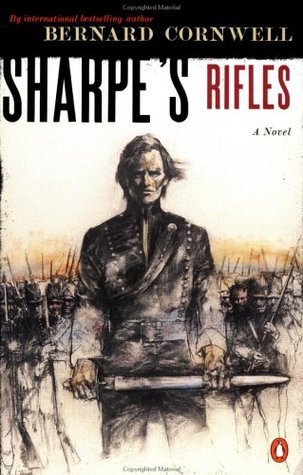
Sharpe's Rifles, by Bernard Cornwell
This week I'm reviewing Sharpe's Rifles, which is actually one of the earlier books in the series in order of publication date, but actually sixth in the series based on chronological order. Also I've come to the realization I'm six books into this series which is a little daunting to say the least. This book is also the first to take place in Spain during the Peninsular War which apparently is a majority of the series. Much like in the previous book, Shapre's Prey, Sharpe is currently a lieutenant in the 95th Rifles and is serving as a quartermaster rather than a fighting officer. This book basically shows us Sharpe's transition and the forging of his partnership with Sergeant Harper, who I strongly suspect will be a very important character in later books. (And for people who've already read them, I'm aware that might be an understatement.)
The biggest issue I had comes probably from reading this series in chronological rather than publication order. This book feels like the biggest reset within the series because we see Sharpe reduced back to being nothing more than a misfit officer promoted from the ranks who isn't respected by the men under him and isn't trusted by the officers above him. Also all the riches and spoils he gained from India are long gone, actually disappeared between Trafalgar and Prey so he's back to being dirt poor again too.
If you're reading the series in publication order than it's probably less jarring to see Sharpe at his absolute worst. After all he's got to build up from basically nothing to become the god among men as portrayed by Sean Bean he eventually becomes. However, if you read in chronological order with his campaigns in India first, it's very jarring to see Sharpe as distrusted by everyone. Despite being a common soldier, people still kind of saw Sharpe as one of the best damn soldiers in the entire British army and there were a few willing to look past his more unusual background. Heck, even in Sharpe's Prey there are powerful patrons who may actually influence Sharpe's career which only makes it that much stranger when he's in Spain as a quartermaster.
Another weird thing that it only took me about six books to notice is Sharpe seems to have a different woman he falls in love with every book. Seriously, it's at the point where I'm suspecting Cornwell had something written into his contract where Sharpe had to meet a beautiful woman and fall in love with her every book, with Sharpe only occasionally getting the girl. It's kind of believable at first, when he meets one or two ladies, but after the sixth it's kind of like, ''Oh, she's the love of your life? Really, Sharpe, you don't say? Mhm, do go on.'' I hate to say it because I'm stereotypically one of those not interested in romance sorts of people, but it's cropping up so much it's practically formulaic. I'm afraid this has the potential to just be incredibly annoying as the series goes on.
I think overall my biggest problem was that I read other books where Sharpe's more developed and becomes the best damn soldier in the entire damn British army and everyone knows it, where now he's basically a nobody. It's a big disconnect, but I think a result of prequels more than anything else. It's okay otherwise. Fairly standard battle scenes but not much else to write home about.
- Kalpar
The biggest issue I had comes probably from reading this series in chronological rather than publication order. This book feels like the biggest reset within the series because we see Sharpe reduced back to being nothing more than a misfit officer promoted from the ranks who isn't respected by the men under him and isn't trusted by the officers above him. Also all the riches and spoils he gained from India are long gone, actually disappeared between Trafalgar and Prey so he's back to being dirt poor again too.
If you're reading the series in publication order than it's probably less jarring to see Sharpe at his absolute worst. After all he's got to build up from basically nothing to become the god among men as portrayed by Sean Bean he eventually becomes. However, if you read in chronological order with his campaigns in India first, it's very jarring to see Sharpe as distrusted by everyone. Despite being a common soldier, people still kind of saw Sharpe as one of the best damn soldiers in the entire British army and there were a few willing to look past his more unusual background. Heck, even in Sharpe's Prey there are powerful patrons who may actually influence Sharpe's career which only makes it that much stranger when he's in Spain as a quartermaster.
Another weird thing that it only took me about six books to notice is Sharpe seems to have a different woman he falls in love with every book. Seriously, it's at the point where I'm suspecting Cornwell had something written into his contract where Sharpe had to meet a beautiful woman and fall in love with her every book, with Sharpe only occasionally getting the girl. It's kind of believable at first, when he meets one or two ladies, but after the sixth it's kind of like, ''Oh, she's the love of your life? Really, Sharpe, you don't say? Mhm, do go on.'' I hate to say it because I'm stereotypically one of those not interested in romance sorts of people, but it's cropping up so much it's practically formulaic. I'm afraid this has the potential to just be incredibly annoying as the series goes on.
I think overall my biggest problem was that I read other books where Sharpe's more developed and becomes the best damn soldier in the entire damn British army and everyone knows it, where now he's basically a nobody. It's a big disconnect, but I think a result of prequels more than anything else. It's okay otherwise. Fairly standard battle scenes but not much else to write home about.
- Kalpar
Tuesday, June 14, 2016
Waterloo: The True Story of Four Days, Three Armies, and Three Battles, by Bernard Cornwell
This week I'm taking a look at another book about the historic battle of Waterloo, in this case a book from historical novelist Bernard Cornwell. Before I get into the review I should preface this by saying that although Cornwell is the creator of the famous Sharpe series and does write a novel in which Richard Sharpe fights at the Battle of Waterloo, this book is not a historical novel. Instead it is a historical text, albeit somewhat short, in which Cornwell makes use of his considerable research to talk about one of the most studied battles in history. Cornwell himself somewhat undermines his book in the preface by stating that the subject of Waterloo's been studied numerous times and there have been perhaps countless books written on the subject before. However Cornwell argues that because Waterloo is such a fascinating battle he believes retelling the story is well worth the effort.
Inevitably, I am going to be contrasting Cornwell's work with the book written by Hamilton-Williams which I reviewed some time ago. One of the biggest contrasts I saw was that Hamilton-Williams puts a large amount of emphasis on the scale model of the Battle of Waterloo which he asserts has greatly influenced historical interpretation of the Battle in the years since. Cornwell mentions the model towards the end of the book and says Wellington believed it actually overstated the importance of the Prussians at the battle. But Cornwell points out that by the time the model was created Wellington had soured somewhat and so was willing to downplay the achievements of his erstwhile allies and take all the credit for winning the battle for himself.
In the key historical points Cornwell and Hamilton-Williams are in agreement, and it's very difficult to argue those anyway. Napoleon and his armies managed to defeat the Prussians at Ligny and fought the British, Dutch, and German forces to a draw at Quatre Bras on the same day, with one of Napoleon's corps marching between battles all day and playing no part in either. The Prussians, under Gebhard von Bluecher withdrew to Favre in the north with an intention of linking up with Wellington rather than retreating east back towards Prussia. Wellington also withdrew to the north, his position at Quatre Bras now exposed on two fronts, and took up a defensive position on a ridge south of the village of Waterloo which would allow Bluecher to join him, concentrate, and then fight Napoleon with a distinct numerical advantage.
On 18 June, 1815, Napoleon joined Marshal Ney's forces, who attacked Wellington's position on the ridge while Marshal Grouchy, under vague orders from Napoleon, marched towards Favre and engaged with the Prussian rearguard, a battle which he eventually won. However instead of tying down the entire Prussian army, most of it managed to march through back roads and eventually joined Wellington's forces in the afternoon, drawing off Napoleon's much needed reserves and eventually giving the allies the numerical advantage necessary to win the battle.
The main argument then comes as to why the allies won and Napoleon lost. Napoleon and many other French sources have long blamed Marshal Grouchy and other of Napoleon's subordinates who did not follow his orders properly. The standard British school of thought has given the lion's share of credit to the British and the King's German Legion forces there, while the other allies present have supported their own countries. And of course the Prussians, led by Bluecher's chief of staff Gneisenau, have stated the entire battle would have been lost without the Prussian contribution. The truth, as Cornwell states is somewhat more complex and for the most part Cornwell says we probably will never know the exact truth. The metaphor of a ball, apparently once used by Wellington, is repeated often in the book. Everyone will remember what happened to them and what they saw, but they will not have been everywhere and have seen everything. Everyone's individual account will vary depending on their location and their own opinions and memories. Some general facts may be agreed upon, but the specifics will be far more difficult to sort out.
For the most part, I think Cornwell does a good job talking about the whole story, keeping in mind the entire time that people's perspectives will of course be rather limited or downright wrong, especially on an early nineteenth century battlefield where the noise and smoke making seeing a few yards in front of you difficult and anything beyond that almost impossible. Cornwell works to incorporate a number of sources, although his perspective from Wellington's army is almost entirely British and only rarely mentions the Dutch, Belgian, or German allies. However, Cornwell does state that in their accounts the British charge their allies with cowardice, and the other allies charge the British with cowardice so the truth is they probably all performed admirably. However he does suggest the Dutch, Belgian, and German troops, who were more likely to be raw recruits compared to their British allies, were more likely to break, which suggests a slight hint of bias.
If there is any reason why Napoleon lost at Waterloo, Cornwell blames it on a combination of Napoleon's decision to wait until the ground was dry for use of his artillery, his decision to assault Wellington head on which only played to Wellington's strengths, his ambiguously worded orders, and some of Marshal Ney's decisions, who was making a very bad mess of things that day. Cornwell also states unambiguously that the Prussians arrived in time to help Wellington, whose army was at the breaking point, win the day and drew off much needed troops from Napoleon's reserves. Perhaps more importantly the Prussians, despite marching since the previous night, continued the pursuit of the French and ensured the complete destruction of Napoleon's army in the following night. If Cornwell's account is from a largely British perspective, it at least seems a rather even-handed if somewhat brief account of the battles.
I think my only strong complaint would be Cornwell's decision to, at points, move the narrative into the present tense. This is only a temporary decision and it's usually done at chapter breaks to ''catch the reader up'' so to speak on events that are happening on the battlefield when we rejoin the narrative. It just seems weird to me, personally, to shift between tenses like that and it's not something I've run into in other historical texts. I think that may be the historical novelist in Cornwell coming out during the book.
Overall, this book is pretty good, if rather brief. It gives a nice overview of the battle and at least gives credit to both the British and Prussians at Waterloo, if perhaps once again the Dutch, Beligians, and other Germans are getting the short shift. It's certainly not as detailed as Hamilton-Williams work, but I think it manages to avoid the pitfalls that other book tends to fall into. And certainly Cornwell has done enough research on the subject matter.
- Kalpar
Inevitably, I am going to be contrasting Cornwell's work with the book written by Hamilton-Williams which I reviewed some time ago. One of the biggest contrasts I saw was that Hamilton-Williams puts a large amount of emphasis on the scale model of the Battle of Waterloo which he asserts has greatly influenced historical interpretation of the Battle in the years since. Cornwell mentions the model towards the end of the book and says Wellington believed it actually overstated the importance of the Prussians at the battle. But Cornwell points out that by the time the model was created Wellington had soured somewhat and so was willing to downplay the achievements of his erstwhile allies and take all the credit for winning the battle for himself.
In the key historical points Cornwell and Hamilton-Williams are in agreement, and it's very difficult to argue those anyway. Napoleon and his armies managed to defeat the Prussians at Ligny and fought the British, Dutch, and German forces to a draw at Quatre Bras on the same day, with one of Napoleon's corps marching between battles all day and playing no part in either. The Prussians, under Gebhard von Bluecher withdrew to Favre in the north with an intention of linking up with Wellington rather than retreating east back towards Prussia. Wellington also withdrew to the north, his position at Quatre Bras now exposed on two fronts, and took up a defensive position on a ridge south of the village of Waterloo which would allow Bluecher to join him, concentrate, and then fight Napoleon with a distinct numerical advantage.
On 18 June, 1815, Napoleon joined Marshal Ney's forces, who attacked Wellington's position on the ridge while Marshal Grouchy, under vague orders from Napoleon, marched towards Favre and engaged with the Prussian rearguard, a battle which he eventually won. However instead of tying down the entire Prussian army, most of it managed to march through back roads and eventually joined Wellington's forces in the afternoon, drawing off Napoleon's much needed reserves and eventually giving the allies the numerical advantage necessary to win the battle.
The main argument then comes as to why the allies won and Napoleon lost. Napoleon and many other French sources have long blamed Marshal Grouchy and other of Napoleon's subordinates who did not follow his orders properly. The standard British school of thought has given the lion's share of credit to the British and the King's German Legion forces there, while the other allies present have supported their own countries. And of course the Prussians, led by Bluecher's chief of staff Gneisenau, have stated the entire battle would have been lost without the Prussian contribution. The truth, as Cornwell states is somewhat more complex and for the most part Cornwell says we probably will never know the exact truth. The metaphor of a ball, apparently once used by Wellington, is repeated often in the book. Everyone will remember what happened to them and what they saw, but they will not have been everywhere and have seen everything. Everyone's individual account will vary depending on their location and their own opinions and memories. Some general facts may be agreed upon, but the specifics will be far more difficult to sort out.
For the most part, I think Cornwell does a good job talking about the whole story, keeping in mind the entire time that people's perspectives will of course be rather limited or downright wrong, especially on an early nineteenth century battlefield where the noise and smoke making seeing a few yards in front of you difficult and anything beyond that almost impossible. Cornwell works to incorporate a number of sources, although his perspective from Wellington's army is almost entirely British and only rarely mentions the Dutch, Belgian, or German allies. However, Cornwell does state that in their accounts the British charge their allies with cowardice, and the other allies charge the British with cowardice so the truth is they probably all performed admirably. However he does suggest the Dutch, Belgian, and German troops, who were more likely to be raw recruits compared to their British allies, were more likely to break, which suggests a slight hint of bias.
If there is any reason why Napoleon lost at Waterloo, Cornwell blames it on a combination of Napoleon's decision to wait until the ground was dry for use of his artillery, his decision to assault Wellington head on which only played to Wellington's strengths, his ambiguously worded orders, and some of Marshal Ney's decisions, who was making a very bad mess of things that day. Cornwell also states unambiguously that the Prussians arrived in time to help Wellington, whose army was at the breaking point, win the day and drew off much needed troops from Napoleon's reserves. Perhaps more importantly the Prussians, despite marching since the previous night, continued the pursuit of the French and ensured the complete destruction of Napoleon's army in the following night. If Cornwell's account is from a largely British perspective, it at least seems a rather even-handed if somewhat brief account of the battles.
I think my only strong complaint would be Cornwell's decision to, at points, move the narrative into the present tense. This is only a temporary decision and it's usually done at chapter breaks to ''catch the reader up'' so to speak on events that are happening on the battlefield when we rejoin the narrative. It just seems weird to me, personally, to shift between tenses like that and it's not something I've run into in other historical texts. I think that may be the historical novelist in Cornwell coming out during the book.
Overall, this book is pretty good, if rather brief. It gives a nice overview of the battle and at least gives credit to both the British and Prussians at Waterloo, if perhaps once again the Dutch, Beligians, and other Germans are getting the short shift. It's certainly not as detailed as Hamilton-Williams work, but I think it manages to avoid the pitfalls that other book tends to fall into. And certainly Cornwell has done enough research on the subject matter.
- Kalpar
Thursday, October 22, 2015
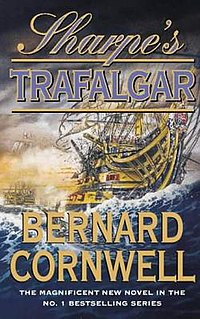
Sharpe's Trafalgar, by Bernard Cornwell
This week I'm making a return back to the extremely popular Sharpe series written by Bernard Cornwell. In keeping with my habit I've been reading the books in the series's own chronological order rather than reading them in order of publication. So far I've enjoyed the series and Sharpe's adventures in India, watching him rise to a sergeant and eventually an ensign before being transferred back to England with the 95th Rifles. (And greater fame and glory I have no doubt.) Of course, Sharpe has to get back to England in the first place which means a long ship voyage across two oceans. And Sharpe just so happens to be off the coast of Spain on an October day in 1805.
I will admit I kind of have a problem with this book and I ended up not enjoying it as much as some of the other Sharpe novel's I've read. And I think part of it may be because I'm reading these books in chronological order instead of publication order. For me it's really weird that Sharpe's at Trafalgar at all. I mean, the man's a footslogger, an excellent footslogger, and there's something fascinating about watching him fight on land. (Although I'm sure the fans of the television adaptations will admit Sean Bean isn't hard on the eyes either.) Cornwell himself admits that Sharpe has absolutely no business being at Trafalgar and he sent Sharpe there because he thought it would make an interesting story. On the one hand, it's kind of annoying because it's the Forrest Gump Effect dragging Sharpe into the course of history once again, but on the other it kind of makes sense. Let me explain.
A good example would be the Gaunt's Ghosts series, which is basically Sharpe IN SPACE! And yes, it's interesting to watch Colonel-Commissar Ibram Gaunt and the Tanith First and Only wandering around on a variety of planets and fighting the forces of the Archenemy. But it was somewhere in the middle of reading the second omnibus, The Saint, that I started to get bored with the series. There's just so many ways that you can tell stories about soldiers fighting battles before they start running together. Fortunately in the next omnibus, The Lost, Abnett managed to bring some new and interesting ideas to the series and so kept me interested as a reader. But if you have a long-running series like that it can be a challenge to keep the ideas fresh and interesting. So while Sharpe's Trafalgar is relatively early in the internal chronology, it's later on in the publication order. And for long-time readers of the series it was probably refreshing to see Sharpe do something different instead of the same old battles over and over. For a relatively new reader such as myself, though, it was sort of a weird installment.
I also should warn people that this book has a ton of historical information about the British Royal Navy in it. A lot. As in there are extended expository conversations among the characters about these sorts of things. A character at one point states what it cost to build a ship, down to the penny. It's very obvious that Cornwell did a ton of research in preparation for writing this novel, talking to people at the HMS Victory museum, which is a very good thing if you're writing historical fiction. There's nothing I hate more than historical fiction that gets things downright wrong when it shouldn't, and it's always nice to see how Cornwell has done his research. However it starts spilling over into the book and it almost feels like an information overload. Now, thanks to a certain other series and my many hours logged on Empire Total War I have more than a passing familiarity with the history of the Royal Navy, but I felt like some of the information was just proving how much research Cornwell had done and didn't really contribute to the plot. While I as a history nerd found it all very interesting, I'm sure there are more than one reader who would be overwhelmed.
Unfortunately, for most of the book there just isn't terribly much for Sharpe to do. He's no sailor so he spends most of his time as a passenger, just passing time on ships and finding things to do to occupy his time. Sure, there are things going on but it feels like a distraction until we get to the final big event itself in the last part of the book. Maybe it really captured the tedium of traveling by sailing ship in the early 1800's, but it was a tedium I'd have rather avoided. When it comes to Trafalgar there is plenty of action and the amount of detail is almost excessive. Although personally I'm somewhat surprised considering the amount of carnage that goes on in these books when I find out how relatively light the actual casualties were, at least for the British. You read about ships getting blasted by broadsides and men getting torn apart, but the final tally for the British is just under 1,700 dead and wounded, a tenth of the British force. The combined Spanish and French force, though, loses half their ships and half their men in the battle, a decisive victory for the British indeed.
Overall, I found this book somewhat less enjoyable than the others I've read so far. I know some people really enjoy it and maybe you just have to be an Age of Sail navy fan to really enjoy it. Personally I'm much happier on the land, thank you very much. And if you're not eager to learn a bunch of Royal Navy statistics I'd recommend avoiding this book. If that's your thing then read away, but be prepared for lots of details.
- Kalpar
I will admit I kind of have a problem with this book and I ended up not enjoying it as much as some of the other Sharpe novel's I've read. And I think part of it may be because I'm reading these books in chronological order instead of publication order. For me it's really weird that Sharpe's at Trafalgar at all. I mean, the man's a footslogger, an excellent footslogger, and there's something fascinating about watching him fight on land. (Although I'm sure the fans of the television adaptations will admit Sean Bean isn't hard on the eyes either.) Cornwell himself admits that Sharpe has absolutely no business being at Trafalgar and he sent Sharpe there because he thought it would make an interesting story. On the one hand, it's kind of annoying because it's the Forrest Gump Effect dragging Sharpe into the course of history once again, but on the other it kind of makes sense. Let me explain.
A good example would be the Gaunt's Ghosts series, which is basically Sharpe IN SPACE! And yes, it's interesting to watch Colonel-Commissar Ibram Gaunt and the Tanith First and Only wandering around on a variety of planets and fighting the forces of the Archenemy. But it was somewhere in the middle of reading the second omnibus, The Saint, that I started to get bored with the series. There's just so many ways that you can tell stories about soldiers fighting battles before they start running together. Fortunately in the next omnibus, The Lost, Abnett managed to bring some new and interesting ideas to the series and so kept me interested as a reader. But if you have a long-running series like that it can be a challenge to keep the ideas fresh and interesting. So while Sharpe's Trafalgar is relatively early in the internal chronology, it's later on in the publication order. And for long-time readers of the series it was probably refreshing to see Sharpe do something different instead of the same old battles over and over. For a relatively new reader such as myself, though, it was sort of a weird installment.
I also should warn people that this book has a ton of historical information about the British Royal Navy in it. A lot. As in there are extended expository conversations among the characters about these sorts of things. A character at one point states what it cost to build a ship, down to the penny. It's very obvious that Cornwell did a ton of research in preparation for writing this novel, talking to people at the HMS Victory museum, which is a very good thing if you're writing historical fiction. There's nothing I hate more than historical fiction that gets things downright wrong when it shouldn't, and it's always nice to see how Cornwell has done his research. However it starts spilling over into the book and it almost feels like an information overload. Now, thanks to a certain other series and my many hours logged on Empire Total War I have more than a passing familiarity with the history of the Royal Navy, but I felt like some of the information was just proving how much research Cornwell had done and didn't really contribute to the plot. While I as a history nerd found it all very interesting, I'm sure there are more than one reader who would be overwhelmed.
Unfortunately, for most of the book there just isn't terribly much for Sharpe to do. He's no sailor so he spends most of his time as a passenger, just passing time on ships and finding things to do to occupy his time. Sure, there are things going on but it feels like a distraction until we get to the final big event itself in the last part of the book. Maybe it really captured the tedium of traveling by sailing ship in the early 1800's, but it was a tedium I'd have rather avoided. When it comes to Trafalgar there is plenty of action and the amount of detail is almost excessive. Although personally I'm somewhat surprised considering the amount of carnage that goes on in these books when I find out how relatively light the actual casualties were, at least for the British. You read about ships getting blasted by broadsides and men getting torn apart, but the final tally for the British is just under 1,700 dead and wounded, a tenth of the British force. The combined Spanish and French force, though, loses half their ships and half their men in the battle, a decisive victory for the British indeed.
Overall, I found this book somewhat less enjoyable than the others I've read so far. I know some people really enjoy it and maybe you just have to be an Age of Sail navy fan to really enjoy it. Personally I'm much happier on the land, thank you very much. And if you're not eager to learn a bunch of Royal Navy statistics I'd recommend avoiding this book. If that's your thing then read away, but be prepared for lots of details.
- Kalpar
Thursday, October 23, 2014
To War with Wellington: From the Peninsula to Waterloo, by Peter Snow
This week I've returned to the Napoleonic wars and the campaigns of Wellington, although without my friend Richard Sharpe. In this case I've decided to read a historical text by Peter Snow that follows Wellington's development as a commander from the start of the Peninsular campaign to Waterloo, as well as talking about army life. When I picked up this book I was less interested in Wellington than I was in information about life in his army. For whatever reason my historical tastes tend to run less towards biographies and more towards the larger picture. Plus, additional information on day-to-day life is always helpful for historical interpretation at museums and historic sites. Overall this book is an okay introduction, but just that, an introduction.
This book is very much a condensed biography of Arthur Wellesley, the first Duke of Wellington, beginning with his military training and eventual appointment to India with the assistance of his older brother as his patron. The book begins properly with Wellington landing in Portugal in 1807 to assist the Portuguese and Spanish resistance against French rule, as well as bleed men and resources from Napoleon's campaigns in Central Europe. The book is very unstinting in its praise of Wellington, being very quick to dismiss Wellington's personal flaws such as his arrogance, aloofness, and disdain for the lower classes. Snow emphasizes that in several key battles Wellington refused to tell his plans to any subordinates ahead of time, leaving no structure in place should he be wounded or killed. It is perhaps the fact that Wellington lived a charmed life and avoided injury when so many of his staff officers and aides were killed or wounded that saved Wellington's army from a disastrous defeat due to a loss of leadership. Even Wellington's notorious and unabashed womanizing is winked at, and while this has nothing to do with his qualities as a general it certainly doesn't put him, in my eyes, in a flattering light.
To his credit, Snow relies extensively on primary sources for his works, drawing upon the diaries, letters, and dispatches of people involved in Wellington's campaigns. As Snow himself admits, some are written decades after the fact when memories are more fuzzy, but many are first-hand accounts written as their authors trudged through Flanders, Portugal, and Spain. It's always nice to see primary sources utilized to such a degree, and Snow even calls Wellington out in the few instances where he tries to pin his failures on others. What I found most interesting was the accounts of army life during the time period, talking about the daily drudgery and discipline which so often breaks down in an orgy of violence and plunder upon the successful completion of a siege. Wellington's apparent indifference to his troops depravities is rather striking considering his reputation of enforcing respect of private property, if nothing else than to prevent the civilian population from hating the English as well!
In that same vein, a lot of emphasis is laid upon Wellington's attention to supply, being determined to keep his army well-fed and well-supplied so that they would not be required to requisition or outright steal food and other items from the civilian population. However there are quite a few accounts of severe starvation suffered by Wellington's troops, including accounts of hunting acorns so they could be ground into an edible paste. A well-supplied army should not need to resort to such measures, which begs the question what has driven them to such a need? Snow briefly mentions Wellington may not have been aware that such things were happening, but if it was as wide-spread as the accounts claim it to be it seems his army faced severe food shortages during some winters. I'm sure there is a good rational explanation for this discrepancy, perhaps several good reasons, but there just seems to be a lack of research there in particular within this work.
The impression I'm left with is this book is rather light reading, especially compared to other historical works. Considering entire books have been written about Waterloo, (I even read one!) Snow's book comes across as a highlight of important events over eight years rather than an in-depth discussion. For people unfamiliar with the Napoleonic Wars it's a good introduction, but it definitely lacks a lot of substance that I've gotten used to in my historical readings. (Sorry! Trained historian!) If you want to learn about the Peninsula Wars this is a good start, but you shouldn't end here.
- Kalpar
This book is very much a condensed biography of Arthur Wellesley, the first Duke of Wellington, beginning with his military training and eventual appointment to India with the assistance of his older brother as his patron. The book begins properly with Wellington landing in Portugal in 1807 to assist the Portuguese and Spanish resistance against French rule, as well as bleed men and resources from Napoleon's campaigns in Central Europe. The book is very unstinting in its praise of Wellington, being very quick to dismiss Wellington's personal flaws such as his arrogance, aloofness, and disdain for the lower classes. Snow emphasizes that in several key battles Wellington refused to tell his plans to any subordinates ahead of time, leaving no structure in place should he be wounded or killed. It is perhaps the fact that Wellington lived a charmed life and avoided injury when so many of his staff officers and aides were killed or wounded that saved Wellington's army from a disastrous defeat due to a loss of leadership. Even Wellington's notorious and unabashed womanizing is winked at, and while this has nothing to do with his qualities as a general it certainly doesn't put him, in my eyes, in a flattering light.
To his credit, Snow relies extensively on primary sources for his works, drawing upon the diaries, letters, and dispatches of people involved in Wellington's campaigns. As Snow himself admits, some are written decades after the fact when memories are more fuzzy, but many are first-hand accounts written as their authors trudged through Flanders, Portugal, and Spain. It's always nice to see primary sources utilized to such a degree, and Snow even calls Wellington out in the few instances where he tries to pin his failures on others. What I found most interesting was the accounts of army life during the time period, talking about the daily drudgery and discipline which so often breaks down in an orgy of violence and plunder upon the successful completion of a siege. Wellington's apparent indifference to his troops depravities is rather striking considering his reputation of enforcing respect of private property, if nothing else than to prevent the civilian population from hating the English as well!
In that same vein, a lot of emphasis is laid upon Wellington's attention to supply, being determined to keep his army well-fed and well-supplied so that they would not be required to requisition or outright steal food and other items from the civilian population. However there are quite a few accounts of severe starvation suffered by Wellington's troops, including accounts of hunting acorns so they could be ground into an edible paste. A well-supplied army should not need to resort to such measures, which begs the question what has driven them to such a need? Snow briefly mentions Wellington may not have been aware that such things were happening, but if it was as wide-spread as the accounts claim it to be it seems his army faced severe food shortages during some winters. I'm sure there is a good rational explanation for this discrepancy, perhaps several good reasons, but there just seems to be a lack of research there in particular within this work.
The impression I'm left with is this book is rather light reading, especially compared to other historical works. Considering entire books have been written about Waterloo, (I even read one!) Snow's book comes across as a highlight of important events over eight years rather than an in-depth discussion. For people unfamiliar with the Napoleonic Wars it's a good introduction, but it definitely lacks a lot of substance that I've gotten used to in my historical readings. (Sorry! Trained historian!) If you want to learn about the Peninsula Wars this is a good start, but you shouldn't end here.
- Kalpar
Thursday, June 20, 2013
Waterloo New Perspectives: The Great Battle Reappraised, by David Hamilton-Williams
To understand the problems with traditional Waterloo scholarship, you have to go back to Captain William Siborne and his models of the battle. According to Hamilton-Williams, Siborne created these models as an economic enterprise and relied upon the statements (and funding) of veteran officers of that campaign. Because Siborne only consulted British sources, and was obligated to exaggerate the roles of his financial backers, his models ended up with a very distorted view of the battlefield which largely disregarded the roles of the Dutch, Belgian, and German soldiers which made up some two-thirds of Wellington's command. The result, by the 1880's, was a myth of British military invincibility and the inability of Wellington to make a mistake. Even on the French side, Napoleon is claimed to be incapable of making a mistake and the blame for Waterloo is heaped upon his marshals, Ney and Grouchy. Hamilton-Williams is not afraid to give blame when it is due, even to the great commanders, and provides what I found to be a largely even-handed account of the Hundred Days and the campaign that culminated in Napoleon's rout at Waterloo.
In Hamilton-Williams's favor is the exhaustive research and extensive footnotes contained within his text. Furthermore Hamilton-Williams draws upon British, French, Dutch, and German sources to provide a comprehensive account that transcends national agendas. (Although I have read that there may be some controversy regarding Hamilton-Williams's sources. I was unable to find anything concrete regarding these accusations, however if more information comes to light I am willing to reanalyze.) With a wide range of sources and detailing specifically how Siborne's account perpetuated unfounded assumptions were far from the truth. The result is a rather complete picture of the 1815 campaign that challenges long-standing assumptions.
Despite his exhaustive research, which may have its own controversies, Hamilton-Williams seems to be fixated on two subjects which tends to cause detriment to the rest of his work. The first issue is Hamilton Williams's adamant defense of the Dutch and Belgian soldiers under Wellington's command who were accused in the Siborne version of events of extreme cowardice and were the cause of all the pitfalls of Wellington's efforts. There are certainly extensive sources, at least according to Hamilton-Williams's footnotes, which certainly state that the Dutch and Belgian soldiers acquitted themselves just as well as Wellington's vaunted redcoats. The trouble is that Hamilton-Williams focuses almost exclusively on the Dutch and Belgian troops and provides relatively little information about the British and German troops that formed up Wellington's army. Although the British soldiers present were probably well-represented in other, Siborne-friendly sources, the relative lack of information leaves large gaps in Hamilton-Williams's account. I feel that in trying to defend the Dutch and Belgians Hamilton-Williams lost a certain degree of perspective.
The other major issue was Hamilton-Williams's vitriol for the Bourbon dynasty of France and their supporters and he makes absolutely no attempt to hide it in his book. In fact in the front-matter of this text he specifically picks out the Bourbons as the most despicable characters in the events of 1814 and 1815 and never hesitates to get a shot in at their expense. While there were certainly issues with the Bourbon regime and Napoleon was definitely a force for change in France, I feel like Hamilton-Williams let his own prejudices gain the better of him and prevented him from providing an impartial appraisal. Certainly bias is a part of any writing, but many historians today aspire to avoid the level of bias found in Hamilton-Williams's book.
I think that this book is very informative for students of the Napoleonic wars, but it falls short in some respects. Despite its exhaustive research the book's bias is incredibly strong and it goes out of its way to pursue that bias in some cases. I was hoping to find more material on the controversy regarding this book but since it's about twenty years old I'm afraid more information will likely not be forthcoming. Definitely look at other sources for more Waterloo research.
- Kalpar
Subscribe to:
Posts (Atom)