We continue Space Odyssey month with the second installment of Arthur C. Clarke's series, 2010: Second Odyssey. I will say that these books are going to be a little bit different from the first one because they're written about fifteen to twenty years later than the first. As Clarke himself says, we hadn't even landed on the moon yet when 2001: A Space Odyssey went to print. By the time he began writing sequels in the eighties we had expanded much further into space with probes, but had also fallen back, making manned missions only into orbit. (Which, as of 2016, is the limit of our abilities. Although NASA has high hopes of sending someone to Mars in the future.)
From this point forward, Clarke makes use of the elements of the movie plot rather than the original novel. The chief difference between these is that the mysterious monolith sends a message to Jupiter rather than Saturn, but this is a fairly trivial change in the grand scheme of things. How Dave Bowman reacts to HAL's rebellion is a little different, but the end result is the same. The biggest thing I noticed most about 2010: Odyssey Two is that there are references to real-life events which had helped expand our knowledge of space, as well as shape science-fiction as a genre, which occurred after the 1960's. Specifically Clarke mentions the Galileo and Voyager missions which gave us far more information about Jupiter and revealed that the moons of Io, Callisto, Ganymede, and Europa were far more interesting than we could have imagined. Clarke also slips in a couple references to Alien and Star Wars, which definitely updates the book and as those movies are still science-fiction classics it certainly doesn't date the book. (References to the Soviet Union aside.)
Plot-wise the book picks up a few years after the ill-fated Discovery expedition to Jupiter, in which all the crew except Dave Bowman perish and Dave, after a cryptic final message, appears to vanish. The United States is eager to recover their lost ship, especially before the Soviets or Chinese can claim it as salvage, but the construction of Discovery II is still underway and it looks like the Americans won't be the first to reach Jupiter. More pressingly, Discovery's previously stable orbit is decaying and it is in very real danger of crashing into Io in the next few years, taking all its information with it. Somewhat reluctantly the Soviets and Americans join forces with the agreement to share all information and find out just what the heck happened out at Jupiter with the mysterious monolith.
The thing that I really liked about all of this is the book took on a far less flowery and dramatic tone than the previous novel. In 2001 Clarke tended to lapse into purple prose and speak about the great destinies involved and the unknown but inevitable fates that humanity was moving towards, almost to the point of being melodramatic. Which is fine, but I had a bit of a hard time taking him seriously sometimes. 2010, by contrast, takes a far more pedestrian tone, which is really cool. Characters have discussions about launching a mission to Jupiter like it's something that happens all the time. And if it happened in our lives it would almost certainly be a huge deal, but I find it absolutely amazing that people could talk about this like it was no big thing. That almost makes it more convincing science-fiction for me than all the alien intelligences and mysterious monoliths. At certain points Clarke sort of lapses into his flowery prose once again, but for the most part I just sort of enjoy how mundane it all is.
In this book, much like the previous one, conflict with HAL is fairly minor and Clarke decides to put much more focus on the monoliths and the forces behind them. There is some concern that HAL may rebel once again and human lives will be put in danger, but it's handled very easily. I mean, Clarke may be making a point that most conflict can be avoided if you handle it properly and it doesn't have to be resolved with force, but it's such a minor part of the overall story. It almost feels like it was shoe-horned in because Clarke had to tie up some loose ends so he could get back to talking about monoliths.
And, on some level, I don't find the monoliths terribly interesting. Once the main mystery of what is their purpose is explained, they become kind of boring. It's all part of some vague plan by ancient aliens to promote intelligent life throughout the galaxy because they were lonely. If we got to speak with these ancient aliens and get to understand them a little bit better they'd probably be a bit more interesting, but they're basically described as ineffable beyond that little bit I've already talked about and having vague and mysterious purposes. It's just hard to get interested in characters that aren't described terribly well.
Finally I personally felt like this book was sort of a middle in the series. There's a book that comes before it, and a book Clarke wants to write that comes afterwards, so he has to write something to connect the two. It's okay, but it's serving as a bridge at best. I'll see if my assessment is correct when I read the next book, but by the end I was left with a bit of a mediocre feeling about this one. Next week we jump forward to 2061: Odyssey Three.
- Kalpar
Thursday, April 14, 2016
Tuesday, April 12, 2016
The Plantagenets: The Warrior Kings and Queens Who Made England, by Dan Jones
This week I'm talking about a...sort of biography by Dan Jones about the Plantagenets. I say sort of biography because the book actually covers the lives of dozens of people over about a century of history, but it's a narrative driven by the individuals that make up the dynasty referred to as the Plantagenets. Although this is today referred to as the monarchs who ruled England from Henry II to Richard II, who was deposed by his cousin, Henry Bolingbroke who became Henry IV. Really the only person who referred to themselves by the surname Plantagenet was Henry II's father, Geoffrey of Anjou, who never ruled England. However historians love giving names to things so ultimately the name has stuck, and it's much easier than saying ''those guys who were all related to each other and ruled England during that time.''
The Plantagenets are some of the most important kings in English history, both from the development of England today, as well as in the popular imagination. The Plantagenet dynasty included Richard the Lionheart, Bad King John, Edward Longshanks, Edward III, and the Black Prince, all major figures in England's historic folklore. This is no accident as several of these kings, such as Edward I and Edward III understood the power of propaganda and purposely cultivated their images for posterity. So it is no exaggeration for Jones to state that these are the monarchs who made England.
I was already passingly familiar with the history involved, if nothing else than because there are plenty of English-language sources for English history. The most interesting resource I've seen on the subject is the documentary series Monarchy with David Starkey which I highly recommend. (It used to be on Netflix but as of the writing of this post it's been taken down, which is a crying shame.) So of course there's a deal of overlap between what I already knew from Monarchy and Jones's book. There is of course the perennial problem with sources in medieval history, and sifting through to come at something approximating the truth. Chroniclers during the middle ages were hardly impartial recorders and while there are plenty of overt biases, there can be fare more subtle ones as well. How accurate Jones's sifting through sources I'm sure other historians have utilized is I cannot say, but it's still informative and interesting.
The Plantagenets are important for a couple of reasons, most importantly establishing English dominance in the British Isles and the creation of Magna Carta. Although the struggles between England, Scotland, and Ireland would continue for centuries and in some cases remain unresolved to this day, the campaigns of kings such as Henry II and Edward I established English dominance and Edward I's campaigns permanently annexed Wales as part of the English kingdom. The Plantagenet kings were also responsible for alternately extending English holdings in France, such as Henry II and Edward III did, or losing them almost entirely, like John or Richard II. The other major contribution, however, was the Magna Carta and the precedent of parliaments.
If we were to ask the Plantagenet rulers, Magna Carta, the charters that followed, and the parliaments that resulted would not be proud accomplishments. Many rulers attempted to overturn or repeal the charters and act unilaterally without the consent of Parliament. And in a way, the Magna Carta did not affect the ''little people'' when it was sealed in 1215, primarily concerned more with the rights of the barons who had rebelled against John than the commoners. However it has become enshrined in popular imagination and is generally credited today with being the origin of English democracy and the uniquely English tradition of common law. As someone who has grown up in the Anglosphere which carries on the tradition of common law, even I am not immune to the worship of these principles that go back centuries. Truly it's the Plantagenet era where the concept that the monarch rules with the consent of the governed becomes codified in the English tradition.
Overall this is a pretty good book, although it tends to focus more on the narrative and a lot of the gory details of ruling in the middle ages. There was a certain amount of big-picture stuff to keep me satisfied, but when you get to Edward II and especially the misrule of Richard II Jones doesn't hold back on the blood. If you're interested in learning more about the rulers of England during the middle ages, then this is a good resource, but I still recommend Monarchy as well.
- Kalpar
Thursday, April 7, 2016
2001: A Space Odyssey, by Arthur C. Clarke
Amazon, in their never-ending plot to get me to buy more books, some time ago offered a large number of Arthur C. Clarke e-books for the reasonable price of two dollars. Being a man willing to part with large amounts of money two dollars at a time, I ended up with a small collection of various Arthur C. Clarke books to read, him being the one of the three Greats of science-fiction whose work I've definitely read the least of. (I definitely spent far too many of my teenage years reading my mother's collection of Heinlein and Asimov which gave me some interesting insights to life.) So this month I'm reviewing the entirety of the Space Odyssey series which I've been told is a little easier to understand than the very famous film.
Warning to my Readers: As both the book and film 2001: A Space Odyssey have now been out for nearly fifty years, I no longer consider it necessary to avoid ''spoiling'' the story. Especially the more esoteric bits that aren't really explained in the movie. If you have not seen the movie by now, then go borrow it from the library or something, it's not my fault you can't be bothered to watch an old school science-fiction movie every now and then.
This edition of the book begins with some rather lengthy introductory material from Clarke himself which goes into some of the details about the making of both the book and movie. According to Clarke, he met with Stanley Kubrick in New York City and they began discussing ideas for a science-fiction movie. Building on a concept from a pre-existing short story of his, The Sentinel (Contained in Expedition to Earth), the duo began developing story ideas for a feature-length movie. 2001 is an odd case where instead of the book being written first and then later adapted to film, or the less common case of a film being created and then later novelized, both the film and book were created in tandem and released at roughly the same time, with Kubrick managing to finish the movie first. There are some slight differences, but they tell roughly the same story. Inevitably, having now gone through both I'm going to be doing a bit of comparison and contrast.
The main difference, though, is the amount of explanation that goes into the novel. The film of 2001: A Space Odyssey is famous for having incredibly little dialog and Kubrick relies heavily on visuals to tell the story. From the monkeys in the beginning of the movie and their encounter with the mysterious black Monolith, he transitions to the scenery porn of space travel in the then still-distant year 2001 and the discovery of a second monolith buried on the moon. There is the tense sequence of events on the ship Discovery as Dave Bowman fights against the incomprehensible mechanical malice of HAL 9000, and then the final bit which...just gets weird. Really, really weird. But the important thing is Kubrick used visuals to tell the story.
Quite simply, unless you're writing a graphic novel, which Clarke was not, you cannot communicate with visuals in a novel. You have to use words. And so while in the film Kubrick leaves a great many things unexplained and up to the viewer's own interpretation, in the novel Clarke goes in the opposite direction and explains perhaps a little bit too much. Intelligent viewers of 2001: A Space Odyssey probably concluded that the Monolith acted as a sort of catalyst for the evolution of our simian ancestors into human beings. Where it comes from, why it's there, what its purpose is, that's all left up to the imagination of the viewer in the film, but in the book Clarke goes into extreme detail.
The monoliths, all of them scattered through our solar system, are the result of a race of aliens experimenting with life and trying to push life towards intelligent forms and report on the success of such an experiment. At times Clarke's descriptions and explanations can be a little bit overwhelming and I find myself thinking less is actually more in this case. His descriptions certainly explain the end part of the movie which is famously the most incomprehensible part, but on the other hand it takes away part of the mystique and tries to make up for the visuals with purple prose which I felt didn't carry as well in text form.
One thing that I did notice was the conflict between the crew of Discovery and HAL 9000 is a much smaller part of the book compared to the movie. In the book it's sort of sandwiched between other parts of the story and happens fairly quickly. It's also heavily foreshadowed in the book and, having seen the movie before, it takes quite a lot of tension out of the situation. In the film, the conflict between the crew and HAL is central to the plot and forms an incredibly tense, nerve-wracking, and memorable story. Who doesn't get a chill at the phrase, ''I'm sorry, Dave, I'm afraid I can't do that.''? And once again, we get far less an explanation why HAL decides to murder the crew in Kubrick's rendition. Which leaves it to the audience's own twisted imagination or in the realm of perhaps the utterly incomprehensible. In the novel, however, it's sort of blandly explained that having been instructed to tell the crew the truth, but to lie to them as well, it creates stress in HAL's psyche that pushes him to murder the crew to remove the apparent conflict. Which, although concerning in its own right, isn't nearly as terrifying as a computer going wrong and not knowing why.
(I will also make the comment that Clarke's explanation of HAL's name totally not being a one letter substitution for IBM leads me to claim he doth protest too much. The fact that HAL supposedly stands for Heuristically programmed ALgorithmic computer sounds far too much like a backronym to me. And there are certain other elements of evidence which lend credence to the IBM theory.)
If you find yourself a little bit confused and perhaps irritated by the film version of 2001: A Space Odyssey then the novel will definitely help clear things up, although you may get a little tired by the amount of detail that Clarke goes into explaining things. And the book has definitely given me new appreciation for the film. I'd say the book is an important supplement, but I'm left with the feeling the film is possibly the stronger of the two. Next week we'll see how the series continues with 2010: Odyssey Two.
- Kalpar
Tuesday, April 5, 2016
The End of Tsarist Russia: World War I and the Road to Revolution, by Dominic Lieven
This week I'm reviewing a somewhat complex book from Dominic Lieven, The End of Tsarist Russia: World War I and the Road to Revolution. Perhaps misleadingly for the title, the book focuses rather little on World War I and the eventual revolution in 1917 which led to the creation of the Soviet Union. Instead the book focuses heavily on the history of Russia in the late nineteenth and early twentieth century, as well as the larger context of Europe, imperialism, and Pan-Slavism, which leads to the fateful decision of Russia's entry into the growing conflict between Russia and Austria. The fall of Tsar Nicholas II's regime is covered, fairly briefly, and the books end with some speculation on Lieven's part about both the past and the future. The book is okay and Lieven states he makes extensive use of Russian government archives, however as it was an audio book I couldn't really confirm the sources and the fact that these resources are once again inaccessible is...concerning, but not necessarily a cause for alarm.
The first chapter of this book is a little confusing because it actually doesn't talk about Russia at all and instead goes into great deal of the psychology of Europe, as well as the concept of Great Powers and the Balance of Power which had dominated European diplomacy since the Congress of Vienna in 1815. Although I was a little annoyed by this distraction, especially because having studied this period before I'm already familiar with the concepts explored, I suppose it's necessary for readers who are unfamiliar with the subject. Providing this contextual framework, Lieven then goes into talking about Russia. The picture that Lieven paints is that by the early 20th century Russia was a country at a crossroads. Russia had been among the victorious powers in 1815, and the tsar had even marched his troops through Paris. Russia's position as one of the Great Powers, unlike Prussia or Spain, had long been assured because of its large population, vast territory, and large military capacity. However by the late nineteenth century the diplomatic scene in Europe was rapidly changing. Prussia had grown stronger through the unification of Germany and the unification of Italy under Piedmont had created two new Great Powers in central Europe, drastically altering the Balance of Power. Furthermore, Germany's industrialization was putting it well on the way to becoming the economic giant of Europe.
Russia, by contrast, had fallen behind the other powers Where other nations had become industrialized economies with extensive railroad networks, Russia remained largely agrarian and with limited rail networks, putting it at a distinct disadvantage when it came to a modern, industrialized war. The Russians were acutely aware of that, especially with the disastrous defeat in the Russo-Japanese War. This backwardness put Russia in very real danger of losing its Great Power status, a situation which was only made worse by the amount of territory Russia controlled. Much like the Hapsburg Austrian Empire, the Romanovs of Russia ruled over a large variety of ethnicities. Depending on how you counted ''Russians'', mainly whether or not you included Ukrainians, Russians made up only a plurality in the expansive empire. Russia was in just as much danger from the enthno-national forces which fracturing the Ottoman Empire and threatening to collapse the Hapsburg monarchy.
However, this did not have to be a permanent state of affairs. Much like the United States, one of the new powers on the scene, Russia had a large frontier that could be settled and exploited, as well as enormous potential to become an industrial power. The United States, after all, began as an agrarian experiment, so Russia could follow the same path. Lieven also points out that most of the development decisions, such as railroad construction, were made by a central authority which set a tradition of planned economies in Russia. (As well as a strong tradition of communal ownership of land, rather than the private property tradition in Western Europe.) Despite numerous setbacks, Russia still had great opportunities provided it had the peace necessary for growth.
So why did Russia go to war? Lieven makes extensive argument stating how it wasn't in Russia's best interests to go to war in 1914. Russia needed the army to maintain order across the empire, rather than fighting in a costly war. Russia's army and navy were still recovering from the catastrophes of the Russo-Japanese war a decade before, and despite extensive increases in budget they were still inadequate to the task of tackling Germany. Finally Russia simply did not have the civilian resources, whether it be railroads, strategic industry, or financing to prosecute an extended war. The answer, as Lieven explains it, boils down to Russian pride. Russia had expended considerable time and resources in cultivating the Balkan states such as Serbia as allies and Pan-Slavic sentiment meant the Russians could not stand idly by while the Austrians dismembered Serbia. If Nicholas II hadn't gone to war, and instead submitted to another Germanic demand, it's very possible Pan-Slavic extremism could have toppled his throne anyway. At least, that's Lieven's conjecture, but I think he indulges into it overmuch.
The two biggest problems I had with this book was the sheer number of people that Lieven talks about and Lieven's speculations. Lieven talks extensively about government officials, mostly Russian but also from the other powers, as well as their opinions on the political spectrums that made Russian policy. This is a good thing on the one hand because it provides a ton of different perspectives but since I was listening to the book rather than reading it I had a hard time keeping track of the various individuals. The other issue is the sheer amount of speculation Lieven does on both the past and the future. Lieven spends a good portion of the end of the book speculating on how World War I might have not happened or, perhaps, been avoided entirely. I think this is largely pointless as by the 1910's there was a strong assumption among the European Powers that a war was going to happen in the near future anyway, which created a self-fulfilling prophecy for when the war finally did occur. If it hadn't been the assassination of Archduke Franz Ferdinand, it would have been another of a dozen different crises that would have set all of Europe off to war once again. Lieven also speculates on the future and vaguely on the possibility of a large war between the rising Asian powers. Although possible, it feels like a pet theory of Lieven's rather than any actual research.
Overall the book is okay, and does an exhaustive job of talking about the Russian perspective going into World War I, as well as why Russia went to war and why, at least with the benefit of hindsight, we can see that it was a very poor decision. The greatest weakness in my opinion is Lieven's speculations on could-have-beens, some weaker than others.
- Kalpar
Thursday, March 31, 2016
Nellie Taft: The Unconventional First Lady of the Ragtime Era, by Carl Sferrazza Anthony
This week I'm reviewing a biography I managed to stumble across at the used bookstore about Nellie Taft, First Lady and wife of President and later Chief Justice of the Supreme Court (and Cincinnati son) William Howard Taft. I have been interested in Nellie Taft for a while after reading Goodwin's text, The Bully Pulpit in which Nellie was briefly described and she seemed like an incredibly fascinating person. Conventional would never be an adjective you could apply to Nellie during the entirety of her life and in an era when most women of her social class were expected to be wives and mothers, Nellie was driven by a desire to be much, much more. Personally I rather like this book because it offers insight into the life of one of the most vivacious First Ladies.
I'll begin with a criticism I had of the book's organization, which was one of my main concerns with the text. The book is divided into twenty chapters and a full nine of those deal with her life before becoming first lady. It begins with her childhood in Cincinnati, as well as her frustrations with the enforced idleness her class and gender brought upon her, and her rebellion expressed in a variety of ways. We then follow her as she marries Will Taft and directs his career, pushing him away from the court and towards more executive positions such as governor of the Philippines and Secretary of War. This culminates in her pushing Will and manipulating Theodore Roosevelt to achieve her ultimate ambition: the White House. Another eight chapters are spent going over the four years the Tafts spent in the White House, a combination of triumph and tragedy with the final betrayal of Roosevelt. Finally the last thirty years of Nellie's life are covered in three very brief chapters.
Personally I feel like this didn't place a lot of emphasis on Nellie's achievements after being First Lady, acting as a proponent of social reform and a frequent world traveler after Will died in 1930. Especially considering this is a book and Anthony could easily have dedicated more space to those subjects. The result makes the last thirty years of Nellie's life pass as a bit of a whirlwind. Certainly Nellie was an individual blessed with an abundance of energy and seemed to approach everything with extreme gusto, but it seems a discredit to her later years to briefly gloss over them compared to everything else. But this is ultimately a personal quibble of mine and in no way detracts from the value of the book overall.
When Nellie Taft was described to me in Bully Pulpit it was as a sort of late nineteenth century rebel. Born to an impoverished upper class family in Cincinnati, Nellie was sent to the very best schools and received a proper upbringing. However, the expectation for upper class white women at the time was marriage and motherhood, with perhaps a series of teas, luncheons, and light charity work. Nellie, however, was someone who simply could not stand the prospect of doing little to nothing and was constantly driven to seek more from her life. This resulted in her rebelling in a variety of ways.
There was of course the traditional teenage rebellion in drugs, alcohol, and gambling, Nellie developed a taste for beer and liquor, was described as an extremely good card player, and was a lifetime smoker of cigarettes. (Especially rebellious considering it wasn't ''acceptable'' for women to smoke before then Twenties.) However, her rebellion also took a far more creative path as well. Wishing to not be a financial burden to her parents, Nellie tried at various times to be a professional musician and writer, without much success, but also worked as a schoolteacher for a period of time. Although tame by today's standards, this was absolutely shocking and Nellie's mother was actually concerned Nellie might drive suitors away by being a working girl. Nellie also established salons with her friends, discussing a variety of topics which is how she met William Taft. Although she rejected him multiple times, she eventually consented to agree to marry him because he respected her as an intellectual and her demand to be an equal partner with him in all things, rather than subordinate.
For most of their marriage Nellie would be Will's greatest adviser and would help steer his career towards the White House. A significant exception is when Will took a slight detour working on the circuit courts and leaving Nellie for long periods of time in Cincinnati. Not one to remain idle, Nellie helped found and organize the Cincinnati Symphony Orchestra, still an important institution in Cincinnati today and equal to the orchestras of cities such as Boston, New York, and Philadelphia. When Will was appointed Governor of the Philippines, Nellie reveled in the position and used her influence in a variety of ways. And when she goes to the Philippines, this is where I give Nellie a ton of credit.
Unlike a majority of people of her class and background, Nellie is willing to work with and cooperate with the local cultures instead of trying to dominate. Wherever she'd go Nellie would try the food, talk with the locals, try to learn the language, and treated everyone with dignity and respect. Now of course, Nellie's egalitarianism did not extend to everyone. Anthony admits that Nellie had an extreme class prejudice and preferred to hobnob with the monied, landed, and educated class rather than the poor working class. But, where she differs from contemporaries, as Anthony points out, is that Nellie welcomes people regardless of race, creed, or gender so long as they're the right class, and makes an effort to integrate all ceremonies and events in the Philippines. Her willingness to work with local Filipino elites puts her ahead of many Americans who viewed the world with the racism endemic in the late nineteenth and early twentieth centuries. Her decision later on to include black servants at the White House, something not tolerated previously, is also a significant step forward.
Something that Anthony emphasizes is that Nellie uses her position both as wife of the governor and later First Lady to bring about social reform. In the Philippines Nellie promoted natal care programs which went a long way towards reducing infant mortality on the islands. As First Lady Nellie worked to improve working conditions for federal employees, many of whom were trapped in substandard buildings with poor light and ventilation. In addition she worked to create the park on the bank of the Potomac River where the Jefferson Memorial currently stands and was influential in beginning the planting of thousands of cherry trees in Washington, D.C. which are a major tourist attraction to this day. And in a variety of other matters, large and small, Nellie used her considerable influence with Will to bring about positive change as the First Lady, often inundated with letters from people seeking her help.
The real tragedy of all of this is that Nellie did not get to enjoy being First Lady terribly much at all. After all, Will's real ambition was the Supreme Court and it was only at Nellie's insistence that Will ran as a candidate at all. Unfortunately in May of 1909, just a few months into their four year tenure at the White House, Nellie suffered a stroke and lost control of both the right side of her body and the ability to speak. Although she eventually recovered and continued to live a full and active life, it greatly curtailed her ability to act as the First Lady and enjoy the power and privilege that came with the position. Will was emotionally devastated and left bereft of the person who had been his chief supporter and confidante for decades. Coupled with the ordinary stress of being president, Will overate constantly and fretted, reaching almost four hundred pounds which would have a long term effect on his health. And in the latter half of his administration, the Tafts dealt with the specter of a resurgent Roosevelt, which would eventually make the election of 1912 one of the bitterest in American History. However, Nellie found purpose again after leaving the White House, finally indulging herself with all of the pleasures she so often had to deny when making due with Will's salary. In her last years Nellie was a frequent world traveler, despite being over seventy years old, and remained extremely vivacious.
I will make a few comments on some other things in the book, although I'm aware I've let this post go for quite some time as it is so I'll try to keep it brief. As a Cincinnatian myself, I take an inordinate amount of pride in my city and I find it rather interesting that while Anthony says Nellie was quick to defend Cincinnati against anyone who might speak disparagingly of it, she certainly did her damndest to get the hell away from Cincinnati for the rest of her life, to the point of putting off seeing her own grandchildren because it'd mean coming to Cincinnati. Anthony also states very strenuously that Nellie was certainly not an alcoholic during her life, despite her great love of wine, beer, and liquor. Personally I feel like Anthony doth protest too much considering Nellie seems to go into great detail about what she was drinking later in life in letters to her son, Charlie. Certainly alcoholism would be a foible of Nellie's character, but it doesn't detract from her other good qualities.
Overall, I really enjoyed this book because Nellie Taft is a fascinating example of a woman rebelling against societal norms and using power and influence to bring about social change, sometimes subverting those societal norms she's rebelling against. Although not the most famous of First Ladies, she's a great example and something all future First Ladies (or perhaps I should say First Spouses) should aspire to exceed. Despite its flaws, I highly recommend this book and encourage everyone to go out and read it.
- Kalpar
Tuesday, March 29, 2016
Dune, by Frank Herbert
This week I'm taking a second look at what's widely considered to be a landmark book in the genre of science-fiction, Frank Herbert's Dune, a gigantic space opera that if nothing else is responsible for giving us the idea of spice as a tradeable commodity in the space future which has turned up in other sci-fi works. This is actually the first of an almost insane number of books and I'm planning on downloading more audiobooks in this series from the library when I get the chance, just to see what all the fuss is about.
As I said, this is actually a second look at the series for me because I originally read read Dune back in high school and I remember not really liking it terribly much. Taking a second look at it I'd say that the book has grown on me somewhat and I've got a better understanding of it, but I can still see where it has some serious problems. Dune has been occasionally described as the Lord of the Rings of space opera, and I can see the parallels between the two works. Both have insanely detailed universes with thousands of years of backstory and lore that are hinted at indirectly through the narrative but you never really learn specifically what those things are. For example, there's the Butlerian Jihad against thinking machines, which is mentioned in passing as ancient history in the remote past, but we never learn more than the barest details. (At least in this book, anyway.) There's also an extensive vocabulary, some of them words Herbert created, some of them not, which are included in a not always helpful glossary in print editions of the book. The result is Herbert creates a world, much like Middle Earth, that feels like it has considerable depth. You may not entirely understand what's going on and spend an inordinate time in appendices and apocrypha trying to sort through and understand details, but it's a world with as much depth and complexity as our own. If nothing else, Dune is a masterpiece in the exercise of world-building. Or more properly galaxy-building.
For those of you unfamiliar with the plot of Dune, the story focuses around Paul Atreides, heir to the Duchy of Atreides who's also the Chosen One. The actual term is kwizats haderach but it's just easier to say Chosen One. So the story focuses, at least partly on Paul becoming said Chosen One, which is okay but I think it's honestly the weaker of the plot lines. The other one is an economic and political drama focusing around the planet Arrakis where House Atreides is sent. Arrakis is a desert world and the only source of melange spice which extends human life and is extremely addictive, making it the most valuable resource in the universe. House Atreides stands to make a great amount of money from being the governors of Arrakis, however it is a trap by their old enemies, the Harkonnens, who plan to shatter their power and eliminate the Atreides. What ensues is a battle between Harkonnen and Atreides for control of Arrakis and, ultimately, the spice.
One of the biggest complaints I have about the book, and has been mentioned by other people who have read it, is that the book really doesn't allow suspense to exist in the book. For example: within the first three chapters of the book we know that House Atreides is going to Arrakis; we know that it's secretly a trap House Harkonnen has made with the help of the Emperor to crush House Atreides; we know that House Atreides knows that it's a trap by House Harkonnen and the Emperor to crush their power and are planning accordingly; we know that House Harkonnen knows that House Atreides knows that it's a trap and so has a secret traitor planted which who we're immediately told who it is and why they're betraying House Atreides. Seriously, that's all in the first three chapters, and it only gets worse as the book goes on and Paul starts being able to see the future. And of course every chapter starts with a quotation from a work about Paul's life afterwards so you know he's going to make it out okay, more or less. So it definitely removes any sense of suspense in the book and I can see where it would get difficult to read.
Another issue, leaving aside the insane amount of world-building and vocabulary-dumping, is that we're often given different characters' internal monologues, sometimes multiple characters during the same chapter. It's perfectly fine to tell stories from the perspectives of multiple characters and it's been done before and since, but in this case the shifts can be downright jarring and confusing at times because they happen with little warning. So much like Lord of the Rings, its writing is not necessarily the book's strongest suit and if it weren't for the amount of work Herbert had put into the book's universe it probably would have been mediocre at best.
As for the audio book in specific, the biggest problem I had was the narration. For whatever reason the people who created the version I listened to decided to get multiple voice actors to provide voices for characters in the novel. However, the voice actors are used fairly infrequently so the regular narrator has to take over for at least half the book, possibly more, and provide a variety of voices for the characters. I can even cite an example where in the space of one chapter they went from using just the narrator to using the voice actors to using the narrator again to using the voice actors again. And it had a weird side effect for me by providing two separate interpretations for one character. Specifically the voice actor they got for Baron Harkonnen had a very deep, manipulative, evil genius voice that makes you feel like he's a force to be reckoned with. However, the voice the narrator used makes Harkonnen come across as a bumbling old fool with delusions of power rather than the mastermind. It's...confusing to say the least and I really wonder why the creators of this audiobook decided to shell out for voice actors if they were only going to use them for only part of the book.
Overall, Dune is okay and while I can understand the fascination and adoration it receives, I wouldn't say it's fantastic. Herbert put an insane amount of work into building the universe of his story and making it feel like a real, breathing, living world. However the writing can be weak or confusing, the plotlines aren't as richly developed as they could be, and Herbert basically tells us what's going to happen before it happens so there's no real suspense to the story. If you like space operas there's probably stuff in here you'll enjoy, but I can see how it would have a limited appeal.
- Kalpar
Thursday, March 24, 2016
Iron Guard, by Mark Clapham
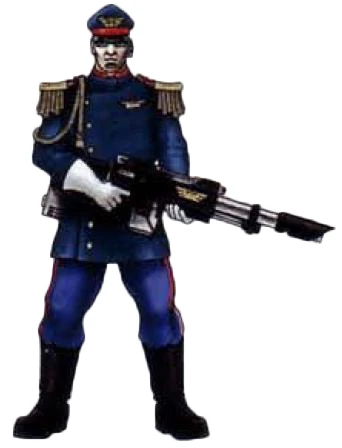
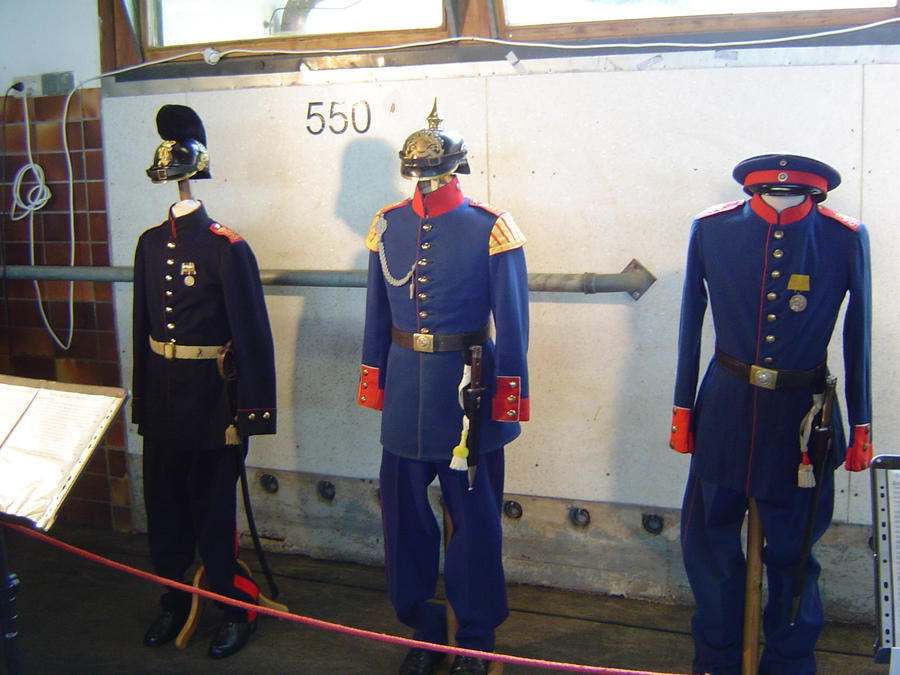
This week I'm returning to the Warhammer 40,000 universe and reviewing yet another novel featuring the warriors of the Imperial Guard. In this case Iron Guard, a book which focuses on the members of the Mordian Iron Guard, one of countless regiments of the Imperial Guard. For my readers who are unfamiliar with the Mordians, they're basically Prussians....IN SPACE! Or to elaborate, the Mordians come from a world where one side is burned to a crisp because it perpetually faces the sun, while the other is constantly exposed to the darkness of space and completely frozen. All of the population lives in hive spires on the dark side of the planet and order is only maintained through ruthless and relentless discipline. The result is the Mordian Iron Guard, regiments clad in bright blue dress uniforms which bear more than a passing resemblance to old Prussian Dunkelblau uniforms. The Mordians' main tactic is to form unbreakable lines of men pouring disciplined volleys of fire into the enemy until either the enemy is routing or dead, or they overwhelm the Mordians with superior numbers and firepower. In either case it will be a costly action for the enemy and the Mordians will remain stalwart against the Emperor's foes.
Iron Guard focuses specifically on the 114th Mordian Regiment, also known as "The Unbreakables", a regiment with a reputation for stalwart determination and discipline over and above the typical Mordian regiment. For the past year they've been helping put down a disorganized rebellion of false Emperors and many have grown bored with the ease of the assignment. Especially since the tide has begun to turn and it appears the world will soon be safely back under the watchful gaze of the Emperor. While half of the regiment will remain behind to continue the process of mopping up the remaining rebels, the other half is being sent onwards to Belmos VII, a world inhabited by a single city surrounding a mine of important raw materials for Imperial war materiel. Although contact with Belmos VII is infrequent at the best of times, a message has recently been received which had made the regional bureaucrats greatly concerned and they want the 114th to go investigate and handle any problems or rebellions that have occurred.
The thing I like most about this book is that it manages to go a different path from most Imperial Guard novels without straying too much from the formula as well. If you read too many Imperial Guard novels, after a while they start to blur together because they're all war novels. There may be differences in the specific details and the specific objectives people are fighting over, but it usually boils down to Imperial Guard and enemies fighting over stuff. Heck, I even got bored with some of the stories in the second omnibus of the Gaunt's Ghosts series because the stories felt so much the same to me. In the case of Iron Guard, though, there is a very spooky element towards the beginning of the story, very much like a horror story. As the 114th goes into the city on Belmos VII they find it entirely deserted, with no signs of life at all. Which is especially concerning because the planet had been out of contact for a few weeks, implying something very, very bad has gone down. As their investigations continue the 114th finds that the people of Belmos VII may have stumbled onto something far more sinister than initially anticipated.
I will say that this book falls on the darker end of the spectrum when it comes to the Imperial Guard novels. Generally speaking these books tend to fall broadly into two categories, either they honor and perhaps to an extent romanticize the sacrifices of the Imperial Guard in humanity's endless war with aliens and heretics, usually showing how their efforts are able to make a positive impact in humanity's plight. On the other hand there are stories that underscore the futility of humanity's war on a thousand fronts and the billions of lives thrown away to try and keep the tottering establishment of the Imperium up for just a little longer. Iron Guard definitely falls into the second category with at least one character ruminating on the senselessness of their struggles and his frustration with how officers seem to callously throw men's lives away only to further their careers. Obviously both sorts of stories have their own merits and some might say that the grimmer types of stories are more in keeping with 40k's notoriously dark outlook. However I personally prefer the more positive stories, but that's a matter of personal taste.
Towards the end of the book the author also brings in other elements of the 40k universe without terribly much explanation of who or what they are and their respective motivations. It's touched upon but they definitely have the feeling of coming out of nowhere and sort of stumbling into what had previously been a survival-horror story. If you're a 40k veteran then you'll be fine because Clapham's not introducing new concepts but rather utilizing pre-existing ones, but if you're new to the lore than you'll probably be confused more than anything else.
Overall I liked the survival horror elements, which felt in some ways sort of like Aliens, which is a pretty good movie. So it makes a refreshing departure from some of the more by-the-numbers Imperial Guard novels. However, if you're not familiar with various parts of 40k lore than you'll probably be confused in the latter third of the book when strange things show up with little warning or explanation. Still a decent read for those who've been around the universe for a while.
- Kalpar
Subscribe to:
Posts (Atom)