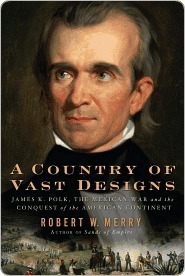
Today I'm looking at a biography of the eleventh president of the United States, James K. Polk. For many people, Polk is among many of those nineteenth century presidents that are largely forgotten. Polk may not have been a caretaker president but with the general population he usually gets lumped in with them. As Merry points out, this is somewhat odd because Polk was president during the third-largest expansion of U.S. territory during his administration, surpassed only by the Louisiana Purchase and the Alaska Purchase. Furthermore Polk managed to achieve all four of his major policy objectives within one term: reduction of tariffs, the creation of an independent treasury, negotiation of the Oregon territory, and annexation of Mexican territory. However, the fact that Polk achieved his major objective through an aggressive and blatantly imperialist war against Mexico has significantly tarnished his reputation and left his political legacy in considerable doubt. I will say that Merry is a pretty strong Polk apologist and that leaves me in some doubt.
I will give Polk some credit by managing to achieve his objectives of tariff reduction and the independent treasury. Polk faced stiff opposition from the Whigs as well as members of his own Democratic Party, revealing the deep sectional divisions hiding within the national parties. It was only through using political capital to get his legislative program accomplished. Furthermore he had to spend considerable effort quelling rebellion and insubordination within his own administration, a process that could have been simplified by removal of James Buchanan as Secretary of State. It does reveal that Polk had considerable skill as a negotiator and coordinator which certainly makes him equal with other presidents who faced equal challenges with an opposed Congress.
If Polk has a biggest flaw, it's his refusal to engage in confrontation and deal with subordinates who undermine or actively act against him. The best example of this is the aforementioned James Buchanan. This really comes to the fore with the negotiations over the boundary for Oregon. Polk was elected on a platform of ''54-40 or Fight'', the extreme boundary of the territory. Merry argues, probably correctly, that Polk adopted this extreme measure to force Britain to negotiate over the boundary, especially since previous attempts to negotiate at the 49th parallel had been rejected by the British. Although there was legitimate concern that Polk's stance would provoke war with Great Britain, Buchanan repeatedly undermined Polk's attempts by providing conflicting information to British diplomats. And when Polk managed to finally negotiate a boundary at the 49th parallel Buchanan immediately reversed course and demanded that Polk accept nothing less than 54-40. Buchanan also opposed the treaty ending the Mexican War, even after it accomplished all the goals Polk proposed. It seemed that Buchanan adopted any contrary position just to cover his own ass for his future presidential prospects.
The biggest issue around Polk is of course the Mexican-American War which was provoked through a variety of diplomatic incidents between Mexico and the United States and started Zachary Taylor and a detachment of dragoons were sent into the disputed boundary between the Rio Grande and Nueces Rivers in Texas. Taylor was attacked by Mexican troops which prompted Congress to grant Polk's request of a declaration of war. However even as the war began, Polk's Whig opponents criticized him for starting what they saw as an illegal, unconstitutional, and imperialist war and those criticisms have remained. This is the point where Merry gets most apologist for Polk, arguing in essence that while the United States provoked the war, it was in some ways justified because of Mexico's inability to meet legal reparations, their mishandling of the diplomatic overtures, and their decision to adopt a hostile stance with a larger and more powerful neighbor. I feel like this is almost a case of victim-blaming that Merry adopts, ignoring any notions Mexicans may have had of national honor offended by American treatment of their nation as inferior, just as strong as American indignation at Mexican offense of American honor. While it may have been rational for Mexico to negotiate with the United States and perhaps end up losing less territory than they did after the war, it may not have been the rational choice for a proud, nineteenth century Mexican nationalist who would rather fight than surrender unilaterally.
And if there's one topic Merry definitely avoids as it pertains to Polk it's the issue of slavery. Polk owned twenty-five slaves and was selected as a candidate for the Democratic party because of his willingness to tolerate slavery. While Polk did not take an adamant stance in favor of slavery, such as contemporary John C. Calhoun famously did, he was no abolitionist or even apologist such as Henry Clay who at least went through the motions of saying it was bad and should be removed even if Henry Clay's scheme of colonization never really worked. Merry makes absolutely no mention of Polk's slaves or his relationship with them, and Polk does not seem to have been bothered by the institution in his personal writings. At most Polk's desperate opposition of the slavery debate seems to have been an effort to keep the country united as the regional fault lines between slave and free became more obvious in the 1840s and 1850s. Furthermore, Polk's acquisition of new territory was responsible for the opening of the slavery debate because those territories had not been covered under the Missouri Compromise legislations. While some people, including Polk, supported extending the compromise legislation to the new territories, a growing abolitionist faction made a simple solution to the slavery question impossible and concerns over the status of new territories added further fuel to the flame of sectional strife.
So while I can understand and appreciate the significance of Polk's achievements as a politician and president, I still think that there's quite a lot to critique as well. Regardless of what Merry thinks, I am still of the opinion that the Mexican-American War was a war of imperialist expansion in keeping with the U.S.'s other (undeclared) wars of expansion against Native American Indian tribes. While there are parts of this book that are highly informative, I think it goes to being a little too laudatory for Polk for me to truly appreciate it.
- Kalpar
Showing posts with label Presidents. Show all posts
Tuesday, August 28, 2018
Thursday, March 31, 2016
Nellie Taft: The Unconventional First Lady of the Ragtime Era, by Carl Sferrazza Anthony
This week I'm reviewing a biography I managed to stumble across at the used bookstore about Nellie Taft, First Lady and wife of President and later Chief Justice of the Supreme Court (and Cincinnati son) William Howard Taft. I have been interested in Nellie Taft for a while after reading Goodwin's text, The Bully Pulpit in which Nellie was briefly described and she seemed like an incredibly fascinating person. Conventional would never be an adjective you could apply to Nellie during the entirety of her life and in an era when most women of her social class were expected to be wives and mothers, Nellie was driven by a desire to be much, much more. Personally I rather like this book because it offers insight into the life of one of the most vivacious First Ladies.
I'll begin with a criticism I had of the book's organization, which was one of my main concerns with the text. The book is divided into twenty chapters and a full nine of those deal with her life before becoming first lady. It begins with her childhood in Cincinnati, as well as her frustrations with the enforced idleness her class and gender brought upon her, and her rebellion expressed in a variety of ways. We then follow her as she marries Will Taft and directs his career, pushing him away from the court and towards more executive positions such as governor of the Philippines and Secretary of War. This culminates in her pushing Will and manipulating Theodore Roosevelt to achieve her ultimate ambition: the White House. Another eight chapters are spent going over the four years the Tafts spent in the White House, a combination of triumph and tragedy with the final betrayal of Roosevelt. Finally the last thirty years of Nellie's life are covered in three very brief chapters.
Personally I feel like this didn't place a lot of emphasis on Nellie's achievements after being First Lady, acting as a proponent of social reform and a frequent world traveler after Will died in 1930. Especially considering this is a book and Anthony could easily have dedicated more space to those subjects. The result makes the last thirty years of Nellie's life pass as a bit of a whirlwind. Certainly Nellie was an individual blessed with an abundance of energy and seemed to approach everything with extreme gusto, but it seems a discredit to her later years to briefly gloss over them compared to everything else. But this is ultimately a personal quibble of mine and in no way detracts from the value of the book overall.
When Nellie Taft was described to me in Bully Pulpit it was as a sort of late nineteenth century rebel. Born to an impoverished upper class family in Cincinnati, Nellie was sent to the very best schools and received a proper upbringing. However, the expectation for upper class white women at the time was marriage and motherhood, with perhaps a series of teas, luncheons, and light charity work. Nellie, however, was someone who simply could not stand the prospect of doing little to nothing and was constantly driven to seek more from her life. This resulted in her rebelling in a variety of ways.
There was of course the traditional teenage rebellion in drugs, alcohol, and gambling, Nellie developed a taste for beer and liquor, was described as an extremely good card player, and was a lifetime smoker of cigarettes. (Especially rebellious considering it wasn't ''acceptable'' for women to smoke before then Twenties.) However, her rebellion also took a far more creative path as well. Wishing to not be a financial burden to her parents, Nellie tried at various times to be a professional musician and writer, without much success, but also worked as a schoolteacher for a period of time. Although tame by today's standards, this was absolutely shocking and Nellie's mother was actually concerned Nellie might drive suitors away by being a working girl. Nellie also established salons with her friends, discussing a variety of topics which is how she met William Taft. Although she rejected him multiple times, she eventually consented to agree to marry him because he respected her as an intellectual and her demand to be an equal partner with him in all things, rather than subordinate.
For most of their marriage Nellie would be Will's greatest adviser and would help steer his career towards the White House. A significant exception is when Will took a slight detour working on the circuit courts and leaving Nellie for long periods of time in Cincinnati. Not one to remain idle, Nellie helped found and organize the Cincinnati Symphony Orchestra, still an important institution in Cincinnati today and equal to the orchestras of cities such as Boston, New York, and Philadelphia. When Will was appointed Governor of the Philippines, Nellie reveled in the position and used her influence in a variety of ways. And when she goes to the Philippines, this is where I give Nellie a ton of credit.
Unlike a majority of people of her class and background, Nellie is willing to work with and cooperate with the local cultures instead of trying to dominate. Wherever she'd go Nellie would try the food, talk with the locals, try to learn the language, and treated everyone with dignity and respect. Now of course, Nellie's egalitarianism did not extend to everyone. Anthony admits that Nellie had an extreme class prejudice and preferred to hobnob with the monied, landed, and educated class rather than the poor working class. But, where she differs from contemporaries, as Anthony points out, is that Nellie welcomes people regardless of race, creed, or gender so long as they're the right class, and makes an effort to integrate all ceremonies and events in the Philippines. Her willingness to work with local Filipino elites puts her ahead of many Americans who viewed the world with the racism endemic in the late nineteenth and early twentieth centuries. Her decision later on to include black servants at the White House, something not tolerated previously, is also a significant step forward.
Something that Anthony emphasizes is that Nellie uses her position both as wife of the governor and later First Lady to bring about social reform. In the Philippines Nellie promoted natal care programs which went a long way towards reducing infant mortality on the islands. As First Lady Nellie worked to improve working conditions for federal employees, many of whom were trapped in substandard buildings with poor light and ventilation. In addition she worked to create the park on the bank of the Potomac River where the Jefferson Memorial currently stands and was influential in beginning the planting of thousands of cherry trees in Washington, D.C. which are a major tourist attraction to this day. And in a variety of other matters, large and small, Nellie used her considerable influence with Will to bring about positive change as the First Lady, often inundated with letters from people seeking her help.
The real tragedy of all of this is that Nellie did not get to enjoy being First Lady terribly much at all. After all, Will's real ambition was the Supreme Court and it was only at Nellie's insistence that Will ran as a candidate at all. Unfortunately in May of 1909, just a few months into their four year tenure at the White House, Nellie suffered a stroke and lost control of both the right side of her body and the ability to speak. Although she eventually recovered and continued to live a full and active life, it greatly curtailed her ability to act as the First Lady and enjoy the power and privilege that came with the position. Will was emotionally devastated and left bereft of the person who had been his chief supporter and confidante for decades. Coupled with the ordinary stress of being president, Will overate constantly and fretted, reaching almost four hundred pounds which would have a long term effect on his health. And in the latter half of his administration, the Tafts dealt with the specter of a resurgent Roosevelt, which would eventually make the election of 1912 one of the bitterest in American History. However, Nellie found purpose again after leaving the White House, finally indulging herself with all of the pleasures she so often had to deny when making due with Will's salary. In her last years Nellie was a frequent world traveler, despite being over seventy years old, and remained extremely vivacious.
I will make a few comments on some other things in the book, although I'm aware I've let this post go for quite some time as it is so I'll try to keep it brief. As a Cincinnatian myself, I take an inordinate amount of pride in my city and I find it rather interesting that while Anthony says Nellie was quick to defend Cincinnati against anyone who might speak disparagingly of it, she certainly did her damndest to get the hell away from Cincinnati for the rest of her life, to the point of putting off seeing her own grandchildren because it'd mean coming to Cincinnati. Anthony also states very strenuously that Nellie was certainly not an alcoholic during her life, despite her great love of wine, beer, and liquor. Personally I feel like Anthony doth protest too much considering Nellie seems to go into great detail about what she was drinking later in life in letters to her son, Charlie. Certainly alcoholism would be a foible of Nellie's character, but it doesn't detract from her other good qualities.
Overall, I really enjoyed this book because Nellie Taft is a fascinating example of a woman rebelling against societal norms and using power and influence to bring about social change, sometimes subverting those societal norms she's rebelling against. Although not the most famous of First Ladies, she's a great example and something all future First Ladies (or perhaps I should say First Spouses) should aspire to exceed. Despite its flaws, I highly recommend this book and encourage everyone to go out and read it.
I'll begin with a criticism I had of the book's organization, which was one of my main concerns with the text. The book is divided into twenty chapters and a full nine of those deal with her life before becoming first lady. It begins with her childhood in Cincinnati, as well as her frustrations with the enforced idleness her class and gender brought upon her, and her rebellion expressed in a variety of ways. We then follow her as she marries Will Taft and directs his career, pushing him away from the court and towards more executive positions such as governor of the Philippines and Secretary of War. This culminates in her pushing Will and manipulating Theodore Roosevelt to achieve her ultimate ambition: the White House. Another eight chapters are spent going over the four years the Tafts spent in the White House, a combination of triumph and tragedy with the final betrayal of Roosevelt. Finally the last thirty years of Nellie's life are covered in three very brief chapters.
Personally I feel like this didn't place a lot of emphasis on Nellie's achievements after being First Lady, acting as a proponent of social reform and a frequent world traveler after Will died in 1930. Especially considering this is a book and Anthony could easily have dedicated more space to those subjects. The result makes the last thirty years of Nellie's life pass as a bit of a whirlwind. Certainly Nellie was an individual blessed with an abundance of energy and seemed to approach everything with extreme gusto, but it seems a discredit to her later years to briefly gloss over them compared to everything else. But this is ultimately a personal quibble of mine and in no way detracts from the value of the book overall.
When Nellie Taft was described to me in Bully Pulpit it was as a sort of late nineteenth century rebel. Born to an impoverished upper class family in Cincinnati, Nellie was sent to the very best schools and received a proper upbringing. However, the expectation for upper class white women at the time was marriage and motherhood, with perhaps a series of teas, luncheons, and light charity work. Nellie, however, was someone who simply could not stand the prospect of doing little to nothing and was constantly driven to seek more from her life. This resulted in her rebelling in a variety of ways.
There was of course the traditional teenage rebellion in drugs, alcohol, and gambling, Nellie developed a taste for beer and liquor, was described as an extremely good card player, and was a lifetime smoker of cigarettes. (Especially rebellious considering it wasn't ''acceptable'' for women to smoke before then Twenties.) However, her rebellion also took a far more creative path as well. Wishing to not be a financial burden to her parents, Nellie tried at various times to be a professional musician and writer, without much success, but also worked as a schoolteacher for a period of time. Although tame by today's standards, this was absolutely shocking and Nellie's mother was actually concerned Nellie might drive suitors away by being a working girl. Nellie also established salons with her friends, discussing a variety of topics which is how she met William Taft. Although she rejected him multiple times, she eventually consented to agree to marry him because he respected her as an intellectual and her demand to be an equal partner with him in all things, rather than subordinate.
For most of their marriage Nellie would be Will's greatest adviser and would help steer his career towards the White House. A significant exception is when Will took a slight detour working on the circuit courts and leaving Nellie for long periods of time in Cincinnati. Not one to remain idle, Nellie helped found and organize the Cincinnati Symphony Orchestra, still an important institution in Cincinnati today and equal to the orchestras of cities such as Boston, New York, and Philadelphia. When Will was appointed Governor of the Philippines, Nellie reveled in the position and used her influence in a variety of ways. And when she goes to the Philippines, this is where I give Nellie a ton of credit.
Unlike a majority of people of her class and background, Nellie is willing to work with and cooperate with the local cultures instead of trying to dominate. Wherever she'd go Nellie would try the food, talk with the locals, try to learn the language, and treated everyone with dignity and respect. Now of course, Nellie's egalitarianism did not extend to everyone. Anthony admits that Nellie had an extreme class prejudice and preferred to hobnob with the monied, landed, and educated class rather than the poor working class. But, where she differs from contemporaries, as Anthony points out, is that Nellie welcomes people regardless of race, creed, or gender so long as they're the right class, and makes an effort to integrate all ceremonies and events in the Philippines. Her willingness to work with local Filipino elites puts her ahead of many Americans who viewed the world with the racism endemic in the late nineteenth and early twentieth centuries. Her decision later on to include black servants at the White House, something not tolerated previously, is also a significant step forward.
Something that Anthony emphasizes is that Nellie uses her position both as wife of the governor and later First Lady to bring about social reform. In the Philippines Nellie promoted natal care programs which went a long way towards reducing infant mortality on the islands. As First Lady Nellie worked to improve working conditions for federal employees, many of whom were trapped in substandard buildings with poor light and ventilation. In addition she worked to create the park on the bank of the Potomac River where the Jefferson Memorial currently stands and was influential in beginning the planting of thousands of cherry trees in Washington, D.C. which are a major tourist attraction to this day. And in a variety of other matters, large and small, Nellie used her considerable influence with Will to bring about positive change as the First Lady, often inundated with letters from people seeking her help.
The real tragedy of all of this is that Nellie did not get to enjoy being First Lady terribly much at all. After all, Will's real ambition was the Supreme Court and it was only at Nellie's insistence that Will ran as a candidate at all. Unfortunately in May of 1909, just a few months into their four year tenure at the White House, Nellie suffered a stroke and lost control of both the right side of her body and the ability to speak. Although she eventually recovered and continued to live a full and active life, it greatly curtailed her ability to act as the First Lady and enjoy the power and privilege that came with the position. Will was emotionally devastated and left bereft of the person who had been his chief supporter and confidante for decades. Coupled with the ordinary stress of being president, Will overate constantly and fretted, reaching almost four hundred pounds which would have a long term effect on his health. And in the latter half of his administration, the Tafts dealt with the specter of a resurgent Roosevelt, which would eventually make the election of 1912 one of the bitterest in American History. However, Nellie found purpose again after leaving the White House, finally indulging herself with all of the pleasures she so often had to deny when making due with Will's salary. In her last years Nellie was a frequent world traveler, despite being over seventy years old, and remained extremely vivacious.
I will make a few comments on some other things in the book, although I'm aware I've let this post go for quite some time as it is so I'll try to keep it brief. As a Cincinnatian myself, I take an inordinate amount of pride in my city and I find it rather interesting that while Anthony says Nellie was quick to defend Cincinnati against anyone who might speak disparagingly of it, she certainly did her damndest to get the hell away from Cincinnati for the rest of her life, to the point of putting off seeing her own grandchildren because it'd mean coming to Cincinnati. Anthony also states very strenuously that Nellie was certainly not an alcoholic during her life, despite her great love of wine, beer, and liquor. Personally I feel like Anthony doth protest too much considering Nellie seems to go into great detail about what she was drinking later in life in letters to her son, Charlie. Certainly alcoholism would be a foible of Nellie's character, but it doesn't detract from her other good qualities.
Overall, I really enjoyed this book because Nellie Taft is a fascinating example of a woman rebelling against societal norms and using power and influence to bring about social change, sometimes subverting those societal norms she's rebelling against. Although not the most famous of First Ladies, she's a great example and something all future First Ladies (or perhaps I should say First Spouses) should aspire to exceed. Despite its flaws, I highly recommend this book and encourage everyone to go out and read it.
- Kalpar
Thursday, March 1, 2012
Ohio Presidents: A History of Mediocrity and Failure
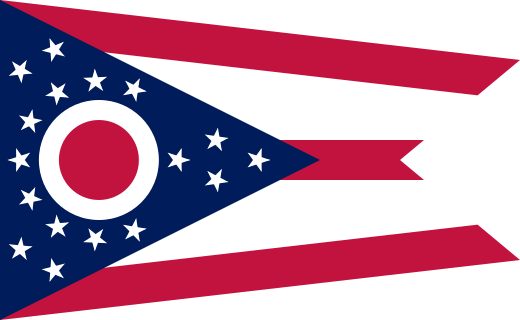
| Ohio: At least our state flag is cool... |
Surprisingly Ohio shares the title "Mother of Presidents" with Virginia. Both states have, as of writing, contributed seven men to the office of President of the United States, and we share William Henry Harrison for a total score of eight. Unfortunately while Virginia gave us presidents such as George Washington, Thomas Jefferson and James Monroe, Ohio has men like James A. Garfield, William Howard Taft and Warren G. Harding. Fully half of the presidents from Ohio died in office, and of those whose presidencies were not riddled with corruption the rest were mediocre at best. So I'll try to put a funny spin on things and be prepared for five presidents you probably never even heard of before today.
(All facts are taken from a combination of Almighty Wikipedia and the Scholastic Encyclopedia of the Presidents and Their Times by David Rubel. Images are from Wikipedia too.)
William Henry Harrison
Honestly there isn't much to say about Old Tippecanoe as president. Although originally born in Virginia, Harrison was living in Ohio when he ran for office in 1840 so both Virginia and Ohio claim him as a son, although I suspect we only do it so the other one can't claim "Mother of Presidents" undisputed. Honestly, Harrison hardly even counts as a president. He gave the longest inaugural speech in U.S. history, talking two hours in extremely cold weather, without either a hat or coat simply to prove how humble he was. Seriously, that was Harrison's platform for becoming president, "I am a man of the people, just like you. Also I killed Indians." So to prove a point he stood outside in the cold, for two hours, without a hat and coat talking at people. Now for those of you that have heard this story, you know he caught pneumonia and died. Well, apparently standing for two hours in the cold wasn't what gave him pneumonia because he didn't catch it until three weeks later. Unsurprisingly, 1840's medicine being what it was, Harrison died shortly after catching pneumonia and served a grand total of a month as president. Go team.
| Remember kids, even if you only had one month as president, somewhere, someone will erect a statue of you. |
Ulysses S. Grant
Many people view Grant as a failure of a president despite being a great general during the Civil War, and to an extent this is largely true. Many people cite Grant's life-long battle with alcoholism and the fact he got a speeding ticket while driving a horse as president. Honestly those are just drops in the bucket compared to the larger issues with Grant's presidency. To be fair, during his two terms Grant passed a series of Civil Rights legislations in an attempt to secure the rights of not only African-Americans but also American Indians. Unfortunately most of those policies were mismanaged or poorly guided and ended poorly. What really marks Grant's presidency as a failure is the number of scandals enacted by his subordinates. Grant had a tendency to put friends, relatives, and old subordinates from the Civil War in positions of authority during his presidency and refused to accept any criticism of his subordinates from outsiders. Some of Grant's subordinates, like Grant himself, were simply not cut out for political life and lacked the necessary skills. Unfortunately a significant number of his subordinates were cut out for the political life, having no consciences and a consuming desire for money, and abused their positions of power for financial gain. In 1875-76 the Attorney General, Secretary of the Interior, Secretary of War, Secretary of the Navy and Grant's own personal secretary were all involved in separate scandals. That's four positions in the presidential cabinet, plus the president's own aide, being involved in financial scandals in the space of two years. Not to mention even the post office and tax collectors were corrupt as well. Grant may have not been involved in these scandals, but the fact that many of the perpetrators were his appointees, and the fact that he seemed to have no idea what was going on in his own administration made Grant look like a bumbling incompetent.
| No, I'm sure it'll all turn out fine... |
Rutherford B. Hayes
Not to worry, though because surely the great Rutherford B. Hayes will be able to salvage Ohio's pride.
Oh...wait...no.
Let me explain. The 1876 presidential election was highly contested between the Republican Candidate, Hayes, and the Democratic Candidate Samuel J. Tilden. Both men had a reputation for being incorruptible and promised to reform the civil service system that had been so abused by Grant's subordinates. Unfortunately the election of 1876 was terribly corrupt and twenty electoral votes were left for either candidate, enough to make one president. A bi-partisan commission consisting of Representatives, Senators and Justices of the Supreme Court met to allocate the last twenty votes, however the eight Republicans of the committee suprisingly decided to give the votes to Hayes, much to the anger of the seven Democrats. As a compromise the Republicans promised to withdraw federal troops from the South and end Reconstruction. Although Hayes himself was an honest man who managed to reform some aspects of the civil service, many people viewed his election as fraudulent and gave him an overall bad public image. To his credit Hayes managed to reform the civil service, helped solve the economic crisis gripping the nation, and vetoed a bill that would restrict Chinese Immigration (Although that bill would be passed by Chester A. Arthur after Hayes's presidency. Oddly enough Arthur was an official Hayes fired for corruption.)
| "I kick you and your mutton chops with my giant right foot of justice!" |
James A. Garfield
Not to worry though, because James A. Garfield is next! He was elected fair and square to the presidency, unlike Hayes so there isn't as much of a stigmata surrounding his presidency. But wait, wasn't he involved in a significant railroad scandal in the 1860's? Will his presidency be just as corrupt as Grant's, if not more so? No! Garfield is a dedicated reformer, firing corrupt officials and pursuing any mention of corruption within his administration. Also he's supporting universal education to increase the literacy rates of African-Americans. Especially in the South where he's afraid their political freedoms are being hampered by their lack of education. Wow! It looks like Ohio might have produced a good president for once! I sure do hope he doesn't get shot by a crazy person or anything....
| GODDAMNIT! |
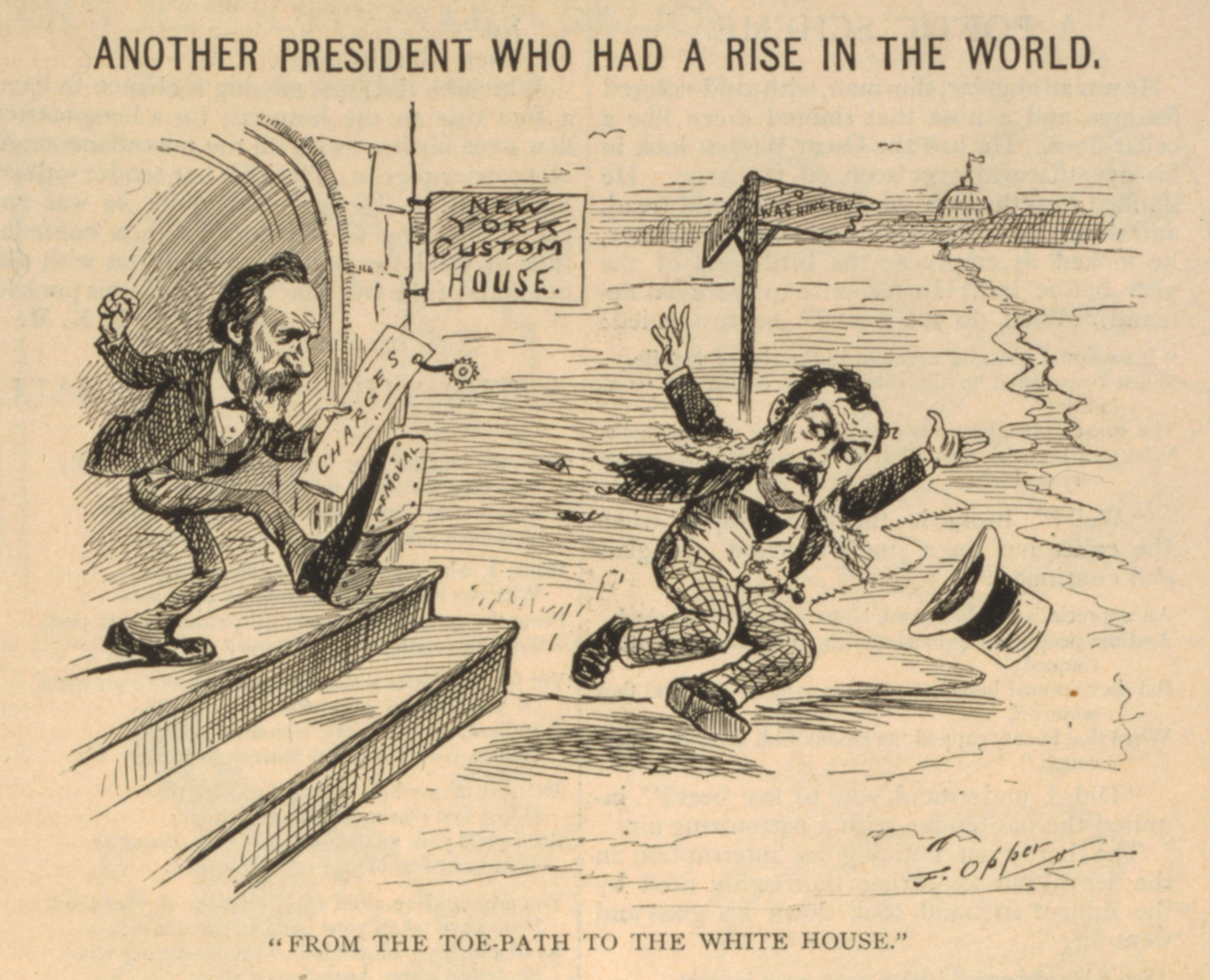
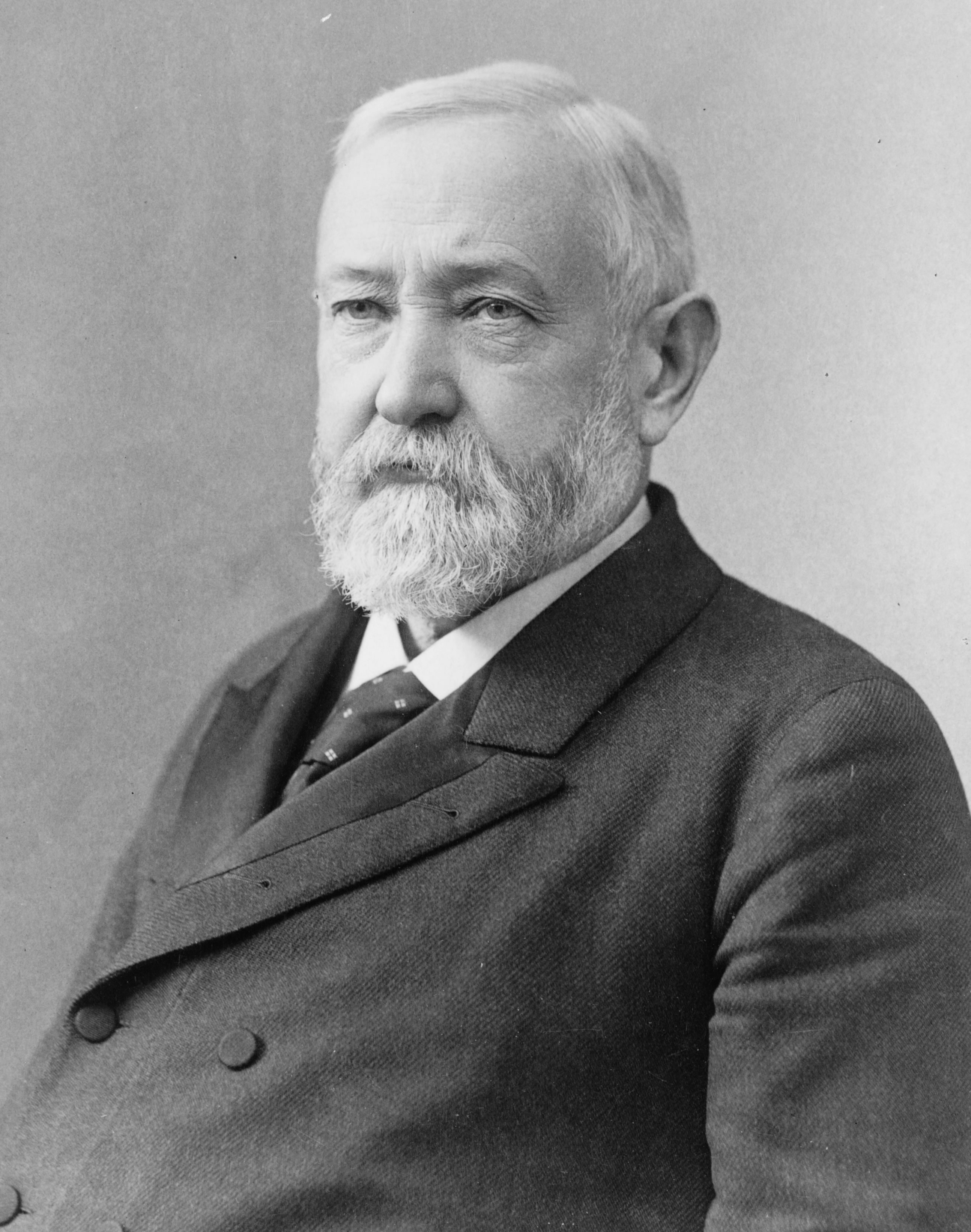
Benjamin Harrison
Benjamin Harrison is another one of those mediocre presidents. On the one hand he did some good things and wasn't corrupt. On the other hand, he annexed Hawaii. You may not think that's a bad thing, but I'll get to it. In Harrison's favor he managed to pass the Sherman Anti-Trust Act, a law which would prohibit monopolies such as Standard Oil. Granted corporate lawyers found a number of loopholes through the Sherman Anti-Trust Act and following presidents didn't really act on it, but it laid important groundwork for the trust-busting activities of Theodore Roosevelt and William Howard Taft. Harrison also created the Dependent and Disability Pensions Act which took federal surplus money and gave it to disabled Union veterans in the form of pensions, which was wildly popular, at least in the North.
Now...as for Hawaii. I'm sure I have at least one reader saying, "But Kalpar! Hawaii is a wonderful vacation spot filled with sun, surf and sand! Why would the United States ever annexing such islands be a terrible idea?" Well...let me put it like this. Hawaii was never annexed just to provide a nice vacation spot for American citizens. Hawaii was annexed for the benefit of the Dole Corporation.
| Who, these guys? Never heard of them! |
William McKinley
Within his own time period, William McKinley was insanely popular, although I am less inclined to take such a rose-tinted view of him. To be fair, McKinley and Taft are so overshadowed by Theodore Roosevelt that many of their accomplishments seem small potatoes by comparison. Overall things went fairly well during McKinley's presidency. The country recovered from the economic troubles that had plagued the nation since the Civil War, and the United States accepted the Gold Standard. How much credit McKinley can actually take for bringing the United States into an era of economic growth is disputed, considering economics seems to operate on fairy magic even at the best of times, but he took credit for it anyway. However, McKinley had a very laissez-faire policy when it came to business and many trusts continued to grow during his presidency, in spite of the Sherman Anti-Trust Act.
What is most memorable about McKinley's presidency is the Spanish-American War, which surprisingly the Americans won. The war effort was plagued by supply shortages and disorganization so it was ultimately more a testament to the disorganization of the Spanish that the Americans won at all. However the war ended quickly and the Americans got the Philippines,Guam, Puerto Rico and went ahead and annexed Hawaii for the hell of it. And delicious delicious pineapples. Overall the American public was satisfied with the results of the war and ignored the growing pacification movement in the Philippines. You see, the Filipinos were initially joyful that the Americans had come to liberate them from the Spanish. However, when they discovered that the Americans weren't going to leave anytime soon they were less than thrilled. As a result a brutal and violent pacification campaign was undertaken by the US Army. However, since it was the US Army doing the oppressing everyone back home in 1900's America thought that was a-okay. *sigh*
Anyway, with the economic and military successes of his first term, McKinley was reelected and served an even greater second term until he was forced to step down due to a permanent case of dead.
| Oh god, my pancreas! |
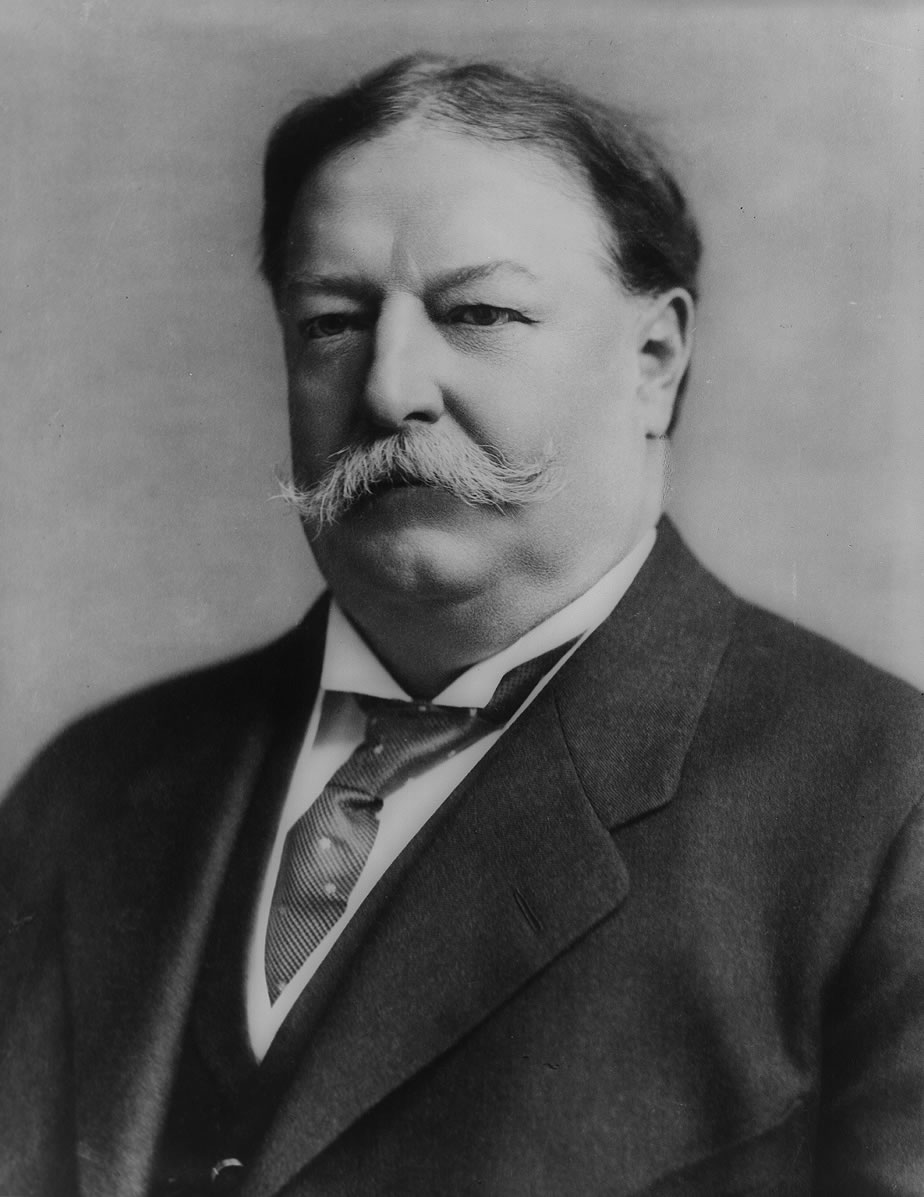
William Howard Taft
You're probably familiar with Taft since he was our heaviest president , clocking in at over 300 pounds, and got stuck in the White House bathtub. If any president suffers from a public image problem it would be Taft, but he was actually a pretty okay president. Certainly not a great president, but I would consider him to be the one president from Ohio who breaks above mediocre into good.
As president Taft continued Theodore Roosevelt's trust-busting policies and managed in one term to bust more trusts than Theodore Roosevelt had in two. Taft also helped pass a corporate income tax which increased federal revenue and removed the dependence on tariffs for income. As a result Taft increased trade agreements with Central and South America as well as Canada and China. Taft also ordered the first presidential cars and, being a native Cincinnatian, began the tradition of throwing the first pitch at the first baseball game of the year. (Go Reds!)
What hurt Taft the most, though was his public image, especially compared to Theodore Roosevelt. Taft simply did not have the same energy and force of personality as Roosevelt. TR tried to help Taft by going on a safari to Africa, but the press just followed TR and recounted his many adventures of killing animals. Despite his good policies, Taft simply could not compete with the image and personality of Roosevelt. I mean honestly, who would you rather have for president? This guy?
| ....I really can't throw for crap, can I? |
Or this guy?
| This is why no one can find Bigfoot anymore. He hunted them to extinction |
Taft really didn't stand a chance image-wise, but he was at least competent and honest, unlike the last Ohio President...
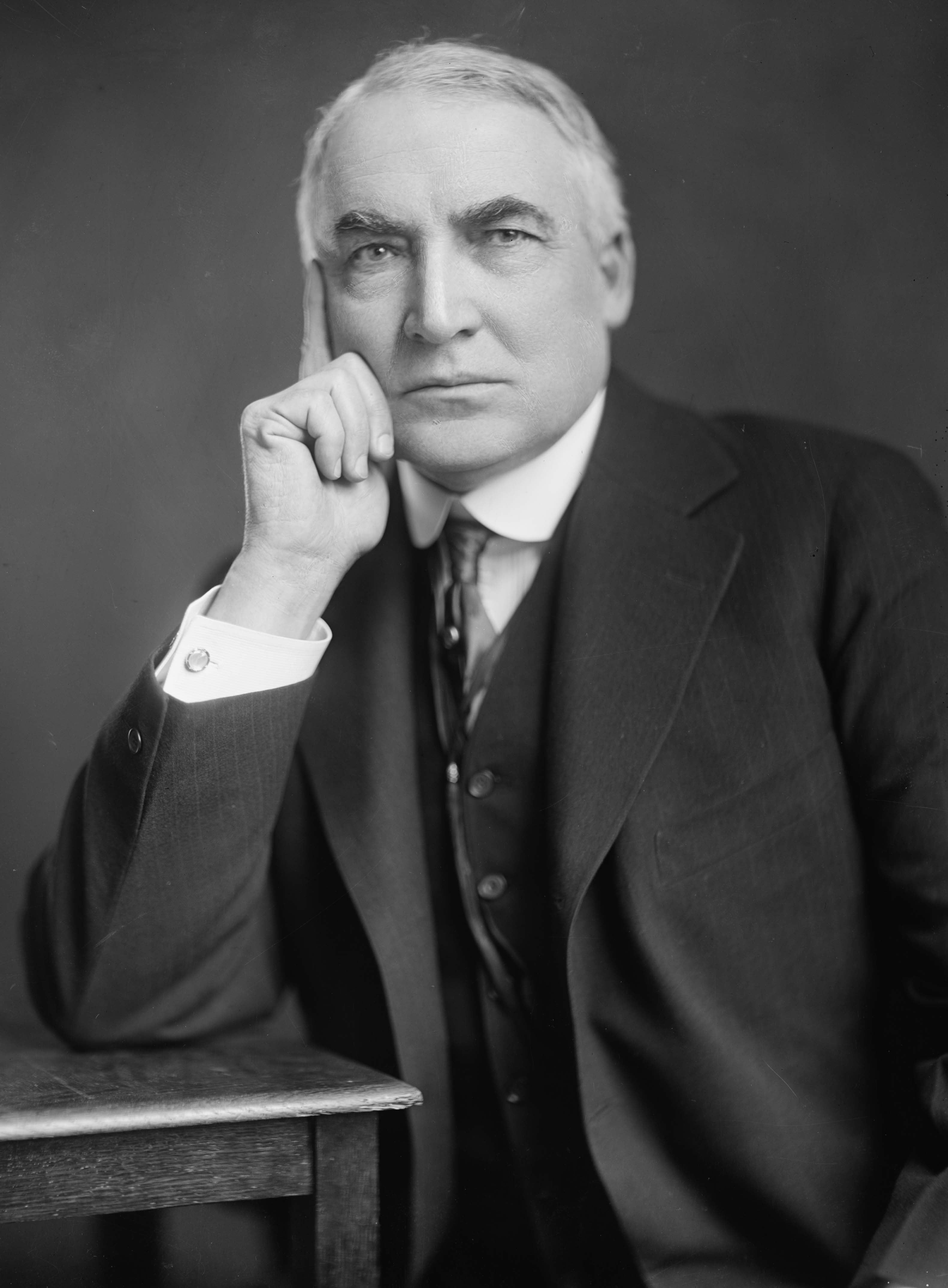
Warren G. Harding
Nah, I'm messing with you, they were corrupt as hell. Although only one scandal was publicly discovered during Harding's term, many of the members of Harding's "Ohio Gang" abused their positions of responsibility for individual gain. The Secretary of the Interior was caught taking bribes to sell of reserves of oil on government-owned land. The Attorney General took bribes from bootleggers and the Prohibition bureau was utterly corrupt. Most famous at the time was the director of Veteran's Affairs who over-charged the government for hospitals to help wounded veterans of World War I and kept the profits for himself. The American people were rather disappointed with Harding and weren't exactly eager to reelect him in 1924.
In an attempt to reconnect with the voters, Harding went on a railroad tour of the West in 1923. Unfortunately...or perhaps fortunately considering the corruption of Harding's administration, his health was not very good and the trip proved to be an incredible strain. Harding eventually fell ill and died in 1923. That's at least the official explanation and honestly the most likely explanation. I prefer the conspiracy theory because it's more interesting.
You see...Harding was a bit of a womanizer. I know his eyebrows might give you cause to doubt, but the man had two confirmed mistresses and one bastard child. Rumor has it that some of the underground tunnels connected to the White House were used by Harding to move his extramarital flings covertly. Enter Florence Harding, Warren G. Harding's wife.
| Cheat on me again, Warren, and I will cut you. |
Because Harding had died under somewhat mysterious circumstances doctors wanted to perform an autopsy, this was the president after all, but Florence declined. Some suspected that Florence got tired of Harding's infidelity and poisoned him, refusing an autopsy to cover her tracks. It was never proven of course and it seems unlikely, but you never know....
So that's the eight presidents hailing from the mediocre state of Ohio. Thanks for bearing with me and hopefully you learned something, even if it was Ohio has terrible luck when it comes to presidents.
- Kalpar
Labels:
History,
Kalpar,
Kalpar Lectures,
Ohio,
Presidents
Location:
Ohio, USA
Subscribe to:
Posts (Atom)