Today I'm looking at a biography of Ruth Bader Ginsburg, who has become a popular figure in recent years and the subject of countless internet memes. The amount of adulation around Justice Ginsburg can be somewhat surprising, considering other popular figures are usually movie stars, musicians, and other entertainers. Most people would not expect and octogenarian jurist to become the subject of internet fame on t-shirts, hats, and other popular media. But this biography proves that RBG, as she's referred to throughout the book, is well-deserving of the adulation and remains an vital figure in American civic and legal life.
This biography is fairly short, coming in at about 240 pages, so it's not an incredibly in-depth and fairly easy to read, but it leaves us with a very powerful portrait of a woman who has refused to let anything to stand in her way. RBG was born to a Jewish family in Brooklyn in 1933 and encountered many barriers as she attempted to enter the legal profession after World War II. As a married woman, a mother, and a Jew, RBG faced discrimination on multiple fronts and found it difficult or impossible to find a job. But RBG did not let any of this stop her and through determination, buckets of hard work, and a little help.
For years RBG worked tirelessly on behalf of the Women's Rights Project with the ACLU and argued several cases before the Supreme Court on the issue of women's rights. Carmon and Knizhnik show how RBG was extremely strategic in her fights for women's rights, planning gradual steps that would chip away at the edifice of patriarchy and gradually undermine the entire structure. Although large, sweeping decisions are dramatic and emotionally satisfying, they also provoke significant reactionary backlash. RBG firmly believed that a gradual approach would wash away the resistance of conservative, male judges until they finally came around to her way of thinking. RBG was also very strategic in some of her cases that she argued, using examples of how patriarchy harmed men through assumptions of gender roles. RBG believed, quite rightly, that using cases that affected men would resonate better with male justices.
Supporting RBG in her decades-long career was her husband Marty Ginsburg, who not only supported his wife pursuing a legal career, but helped take on chores at home. Most famously Marty took on the duties of cooking after an infamous incident involving a tuna casserole. Marty took great joy in becoming a world-class chef while RBG continued to work on the highest court of the land. Carmon and Knizhnik include a small sampling of the notes between the couple over the years and reveals a deep and abiding friendship and love built on mutual respect. It reveals a deeply personal side of RBG's life that is immensely touching.
The biggest change we've seen from RBG over the past decade was RBG's increasing willingness to voice her dissent and speak up. For years RBG developed a reputation as someone who didn't rock the boat and worked to create compromise. However the court has taken a hard shift to the right in recent years and begun to challenge many of the freedoms that she had fought for before the Supreme Court. As a result RBG has begun speaking out more and as the senior-most liberal has led the other three liberal justices, occasionally winning a critical fifth or sixth vote. Because of her championship for progressive causes, RBG has become an icon to many young people who believe in the same causes. Today many continue to hope that RBG will hold on at the Supreme Court and continue to fight for the rest of us.
I would highly recommend this book to everyone. As short as it is, it's a very quick read and provides great insight into probably the most influential jurist of her generation. I knew basically nothing about RBG about this, and while I now only know a little bit more it's infinitely more than I knew before.
- Kalpar
Showing posts with label American History. Show all posts
Thursday, December 6, 2018
Thursday, November 22, 2018
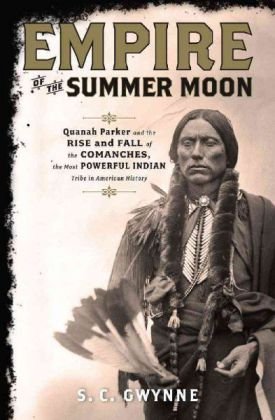
Empire of the Summer of Moon, by S.C. Gwynne
Today I'm looking at another book about Comanche history, Empire of the Summer Moon, by S.C. Gwynne. Some of my long-time readers may remember a lifetime ago when I looked at another book, Comanche Empire, and while I quibbled over the use of the term ''empire'' for what appeared to be a band of similar nomadic ethnic groups that exerted military and economic control over a vast geographic area, but I thought that Hamalainen did a pretty good job with their arguments. In Empire of the Summer Moon, however, Gwynne uses outdated methodology that reveals an underlying racist ideology which brings his whole work into question. The focus on Quanah Parker, who some people might suggest was a collaborator, further leads me to suspect this book isn't worth the effort of reading.
I know that in the last paragraph I made some pretty serious charges, but I think this is entirely justified by Gwynne's use of the terms ''primitive'' and ''civilized''. Without going into a huge lecture, basically the social sciences (history, sociology, anthropology, etc.) basically avoid using the terms primitive and civilized to describe people, societies, nations, etc. This is because the terms primitive and civilized, especially in how they were used in the nineteenth century to justify colonization and imperialism, come with inherent moral baggage. Civilization is good, primitiveness is bad and needs to be countered with the force of civilization. We're even at a point where using simple and complex to describe societies is debated because a society that appears simple may in fact be rather complex, depending on how one wishes to use the term.
At multiple points through the book, Gwynne uses the terms primitive to describe the Comanche people and pits them in conflict with white civilization. I remember two specific examples that stuck out for me. First was when Gwynne briefly talked about Comanche language he said that despite its primitive nature, it had extremely detailed descriptions of horses, such as a yellow horses with black hair and a black tail, a horse with red ears, a horse with white ears, and so on. To which I reply, of course the Comanche don't have words for concepts like plumbing or income tax. They're a nomadic hunting culture where horses are central to their way of life. Where their language is going to get precise and sophisticated is with horses, not with concepts they have no use for. Comanche language can be complex without necessarily talking about abstract ideas.
Another example is when Gwynne talks about the Comanche response to diseases such as cholera, smallpox, and syphilis which they had no previous experience dealing with. He dismisses their traditional medicine as ''primitive'' which would have had no effect on the underlying disease. Again, this is an assumption that native people are automatically primitive and white people are somehow advanced. I would like to point out by our modern standards at the time the Comanche were dealing with these illnesses, the 1850's, Western medicine was equally primitive, or perhaps even more harmful. The Comanche may not have been able to do anything about syphilis, but at least they weren't treating it with mercury pills.
On top of this, Gwynne seems to get invested in the idea of the Comanche as a warrior people. I will admit that the Comanche were extremely well trained as mounted archers, but considering their livelihood was hunting the American bison, it makes sense that they would get very, very good at mounted archery just as a matter of survival. Gwynne seems to take especial pleasure in describing the torture, murder, abduction, and rape carried out by Comanches against white settlers. While this is certainly a thing that happened, I find it frustrating when Gwynne literally glosses over the Sand Creek Massacre by merely saying that ''what happened is too terrible to speak about in detail''. To go into detail about Comanche atrocities while largely ignoring the extensive, systemic, and documented atrocities as part of the genocidal campaign of the American government does a great injustice to the cause of Native American history to merely pass over this. Coupled with his usage of the terms primitive and civilized leads me to think there is a far more racial bias in Gwynne's work.
All of this leaves me to look somewhat askance and Quanah Parker's inclusion in the book. As Gwynne depicts it, Parker seems the most responsible for encouraging the Comanche to settle on a reservation and adopt white ways of life. Because of the racial overtones in Gwynne's work, and the positive light in which Parker is depicted, I almost come to the conclusion that Parker was a collaborator with the white government in betraying his people. I don't know what the current Comanche people think about Parker, but Gwynne certainly leaves me with doubts.
Overall I would not recommend this book. Gwynne's mythology is flawed and he uses racial tones within his writing. Considering this book was written in the last ten years, that raises some serious red flags for me. If you're looking for a book about the Comanche, I would definitely go with Comanche Empire instead.
- Kalpar
I know that in the last paragraph I made some pretty serious charges, but I think this is entirely justified by Gwynne's use of the terms ''primitive'' and ''civilized''. Without going into a huge lecture, basically the social sciences (history, sociology, anthropology, etc.) basically avoid using the terms primitive and civilized to describe people, societies, nations, etc. This is because the terms primitive and civilized, especially in how they were used in the nineteenth century to justify colonization and imperialism, come with inherent moral baggage. Civilization is good, primitiveness is bad and needs to be countered with the force of civilization. We're even at a point where using simple and complex to describe societies is debated because a society that appears simple may in fact be rather complex, depending on how one wishes to use the term.
At multiple points through the book, Gwynne uses the terms primitive to describe the Comanche people and pits them in conflict with white civilization. I remember two specific examples that stuck out for me. First was when Gwynne briefly talked about Comanche language he said that despite its primitive nature, it had extremely detailed descriptions of horses, such as a yellow horses with black hair and a black tail, a horse with red ears, a horse with white ears, and so on. To which I reply, of course the Comanche don't have words for concepts like plumbing or income tax. They're a nomadic hunting culture where horses are central to their way of life. Where their language is going to get precise and sophisticated is with horses, not with concepts they have no use for. Comanche language can be complex without necessarily talking about abstract ideas.
Another example is when Gwynne talks about the Comanche response to diseases such as cholera, smallpox, and syphilis which they had no previous experience dealing with. He dismisses their traditional medicine as ''primitive'' which would have had no effect on the underlying disease. Again, this is an assumption that native people are automatically primitive and white people are somehow advanced. I would like to point out by our modern standards at the time the Comanche were dealing with these illnesses, the 1850's, Western medicine was equally primitive, or perhaps even more harmful. The Comanche may not have been able to do anything about syphilis, but at least they weren't treating it with mercury pills.
On top of this, Gwynne seems to get invested in the idea of the Comanche as a warrior people. I will admit that the Comanche were extremely well trained as mounted archers, but considering their livelihood was hunting the American bison, it makes sense that they would get very, very good at mounted archery just as a matter of survival. Gwynne seems to take especial pleasure in describing the torture, murder, abduction, and rape carried out by Comanches against white settlers. While this is certainly a thing that happened, I find it frustrating when Gwynne literally glosses over the Sand Creek Massacre by merely saying that ''what happened is too terrible to speak about in detail''. To go into detail about Comanche atrocities while largely ignoring the extensive, systemic, and documented atrocities as part of the genocidal campaign of the American government does a great injustice to the cause of Native American history to merely pass over this. Coupled with his usage of the terms primitive and civilized leads me to think there is a far more racial bias in Gwynne's work.
All of this leaves me to look somewhat askance and Quanah Parker's inclusion in the book. As Gwynne depicts it, Parker seems the most responsible for encouraging the Comanche to settle on a reservation and adopt white ways of life. Because of the racial overtones in Gwynne's work, and the positive light in which Parker is depicted, I almost come to the conclusion that Parker was a collaborator with the white government in betraying his people. I don't know what the current Comanche people think about Parker, but Gwynne certainly leaves me with doubts.
Overall I would not recommend this book. Gwynne's mythology is flawed and he uses racial tones within his writing. Considering this book was written in the last ten years, that raises some serious red flags for me. If you're looking for a book about the Comanche, I would definitely go with Comanche Empire instead.
- Kalpar
Thursday, November 8, 2018
American Pain, by John Temple
Today I'm looking at a book that explores the industry of pill mills that cropped up in recent decades in the United States, with the most flagrant examples being ''pain clinics'' in Florida. The biggest and most profitable of these was American Pain, run by Chris George, a college drop-out, convicted felon with Nazi tattoos. The pain clinics that George operated took in thousands of dollars in cash every day, deposited in garbage cans because regular tills were inadequate for the sheer quantity. Large groups of people from Appalachia would make marathon drives from out of state to purchase supplies of powerful narcotics, and make the trip back in a month. And amazingly the entire thing existed within the realm of legality due to lax laws and weak regulation.
Ordinarily you would not think that a convicted felon in his mid-twenties, whose main experience is house construction, would be able to get involved in anything resembling the medical field. Chris George got his start by selling diet pills and steroids, but a doctor got him started in the field of opioid painkillers. George merely had to rent a location, and provide the start-up money to produce something resembling a walk-in clinic. The doctor would provide their DEA license which enabled George to make purchases of oxycodone and other drugs from wholesalers and the doctor would write the prescriptions. The pain clinic could then fill the purchases in-house under the ''supervision'' of the physician. George wasn't certain that the idea would really take off, but was willing to give it a try. As patients continued coming in, packing the waiting room and stretching the line outside into the tiny parking lot, George realized they were onto something. From there the business grew by leaps and bounds until George's clinic was processing hundreds of patients in a single day, and bringing in hundreds of thousands of dollars in revenue each day as well.
Why this happened is because of a multitude of reasons, which created a perfect storm situation that allowed George and his cadre to grow absurdly wealthy on something that was (technically) legal. The first was the increase in the availability of opioids starting in the late 1990s. Prior to that period opioids were largely restricted to patients who most likely weren't going to live long enough for addiction to become an issue. However, starting in the 1990s drug manufacturers began aggressively campaigning for increased sales of opioid painkillers through a variety of methods. This included advertising campaigns with fallacious information about how new opioids were safe and non-addictive if taken ''as prescribed'', dubious or downright illegal efforts by drug representatives to encourage physicians to prescribe opioids, and lobbying of the DEA to increase annual quotas of controlled substances. (Go ahead and put a pin in that last part. We're going to come back to it later.)
In addition, Florida had fairly lax regulations regarding pain clinics and opioid prescriptions. Basically anybody who could fill out a business registration form could start up a pain clinic, regardless of their background. And any doctor, so long as they had a valid DEA license, could order and prescribe opioid painkillers. The doctors did not even have to be pain specialists, they just had to have a valid license. There were various ways that doctors could trip automatic alerts and cause increased scrutiny from the DEA and other police agencies, but generally as long as a doctor didn't prescribe more than 240 30mg doses per patient per 28 day period, they could fly under the radar.
George even went to the effort of making it appear they were a legitimate medical facility. MRI reports were required before treatment, mounds of paperwork including a pain management contract were created, and patients with obvious track marks or forged paperwork were turned away, just to give the organization a veneer of legitimacy. But it was at most a paper shield to cover everyone's ass. People could tell that this was drug-dealing, plain and simple. The fact that patients would start shooting ground-up pills in the parking lot was proof enough of that. Eventually the police did end George's operation and new legislation made setting up a pill mill more difficult, but the fact that they operated for two years in the wide open, with multiple imitators and competitors, shows how dangerously lax the regulatory environment was.
Okay, so to return to the issue of the DEA and quotas, this was my biggest takeaway from the book. Every year the various drug manufacturers submit requests to the DEA for quotas on how much of controlled substances, such as amphetamines, opioids, and other drugs, they can produce in a year. Now, the public doesn't know how much opioids a specific manufacturer is allowed to produce in a year, but the DEA does release its total for the industry as a whole. In the past 25 years, the total quota for opioids has increased dramatically. In the past ten years it's at least doubled. In the past 25, it's increased by a factor of 42. Yes. 42. For every kilogram of opioids produced in 1993, there are 42 being produced today. The question isn't how we ended up with an opioid epidemic in the United States. We're so awash in pills nowadays that the more apt question is how couldn't we?
And yet, there's something the DEA could have done. Back in the 1970s when there was concern that amphetamines were being abused, the DEA drastically cut national quotas for the drugs and severely curtailing supply. When the supply dried up, the market for amphetamines dried up as well. At any point in the past decade when people started expressing concerns about the abuse of prescription painkillers the DEA could have drastically curtailed the quotas and dried up the supply of opioids. Instead, year after year, the DEA has obligingly raised the quotas meaning, year after year, we end up with an even greater supply of opioids. If we were serious about ending the opioid epidemic in the United States we could cut the supply off at the source, and it wouldn't cost us anything we weren't already spending.
I think this book is definitely worth reading. If nothing else it reveals the core problems surrounding our current opioid crisis, an overly plentiful supply of drugs and lax regulations regarding them. I definitely recommend giving this book a read for that, as well as the true crime aspects of the story involving the American Pain clinic.
- Kalpar
Ordinarily you would not think that a convicted felon in his mid-twenties, whose main experience is house construction, would be able to get involved in anything resembling the medical field. Chris George got his start by selling diet pills and steroids, but a doctor got him started in the field of opioid painkillers. George merely had to rent a location, and provide the start-up money to produce something resembling a walk-in clinic. The doctor would provide their DEA license which enabled George to make purchases of oxycodone and other drugs from wholesalers and the doctor would write the prescriptions. The pain clinic could then fill the purchases in-house under the ''supervision'' of the physician. George wasn't certain that the idea would really take off, but was willing to give it a try. As patients continued coming in, packing the waiting room and stretching the line outside into the tiny parking lot, George realized they were onto something. From there the business grew by leaps and bounds until George's clinic was processing hundreds of patients in a single day, and bringing in hundreds of thousands of dollars in revenue each day as well.
Why this happened is because of a multitude of reasons, which created a perfect storm situation that allowed George and his cadre to grow absurdly wealthy on something that was (technically) legal. The first was the increase in the availability of opioids starting in the late 1990s. Prior to that period opioids were largely restricted to patients who most likely weren't going to live long enough for addiction to become an issue. However, starting in the 1990s drug manufacturers began aggressively campaigning for increased sales of opioid painkillers through a variety of methods. This included advertising campaigns with fallacious information about how new opioids were safe and non-addictive if taken ''as prescribed'', dubious or downright illegal efforts by drug representatives to encourage physicians to prescribe opioids, and lobbying of the DEA to increase annual quotas of controlled substances. (Go ahead and put a pin in that last part. We're going to come back to it later.)
In addition, Florida had fairly lax regulations regarding pain clinics and opioid prescriptions. Basically anybody who could fill out a business registration form could start up a pain clinic, regardless of their background. And any doctor, so long as they had a valid DEA license, could order and prescribe opioid painkillers. The doctors did not even have to be pain specialists, they just had to have a valid license. There were various ways that doctors could trip automatic alerts and cause increased scrutiny from the DEA and other police agencies, but generally as long as a doctor didn't prescribe more than 240 30mg doses per patient per 28 day period, they could fly under the radar.
George even went to the effort of making it appear they were a legitimate medical facility. MRI reports were required before treatment, mounds of paperwork including a pain management contract were created, and patients with obvious track marks or forged paperwork were turned away, just to give the organization a veneer of legitimacy. But it was at most a paper shield to cover everyone's ass. People could tell that this was drug-dealing, plain and simple. The fact that patients would start shooting ground-up pills in the parking lot was proof enough of that. Eventually the police did end George's operation and new legislation made setting up a pill mill more difficult, but the fact that they operated for two years in the wide open, with multiple imitators and competitors, shows how dangerously lax the regulatory environment was.
Okay, so to return to the issue of the DEA and quotas, this was my biggest takeaway from the book. Every year the various drug manufacturers submit requests to the DEA for quotas on how much of controlled substances, such as amphetamines, opioids, and other drugs, they can produce in a year. Now, the public doesn't know how much opioids a specific manufacturer is allowed to produce in a year, but the DEA does release its total for the industry as a whole. In the past 25 years, the total quota for opioids has increased dramatically. In the past ten years it's at least doubled. In the past 25, it's increased by a factor of 42. Yes. 42. For every kilogram of opioids produced in 1993, there are 42 being produced today. The question isn't how we ended up with an opioid epidemic in the United States. We're so awash in pills nowadays that the more apt question is how couldn't we?
And yet, there's something the DEA could have done. Back in the 1970s when there was concern that amphetamines were being abused, the DEA drastically cut national quotas for the drugs and severely curtailing supply. When the supply dried up, the market for amphetamines dried up as well. At any point in the past decade when people started expressing concerns about the abuse of prescription painkillers the DEA could have drastically curtailed the quotas and dried up the supply of opioids. Instead, year after year, the DEA has obligingly raised the quotas meaning, year after year, we end up with an even greater supply of opioids. If we were serious about ending the opioid epidemic in the United States we could cut the supply off at the source, and it wouldn't cost us anything we weren't already spending.
I think this book is definitely worth reading. If nothing else it reveals the core problems surrounding our current opioid crisis, an overly plentiful supply of drugs and lax regulations regarding them. I definitely recommend giving this book a read for that, as well as the true crime aspects of the story involving the American Pain clinic.
- Kalpar
Thursday, November 1, 2018
Democracy in Chains, by Nancy MacLean
Today I'm looking at another rather concerning book about the history of politics in the United States and how we got into the seemingly interminable mess that we now find ourselves. MacLean dug into archives from multiple universities and discovered what can only be called a conspiracy, spanning decades, and inspired by the ideological work of at least one man, James McGill Buchanan. This book is mostly a biography of Buchanan and his professional life until his break with the Koch brothers, forcing him into retirement. While I think it may be a stretch to say that Buchanan alone was responsible for the development of the radical right, I think it's fair to say that he was one of multiple influential figures who helped to shape the ideology of the modern right.
MacLean traces the origins of the modern right wing back to a key event in American history, Brown v. Board of Education, in 1954. Many southerners resisted this decision, and the fight for integration continued for many years, and is in many ways still ongoing. However, the overt resistance in places such as Arkansas and Mississippi were not as appealing to border regions such as Virginia. The wealthy, elite ruling classes of Virginia maintained control through systems such as poll taxes, literacy tests, and extreme gerrymandering to ensure their continued dominance of their respective states, without any challenge from ordinary people. Effectively, an oligarchy in all but name. The federal decision to force integration of public schools under the Fourteenth Amendment promised additional federal changes to existing power structures within the states, breaking the chokehold of the oligarchs. The oligarchs needed a method to resist, without bringing overt attention to their objectives Buchanan managed to provide a solution. Privatize the schools. If there are no public schools, then there can be no discrimination. Private schools can refuse blacks admittance, and the burden of taxes for public education can be removed in favor of people who desire education actually paying for it. And in fact, that's what Virginia did in Prince Edward County for five years, despite massive local protest. The state government overruled local school boards and closed all the public schools, leaving black children without education for five vital years.
Buchanan and many of his compatriots were committed to an ideology that sought to return the United States back to an era of absolute economic freedom, resembling the Gilded Age more than anything else. No minimum wage, no right to organize, and no government regulation. Buchanan and his allies in fact want to go even further, disdaining corporate welfare systems such as health insurance and pension plans provided through employers. If people want health insurance or retirement money, they'll have to do it themselves. The government should exist only to protect private property and to repress the masses.
Yes, that's actually an important aspect of their entire ideology, repressing the masses. See, here's the biggest paradox that Buchanan and his ilk discovered when trying to promote their ideology. It's actually unpopular among the majority of people. For the most part, people like having clean air and water, good schools for children, old age insurance, and a number of other government programs that have to be supported by taxes. As libertarians discovered in the 1950's and 1960's, coming out directly and stating a desire to return to Gilded Age laissez faire did not go over well with really any focus group at all. The solution for Buchanan and their wealthy supporters was to impose their system of economic ''freedom'' on the majority through a combination of voter suppression and outright deceit, gradually dismantling the U.S. support net and regulatory systems until the network is completely destroyed.
This is perhaps the most galling and aggravating thing about libertarian intellectuals is their absolute and total lack of any morality or concern for political freedoms, which becomes apparent in much of their writing. MacLean includes an example of one member of Buchanan's cadre who stated that if their program was successful, many Americans would have to live in slums like the favela in Rio de Janeiro, casually stating that the air and water might not be what Americans are used to, but they'd have to adapt. It's social Darwinism pure and simple, the poor are poor because of some sort of inherent failing or weakness. If they're willing to work hard, tighten their belts, and raise themselves by their bootstraps, they can get ahead through rough individualism. If they're not willing to put in the work, then nobody else should have to carry them. This cruel callousness fits perfectly with their nineteenth century ideology. So long as they're fine, the rest of the world can go straight to hell for all they care.
The picture that emerges is highly disturbing. A small cadre of the ultra-rich and their lackeys, working to simultaneously undermine support for social welfare and regulatory programs while disenfranchising the very masses that they seek to exploit. The rise of the radical right, funded by ultra-wealthy backers, has thrown the future of American democracy in doubt. We are in the midst of a class war, started by the upper classes, and they are in the process of winning because they have convinced a significant percentage of the lower classes that the class war is in their own best interest. It is only through organization and education that we'll be able to fight back against the upper classes and ensure the future of social democracy.
- Kalpar
MacLean traces the origins of the modern right wing back to a key event in American history, Brown v. Board of Education, in 1954. Many southerners resisted this decision, and the fight for integration continued for many years, and is in many ways still ongoing. However, the overt resistance in places such as Arkansas and Mississippi were not as appealing to border regions such as Virginia. The wealthy, elite ruling classes of Virginia maintained control through systems such as poll taxes, literacy tests, and extreme gerrymandering to ensure their continued dominance of their respective states, without any challenge from ordinary people. Effectively, an oligarchy in all but name. The federal decision to force integration of public schools under the Fourteenth Amendment promised additional federal changes to existing power structures within the states, breaking the chokehold of the oligarchs. The oligarchs needed a method to resist, without bringing overt attention to their objectives Buchanan managed to provide a solution. Privatize the schools. If there are no public schools, then there can be no discrimination. Private schools can refuse blacks admittance, and the burden of taxes for public education can be removed in favor of people who desire education actually paying for it. And in fact, that's what Virginia did in Prince Edward County for five years, despite massive local protest. The state government overruled local school boards and closed all the public schools, leaving black children without education for five vital years.
Buchanan and many of his compatriots were committed to an ideology that sought to return the United States back to an era of absolute economic freedom, resembling the Gilded Age more than anything else. No minimum wage, no right to organize, and no government regulation. Buchanan and his allies in fact want to go even further, disdaining corporate welfare systems such as health insurance and pension plans provided through employers. If people want health insurance or retirement money, they'll have to do it themselves. The government should exist only to protect private property and to repress the masses.
Yes, that's actually an important aspect of their entire ideology, repressing the masses. See, here's the biggest paradox that Buchanan and his ilk discovered when trying to promote their ideology. It's actually unpopular among the majority of people. For the most part, people like having clean air and water, good schools for children, old age insurance, and a number of other government programs that have to be supported by taxes. As libertarians discovered in the 1950's and 1960's, coming out directly and stating a desire to return to Gilded Age laissez faire did not go over well with really any focus group at all. The solution for Buchanan and their wealthy supporters was to impose their system of economic ''freedom'' on the majority through a combination of voter suppression and outright deceit, gradually dismantling the U.S. support net and regulatory systems until the network is completely destroyed.
This is perhaps the most galling and aggravating thing about libertarian intellectuals is their absolute and total lack of any morality or concern for political freedoms, which becomes apparent in much of their writing. MacLean includes an example of one member of Buchanan's cadre who stated that if their program was successful, many Americans would have to live in slums like the favela in Rio de Janeiro, casually stating that the air and water might not be what Americans are used to, but they'd have to adapt. It's social Darwinism pure and simple, the poor are poor because of some sort of inherent failing or weakness. If they're willing to work hard, tighten their belts, and raise themselves by their bootstraps, they can get ahead through rough individualism. If they're not willing to put in the work, then nobody else should have to carry them. This cruel callousness fits perfectly with their nineteenth century ideology. So long as they're fine, the rest of the world can go straight to hell for all they care.
The picture that emerges is highly disturbing. A small cadre of the ultra-rich and their lackeys, working to simultaneously undermine support for social welfare and regulatory programs while disenfranchising the very masses that they seek to exploit. The rise of the radical right, funded by ultra-wealthy backers, has thrown the future of American democracy in doubt. We are in the midst of a class war, started by the upper classes, and they are in the process of winning because they have convinced a significant percentage of the lower classes that the class war is in their own best interest. It is only through organization and education that we'll be able to fight back against the upper classes and ensure the future of social democracy.
- Kalpar
Thursday, October 18, 2018
White Trash: The 400 Year Untold History of Class in America, by Nancy Isenberg
Today I'm looking at the book White Trash, a book that talks about the history of class in the United States, specifically poor whites living in the American south from the early colonial era into the modern day. Throughout the centuries this underclass has has been called a number of things: waste people, clay eaters, crackers, white trash, hillbillies, and rednecks. This underclass has been consistently stereotyped as poor, lazy, sexually licentious, uneducated, and morally suspect. Isenberg illustrates that these stereotypes about poor whites, which have been extended to poor blacks as well, have been persistent through the centuries and Isenberg draws on multiple sources to make her point. Obviously covering four centuries makes this book more a broad overview than a detailed investigation but I think Isenberg does a very good job of making her points through the book.
When the United States was first colonized by England the major source of colonists, especially in regions such as Virginia, the Carolinas, and Georgia, were what were considered ''waste peoples''. England had a not insignificant population of unemployed people who, due to the harsh poor and anti-vagrancy laws of the time period, were often in and out of prisons or forced to wander from location to location. In times of war this expendable underclass were pressed into service to fight in Britain's military and in time of peace they were expected to either find work or die through starvation or on the gallows. For colonies thousands of miles across the Atlantic and with high death tolls, an expendable population made ideal candidates to be dumped in the colonies. If they died, then they wouldn't be a burden on the home country. If they managed to learn how to work and thrive, perhaps they could become of economic benefit to the mother country. This stereotype of the poor as inherently lazy and needing to be forced to work is one of the most consistent and has perpetuated to the modern era.
As the South developed into a slave economy, the underclass of poor whites developed an important racial component, which has remained an important aspect of American class and racial relations into the modern era. African-Americans and other racial minorities have been the subject of systemic racial discrimination perpetuated by white elites. The real genius of this system is that so long as the poor whites have blacks to look down upon, they willingly perpetuate the system. Poor whites are often no better off than the poor blacks, but as long as there is the feeling of superiority to someone else, they are willing to participate in the system. This is best illustrated in the rebellion of 1861 in which poor whites were overwhelmingly conscripted into insurgent forces while the rich planter class, who began the rebellion, were exempted from military service including the exemption of all individuals owning more than twenty slaves. Poor whites were the muscle that perpetuated the slavery system.
The latest trend relating to poor whites is the almost voyeuristic pleasure that American culture has taken in looking at the lives of poor, mostly Southern, whites. Isenberg specifically mentions figures like Sarah Palin and Honey Boo Boo, although the growth of popularity in the blue collar comedy group including Jeff Foxworthy and Larry the Cable Guy is definitely in the same vein. The growth of the Tea Party and its ideology, although not mentioned by Isenberg, definitely feels like a continuation of the same ideas. Poor whites are manipulated by white elites into attacking (usually) racial others and acting against their own interests for the benefit of white elites. Based on Isenberg's evidence it appears that the issues we are dealing with today is only a continuation of a centuries-long tradition.
Overall I thought this book was pretty interesting if brief and fairly shallow in its investigation of race and class relations in the United States. However Isenberg makes a consistent argument that poor whites have consistently been seen as an expendable, degenerate breed for four hundred years, useful to white elites when fighting or helping oppress other groups, but largely exploited or ignored by elites when no longer useful. I think this is a book well worth reading to gain insight into both class and race relations in the United States that has shaped political debates to this day.
- Kalpar
When the United States was first colonized by England the major source of colonists, especially in regions such as Virginia, the Carolinas, and Georgia, were what were considered ''waste peoples''. England had a not insignificant population of unemployed people who, due to the harsh poor and anti-vagrancy laws of the time period, were often in and out of prisons or forced to wander from location to location. In times of war this expendable underclass were pressed into service to fight in Britain's military and in time of peace they were expected to either find work or die through starvation or on the gallows. For colonies thousands of miles across the Atlantic and with high death tolls, an expendable population made ideal candidates to be dumped in the colonies. If they died, then they wouldn't be a burden on the home country. If they managed to learn how to work and thrive, perhaps they could become of economic benefit to the mother country. This stereotype of the poor as inherently lazy and needing to be forced to work is one of the most consistent and has perpetuated to the modern era.
As the South developed into a slave economy, the underclass of poor whites developed an important racial component, which has remained an important aspect of American class and racial relations into the modern era. African-Americans and other racial minorities have been the subject of systemic racial discrimination perpetuated by white elites. The real genius of this system is that so long as the poor whites have blacks to look down upon, they willingly perpetuate the system. Poor whites are often no better off than the poor blacks, but as long as there is the feeling of superiority to someone else, they are willing to participate in the system. This is best illustrated in the rebellion of 1861 in which poor whites were overwhelmingly conscripted into insurgent forces while the rich planter class, who began the rebellion, were exempted from military service including the exemption of all individuals owning more than twenty slaves. Poor whites were the muscle that perpetuated the slavery system.
The latest trend relating to poor whites is the almost voyeuristic pleasure that American culture has taken in looking at the lives of poor, mostly Southern, whites. Isenberg specifically mentions figures like Sarah Palin and Honey Boo Boo, although the growth of popularity in the blue collar comedy group including Jeff Foxworthy and Larry the Cable Guy is definitely in the same vein. The growth of the Tea Party and its ideology, although not mentioned by Isenberg, definitely feels like a continuation of the same ideas. Poor whites are manipulated by white elites into attacking (usually) racial others and acting against their own interests for the benefit of white elites. Based on Isenberg's evidence it appears that the issues we are dealing with today is only a continuation of a centuries-long tradition.
Overall I thought this book was pretty interesting if brief and fairly shallow in its investigation of race and class relations in the United States. However Isenberg makes a consistent argument that poor whites have consistently been seen as an expendable, degenerate breed for four hundred years, useful to white elites when fighting or helping oppress other groups, but largely exploited or ignored by elites when no longer useful. I think this is a book well worth reading to gain insight into both class and race relations in the United States that has shaped political debates to this day.
- Kalpar
Tuesday, August 28, 2018
A Country of Vast Designs, by Robert W. Merry
Today I'm looking at a biography of the eleventh president of the United States, James K. Polk. For many people, Polk is among many of those nineteenth century presidents that are largely forgotten. Polk may not have been a caretaker president but with the general population he usually gets lumped in with them. As Merry points out, this is somewhat odd because Polk was president during the third-largest expansion of U.S. territory during his administration, surpassed only by the Louisiana Purchase and the Alaska Purchase. Furthermore Polk managed to achieve all four of his major policy objectives within one term: reduction of tariffs, the creation of an independent treasury, negotiation of the Oregon territory, and annexation of Mexican territory. However, the fact that Polk achieved his major objective through an aggressive and blatantly imperialist war against Mexico has significantly tarnished his reputation and left his political legacy in considerable doubt. I will say that Merry is a pretty strong Polk apologist and that leaves me in some doubt.
I will give Polk some credit by managing to achieve his objectives of tariff reduction and the independent treasury. Polk faced stiff opposition from the Whigs as well as members of his own Democratic Party, revealing the deep sectional divisions hiding within the national parties. It was only through using political capital to get his legislative program accomplished. Furthermore he had to spend considerable effort quelling rebellion and insubordination within his own administration, a process that could have been simplified by removal of James Buchanan as Secretary of State. It does reveal that Polk had considerable skill as a negotiator and coordinator which certainly makes him equal with other presidents who faced equal challenges with an opposed Congress.
If Polk has a biggest flaw, it's his refusal to engage in confrontation and deal with subordinates who undermine or actively act against him. The best example of this is the aforementioned James Buchanan. This really comes to the fore with the negotiations over the boundary for Oregon. Polk was elected on a platform of ''54-40 or Fight'', the extreme boundary of the territory. Merry argues, probably correctly, that Polk adopted this extreme measure to force Britain to negotiate over the boundary, especially since previous attempts to negotiate at the 49th parallel had been rejected by the British. Although there was legitimate concern that Polk's stance would provoke war with Great Britain, Buchanan repeatedly undermined Polk's attempts by providing conflicting information to British diplomats. And when Polk managed to finally negotiate a boundary at the 49th parallel Buchanan immediately reversed course and demanded that Polk accept nothing less than 54-40. Buchanan also opposed the treaty ending the Mexican War, even after it accomplished all the goals Polk proposed. It seemed that Buchanan adopted any contrary position just to cover his own ass for his future presidential prospects.
The biggest issue around Polk is of course the Mexican-American War which was provoked through a variety of diplomatic incidents between Mexico and the United States and started Zachary Taylor and a detachment of dragoons were sent into the disputed boundary between the Rio Grande and Nueces Rivers in Texas. Taylor was attacked by Mexican troops which prompted Congress to grant Polk's request of a declaration of war. However even as the war began, Polk's Whig opponents criticized him for starting what they saw as an illegal, unconstitutional, and imperialist war and those criticisms have remained. This is the point where Merry gets most apologist for Polk, arguing in essence that while the United States provoked the war, it was in some ways justified because of Mexico's inability to meet legal reparations, their mishandling of the diplomatic overtures, and their decision to adopt a hostile stance with a larger and more powerful neighbor. I feel like this is almost a case of victim-blaming that Merry adopts, ignoring any notions Mexicans may have had of national honor offended by American treatment of their nation as inferior, just as strong as American indignation at Mexican offense of American honor. While it may have been rational for Mexico to negotiate with the United States and perhaps end up losing less territory than they did after the war, it may not have been the rational choice for a proud, nineteenth century Mexican nationalist who would rather fight than surrender unilaterally.
And if there's one topic Merry definitely avoids as it pertains to Polk it's the issue of slavery. Polk owned twenty-five slaves and was selected as a candidate for the Democratic party because of his willingness to tolerate slavery. While Polk did not take an adamant stance in favor of slavery, such as contemporary John C. Calhoun famously did, he was no abolitionist or even apologist such as Henry Clay who at least went through the motions of saying it was bad and should be removed even if Henry Clay's scheme of colonization never really worked. Merry makes absolutely no mention of Polk's slaves or his relationship with them, and Polk does not seem to have been bothered by the institution in his personal writings. At most Polk's desperate opposition of the slavery debate seems to have been an effort to keep the country united as the regional fault lines between slave and free became more obvious in the 1840s and 1850s. Furthermore, Polk's acquisition of new territory was responsible for the opening of the slavery debate because those territories had not been covered under the Missouri Compromise legislations. While some people, including Polk, supported extending the compromise legislation to the new territories, a growing abolitionist faction made a simple solution to the slavery question impossible and concerns over the status of new territories added further fuel to the flame of sectional strife.
So while I can understand and appreciate the significance of Polk's achievements as a politician and president, I still think that there's quite a lot to critique as well. Regardless of what Merry thinks, I am still of the opinion that the Mexican-American War was a war of imperialist expansion in keeping with the U.S.'s other (undeclared) wars of expansion against Native American Indian tribes. While there are parts of this book that are highly informative, I think it goes to being a little too laudatory for Polk for me to truly appreciate it.
- Kalpar
I will give Polk some credit by managing to achieve his objectives of tariff reduction and the independent treasury. Polk faced stiff opposition from the Whigs as well as members of his own Democratic Party, revealing the deep sectional divisions hiding within the national parties. It was only through using political capital to get his legislative program accomplished. Furthermore he had to spend considerable effort quelling rebellion and insubordination within his own administration, a process that could have been simplified by removal of James Buchanan as Secretary of State. It does reveal that Polk had considerable skill as a negotiator and coordinator which certainly makes him equal with other presidents who faced equal challenges with an opposed Congress.
If Polk has a biggest flaw, it's his refusal to engage in confrontation and deal with subordinates who undermine or actively act against him. The best example of this is the aforementioned James Buchanan. This really comes to the fore with the negotiations over the boundary for Oregon. Polk was elected on a platform of ''54-40 or Fight'', the extreme boundary of the territory. Merry argues, probably correctly, that Polk adopted this extreme measure to force Britain to negotiate over the boundary, especially since previous attempts to negotiate at the 49th parallel had been rejected by the British. Although there was legitimate concern that Polk's stance would provoke war with Great Britain, Buchanan repeatedly undermined Polk's attempts by providing conflicting information to British diplomats. And when Polk managed to finally negotiate a boundary at the 49th parallel Buchanan immediately reversed course and demanded that Polk accept nothing less than 54-40. Buchanan also opposed the treaty ending the Mexican War, even after it accomplished all the goals Polk proposed. It seemed that Buchanan adopted any contrary position just to cover his own ass for his future presidential prospects.
The biggest issue around Polk is of course the Mexican-American War which was provoked through a variety of diplomatic incidents between Mexico and the United States and started Zachary Taylor and a detachment of dragoons were sent into the disputed boundary between the Rio Grande and Nueces Rivers in Texas. Taylor was attacked by Mexican troops which prompted Congress to grant Polk's request of a declaration of war. However even as the war began, Polk's Whig opponents criticized him for starting what they saw as an illegal, unconstitutional, and imperialist war and those criticisms have remained. This is the point where Merry gets most apologist for Polk, arguing in essence that while the United States provoked the war, it was in some ways justified because of Mexico's inability to meet legal reparations, their mishandling of the diplomatic overtures, and their decision to adopt a hostile stance with a larger and more powerful neighbor. I feel like this is almost a case of victim-blaming that Merry adopts, ignoring any notions Mexicans may have had of national honor offended by American treatment of their nation as inferior, just as strong as American indignation at Mexican offense of American honor. While it may have been rational for Mexico to negotiate with the United States and perhaps end up losing less territory than they did after the war, it may not have been the rational choice for a proud, nineteenth century Mexican nationalist who would rather fight than surrender unilaterally.
And if there's one topic Merry definitely avoids as it pertains to Polk it's the issue of slavery. Polk owned twenty-five slaves and was selected as a candidate for the Democratic party because of his willingness to tolerate slavery. While Polk did not take an adamant stance in favor of slavery, such as contemporary John C. Calhoun famously did, he was no abolitionist or even apologist such as Henry Clay who at least went through the motions of saying it was bad and should be removed even if Henry Clay's scheme of colonization never really worked. Merry makes absolutely no mention of Polk's slaves or his relationship with them, and Polk does not seem to have been bothered by the institution in his personal writings. At most Polk's desperate opposition of the slavery debate seems to have been an effort to keep the country united as the regional fault lines between slave and free became more obvious in the 1840s and 1850s. Furthermore, Polk's acquisition of new territory was responsible for the opening of the slavery debate because those territories had not been covered under the Missouri Compromise legislations. While some people, including Polk, supported extending the compromise legislation to the new territories, a growing abolitionist faction made a simple solution to the slavery question impossible and concerns over the status of new territories added further fuel to the flame of sectional strife.
So while I can understand and appreciate the significance of Polk's achievements as a politician and president, I still think that there's quite a lot to critique as well. Regardless of what Merry thinks, I am still of the opinion that the Mexican-American War was a war of imperialist expansion in keeping with the U.S.'s other (undeclared) wars of expansion against Native American Indian tribes. While there are parts of this book that are highly informative, I think it goes to being a little too laudatory for Polk for me to truly appreciate it.
- Kalpar
Thursday, August 23, 2018
Six Frigates: The Epic History of the Founding of the U.S. Navy, by Ian W. Toll
Today I'm looking at a history of the United States Navy in its earliest era from its founding during George Washington's administration through the War of 1812. For much of this period the existence of the navy was very much in doubt. The early United States had a strong distaste for standing military forces, and this included naval forces. In addition to the great expense involved in maintaining a naval force, many Americans believed a navy would only lead to further conflicts with European powers. Some Americans much preferred the use of privateers, much like the American militia system, to meet America's security needs than a large standing army.
The need for an American navy became apparent, however, due to conflict with the Barbary States and the Revolutionary and Napoleonic Wars in Europe. The conflict with the Barbary states is gone into much greater detail in another book I read, Thomas Jefferson and the Tripoli Pirates. While this book spends at least a decent portion talking about the Barbary States since it's an examination of the Navy as a whole it also explores the Quasi-war and the War of 1812 which further emphasized the need for a navy.
From the beginning the leaders of the United States realized that a large navy with ships of the line modeled along European lines would not be sustainable with the resources that the United States possessed. The initial plan in 1794 called for six frigates, four heavy and two light, constructed at six different shipyards through the United States. The main designer Joshua Humphreys, planned the frigates on designs that would make them heavier, stronger, and better-armed than British and French frigates, but also make them fast enough to still evade ships of the line against which the frigate would be hopelessly outmatched. The result, proved eventually in the War of 1812, was that the American frigates could go toe-to-toe (or more accurately yardarm-to-yardarm) with British frigates and in many cases still win.
The amazing thing is that the Navy managed to survive despite almost being dissolved numerous times. It seems to be a consistent policy that when war is looming, the United States went through a flurry of trying to get ships together and ready to fight, but once a treaty has been made and peace declared the United States decides to mothball its frigates and furlough its officers, squandering valuable institutional experience in the interim. Only to have to bring the ships back up to fighting trim when the next round of hostilities opened. In some ways it's amazing that the navy managed to survive until the War of 1812.
If the War of 1812 did anything, it proved that the navy was a necessary element for national defense and that the United States could, and would, stand up against British naval power and win. Compared to the debacles of the various attempted invasions of Canada and the disgrace of Washington D. C. being burned by redcoats, the multiple victories at sea against the best navy in the world dramatically boosted American morale. Naval commanders such as Stephen Decatur and Oliver Hazard Perry became household names and lithographs of the nation's frigates became popular decorations. After the war ended, support and funding for the navy remained strong and the United States navy continued to grow.
Overall I thought this book was interesting, if fairly brief. It's at best a brief overview of the history of the U.S. navy for its first twenty years of its existence. Because I did a report on the Battle of Lake Erie in seventh grade, I did a ton of research on the early navy so I vaguely remembered quite a few of the events described in this book. But if you're looking for a brief history this is definitely a good choice and worth the effort.
- Kalpar
The need for an American navy became apparent, however, due to conflict with the Barbary States and the Revolutionary and Napoleonic Wars in Europe. The conflict with the Barbary states is gone into much greater detail in another book I read, Thomas Jefferson and the Tripoli Pirates. While this book spends at least a decent portion talking about the Barbary States since it's an examination of the Navy as a whole it also explores the Quasi-war and the War of 1812 which further emphasized the need for a navy.
From the beginning the leaders of the United States realized that a large navy with ships of the line modeled along European lines would not be sustainable with the resources that the United States possessed. The initial plan in 1794 called for six frigates, four heavy and two light, constructed at six different shipyards through the United States. The main designer Joshua Humphreys, planned the frigates on designs that would make them heavier, stronger, and better-armed than British and French frigates, but also make them fast enough to still evade ships of the line against which the frigate would be hopelessly outmatched. The result, proved eventually in the War of 1812, was that the American frigates could go toe-to-toe (or more accurately yardarm-to-yardarm) with British frigates and in many cases still win.
The amazing thing is that the Navy managed to survive despite almost being dissolved numerous times. It seems to be a consistent policy that when war is looming, the United States went through a flurry of trying to get ships together and ready to fight, but once a treaty has been made and peace declared the United States decides to mothball its frigates and furlough its officers, squandering valuable institutional experience in the interim. Only to have to bring the ships back up to fighting trim when the next round of hostilities opened. In some ways it's amazing that the navy managed to survive until the War of 1812.
If the War of 1812 did anything, it proved that the navy was a necessary element for national defense and that the United States could, and would, stand up against British naval power and win. Compared to the debacles of the various attempted invasions of Canada and the disgrace of Washington D. C. being burned by redcoats, the multiple victories at sea against the best navy in the world dramatically boosted American morale. Naval commanders such as Stephen Decatur and Oliver Hazard Perry became household names and lithographs of the nation's frigates became popular decorations. After the war ended, support and funding for the navy remained strong and the United States navy continued to grow.
Overall I thought this book was interesting, if fairly brief. It's at best a brief overview of the history of the U.S. navy for its first twenty years of its existence. Because I did a report on the Battle of Lake Erie in seventh grade, I did a ton of research on the early navy so I vaguely remembered quite a few of the events described in this book. But if you're looking for a brief history this is definitely a good choice and worth the effort.
- Kalpar
Tuesday, July 17, 2018
An Indigenous Peoples' History of the United States, by Roxanne Dunbar-Ortiz
Today I'm looking at a history book by Roxanne Dunbar-Ortiz that seeks to redress the problem of Native Americans, (alternately called American Indians, the First Peoples, or Indigenous Peoples), who are largely written out of standard American history and when they are included at all it is an entirely inadequate representation of the peoples and cultures. This book is not an exhaustive exploration of the indigenous people who lived in the United States. That would be a difficult if not impossible task for a number of reasons including a scarcity of surviving written and archaeological records, often wantonly destroyed by European colonialists, and because the sheer number of Indigenous nations that populated the modern United States. This book focuses largely, instead, on the policy of the Anglo-American settlers starting with the colonies of Jamestown and Plymouth going into the twenty-first century. Dunbar-Ortiz makes a compelling argument that the United States has, and continues to pursue, a policy of genocide against American Indians through a variety of methods and provides suggestions on how to remedy this state of affairs.
Throughout this book Dunbar-Ortiz utilizes the definitions of the United Nations Convention on the Prevention and Punishment of the Crime of Genocide as her rubric for defining genocide. Although most people usually associate genocide with the wholesale killing of members of an ethnic group or religion, such as in the Holocaust, the UN Convention includes within its definition the forced transfer of children out of an ethnic group, preventing births within the group, and imposing conditions of hardship on groups calculated to bring about their destruction. Although she uses the term retroactively from its creation, by the modern definition the actions of European colonials from their first contact with American Indians matches the textbook definition of genocide.
Dunbar-Ortiz catalogues the methods utilized by European colonists from the overt to the more insidious as a series of tools utilized through five centuries to wage an ongoing genocide against indigenous peoples. Regular warfare, smallpox, liquor, and the practices of head-hunting and scalping factor heavily in the early years of European contact with American Indians. The only point of concern I actually had at this point was Dunbar-Ortiz's assertion that smallpox could not have killed 90% of the population of the Americas. The current historical consensus is that the total population for the Americas was as high as 100 million people, but around 90% of those died of diseases carried by Europeans that American Indians had no resistance to. Smallpox is often pointed to as the biggest, but blame is also assigned to diseases such as measles, typhoid, diptheria, and pertussis which could have had equally high mortality rates. Dunbar-Ortiz argues it's highly improbable that diseases could have wiped out such a great chunk of the population, but admits that they had their effect. Obviously the evidence available to historians is highly fragmentary so a definitive answer is unlikely.
Aside from the obvious methods utilized by Europeans, Dunbar-Ortiz explores some of the less overt but equally deadly methods Anglo-Americans used to try and wipe out indigenous nations. She places a good deal of emphasis on trade, where natives could provide goods (usually pelts) to whites, and whites would offer food, tools, clothing, firearms, and most dangerously liquor in exchange. By replacing traditional crafts with European-manufactured goods, whites made native communities dependent on trade for their continued survival, providing a powerful lever against native communities. This became even more overt with the American reservation system where many natives were dependent on government supplies to provide food, clothing, and other basic necessities just to survive.
Another horrific practice was the means of ''educating'' native peoples ranging from the Spanish mission system to the infamous Indian Academies of the United States, typified by Carlisle. In these cases young children were ripped away from their families and sent to live in distant boarding schools. Their hair was cut, they were forbidden from speaking in their native tongue or practicing their own religions, and severely beaten for any infractions. This was a concentrated effort by Europeans to force natives to adapt to the dominant Anglo-American culture and did untold damage to the life of native communities in the United States.
Even as recently as the mid-twentieth centuries there have been attempts by the American government to renege on agreements with Native American nations, many of whom had sovereign status recognized in treaties signed with the United States government. Native communities have resisted such efforts to strip them of their rights, but obviously with mixed results. Even issues as recent as the Dakota Access Pipeline underscore the struggle Indian communities still face when dealing with the federal and state governments. However, because there are only around five million American Indians in the United States (making approximately 1.6% of the population), it is unlikely they alone will be able to force change. Dunbar-Ortiz says that it will require African-Americans, Hispanics, and Euro-Americans to cooperate as allies for American Indian communities and allow native voices to be heard. American Indians will speak for themselves, but it's the rest of us that have to be willing to listen.
On a final note, I thought it was interesting in how Dunbar-Ortiz talks about the American Army and how it owes its existence to the need of the American Government to kill Indians and make room for European colonization. The oldest units of the American Army can trace their origins to units in the Regular Army whose ''peacetime'' purpose was to expand the frontier and kill and control Indians. Dunbar-Ortiz even illustrates how the American colonial project, the expansion and domination of the North American continent, made use of colonial troops in the guise of the Buffalo Soldiers, African-Americans enlisted in the regular army and deployed in the Western Frontier to fight Indians. To this day, the American Army refers to territory behind enemy lines as ''Indian Country'', part of the Army's institutional heritage fighting native nations.
I definitely think this book is worth a read because of how Dunbar-Ortiz shifts the perspective and provides an in-depth explanation of how American colonialism continues to affect native communities.
- Kalpar
Throughout this book Dunbar-Ortiz utilizes the definitions of the United Nations Convention on the Prevention and Punishment of the Crime of Genocide as her rubric for defining genocide. Although most people usually associate genocide with the wholesale killing of members of an ethnic group or religion, such as in the Holocaust, the UN Convention includes within its definition the forced transfer of children out of an ethnic group, preventing births within the group, and imposing conditions of hardship on groups calculated to bring about their destruction. Although she uses the term retroactively from its creation, by the modern definition the actions of European colonials from their first contact with American Indians matches the textbook definition of genocide.
Dunbar-Ortiz catalogues the methods utilized by European colonists from the overt to the more insidious as a series of tools utilized through five centuries to wage an ongoing genocide against indigenous peoples. Regular warfare, smallpox, liquor, and the practices of head-hunting and scalping factor heavily in the early years of European contact with American Indians. The only point of concern I actually had at this point was Dunbar-Ortiz's assertion that smallpox could not have killed 90% of the population of the Americas. The current historical consensus is that the total population for the Americas was as high as 100 million people, but around 90% of those died of diseases carried by Europeans that American Indians had no resistance to. Smallpox is often pointed to as the biggest, but blame is also assigned to diseases such as measles, typhoid, diptheria, and pertussis which could have had equally high mortality rates. Dunbar-Ortiz argues it's highly improbable that diseases could have wiped out such a great chunk of the population, but admits that they had their effect. Obviously the evidence available to historians is highly fragmentary so a definitive answer is unlikely.
Aside from the obvious methods utilized by Europeans, Dunbar-Ortiz explores some of the less overt but equally deadly methods Anglo-Americans used to try and wipe out indigenous nations. She places a good deal of emphasis on trade, where natives could provide goods (usually pelts) to whites, and whites would offer food, tools, clothing, firearms, and most dangerously liquor in exchange. By replacing traditional crafts with European-manufactured goods, whites made native communities dependent on trade for their continued survival, providing a powerful lever against native communities. This became even more overt with the American reservation system where many natives were dependent on government supplies to provide food, clothing, and other basic necessities just to survive.
Another horrific practice was the means of ''educating'' native peoples ranging from the Spanish mission system to the infamous Indian Academies of the United States, typified by Carlisle. In these cases young children were ripped away from their families and sent to live in distant boarding schools. Their hair was cut, they were forbidden from speaking in their native tongue or practicing their own religions, and severely beaten for any infractions. This was a concentrated effort by Europeans to force natives to adapt to the dominant Anglo-American culture and did untold damage to the life of native communities in the United States.
Even as recently as the mid-twentieth centuries there have been attempts by the American government to renege on agreements with Native American nations, many of whom had sovereign status recognized in treaties signed with the United States government. Native communities have resisted such efforts to strip them of their rights, but obviously with mixed results. Even issues as recent as the Dakota Access Pipeline underscore the struggle Indian communities still face when dealing with the federal and state governments. However, because there are only around five million American Indians in the United States (making approximately 1.6% of the population), it is unlikely they alone will be able to force change. Dunbar-Ortiz says that it will require African-Americans, Hispanics, and Euro-Americans to cooperate as allies for American Indian communities and allow native voices to be heard. American Indians will speak for themselves, but it's the rest of us that have to be willing to listen.
On a final note, I thought it was interesting in how Dunbar-Ortiz talks about the American Army and how it owes its existence to the need of the American Government to kill Indians and make room for European colonization. The oldest units of the American Army can trace their origins to units in the Regular Army whose ''peacetime'' purpose was to expand the frontier and kill and control Indians. Dunbar-Ortiz even illustrates how the American colonial project, the expansion and domination of the North American continent, made use of colonial troops in the guise of the Buffalo Soldiers, African-Americans enlisted in the regular army and deployed in the Western Frontier to fight Indians. To this day, the American Army refers to territory behind enemy lines as ''Indian Country'', part of the Army's institutional heritage fighting native nations.
I definitely think this book is worth a read because of how Dunbar-Ortiz shifts the perspective and provides an in-depth explanation of how American colonialism continues to affect native communities.
- Kalpar
Thursday, June 28, 2018
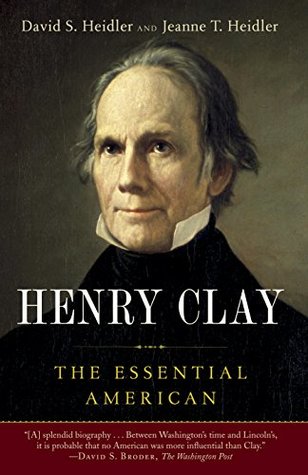
Henry Clay: The Essential American, by David S. Heidler and Jeanne T. Heidler
Today I'm looking at a biography of Henry Clay, one of the most prominent statesmen of the early American Republic. With John C. Calhoun and Daniel Webster, Henry Clay formed a triumvirate that represented the political and sectional differences of the United States. For nearly forty years they held positions of high office in the United States and held the country together. When the three giants died in the early 1850's, America was aware that it was the end of an age and it would only be a few years until the Slaveholders' Rebellion would tear the nation apart. But even in his dying days Clay labored to keep the country together.
Clay had a long and varied career, serving in the House of Representatives, becoming Speaker, being a commissioner in Ghent that formed the treaty that ended the War of 1812, Secretary of State, and finally Senator. Clay left an indelible mark on the United States both metaphorically and very literally with actions such as the Missouri Compromise of 1820. Clay's most enduring power was to marshal votes, create majorities, and form a consensus despite the incredibly fluid nature of American politics. Despite there being only one or two political parties during Clay's lifetime a person's political ideas were less likely to be dependent on party and more likely to depend on geographic location and economic background. So it was probably easier for Clay to form bipartisan measures in his era than in our own.
Clay's most enduring project was what he called the American System, a program that would promote American development through a variety of measures. Specifically Clay advocated for a protective tariff to stimulate American industry, internal improvements including canals, roads, and later railroads to stimulate trade, and a central bank to ensure a stable currency. Clay made some progress with at least the tariff and funding internal improvements but due to the rise of Jacksonian democracy Clay never succeeded in creating a central bank and reforms to banking would have to wait until Salmon P. Chase's tenure as Secretary of the Treasury.
I think the most frustrating thing about Henry Clay is he spent a lifetime perched on the fence in regards to slavery and perhaps no other person than Clay personally represented the dilemma America faced. Clay owned slaves and personally detested the institution of slavery, but also opposed the platform of abolition and immediate emancipation. Clay spent a lifetime as president of the American Colonization Society, an organization that sought to neatly solve the problem of slavery by gradually emancipating slaves and sending them back to somewhere in Africa and completely sidestepping the issue of racial relations in the United States. Colonization as a plan was never practical for a variety of problems. First, colonization never attracted sufficient money to emancipate and transport slaves in any practical means, so it remained a minor solution at best. Second, the timeline for emancipation and colonization was theoretical at best, inevitably pushing the problem to some later date when increases in population would make slavery unnecessary. Finally, colonization never took the opinions of the slaves themselves into consideration either. African-Americans, all of whom at this point were born in America, knew nothing about Africa and had no desire to be sent there and they had no desire to be sent anywhere else. The Colonization Society perfectly matched Clay's attitudes on slavery, an attempt to ignore the problem and hope to solve it at some later date while it grew to be a problem that almost tore the country apart.
Clay is an interesting individual and was at the center of every political issue during the first half of the nineteenth century, even with his individual failings. If you seek to understand politics of the early Republic and the antebellum era, this is an excellent book to read.
- Kalpar
Clay had a long and varied career, serving in the House of Representatives, becoming Speaker, being a commissioner in Ghent that formed the treaty that ended the War of 1812, Secretary of State, and finally Senator. Clay left an indelible mark on the United States both metaphorically and very literally with actions such as the Missouri Compromise of 1820. Clay's most enduring power was to marshal votes, create majorities, and form a consensus despite the incredibly fluid nature of American politics. Despite there being only one or two political parties during Clay's lifetime a person's political ideas were less likely to be dependent on party and more likely to depend on geographic location and economic background. So it was probably easier for Clay to form bipartisan measures in his era than in our own.
Clay's most enduring project was what he called the American System, a program that would promote American development through a variety of measures. Specifically Clay advocated for a protective tariff to stimulate American industry, internal improvements including canals, roads, and later railroads to stimulate trade, and a central bank to ensure a stable currency. Clay made some progress with at least the tariff and funding internal improvements but due to the rise of Jacksonian democracy Clay never succeeded in creating a central bank and reforms to banking would have to wait until Salmon P. Chase's tenure as Secretary of the Treasury.
I think the most frustrating thing about Henry Clay is he spent a lifetime perched on the fence in regards to slavery and perhaps no other person than Clay personally represented the dilemma America faced. Clay owned slaves and personally detested the institution of slavery, but also opposed the platform of abolition and immediate emancipation. Clay spent a lifetime as president of the American Colonization Society, an organization that sought to neatly solve the problem of slavery by gradually emancipating slaves and sending them back to somewhere in Africa and completely sidestepping the issue of racial relations in the United States. Colonization as a plan was never practical for a variety of problems. First, colonization never attracted sufficient money to emancipate and transport slaves in any practical means, so it remained a minor solution at best. Second, the timeline for emancipation and colonization was theoretical at best, inevitably pushing the problem to some later date when increases in population would make slavery unnecessary. Finally, colonization never took the opinions of the slaves themselves into consideration either. African-Americans, all of whom at this point were born in America, knew nothing about Africa and had no desire to be sent there and they had no desire to be sent anywhere else. The Colonization Society perfectly matched Clay's attitudes on slavery, an attempt to ignore the problem and hope to solve it at some later date while it grew to be a problem that almost tore the country apart.
Clay is an interesting individual and was at the center of every political issue during the first half of the nineteenth century, even with his individual failings. If you seek to understand politics of the early Republic and the antebellum era, this is an excellent book to read.
- Kalpar
Tuesday, May 29, 2018
The President is a Sick Man, by Matthew Alego
Today I'm looking at a book about Grover Cleveland, a president that most people only know because of his election to two non-consecutive terms, a feat which today remains unrepeated. This book talks about a secret operation that was performed on Grover Cleveland to remove cancerous cells from the president's mouth in the summer of 1893. Because of the impending debate over repeal of the Silver Purchase Act as well as the ongoing economic depression, secrecy of the operation was considered paramount for the good of the country. However word soon leaked about Cleveland's operation and a reporter named E.J. Edwards revealed the information in a fairly tame article, drawing ire from Cleveland and his doctors. Despite his reputation for integrity, Cleveland and his aides categorically denied that Cleveland had anything more than some bad teeth removed and E.J. Edward's article was dismissed as a hoax. It would not be until twenty-five years later that William Keen, the leading surgeon, finally admitted the operation had been performed.
I have some issues with this book, and I think it's mostly because there are points where Algeo goes onto tangents to talk about subjects that really don't contribute to the subject matter and I suspect that was to pad out the length of the book. I think Algeo also blows the secrecy surrounding Cleveland's operation out of proportion by comparing it to conspiracies like Watergate. The result is a book that's adequate from a research perspective but Alego's historical arguments don't really work.
Alego does an adequate job talking about the historical facts and providing relevant historical context, such as including the history of the antiseptic movement which dramatically increased the survival rate of surgery patients after its adoption and which probably helped save Cleveland's life because his doctors followed antiseptic protocol. Alego also talks about the silver debate and the importance attached to repealing the Silver Purchase Act as an attempt to rectify the Panic of 1893. For modern audiences, it can be difficult to understand the importance of the money question and how it caused divisions even within the Democratic and Republican parties. Cleveland's Vice-President, Adlai Stevenson, was a staunch silverite and would never have approved a repeal of the Silver Purchase Act. If word that Cleveland wasn't well it would have significantly undermined his political power and given the silverites the motivation to hold out.
However, Alego spends a significant amount of time talking about other subjects which have little to no relevance to the book and feel obviously used to pad out the length of the book. There are at least a couple of passages that could definitely have been removed without losing anything substantive to the book. Among these was when Alego took time talking about the history of men's facial hair in the late nineteenth and early twentieth century until the development of the safety razor, and going so far as to categorize the facial hair of each president who had facial hair. Alego also blames Cleveland's response to the Pullman Strike (sending in federal troops to violently put down the strike) on the pain Cleveland experienced from his surgery. I would say that completely ignores the trend of the government siding with capital against labor in the nineteenth century. I mean, there are multiple times when troops were sent in to put down strikes so it's hard for me to agree that Cleveland having surgery was the sole reason he put in the Pullman strike.
Ultimately I think this book is a lot longer than it needs to be. When you look at the historical context, it's hardly surprising that Cleveland kept his heath condition a secret. Alego himself writes about how the word cancer couldn't even be published in newspapers, much less talked about. Cleveland wasn't the first president to conceal his actual health and project an image of healthy vigor to assure the nation, and he wasn't the last either. While I agree it was an act of dishonesty, this was hardly and act bringing about a constitutional crisis.
Overall I'd say this book isn't worth your time because it hasn't got a lot to say and it becomes very obvious when Alego is just padding out the book to meet a word count.
- Kalpar
I have some issues with this book, and I think it's mostly because there are points where Algeo goes onto tangents to talk about subjects that really don't contribute to the subject matter and I suspect that was to pad out the length of the book. I think Algeo also blows the secrecy surrounding Cleveland's operation out of proportion by comparing it to conspiracies like Watergate. The result is a book that's adequate from a research perspective but Alego's historical arguments don't really work.
Alego does an adequate job talking about the historical facts and providing relevant historical context, such as including the history of the antiseptic movement which dramatically increased the survival rate of surgery patients after its adoption and which probably helped save Cleveland's life because his doctors followed antiseptic protocol. Alego also talks about the silver debate and the importance attached to repealing the Silver Purchase Act as an attempt to rectify the Panic of 1893. For modern audiences, it can be difficult to understand the importance of the money question and how it caused divisions even within the Democratic and Republican parties. Cleveland's Vice-President, Adlai Stevenson, was a staunch silverite and would never have approved a repeal of the Silver Purchase Act. If word that Cleveland wasn't well it would have significantly undermined his political power and given the silverites the motivation to hold out.
However, Alego spends a significant amount of time talking about other subjects which have little to no relevance to the book and feel obviously used to pad out the length of the book. There are at least a couple of passages that could definitely have been removed without losing anything substantive to the book. Among these was when Alego took time talking about the history of men's facial hair in the late nineteenth and early twentieth century until the development of the safety razor, and going so far as to categorize the facial hair of each president who had facial hair. Alego also blames Cleveland's response to the Pullman Strike (sending in federal troops to violently put down the strike) on the pain Cleveland experienced from his surgery. I would say that completely ignores the trend of the government siding with capital against labor in the nineteenth century. I mean, there are multiple times when troops were sent in to put down strikes so it's hard for me to agree that Cleveland having surgery was the sole reason he put in the Pullman strike.
Ultimately I think this book is a lot longer than it needs to be. When you look at the historical context, it's hardly surprising that Cleveland kept his heath condition a secret. Alego himself writes about how the word cancer couldn't even be published in newspapers, much less talked about. Cleveland wasn't the first president to conceal his actual health and project an image of healthy vigor to assure the nation, and he wasn't the last either. While I agree it was an act of dishonesty, this was hardly and act bringing about a constitutional crisis.
Overall I'd say this book isn't worth your time because it hasn't got a lot to say and it becomes very obvious when Alego is just padding out the book to meet a word count.
- Kalpar
Tuesday, May 8, 2018
The Wars of the Roosevelts, by William Mann
Today I'm looking at a biography of not one Roosevelt in particular, but more about the Roosevelt family in general. Like anyone who has any familiarity with the Roosevelt family, you're probably aware of the history of mental illness within the Roosevelt family, with several members succumbing to alcoholism. More specifically several members including Eleanor and Theodore show signs of depression or bipolar disorder. The Wars of the Roosevelts is a delve into the ''dirty laundry'' of the Roosevelt family and the revelation of the deep emotional issues that plagued multiple members of the family.
Because I've read so much about Theodore, Franklin, and Eleanor a lot of the subject matter was familiar to me. Because the book focused more on Eleanor's father (and Theodore's brother) Elliot, as well as Theodore's children there was more information than what I knew before. Mann specifically talks about the son Elliot had with Katy Mann, Elliott Roosevelt Mann, an illegitimate child and one of the dirty secrets of the Roosevelt family. Mann talks about Elliot's rise as a banker and eventually enter the ranks of the middle class. Despite his success, Elliot Roosevelt Mann never got acknowledgement from his more prestigious relatives. However at the 1991 Roosevelt family reunion the Manns were finally accepted into the fold.
Personally I think it's hardly surprising that the Roosevelt family, like so many families, had its share of internal division and strife. There are plenty of happy families, but there are just as many dysfunctional ones as well. Considering the high amount of pressure put on the Roosevelt family to succeed and the ambitions for political power it's hardly surprising that so many of them struggled emotionally. Throw in a family history of alcoholism, depression, and bipolar disorder and it's a recipe for emotional molotov cocktails.
From the description of this book on the library's website Mann implied that the struggles among the Roosevelts would reach the level of warfare or bloodsport. I will admit that the struggles between the Hyde Park and Oyster Bay branches of the Roosevelt families during Franklin's election runs certainly reached the level of warfare, but that at least makes sense considering the partisan and occasional ideological divisions between the two branches. Within the respective branches of the Roosevelt families, I don't know if I'd go so far as to call it outright war. Let me try to explain.
Mann talks a lot about the non-conformists of the Roosevelt families, people who refused to follow the paths and expectations set by their relatives, usually Groton, Harvard, and then some sort of career in business or politics and a drive to succeed. Specifically Mann points to Elliot Roosevelt, Kermit Roosevelt (one of Theodore's sons), and James ''Tadd'' Roosevelt Jr (Franklin's nephew and son of his much older half-brother Rosey). Elliott and Kermit both struggled with alcoholism and were engaged in extramarital affairs. (Although they were far from the only Roosevelts to do so.) Elliott was eventually forced to separate from his family under pressure of his brother Theodore who threatened multiple times to have him incarcerated in an insane asylum. Elliott died at the age of thirty-four after a suicide attempt. Kermit, Theodore's second son, did not receive the same pressure to succeed as his older brother Ted, their father's namesake and crown prince to the dynasty. Kermit always seemed unsure of what he wanted to do in life and also fell prey to alcohol and publicly flaunted his mistress, leading to additional shunning by his own family. Much like his uncle, Kermit eventually committed suicide while serving in Alaska during World War II. Really the only non-conforming Roosevelt who did fairly well was Tadd who, thanks to being an heir to a slice of the Astor fortune through his mother's side, was financially independent enough to ignore his family after he married a common factory girl. Tadd's marriage eventually soured and he spent the rest of his days living in Florida.
The thing you have to understand is that mental illness was highly stigmatized in the nineteenth and early twentieth centuries. In fact to this day organizations such as NAMI are still fighting to end social stigma associated with mental illness. For a socially prominent family such as the Roosevelts, it's hardly surprising that they would shun or attempt to hide members of their families who showed signs of mental illness and failed to meet the high expectations of the family. I wouldn't call it a war within the family so much as a family of high-achievers reacting like many people in the same time and place would react to family members that failed to meet expectations.
Overall in spite of a good portion of this book being review for me, I still thought it was interesting and worth checking out. This definitely goes into the lives of the less prominent figures such as Elliott, Kermit, Theodore Jr., and Alice whose lives are overshadowed by the giants of Theodore, Franklin, and Eleanor. If anything, it shows that the Roosevelt family was much like any other, dirty secrets and all.
- Kalpar
Because I've read so much about Theodore, Franklin, and Eleanor a lot of the subject matter was familiar to me. Because the book focused more on Eleanor's father (and Theodore's brother) Elliot, as well as Theodore's children there was more information than what I knew before. Mann specifically talks about the son Elliot had with Katy Mann, Elliott Roosevelt Mann, an illegitimate child and one of the dirty secrets of the Roosevelt family. Mann talks about Elliot's rise as a banker and eventually enter the ranks of the middle class. Despite his success, Elliot Roosevelt Mann never got acknowledgement from his more prestigious relatives. However at the 1991 Roosevelt family reunion the Manns were finally accepted into the fold.
Personally I think it's hardly surprising that the Roosevelt family, like so many families, had its share of internal division and strife. There are plenty of happy families, but there are just as many dysfunctional ones as well. Considering the high amount of pressure put on the Roosevelt family to succeed and the ambitions for political power it's hardly surprising that so many of them struggled emotionally. Throw in a family history of alcoholism, depression, and bipolar disorder and it's a recipe for emotional molotov cocktails.
From the description of this book on the library's website Mann implied that the struggles among the Roosevelts would reach the level of warfare or bloodsport. I will admit that the struggles between the Hyde Park and Oyster Bay branches of the Roosevelt families during Franklin's election runs certainly reached the level of warfare, but that at least makes sense considering the partisan and occasional ideological divisions between the two branches. Within the respective branches of the Roosevelt families, I don't know if I'd go so far as to call it outright war. Let me try to explain.
Mann talks a lot about the non-conformists of the Roosevelt families, people who refused to follow the paths and expectations set by their relatives, usually Groton, Harvard, and then some sort of career in business or politics and a drive to succeed. Specifically Mann points to Elliot Roosevelt, Kermit Roosevelt (one of Theodore's sons), and James ''Tadd'' Roosevelt Jr (Franklin's nephew and son of his much older half-brother Rosey). Elliott and Kermit both struggled with alcoholism and were engaged in extramarital affairs. (Although they were far from the only Roosevelts to do so.) Elliott was eventually forced to separate from his family under pressure of his brother Theodore who threatened multiple times to have him incarcerated in an insane asylum. Elliott died at the age of thirty-four after a suicide attempt. Kermit, Theodore's second son, did not receive the same pressure to succeed as his older brother Ted, their father's namesake and crown prince to the dynasty. Kermit always seemed unsure of what he wanted to do in life and also fell prey to alcohol and publicly flaunted his mistress, leading to additional shunning by his own family. Much like his uncle, Kermit eventually committed suicide while serving in Alaska during World War II. Really the only non-conforming Roosevelt who did fairly well was Tadd who, thanks to being an heir to a slice of the Astor fortune through his mother's side, was financially independent enough to ignore his family after he married a common factory girl. Tadd's marriage eventually soured and he spent the rest of his days living in Florida.
The thing you have to understand is that mental illness was highly stigmatized in the nineteenth and early twentieth centuries. In fact to this day organizations such as NAMI are still fighting to end social stigma associated with mental illness. For a socially prominent family such as the Roosevelts, it's hardly surprising that they would shun or attempt to hide members of their families who showed signs of mental illness and failed to meet the high expectations of the family. I wouldn't call it a war within the family so much as a family of high-achievers reacting like many people in the same time and place would react to family members that failed to meet expectations.
Overall in spite of a good portion of this book being review for me, I still thought it was interesting and worth checking out. This definitely goes into the lives of the less prominent figures such as Elliott, Kermit, Theodore Jr., and Alice whose lives are overshadowed by the giants of Theodore, Franklin, and Eleanor. If anything, it shows that the Roosevelt family was much like any other, dirty secrets and all.
- Kalpar
Thursday, May 3, 2018
Fierce Patriot: The Tangled Lives of William Tecumseh Sherman, by Robert O'Connell
Today I'm looking at a biography of William Tecumseh Sherman, who with Ulysses S. Grant made the winning team the United States needed to put down the slaveholders' rebellion. As O'Connell points out, Sherman has been the subject of varying biographies in the years since his death. While some people depict him as a stalwart defender of the United States, proponents of the Lost Cause mythology tend to depict Sherman as a bloodthirsty monster. This is to provide a contrast to the warlord Robert E. Lee, who in the Lost Cause mythology is almost deified. Lee was good and honorable while Sherman pillaged and burned through Georgia. O'Connell counters that this was not the case but I feel like he goes too far in the other direction and almost becomes a hagiography of Sherman instead.
The issue I have with this book is I feel like O'Connell doesn't deliver on the promises which he made in the introduction. O'Connell states he'll talk about Sherman not only as a general, but as an individual in a separate section. O'Connell does do this, but it feels largely inadequate for the promises he made in the opening.
The majority of this book focuses on Sherman's career during the Civil War as well as the development of the Army of the West into a cohesive fighting force. O'Connell goes so far as to say that the Army of the West was the true predecessor of the modern American ground force, capable of undertaking any task, conquering any terrain, and adapting to any situation. O'Connell argues that this created the institutional DNA of later American forces. Personally I don't know how well this argument holds up, but I'm also no expert on military affairs so it's entirely possible that O'Connell is right.
Unfortunately I think O'Connell focuses on the Civil War to the detriment of talking about other parts of Sherman's life, specifically the time when he was General of the Army after Grant's retirement and when he was in charge of Indian policy in the West. Sherman was an avowed American expansionist and vigorously promoted the building of transcontinental railroads, the extermination of buffalo, and the forcing of Indian tribes onto reservations. Sherman may have grown in his opinions on African-Americans due to his experience with escaped slaves, but his opinions on American Indians remained decidedly intolerant. I think Sherman's policy on Indians, more than anything, is the biggest black mark on his record. Personally I think O'Connell skips over Sherman's post-war career in an attempt to burnish Sherman's reputation to the point of becoming hagiographic.
Obviously nobody is perfect, and human beings in positions of power have more opportunities to make bad decisions. Personally I don't blame Sherman for burning Atlanta and other major cities in the South during the war, especially if it was as limited as O'Connell argues it was, then it makes absolute strategic sense from a military perspective. However the systemic genocide of native peoples by the American government to promote white expansion into the American West has no such argument. I feel like O'Connell purposely ignores this problem because it will be too much of a black mark on Sherman.
Overall I think this book has some problems. First are the organizational issues, where despite his attempts to do otherwise O'Connell focuses heavily on Sherman's Civil War career and only briefly talks about the rest of his life. In so doing, O'Connell takes an almost hagiographic approach to Sherman, almost making him the patron saint of the American military. I feel like this is far too simplistic, especially for a twenty-first century audience, and O'Connell probably could have taken a more complicated view.
- Kalpar
The issue I have with this book is I feel like O'Connell doesn't deliver on the promises which he made in the introduction. O'Connell states he'll talk about Sherman not only as a general, but as an individual in a separate section. O'Connell does do this, but it feels largely inadequate for the promises he made in the opening.
The majority of this book focuses on Sherman's career during the Civil War as well as the development of the Army of the West into a cohesive fighting force. O'Connell goes so far as to say that the Army of the West was the true predecessor of the modern American ground force, capable of undertaking any task, conquering any terrain, and adapting to any situation. O'Connell argues that this created the institutional DNA of later American forces. Personally I don't know how well this argument holds up, but I'm also no expert on military affairs so it's entirely possible that O'Connell is right.
Unfortunately I think O'Connell focuses on the Civil War to the detriment of talking about other parts of Sherman's life, specifically the time when he was General of the Army after Grant's retirement and when he was in charge of Indian policy in the West. Sherman was an avowed American expansionist and vigorously promoted the building of transcontinental railroads, the extermination of buffalo, and the forcing of Indian tribes onto reservations. Sherman may have grown in his opinions on African-Americans due to his experience with escaped slaves, but his opinions on American Indians remained decidedly intolerant. I think Sherman's policy on Indians, more than anything, is the biggest black mark on his record. Personally I think O'Connell skips over Sherman's post-war career in an attempt to burnish Sherman's reputation to the point of becoming hagiographic.
Obviously nobody is perfect, and human beings in positions of power have more opportunities to make bad decisions. Personally I don't blame Sherman for burning Atlanta and other major cities in the South during the war, especially if it was as limited as O'Connell argues it was, then it makes absolute strategic sense from a military perspective. However the systemic genocide of native peoples by the American government to promote white expansion into the American West has no such argument. I feel like O'Connell purposely ignores this problem because it will be too much of a black mark on Sherman.
Overall I think this book has some problems. First are the organizational issues, where despite his attempts to do otherwise O'Connell focuses heavily on Sherman's Civil War career and only briefly talks about the rest of his life. In so doing, O'Connell takes an almost hagiographic approach to Sherman, almost making him the patron saint of the American military. I feel like this is far too simplistic, especially for a twenty-first century audience, and O'Connell probably could have taken a more complicated view.
- Kalpar
Thursday, April 26, 2018
The Tycoons, by Charles R. Morris
Today I'm looking at an economic history that focuses on four of the most famous American robber barons of the Gilded Age. This book is partly a biography of the tycoons, but also talks about the larger factors that helped turned the United States into the dominant global economic power that would dominate the twentieth century. This book is definitely interesting, although some of Morris's conclusions run counter to conventional thinking about the Gilded Age. Morris does utilize extensive data so I think it's a matter that merits more investigation and research and we may be able to come to new conclusions from existing data.
Of the many business executives of the nineteenth century, Morris focuses on four that stand head and shoulders above the rest, both in influence and wealth. Jay Gould, a stock jobber and railroad magnate; John Rockefeller, who ruthlessly crushed competition and consolidated former rivals into his sprawling Standard Oil; Andrew Carnegie, who dominated the steel industry and drove prices down through any method possible; and J.P. Morgan, the financier who personally forestalled two financial panics. Morris provides brief biographies of all four the tycoons as well as their influence on American industry. Morris actually spends time arguing that Rockefeller, Gould, and Morgan do not deserve as much opprobrium that they receive in traditional histories. He particularly focuses on Jay Gould who is largely remembered for his gutting of the troubled Erie railroad and absconding with some seven million dollars. Morris argues that Erie was the exception and Gould spent most of his career genuinely trying to consolidate railroads into profitable enterprises. He makes further arguments on Rockefeller and Morgan to much the same effect, going so far as to argue that Morgan was interested in defeating ruinous competition.
The only tycoon that Morris really attacks is Andrew Carnegie to demolish the reputation Carnegie had in the nineteenth century as a ''good tycoon'', although in the modern era I wouldn't think many people think of Andrew Carnegie as a good tycoon. Morris points to the repeated conflicts Carnegie had with labor and his constant attempts to reduce worker's wages despite growing profits while Rockefeller had fairly few issues with his own workers. Regardless, I think the exploitation of workers and consolidation of capital don't make the tycoons completely blameless.
In addition to talking about the titular tycoons, Morris talks about the larger developments of the United States that enabled it to become the economic powerhouse of the twentieth century. One of the most important is the development of the rail infrastructure which enabled mail-order industries like Sears and Roebuck to grow, something which wasn't anticipated by Morgan and Gould who originally helped build the railroads. Morris also argues that the economic conditions for the middle class actually improved during the Gilded Age, despite widespread deflation.
When the United States effectively went on the gold standard, the dollar went through a gradual deflation which resulted in falling prices as well as wages, which gave many people the impression that times were getting harder all around. Morris argues from his data, however, that despite the falling wages caused by deflation purchasing power did not decrease equally and as a result standards of living in the United States actually went up. Obviously this is a difficult issue that requires a lot of data to make a conclusion but I see no reason to at least not accept Morris's argument as possibly valid and meriting further research.
Overall I thought this book was rather interesting, although I have a personal interest in financial history and the nineteenth century. Some of Morris's arguments do run counter to existing understandings of history, but I think there's enough data that extensive research could see how accurate Morris's arguments really are. If these are topics that pique your interest then I think it's definitely worth your time.
- Kalpar
Of the many business executives of the nineteenth century, Morris focuses on four that stand head and shoulders above the rest, both in influence and wealth. Jay Gould, a stock jobber and railroad magnate; John Rockefeller, who ruthlessly crushed competition and consolidated former rivals into his sprawling Standard Oil; Andrew Carnegie, who dominated the steel industry and drove prices down through any method possible; and J.P. Morgan, the financier who personally forestalled two financial panics. Morris provides brief biographies of all four the tycoons as well as their influence on American industry. Morris actually spends time arguing that Rockefeller, Gould, and Morgan do not deserve as much opprobrium that they receive in traditional histories. He particularly focuses on Jay Gould who is largely remembered for his gutting of the troubled Erie railroad and absconding with some seven million dollars. Morris argues that Erie was the exception and Gould spent most of his career genuinely trying to consolidate railroads into profitable enterprises. He makes further arguments on Rockefeller and Morgan to much the same effect, going so far as to argue that Morgan was interested in defeating ruinous competition.
The only tycoon that Morris really attacks is Andrew Carnegie to demolish the reputation Carnegie had in the nineteenth century as a ''good tycoon'', although in the modern era I wouldn't think many people think of Andrew Carnegie as a good tycoon. Morris points to the repeated conflicts Carnegie had with labor and his constant attempts to reduce worker's wages despite growing profits while Rockefeller had fairly few issues with his own workers. Regardless, I think the exploitation of workers and consolidation of capital don't make the tycoons completely blameless.
In addition to talking about the titular tycoons, Morris talks about the larger developments of the United States that enabled it to become the economic powerhouse of the twentieth century. One of the most important is the development of the rail infrastructure which enabled mail-order industries like Sears and Roebuck to grow, something which wasn't anticipated by Morgan and Gould who originally helped build the railroads. Morris also argues that the economic conditions for the middle class actually improved during the Gilded Age, despite widespread deflation.
When the United States effectively went on the gold standard, the dollar went through a gradual deflation which resulted in falling prices as well as wages, which gave many people the impression that times were getting harder all around. Morris argues from his data, however, that despite the falling wages caused by deflation purchasing power did not decrease equally and as a result standards of living in the United States actually went up. Obviously this is a difficult issue that requires a lot of data to make a conclusion but I see no reason to at least not accept Morris's argument as possibly valid and meriting further research.
Overall I thought this book was rather interesting, although I have a personal interest in financial history and the nineteenth century. Some of Morris's arguments do run counter to existing understandings of history, but I think there's enough data that extensive research could see how accurate Morris's arguments really are. If these are topics that pique your interest then I think it's definitely worth your time.
- Kalpar
Tuesday, April 3, 2018
The Great Bridge: The Epic Story of the Building of the Brooklyn Bridge, by David McCullough
Today I'm looking at another book from historian David McCullough, which you may remember as the author of two other books I've read, John Adams and 1776. Obviously this is not in the same historical era as the Brooklyn Bridge was constructed in the late nineteenth century, but McCullough still brings excellent writing to a subject making it engaging and entertaining. If you're interested in the history of engineering projects in the nineteenth century, such as I am, this is definitely worth taking the time to check out.
The Brooklyn Bridge is one of many massive civic engineering challenges undertaken in the nineteenth century, each of which came with its own unique challenges. Whether it was building a canal through the Suez, railroads through the Rocky Mountains, or building bridges across the busiest harbor in the United States, each construction project came with its own engineering challenges, as well as financial and political problems that always follow such projects. Perhaps most impressive is the Brooklyn Bridge, one of the few suspension bridges to be built with stone towers, and remains in continuous use to this day, requiring only minimal maintenance and upkeep.
In addition to talking about the unique engineering challenges, McCullough provides plenty of context about the construction of the Brooklyn Bridge including the personal life of the Roebling family, the interference of infamous Boss Tweed, and the various financial issues which almost prevented the bridge from being completed. I am left wondering if this was an abridged copy of the book that I listened to, though, because it didn't seem quite as in depth as I thought it would be. And for a project that took fourteen years to complete, McCullough doesn't seem to spend as much time talking about the actual construction of the bridge as he does about other topics like the life of Washington Roebling and the influence of Boss Tweed in Tammany Hall. I tried looking on the library website and I didn't see anything about it being an abridged version so I'm not sure.
Despite my concerns I think this is a really good book about a civic engineering project of the nineteenth century. McCullough provides information and context without getting overly bogged down in the technical details, such as details about exactly how many tons of stone and steel were used in the bridge construction project, which certain other histories about engineering projects can fall prey to. If you're interested in this sort of history, this is definitely a book worth checking out.
- Kalpar
The Brooklyn Bridge is one of many massive civic engineering challenges undertaken in the nineteenth century, each of which came with its own unique challenges. Whether it was building a canal through the Suez, railroads through the Rocky Mountains, or building bridges across the busiest harbor in the United States, each construction project came with its own engineering challenges, as well as financial and political problems that always follow such projects. Perhaps most impressive is the Brooklyn Bridge, one of the few suspension bridges to be built with stone towers, and remains in continuous use to this day, requiring only minimal maintenance and upkeep.
In addition to talking about the unique engineering challenges, McCullough provides plenty of context about the construction of the Brooklyn Bridge including the personal life of the Roebling family, the interference of infamous Boss Tweed, and the various financial issues which almost prevented the bridge from being completed. I am left wondering if this was an abridged copy of the book that I listened to, though, because it didn't seem quite as in depth as I thought it would be. And for a project that took fourteen years to complete, McCullough doesn't seem to spend as much time talking about the actual construction of the bridge as he does about other topics like the life of Washington Roebling and the influence of Boss Tweed in Tammany Hall. I tried looking on the library website and I didn't see anything about it being an abridged version so I'm not sure.
Despite my concerns I think this is a really good book about a civic engineering project of the nineteenth century. McCullough provides information and context without getting overly bogged down in the technical details, such as details about exactly how many tons of stone and steel were used in the bridge construction project, which certain other histories about engineering projects can fall prey to. If you're interested in this sort of history, this is definitely a book worth checking out.
- Kalpar
Thursday, March 8, 2018
American Heiress: The Wild Saga of the Kidnapping, Crimes, and Trial of Patty Hearst, by Jeffrey Toobin
Today I'm looking at a book that talks about an event I only knew of through the final line to Warren Zevron's song Roland the Headless Thompson Gunner, the kidnapping and conversion to terrorist of Patricia Hearst in the 1970's. For many people this was a truly bizarre and confusing event. A member of the prominent Hearst family gets kidnapped by the Symbionese Liberation Army, a radical group that people have only heard of in connection to the murder of Marcus Foster, a local and highly popular superintendent of schools.
After a series of incoherent messages with the only clear demand being the Hearst family bankroll the distribution of food to needy people in California, the SLA breaks off contact only to resurface with Patricia Hearst, their captive, now a member and involved in a prominent bank robbery. The majority of the nine members die in a shootout with police in Los Angeles, but for more than a year Patricia Hearst and two other survivors manage to evade capture for over a year. It's almost by accident that Patricia gets arrested and after serving less than two years of a seven year prison sentence, she gets a commutation from president Jimmy Carter.
Overall these events seem strange and confusing, but if Toobin does anything right, he manages to put everything into context and make it much more understandable for the reader. What emerges is a narrative not of random events and brainwashing of heiresses, but a young woman who goes through what might charitably be called a rebellious phase. By the time of her kidnapping, Patricia saw her future as largely fixed. She was a trust fund heiress so there was no need to work for a living, and she was already engaged to be married. Despite going to UC Berkeley her life had become confined to a narrow domesticity which threatened to dominate the rest of her life. Patricia Hearst may have gone on to become just another of the socialite set of baby boomers except her world was violently interrupted on February 4th.
For someone who felt trapped by life and was yearning for something different and meaningful, is it any surprise that Patricia came to adopt the ideology of the SLA? Toobin makes it very doubtful that they brainwashed her. Aside from one murder, one kidnapping, and a handful of bank robberies the SLA failed to do almost anything correctly and the disparate political opinions, some of which weren't terribly developed, meant the SLA had more a broad outline rather than a specific platform. Indeed, once the SLA kidnapped Patricia, Toobin points out they seemed utterly at a loss for what to do with her and quickly lost sight of whatever ransom demands they might have had.
But with individuals in the SLA talking to Patricia about political philosophies she hadn't even encountered and reading from socialist and communist texts, they probably presented Patricia with an alternative to the narrow lifestyle she had seen before her. So while it's somewhat surprising, it's understandable why Patricia may eventually join with her kidnappers. Toobin also dismantles through several examples, including times Patricia could have very easily escaped, why Patricia's argument that she joined the SLA out of fear for her life simply doesn't hold up under inspection.
Following her arrest, her desire to rejoin the life she had before her kidnapping is even less surprising. The conditions of the SLA were quite terrible, going from bad to worse and at some points resorting to eating horse meat and beans. The comfort and security of her privileged lifestyle would have been a powerful lure to Patricia, especially with the prospect of a lengthy prison sentence looming.
Finally I, and it seems Toobin, are left with mixed feelings about the commutation and later pardon of Patricia Hearst. On the one hand, Patricia definitely showed that she had recognized the wrong of what she had done, and had reformed for her crimes and would become a productive and law-abiding member of society again. On the other hand, she definitely only got such treatment because of her family's extensive connections and it can quite cynically be seen as the rich escaping justice. It's a hard question and since it's all in the past it's largely irrelevant, but it does reveal a divide all the more prevalent today.
The story of Patricia Hearst is important because it reflects deep issues in the United States that are still affecting us today. The civil rights movements of the 1960's morphed into the violent countercultures of then 1970's, along with a variety of other bad events for the United States. High oil prices, a stagnant economy, a corrupt president, and a decline in law and order saw the seventies become a decade of despair and frustration. The surge of modern conservatism, with its roots in Ronald Reagan, saw its beginnings as a reaction to the violent counterculture of the 1970's, and we are still dealing with those result to this day.
This book is an interesting look into a troubled time of American history and how it had profound effects not only in the immediate, but long term as well. I think it's worth your time to investigate.
- Kalpar
After a series of incoherent messages with the only clear demand being the Hearst family bankroll the distribution of food to needy people in California, the SLA breaks off contact only to resurface with Patricia Hearst, their captive, now a member and involved in a prominent bank robbery. The majority of the nine members die in a shootout with police in Los Angeles, but for more than a year Patricia Hearst and two other survivors manage to evade capture for over a year. It's almost by accident that Patricia gets arrested and after serving less than two years of a seven year prison sentence, she gets a commutation from president Jimmy Carter.
Overall these events seem strange and confusing, but if Toobin does anything right, he manages to put everything into context and make it much more understandable for the reader. What emerges is a narrative not of random events and brainwashing of heiresses, but a young woman who goes through what might charitably be called a rebellious phase. By the time of her kidnapping, Patricia saw her future as largely fixed. She was a trust fund heiress so there was no need to work for a living, and she was already engaged to be married. Despite going to UC Berkeley her life had become confined to a narrow domesticity which threatened to dominate the rest of her life. Patricia Hearst may have gone on to become just another of the socialite set of baby boomers except her world was violently interrupted on February 4th.
For someone who felt trapped by life and was yearning for something different and meaningful, is it any surprise that Patricia came to adopt the ideology of the SLA? Toobin makes it very doubtful that they brainwashed her. Aside from one murder, one kidnapping, and a handful of bank robberies the SLA failed to do almost anything correctly and the disparate political opinions, some of which weren't terribly developed, meant the SLA had more a broad outline rather than a specific platform. Indeed, once the SLA kidnapped Patricia, Toobin points out they seemed utterly at a loss for what to do with her and quickly lost sight of whatever ransom demands they might have had.
But with individuals in the SLA talking to Patricia about political philosophies she hadn't even encountered and reading from socialist and communist texts, they probably presented Patricia with an alternative to the narrow lifestyle she had seen before her. So while it's somewhat surprising, it's understandable why Patricia may eventually join with her kidnappers. Toobin also dismantles through several examples, including times Patricia could have very easily escaped, why Patricia's argument that she joined the SLA out of fear for her life simply doesn't hold up under inspection.
Following her arrest, her desire to rejoin the life she had before her kidnapping is even less surprising. The conditions of the SLA were quite terrible, going from bad to worse and at some points resorting to eating horse meat and beans. The comfort and security of her privileged lifestyle would have been a powerful lure to Patricia, especially with the prospect of a lengthy prison sentence looming.
Finally I, and it seems Toobin, are left with mixed feelings about the commutation and later pardon of Patricia Hearst. On the one hand, Patricia definitely showed that she had recognized the wrong of what she had done, and had reformed for her crimes and would become a productive and law-abiding member of society again. On the other hand, she definitely only got such treatment because of her family's extensive connections and it can quite cynically be seen as the rich escaping justice. It's a hard question and since it's all in the past it's largely irrelevant, but it does reveal a divide all the more prevalent today.
The story of Patricia Hearst is important because it reflects deep issues in the United States that are still affecting us today. The civil rights movements of the 1960's morphed into the violent countercultures of then 1970's, along with a variety of other bad events for the United States. High oil prices, a stagnant economy, a corrupt president, and a decline in law and order saw the seventies become a decade of despair and frustration. The surge of modern conservatism, with its roots in Ronald Reagan, saw its beginnings as a reaction to the violent counterculture of the 1970's, and we are still dealing with those result to this day.
This book is an interesting look into a troubled time of American history and how it had profound effects not only in the immediate, but long term as well. I think it's worth your time to investigate.
- Kalpar
Tuesday, February 27, 2018
Hidden Figures, by Margot Lee Shetterly
Today I'm looking at Hidden Figures, a book you may remember coming out way back in 2016. I was recently able to borrow it from the library and because I had heard good things I decided it was worth reading about. Hidden Figures talks about the history of the black female computers who worked first for the aeronautical research laboratories at Langley Field and later for NASA during the height of the space race. These women, who literally did nothing but math for a living, have been overlooked in official and even unofficial histories of NASA. Shetterly began investigations because her father was a black engineer for NASA and knew many of the computers who lived in their neighborhood. As she continued her research Shetterly discovered that at least fifty black women worked for the Langley aeronautical research labs and/or NASA, and it's possibly a much greater number. This is to say nothing of the white women who worked in the exact same jobs but have gotten only slightly more recognition. Even Shetterly admits that her book only scratches the surface of the history of NASA's black women computers, but it's an important first step so further research can be done.
Today when we hear computer we think immediately of an inanimate object so ubiquitous it hardly bears thinking about. I am writing this blog post on a computer. You are reading it on a different computer. You probably use a computer at work, and so do I. But seventy years ago electronic computers were little better than theory, and complex mathematics had to be done at best with the aid of slide rules and mechanical adding machines. Because this was seen as drudge work, scientists and engineers were happy to pass the difficult task of actually doing the math to female computers.
During World War II, America's quest for air supremacy meant that massive amounts of money were spent on the research and development of new and better airplanes, and the aeronautic studies required massive amounts of calculations. Whether it was refining the SBD Dauntless, speeding up the P-51 Mustang, or getting a little more lift from the B-29, thousands of calculations had to be done to ensure American planes would win the war. But due to wartime shortages in labor, the War Department was looking for anyone with mathematical aptitude to work for their research labs. Thanks to this and an executive order from FDR prohibiting racial discrimination for federal jobs, an entire new set of opportunities were open not only to African-Americans in general, but specifically African-American women. Although they had to struggle with segregation within the laboratories, the black computers confined to a separate computing pool and relegated to a single table in the cafeteria, the ladies of Computing West were undeterred by their circumstances and gave it their all. And like many of their white counterparts, these female computers managed to earn the respect and admiration of their white male colleagues.
Perhaps most astoundingly, what was supposed to be a temporary war-time job, soon developed into a career for many of these women as the arms race and space race of the Cold War continued to feed demand for mathematical know-how. Some women even went on to learn how to program and operate the electronic computers that began replacing the biological kinds in the 1960's.
It is not overall surprising that black women have been overlooked by more traditional histories. Non-whites and women have had a hard time going beyond more than mere token status. But I think this book is an important step into revealing the complex nature of NASA even in the 1950's and 60's and how women of color have been involved since the beginning. As I said, hopefully more research will follow on Shetterly's book and we can learn more about the computers of NASA.
- Kalpar
Today when we hear computer we think immediately of an inanimate object so ubiquitous it hardly bears thinking about. I am writing this blog post on a computer. You are reading it on a different computer. You probably use a computer at work, and so do I. But seventy years ago electronic computers were little better than theory, and complex mathematics had to be done at best with the aid of slide rules and mechanical adding machines. Because this was seen as drudge work, scientists and engineers were happy to pass the difficult task of actually doing the math to female computers.
During World War II, America's quest for air supremacy meant that massive amounts of money were spent on the research and development of new and better airplanes, and the aeronautic studies required massive amounts of calculations. Whether it was refining the SBD Dauntless, speeding up the P-51 Mustang, or getting a little more lift from the B-29, thousands of calculations had to be done to ensure American planes would win the war. But due to wartime shortages in labor, the War Department was looking for anyone with mathematical aptitude to work for their research labs. Thanks to this and an executive order from FDR prohibiting racial discrimination for federal jobs, an entire new set of opportunities were open not only to African-Americans in general, but specifically African-American women. Although they had to struggle with segregation within the laboratories, the black computers confined to a separate computing pool and relegated to a single table in the cafeteria, the ladies of Computing West were undeterred by their circumstances and gave it their all. And like many of their white counterparts, these female computers managed to earn the respect and admiration of their white male colleagues.
Perhaps most astoundingly, what was supposed to be a temporary war-time job, soon developed into a career for many of these women as the arms race and space race of the Cold War continued to feed demand for mathematical know-how. Some women even went on to learn how to program and operate the electronic computers that began replacing the biological kinds in the 1960's.
It is not overall surprising that black women have been overlooked by more traditional histories. Non-whites and women have had a hard time going beyond more than mere token status. But I think this book is an important step into revealing the complex nature of NASA even in the 1950's and 60's and how women of color have been involved since the beginning. As I said, hopefully more research will follow on Shetterly's book and we can learn more about the computers of NASA.
- Kalpar
Tuesday, February 6, 2018
Destiny of the Republic, by Candice Millard
Today I'm looking at a book that's part biography, part larger history, and focuses around the events of the assassination of President James Garfield just a handful of months into his term in 1881. Despite initially surviving the bullet and clinging to life for several weeks, Garfield eventually died of massive internal infection leaving Chester A. Arthur, a man nobody had expected to be president, in the White House. In addition to talking about Garfield, this book focuses on the life of his assassin, Charles Giteau, who was not a sane individual by any stretch of the imagination. The aftereffects of this assassination are also important to American history both in what happened and what didn't happen as a result.
James Garfield was a politician from Ohio who did not expect to be nominated for president in 1880. To the very end, Garfield remained loyal to Senator John Sherman of Ohio who he had pledged his vote. The 1880 Republican convention was seeking a new candidate, after the ignominy of Rutherford B. Hayes's electoral victory in 1876 and was divided between three candidates. Ulysses S. Grant, although having already served two terms, was supported by the machine politicians but was opposed by James G. Blaine who was favored by those who supported reform. Finally John Sherman brought up the rear for those dissatisfied with either candidate. Eventually Garfield was selected as a compromise candidate, despite his loud protestations that he did not desire the candidacy. Reluctantly Garfield found himself the nominee, and eventually elected as president of the United States.
According to Millard and her sources, Garfield was a highly respected member of the Republican party at the time, even when he was only a junior congressman from Ohio his oratory skills were lauded by his colleagues. Garfield presents a wonderful opportunity of what could have been because of his political skill, his personality, and his desire for government reform and racial equality. Had Garfield been able to serve even just one full presidential term he might be remembered as far more than a presidential footnote.
Guiteau, by contrast, did not lead a very successful life and considering his mental illness this is not much of a surprise. And based on what Millard described, Guiteau definitely qualifies for some sort of personality disorder, although since I'm not a psychologist I can't define it with any precision. Guiteau spent much of his life wandering from place to place, unable to hold down a job, and trying to avoid creditors. Guiteau spent much of his life borrowing money from acquaintances, promising to pay it back once he got a check that was due to him any day now and purchasing many items for a down payment and failing to pay the remainder of the bill, as well as fleeing from boarding houses in the middle of the night. Most importantly, Guiteau suffered from persistent delusions. Guiteau believed that god had designated him for some special purpose and that a speech Guiteau had written (and had never delivered) was critical to getting Garfield elected. As a result, Guiteau assumed that a duly grateful Garfield would appoint him to some high office, first a consulate in Vienna and later as the general consul in Paris.
Garfield and his staff, receiving the letters and visits from a man who they deemed no more than an eccentric and persistent nuisance of an office seeker, simply stalled him until Blaine, now secretary of state, finally grew tired of Guiteau's inquiries and told him to stop asking about the Paris consulate. Guiteau, taken aback by these remarks, turned on Garfield and his administration and came to believe that god had told him to kill Garfield, ensuring a change in administration for which he would be duly rewarded. Finally, on July 2nd of 1881, Guiteau succeeded in shooting Garfield in the back at the Baltimore and Potomac train station.
The most tragic irony of all of this is that Garfield probably would have survived this assassination attempt and, if he had lived in the modern era, he'd probably be up and walking after a few days in the hospital. Although the bullet had shattered ribs and nicked an artery, it came safely to a rest behind Garfield's pancreas and even without the bullet being removed he probably would have survived. However, due to the unsanitary medical practices of the time, Garfield ended up with a terminal case of internal gangrene and quite literally rotted from the inside out.
Immediately after he was shot, Garfield was carried upstairs in the train station and several doctors probed the president's wound. Some utilized their bare hands, and some utilized a variety of probes, but none of these objects were sterilized before being inserted into the president. Germ theory and the process of sterilization had been relatively new developments to medical science and largely considered false by Americans. The idea that tiny, invisible creatures could make people sick and just by washing your hands and instruments in carbolic acid could prevent this seemed fairly suspicious to them at the time. After Garfield's agonizing death, and the revelation that he had died not from the bullet, but rather from sepsis, American medical science quickly began to accept that maybe there was something to this germ theory after all. However it would take the assassination of William McKinley for the American public to begin to think that maybe the president needed some protection and not just anyone could walk right into the White House.
Overall I thought this book was really interesting. There are a lot of different tangents to this book, such as Alexander Graham Bell (who I hadn't mentioned in the review) who developed a metal detector in an attempt to find the bullet and help save Garfield's life. However, I think they all manage to work together quite well and the result is a satisfactory book. It is interesting to learn about a president that isn't frequently talked about because of the short time he spent in office and Guiteau makes an interesting character by himself. If you're interested in nineteenth century America and learning more about one of the ''placeholder'' presidents or medical science at the time, this book is definitely worth checking out.
- Kalpar
James Garfield was a politician from Ohio who did not expect to be nominated for president in 1880. To the very end, Garfield remained loyal to Senator John Sherman of Ohio who he had pledged his vote. The 1880 Republican convention was seeking a new candidate, after the ignominy of Rutherford B. Hayes's electoral victory in 1876 and was divided between three candidates. Ulysses S. Grant, although having already served two terms, was supported by the machine politicians but was opposed by James G. Blaine who was favored by those who supported reform. Finally John Sherman brought up the rear for those dissatisfied with either candidate. Eventually Garfield was selected as a compromise candidate, despite his loud protestations that he did not desire the candidacy. Reluctantly Garfield found himself the nominee, and eventually elected as president of the United States.
According to Millard and her sources, Garfield was a highly respected member of the Republican party at the time, even when he was only a junior congressman from Ohio his oratory skills were lauded by his colleagues. Garfield presents a wonderful opportunity of what could have been because of his political skill, his personality, and his desire for government reform and racial equality. Had Garfield been able to serve even just one full presidential term he might be remembered as far more than a presidential footnote.
Guiteau, by contrast, did not lead a very successful life and considering his mental illness this is not much of a surprise. And based on what Millard described, Guiteau definitely qualifies for some sort of personality disorder, although since I'm not a psychologist I can't define it with any precision. Guiteau spent much of his life wandering from place to place, unable to hold down a job, and trying to avoid creditors. Guiteau spent much of his life borrowing money from acquaintances, promising to pay it back once he got a check that was due to him any day now and purchasing many items for a down payment and failing to pay the remainder of the bill, as well as fleeing from boarding houses in the middle of the night. Most importantly, Guiteau suffered from persistent delusions. Guiteau believed that god had designated him for some special purpose and that a speech Guiteau had written (and had never delivered) was critical to getting Garfield elected. As a result, Guiteau assumed that a duly grateful Garfield would appoint him to some high office, first a consulate in Vienna and later as the general consul in Paris.
Garfield and his staff, receiving the letters and visits from a man who they deemed no more than an eccentric and persistent nuisance of an office seeker, simply stalled him until Blaine, now secretary of state, finally grew tired of Guiteau's inquiries and told him to stop asking about the Paris consulate. Guiteau, taken aback by these remarks, turned on Garfield and his administration and came to believe that god had told him to kill Garfield, ensuring a change in administration for which he would be duly rewarded. Finally, on July 2nd of 1881, Guiteau succeeded in shooting Garfield in the back at the Baltimore and Potomac train station.
The most tragic irony of all of this is that Garfield probably would have survived this assassination attempt and, if he had lived in the modern era, he'd probably be up and walking after a few days in the hospital. Although the bullet had shattered ribs and nicked an artery, it came safely to a rest behind Garfield's pancreas and even without the bullet being removed he probably would have survived. However, due to the unsanitary medical practices of the time, Garfield ended up with a terminal case of internal gangrene and quite literally rotted from the inside out.
Immediately after he was shot, Garfield was carried upstairs in the train station and several doctors probed the president's wound. Some utilized their bare hands, and some utilized a variety of probes, but none of these objects were sterilized before being inserted into the president. Germ theory and the process of sterilization had been relatively new developments to medical science and largely considered false by Americans. The idea that tiny, invisible creatures could make people sick and just by washing your hands and instruments in carbolic acid could prevent this seemed fairly suspicious to them at the time. After Garfield's agonizing death, and the revelation that he had died not from the bullet, but rather from sepsis, American medical science quickly began to accept that maybe there was something to this germ theory after all. However it would take the assassination of William McKinley for the American public to begin to think that maybe the president needed some protection and not just anyone could walk right into the White House.
Overall I thought this book was really interesting. There are a lot of different tangents to this book, such as Alexander Graham Bell (who I hadn't mentioned in the review) who developed a metal detector in an attempt to find the bullet and help save Garfield's life. However, I think they all manage to work together quite well and the result is a satisfactory book. It is interesting to learn about a president that isn't frequently talked about because of the short time he spent in office and Guiteau makes an interesting character by himself. If you're interested in nineteenth century America and learning more about one of the ''placeholder'' presidents or medical science at the time, this book is definitely worth checking out.
- Kalpar
Thursday, January 25, 2018
Eleanor and Hick: The Love Affair That Shaped a First Lady, by Susan Quinn
Today I'm looking at a biography about Eleanor Roosevelt and her friend Lorena Hickok, although based on their correspondence it is possible that Eleanor and Hick were far more than just friends. This book covers their lives, albeit only very briefly. (And in a life as full and complex as the lives of Eleanor Roosevelt or Lroena Hickock, it's very difficult to talk about either one fully in just one book.) Most of the focus of this book seems to be in the New Deal years, when Eleanor and Hick's relationship was at its closest, especially after Hick left her job with the Associated Press to work for the Roosevelt administration and later the Democratic Party. After they separated the two ladies remained in contact and Quinn also talks about other romantic connections in Eleanor's life which add depth to an already fascinating person.
Lorena Hickok died in 1968 and willed her surviving correspondence with Eleanor Roosevelt to the Franklin D. Roosevelt Library, on the condition that they be sealed for a decade after her death. When the letters were first examined in 1978 the depths of the romantic attachment between the two ladies was revealed for the first time, but this being the seventies the possibility of Eleanor Roosevelt, one of the most respected women of the twentieth century, being involved in a homosexual relationship was deemed impossible and dismissed. However, as times and mores have changed, a reexamination of the correspondence between Eleanor and Lorena is well worth going into. And Quinn makes a convincing argument that the two women were definitely involve romantically based on the available evidence.
First and foremost there is the depth of emotion and expression in their letters, especially the ones written by Eleanor. Eleanor herself was a very emotionally reserved person due to her childhood and had particular difficulty expressing emotions with her own family. Yes, Eleanor had an easier time expressing emotions with friends but the depth of emotion with Lorena was on quite another level. Second we know for a fact that Lorena was a lesbian so that makes the possibility of a homoromantic relationship between the two all the more possible. Third, Eleanor herself had lesbian friends some of whom she went into business with in the Val-Kill furniture shop so Eleanor was not unaware of the possibility either. (Although where Eleanor fell on the spectrum both romantically and sexually is a question ultimately unanswerable.) Finally, we know that Eleanor was trapped in an unsatisfying marriage after the discovery of Franklin's affair with Lucy Mercer in 1918. Unable to divorce because of Franklin's political ambitions, but equally unable to go to Franklin for emotional support because of his betrayal, it is perfectly rational that Eleanor might search elsewhere for romantic and emotional companionship outside her marriage, much like how Franklin did.
The question of whether Eleanor and Lorena were ever physically intimate is unanswerable. Any letters that may have answered that question have been destroyed so the matter is left purely to speculation, but I think the subject's largely irrelevant. We have a large body of evidence suggesting a deep emotional and romantic relationship between the two women, however they chose to express it within the limited roles available to them in the 1940's. And quite frankly I think it's an inspiring message to people across the gender and sexuality spectrums that even people like Eleanor Roosevelt didn't fit into neatly defined categories. People are ultimately people, regardless of time and place; messy, complicated, unsure of themselves, loaded with emotional baggage, and all manner of other issues.
A lot of the rest of the information in the book, at least about Eleanor, was a repeat of things I was already familiar with thanks to resources such as the Ken Burns Documentary and the book Eleanor and Franklin. As I said, this book specifically seems to focus on the New Deal/1930's era when Eleanor and Hick were closest in their relationship. But regardless I think this book is definitely worth checking out.
- Kalpar
Lorena Hickok died in 1968 and willed her surviving correspondence with Eleanor Roosevelt to the Franklin D. Roosevelt Library, on the condition that they be sealed for a decade after her death. When the letters were first examined in 1978 the depths of the romantic attachment between the two ladies was revealed for the first time, but this being the seventies the possibility of Eleanor Roosevelt, one of the most respected women of the twentieth century, being involved in a homosexual relationship was deemed impossible and dismissed. However, as times and mores have changed, a reexamination of the correspondence between Eleanor and Lorena is well worth going into. And Quinn makes a convincing argument that the two women were definitely involve romantically based on the available evidence.
First and foremost there is the depth of emotion and expression in their letters, especially the ones written by Eleanor. Eleanor herself was a very emotionally reserved person due to her childhood and had particular difficulty expressing emotions with her own family. Yes, Eleanor had an easier time expressing emotions with friends but the depth of emotion with Lorena was on quite another level. Second we know for a fact that Lorena was a lesbian so that makes the possibility of a homoromantic relationship between the two all the more possible. Third, Eleanor herself had lesbian friends some of whom she went into business with in the Val-Kill furniture shop so Eleanor was not unaware of the possibility either. (Although where Eleanor fell on the spectrum both romantically and sexually is a question ultimately unanswerable.) Finally, we know that Eleanor was trapped in an unsatisfying marriage after the discovery of Franklin's affair with Lucy Mercer in 1918. Unable to divorce because of Franklin's political ambitions, but equally unable to go to Franklin for emotional support because of his betrayal, it is perfectly rational that Eleanor might search elsewhere for romantic and emotional companionship outside her marriage, much like how Franklin did.
The question of whether Eleanor and Lorena were ever physically intimate is unanswerable. Any letters that may have answered that question have been destroyed so the matter is left purely to speculation, but I think the subject's largely irrelevant. We have a large body of evidence suggesting a deep emotional and romantic relationship between the two women, however they chose to express it within the limited roles available to them in the 1940's. And quite frankly I think it's an inspiring message to people across the gender and sexuality spectrums that even people like Eleanor Roosevelt didn't fit into neatly defined categories. People are ultimately people, regardless of time and place; messy, complicated, unsure of themselves, loaded with emotional baggage, and all manner of other issues.
A lot of the rest of the information in the book, at least about Eleanor, was a repeat of things I was already familiar with thanks to resources such as the Ken Burns Documentary and the book Eleanor and Franklin. As I said, this book specifically seems to focus on the New Deal/1930's era when Eleanor and Hick were closest in their relationship. But regardless I think this book is definitely worth checking out.
- Kalpar
Tuesday, January 2, 2018
The Sun and the Moon, by Matthew Goodman
Today I'm looking at a history of one of the most famous newspaper hoaxes of the nineteenth century, when Richard Adams Locke wrote a series of articles purportedly about discoveries made by Sir John Herschel with a new type of telescope that discovered the existence of life, including sentient life, on the moon. When the story it was widely circulated and reprinted in newspapers across the United States and later the world, with many people arguing over its veracity. However, this book talks about quite a few other subjects beyond the moon story, putting it within historical context.
The early nineteenth century saw developments in printing technology, which had remained fairly unchanged since the fifteenth century. Printing presses could previously only produce about two hundred and fifty copies an hour, but the invention of cylindrical presses and application of steam power meant thousands of copies could be produced cheaply and quickly. By the 1830's the United States saw the development of the penny press, daily newspapers that cost only a penny making them affordable to far more people than the six cent papers at the time. The penny press exploded newspaper readership in the United States and also dramatically changed the content of newspapers. Previously focused towards the upper classes interested in financial and international news, penny papers focused on local news, sports, true crime stories, and the introduction of humorous and not always true anecdotes.
Goodman goes into considerable detail talking about the nineteenth century institution of ''humbugs'', stories or objects that might be real or might not be, the foundation of P.T. Barnum's career. (A biography of Barnum makes up a significant part of this book as well.) And I'm pretty sure society hasn't changed much considering the popularity of urban legends and other stories that may not be true, but have just enough verisimilitude to make their veracity plausible. The thrill then, as of now, is debating whether the story actually is true and so humbugs, both in Barnum's museum and on the pages of newspapers, made endless entertainment fodder for the nineteenth century.
I have a couple of criticisms about this book, but they're fairly minor. The first is that I feel like this book kind of lacked focus. Goodman jumped between talking about Benjamin Day and his creation of The Sun, New York's first successful penny press, talking about Richard Adam Locke's life and career, P.T. Barnum's life and career, and even the life and career of Edgar Allan Poe. Granted, all these subjects are interrelated. It's difficult to talk about Locke's moon story without first talking about the newspaper it was published in. Barnum is a great example of how hoaxes were popular entertainment and how newspapers helped spread them. And Poe himself wrote a story about a voyage to the moon shortly before Locke wrote his own story. The problem is it feels like Goodman had two or three different topics he wanted to write about but he didn't have enough material to make any one of them into a book by itself so he melded them together. So yes, they're connected, but it still feels disjointed to me.
The other issue I had, and this is purely because I'm a trained historian, is that Goodman goes into purple prose territory at times, making grand, literary statements. Really the only reason I take issue with this is because I personally don't think it's proper historical writing, but that's really a personal bugbear of mine. If you're a casual reader of history it probably won't bother you too much.
Finally Goodman tries to argue towards the end of his book that Locke's moon writings were supposed to be from the beginning, as Locke claimed much later, an elaborate satire of religious astronomy. During the early nineteenth century astronomy was the science most in concord with religion and many religious figures argued that other worlds must be inhabited by beings to further increase the glory of God. Some would go on to say that these beings from other worlds would be in a state of natural grace, having never fallen to sin like humanity did, so their worlds would be paradises. The problem I have with this argument is Goodman doesn't devote considerably much time to it in his book. The inclusion of P.T. Barnum and other examples of humbugs, hoaxes, and diddles certainly undermines Goodman's assertion that Locke's work was meant to be a satire and he devotes considerably less time talking about it than the hoaxes.
Overall, I thought this book was interesting. It feels disjointed because it talks about a lot of different things which are related, but it gives a good view of the culture of nineteenth century New York. If any of the topics listed in the (fairly long) title interest you, I think this book is worth taking the time to check out.
- Kalpar
The early nineteenth century saw developments in printing technology, which had remained fairly unchanged since the fifteenth century. Printing presses could previously only produce about two hundred and fifty copies an hour, but the invention of cylindrical presses and application of steam power meant thousands of copies could be produced cheaply and quickly. By the 1830's the United States saw the development of the penny press, daily newspapers that cost only a penny making them affordable to far more people than the six cent papers at the time. The penny press exploded newspaper readership in the United States and also dramatically changed the content of newspapers. Previously focused towards the upper classes interested in financial and international news, penny papers focused on local news, sports, true crime stories, and the introduction of humorous and not always true anecdotes.
Goodman goes into considerable detail talking about the nineteenth century institution of ''humbugs'', stories or objects that might be real or might not be, the foundation of P.T. Barnum's career. (A biography of Barnum makes up a significant part of this book as well.) And I'm pretty sure society hasn't changed much considering the popularity of urban legends and other stories that may not be true, but have just enough verisimilitude to make their veracity plausible. The thrill then, as of now, is debating whether the story actually is true and so humbugs, both in Barnum's museum and on the pages of newspapers, made endless entertainment fodder for the nineteenth century.
I have a couple of criticisms about this book, but they're fairly minor. The first is that I feel like this book kind of lacked focus. Goodman jumped between talking about Benjamin Day and his creation of The Sun, New York's first successful penny press, talking about Richard Adam Locke's life and career, P.T. Barnum's life and career, and even the life and career of Edgar Allan Poe. Granted, all these subjects are interrelated. It's difficult to talk about Locke's moon story without first talking about the newspaper it was published in. Barnum is a great example of how hoaxes were popular entertainment and how newspapers helped spread them. And Poe himself wrote a story about a voyage to the moon shortly before Locke wrote his own story. The problem is it feels like Goodman had two or three different topics he wanted to write about but he didn't have enough material to make any one of them into a book by itself so he melded them together. So yes, they're connected, but it still feels disjointed to me.
The other issue I had, and this is purely because I'm a trained historian, is that Goodman goes into purple prose territory at times, making grand, literary statements. Really the only reason I take issue with this is because I personally don't think it's proper historical writing, but that's really a personal bugbear of mine. If you're a casual reader of history it probably won't bother you too much.
Finally Goodman tries to argue towards the end of his book that Locke's moon writings were supposed to be from the beginning, as Locke claimed much later, an elaborate satire of religious astronomy. During the early nineteenth century astronomy was the science most in concord with religion and many religious figures argued that other worlds must be inhabited by beings to further increase the glory of God. Some would go on to say that these beings from other worlds would be in a state of natural grace, having never fallen to sin like humanity did, so their worlds would be paradises. The problem I have with this argument is Goodman doesn't devote considerably much time to it in his book. The inclusion of P.T. Barnum and other examples of humbugs, hoaxes, and diddles certainly undermines Goodman's assertion that Locke's work was meant to be a satire and he devotes considerably less time talking about it than the hoaxes.
Overall, I thought this book was interesting. It feels disjointed because it talks about a lot of different things which are related, but it gives a good view of the culture of nineteenth century New York. If any of the topics listed in the (fairly long) title interest you, I think this book is worth taking the time to check out.
- Kalpar
Subscribe to:
Posts (Atom)