Showing posts with label Space Opera. Show all posts

Tuesday, July 3, 2018

Tarkin, by James Luceno

Today I'm looking at yet another book in the new Star Wars canon, Tarkin, apparently because I'm a sucker for punishment. Or I'm just desperate for something to listen to from the library. Bit of column A, bit of column B. As you can probably guess, this book focuses on Wilhuff Tarkin about five years after the events of Revenge of the Sith. This book bothers me like a lot of the rest of the new canon because it drags the Rebellion down to the level of the Empire and creates a sort of moral equivalency between the two. In a way I find it rather ironic because when Disney first bought Star Wars everyone was concerned that the franchise would be, well, Disneyfied and made lighter and softer. But instead it seems like they've gone in the opposite direction and I don't know if I really like that change in the Star Wars universe. Star Wars as a universe has always been fairly black and white, which I'll admit has been to its detriment at time, but I feel like we're going too far in the other way whihc is making Star Wars...well...not Star Wars.

The reason I bring this up is because in this book we once again have a band of rebels who fall more heavily on the terrorist side of the freedom fighter/terrorist spectrum. And while I don't oppose the idea that the Rebellion wasn't entirely filled with pure, good, innocent people like Luke Skywalker. After all, Han Solo didn't exactly start as good person when he signed up for the Rebellion. The problem is that in the new expanded canon, we seem to be moving towards all factions of the Rebellion being ideological extremists. The flip side of this is that the Empire also gets more humanized which, again, is fine, but when the Empire is regularly committing atrocities such as blowing up planets and people think this is fair and necessary it really undermines the idea that people in the Empire aren't terrible. Ultimately I feel like the new canon is dragging both the Rebellion and the Empire to a level of them being shades of grey and it just feels wrong for Star Wars. But I'm willing to accept that I'm part of the old-school fandom who probably wouldn't have been happy regardless of what Disney did.

The majority of this book focuses on Tarkin and Darth Vader doing what almost amounts to a buddy cop story. The Emperor sends them to investigate a rebel plot and ultimately Tarkin's special ship Carrion Spike gets stolen by rebels so Vader and Tarkin have to get it back. Which weirdly results in Tarkin doing a lot of detective work to figure out who the rebels who stole his ship are, where they're going to strike next, and how to stop them. I'm not sure if this is supposed to be an homage to the fact that Peter Cushing played Sherlock Holmes in a Hammer Horror adaptation of Hound of the Baskervilles and in a 60's TV adaptation, but I'm going to pretend that it is. I don't know if it really makes sense for Tarkin to be a great detective, but I'm willing to at least roll with it.

But the other personality traits and abilities they give Tarkin don't really hold up. Especially with him being a crack fighter pilot. I say he's a crack fighter pilot because there's a part of the book where he flies an old-school V-wing Starfighter in a dogfight and manages to keep pace with Vader. Now I consulted with several old-school fans who agreed with me that this was a feat of flying which would require a pilot on the level of Wedge Antilles or Soontir Fel. So while Tarkin might not have racked up enough fighter kills to be counted as an ace, he certainly has the skills to be a crack pilot. And it just...it doesn't work for Tarkin.

At the risk of going all Plinkett on you, Tarkin always struck me as a political bigwig with connections that enabled him to reach a position of influence. Probably someone from a core world with all the benefits of the upper classes to help ease his ascent into the command ranks. Tarkin seemed the sort of person who would be truly comfortable on the command deck of a Star Destroyer, marshaling a fleet, but would be incredibly out of place in the cockpit of a starfighter. It's just a weird thing that stood out among the other things in Tarkin's backstory that seem so at odds with the character as I knew him from the original Star Wars. Again, I'm probably being an old fuddy-duddy who's upset over the replacement of the old canon but I feel like there are some legitimate complaints against the new canon to make.

Ultimately I don't know if this book really works well. Tarkin gets a backstory and abilities, some of which mesh with the cruel administrator who advocates rule through fear, and some which just leave me confused. This book doesn't build on the canon in any meaningful way, and I don't think we really needed to explore why Tarkin believed rule through fear was the way to handle the galaxy. I think this book can be safely skipped, even by the most diehard fans of the canon, old and new.

- Kalpar

Tuesday, January 16, 2018

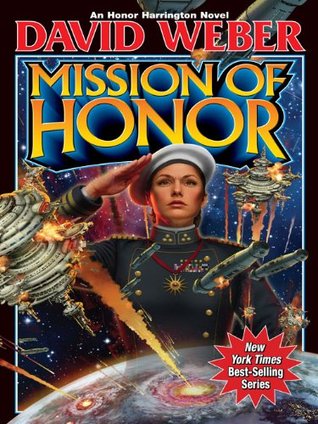
Mission of Honor, by David Weber

Today I'm looking at the twelfth, count them, twelfth book in the Honor Harrington series. And this is just the main series, this doesn't include the side books and short stories where additional plot has been going on. (More on that later.) But since this is the twelfth book the following obligatory statement must be made.

Dear and gentle readers, it is basically impossible for me to talk coherently about this book without going into spoilers. If you wish to avoid spoilers about this book or series please cease to read at this point. Thank you for your patience. 

At the end of the last book Queen Elizabeth III sent Honor and Eighth Fleet on a mission to the planet Haven to negotiate a peace treaty with the Republic of Haven, hopefully to end the war that's been going on for two decades and has effectively broken both nations after the casualties of the Battle of Manticore. Hence the title, Mission of Honor. However, there are a lot of other things going on in this book and ultimately leads to a fundamental shift in the narrative of the series so far and how it's going to play out in the other books.

As I've mentioned, there have been other plotlines developing in supplemental books to this series, books which I really wish I'd taken the time to read at this point. As I've always said, I'm of two opinions on having a plotline spread and grow from just one medium into a multi-medium series. In this case it's intertwined book series, but another example I could use is the Marvel cinematic universe where TV shows like Agents of S.H.I.E.L.D. are starting to cross over with each other (and possibly other series as well). Or like the current Star Wars universe which is growing to be very much like the old Expanded Universe they were trying to avoid where films, tv shows, books, comics, and video games are all interconnected. On the one hand, I can see how cool having a story that arcs across multiple forms of media can be and the potential it has. There are simply stories that you can tell better with a book or a tv show than you can with a two or three hour movie and connecting them together can be really neat.

On the other hand, it makes it all the more difficult to track down all the plot threads and fully understand what's going on. It can also make the universe difficult or intimidating for newcomers to delve into, leaving only a gradually diminishing fanbase. And this is exactly the reason why I never was able to get into traditional superhero comics either. Inevitably every time I would try to start reading comics, there would be cross overs or plot events with other books that you'd have to hunt down and investigate. I personally found it very difficult to get into superhero comics as a result. Obviously this doesn't pose a problem to the huge audience of superhero comic fans, but I think it's a valid concern.

Now I will start by saying that I liked this book. There were things that I enjoyed quite a bit, even if they were loudly telegraphed and I could predict where the plot twists were going to go because Weber so neatly laid them out that even a blind person could follow them. So while this book didn't have any real surprises, I still had a very emotional reaction to this book. And so I think that's a good thing. Unfortunately I gave this book a poor rating on GoodReads simply because I think Weber's gotten to a point where he's thinking, ''Okay, where the heck do I take the series from here?'' And some of the things we're supposed to accept as plausible are a little...extreme.

As I may have mentioned in previous books, the organization known as Manpower which specializes in the genetic slave trade has started popping up, so they're not exactly coming out of the blue. And we've known that they've been stirring the pot and hatching evil schemes for a while now so I can see them influencing certain events for their own advantage. Especially since they intend to create some sort of genetic caste system across the galaxy in a next step of human evolution. The problem I have is that this plan by Manpower/Mesa is a centuries-long plan and apparently these guys have been responsible for pushing both Manticore and Haven towards war for the past seventy to a hundred years. And nobody outside the conspiracy has gotten wise to this plot until the events of this book when people working for Manpower decide to defect.

Obviously this is a work of fiction. With interstellar travel, psychic cats, laser weapons, life prolonging technology, and a variety of other incredibly difficult or impossible things in it. A massive, centuries-long conspiracy involving thousands, if not millions of people should not be all that strange. Except everything that I know about human nature makes me doubt that a conspiracy that big going on for that long could possibly have been going on in the dark. I mean, we have mathematical formulas at this point showing it's basically impossible to keep a conspiracy from being blown if more than a handful of people are involved. So as much as I hate to say it, suggesting that a massive organization of genetic superpeople have been manipulating entire galactic governments from the shadows for centuries just strains credulity. I know, I know. Fiction with interstellar travel and psychic cats, but for whatever reason I'm still stuck up on this point.

I also feel like this diminishes the series on another level. When this series began it was the conflict between the People's Republic of Haven and the Star Kingdom of Manticore. The People's Republic (which was a libertarian's nightmare of a corrupt, bloated welfare state), needed a source of income to prop up their social programs and Manticore with its lucrative wormhole junction was an obvious target. Manticore, of course, did not want to be annexed so warfare was inevitable. And I felt like this was a believable premise, especially with the French Revolution and Napoleonic Wars but in Space angle. And it was believable that a well-meaning government like the People's Republic of Haven could establish a robust welfare system, resulting in massive government deficits, and resulting in them looking to territorial conquest as a means to keep cash and resources flowing in the system, with empire eventually becoming something of a bad habit. It was believable, and there were people on both sides we disliked and people we liked.

Except now we're expected to believe that the conflict between the People's Republic of Haven and Manticore was the result of interference by the Manpower faction. They're the ones that turned the noble Republic of Haven into the despicable welfare state People's Republic of Haven (have I mentioned Weber seems to have a libertarian leaning?). Manpower was responsible for the Peep solution of annexing other star nations to fill the coffers to support the welfare state. And because the Peeps and Manties were the two powers most vocally against the genetic slave trade, Manpower decided it needed to take both of them out. You know...in a couple of centuries. (And as a side note, now that I think about it, I'm kind of surprised Manpower didn't try to corrupt either or both of the star nations into changing their stance on genetic slavery. That seems like it would have been easier.) So now the reason bad things happen hasn't been because people were just people, it's because there was a conspiracy of bad people behind everything. Ultimately people are selfish, short-sighted, petty, and a variety of other negative traits which make us not the best at planning things in advance. Bad things happen because people are, at the end of the day, people and we don't always make the best decisions. But now we have a bad guy, someone with obviously evil intentions, and we get to pin everything on them. It just feels dishonest somehow.

Another way Weber kind of got to ''what can I blow up next'' is what he did to Manticore's industrial infrastructure, basically blowing it to smithereens through a surprise attack by Manpower using new, mysterious, undetectable superweapons. It kills several million more people and trashes Manticore's industry and economy, effectively knocking them out of the war until they can get missile and ship production back up and running. Something which promises to be an extremely difficult task. I feel like Weber was looking for a way to both up the stakes and further force Manticore and Haven into an alliance of necessity. And for me it just feels like too much.

So, all this being said, I have mixed feelings about this book. There are a lot of things that I enjoyed, but there are a lot of issues that I had as well. I'm going to continue with this series because I am interested in where it's going, but I suspect it's not going to be the same series that it began as.

- Kalpar

Thursday, November 2, 2017

We Few, by David Weber and John Ringo

Today I'm wrapping up the Empire of Man series with the final novel, We Few. The result for this book, and I guess for this series overall, is actually a bit of a disappointment. The biggest thing I'm left feeling is that Ringo and Weber had much bigger plans for this series beyond just the four fairly long books, but for whatever reason they kept the series at just four novels and didn't bother to expand it from there. Maybe they had other projects to work on. Maybe Baen decided it wasn't interested in continuing the series, I don't know. But I'm left feeling like the story Weber and Ringo wanted to tell wasn't completed and we got only a fraction of what we could have.

Warning: Mild Spoilers Ahead

Towards the end of the last book, March to the Stars, we discovered that Prince Roger's mother, Empress Alexandra, had been captured by a coup orchestrated in part by Roger's father, the Earl of New Madrid, and the naval minister Prinz Jackson . Roger and the survivors of Bravo Company, Bronze Battalion, have been declared traitors and are officially wanted people throughout Imperial space. Unofficially rumors of the drugs, torture, and rape that New Madrid and Jackson have been using to control Empress Alexandra has been leaking out of the palace and some people are beginning to think maybe Roger wasn't behind the coup after all. When Roger and the survivors of Bravo Company manage to get back to civilized territory they find plenty of allies ready to help them in a daring plan to rescue the Empress and save the Empire.

Plot-wise I actually liked the idea Weber and Ringo managed to come up with for this book. The best plan Roger's staff is able to come up with is that they start up a Mardukan-themed restaurant in Imperial City as an advanced base of operations and a front for the importation of money and equipment for their raid on the Imperial Palace. Most of the battles the heroes have gone through before have been straight-up fights, massive set piece battles with hundreds or thousands of casualties. Seeing Roger and company work on doing a covert operation with a bunch of green, three-meter tall, four armed aliens is different enough to be really interesting. So for that I give it plenty of credit.

On the down side, there is some stuff that is either terribly dull, or stuff that's left out entirely. Some major space naval battles are part of this book, which I'm all for, but Weber goes into the numbering the missiles the ships launch in a salvo, describing how many get defeated by counter-missiles, how many get stopped by point-defense, and then how many manage to get through and strike hits. This is something I've been noticing a lot recently in the Honor Harrington books and it honestly feels like so much padding. I really didn't want to know the exact number of missiles utilized. You say it's fifty thousand? Great. That sounds like a lot. And then we have descriptions of vectors and time lag from transmissions and so on which is very pretty and I'm sure all manner of accurate, but it really takes away from the story.

Another thing that bugs me is the loose ends left at the end of this book, specifically Prinz Jackson and the Saints. From the first book we've had the Saints described as antagonists, but at a larger scale than what Bravo Company was going through. For the last three books the main enemy Bravo company was fighting was the environment of Marduk itself and the natives. The Saints actually appear in the first and third book to be enemies but aside from some mentions about how they're evil enviro-hippies and enemies of the Empire, that's about it. It's almost outright stated that a conflict between the Saints and the Empire is extremely probable in the near future and presumably some of the events of these books would move the two factions closer to war. But instead, Bravo Company and the Empire are dealing with the issue of a civil war at home. By the end of the book the issues with the Saints still have not been resolved or for that matter even addressed so it almost becomes a question of why were the Saints included at all in the series?

The other thread at the end was the escape of Prinz Jackson, the mastermind of the coup against Empress Alexandra. With Jackson safely out of the Sol system and calling as many admirals loyal to him as he can, the Empire is definitely in a state of civil war. With the Saints eager to snap up territory while the Empire is occupied, it's clear that this civil war needs to be resolved quickly and decisively if the Empire is going to survive at all. And we see the start of it when Roger leads the assault on the Imperial Palace to rescue his mother as well as the division within Home Fleet's forces between those loyal to Alexandra and those loyal to Jackson. But otherwise the war is left incomplete. The start of the book has a brief historical passage on Roger who becomes known as Roger the Terrible so presumably he manages to quash Jackson's rebellion, but we're left with so much to be done and so much unexplored.

There are a few minor things as well, but that's kind of niggling over details compared to the big stuff. These books have left me feeling like Weber and Ringo had plans for a huge, complicated world as deep and interesting as that of the Honor Harrington series. Instead we only catch glimpses of this world in a time period spanning not much more than a year. Maybe this was their intention, but it makes me feel like Roger's story is incomplete more than anything else. And so this series is, ultimately, kind of a disappointment.

- Kalpar

Tuesday, October 24, 2017

March to the Stars, by David Weber and John Ringo

Today I'm looking at March to the Stars, the third book in the Empire of Man series by David Weber and John Ringo where Prince Roger and the survivors of Bravo Company manage to finally reach the spaceport with their band of Mardukan allies and start working on getting off of Marduk and back to Terra. I had expected this book to be a bit of a finale but it introduces some new plot threads and leaves a lot of things hanging which I presume will be wrapped up in We Few, the final book of the series. My opinion of this book is mixed for a number of reasons which I'll go into more detail.

In the broadest strokes, this book is really more of what we've seen before, just the details have changed. Roger and company arrive at a location on Marduk, there is some sort of obstacle in their way, usually a conflict among groups of Mardukans, and to continue on their way Roger and the marines have to fight their way through, leaving plenty of casualties behind them. Only in this case, they cross an ocean on ships, run into a sentient-sacrificing and cannibalism state religion, ally with some barbarians to fight the crazy religious nuts, opposed to last time when they joined up with the religious nuts to fight the barbarians, and finally, finally get to the space port.

I'll start with what I liked about the book, which is the pulp sci-fi action. As I've openly admitted plenty of times here on the blog, I am perfectly happy with the most ridiculous,  pulpy, sci-fi action you can conjure up for me. Spaceships, robot tanks, plasma weapons, I love the heck out of that stuff. And Weber and Ringo can write pulp sci-fi action. That's something they know how to do. So the result is good. And if you like the pulp stuff like I do, Weber and Ringo are good guys to go get your supply from and I highly recommend it. So that's the good part.

The bad part about the book is not one specific thing, it's a lot of little things that add up to some concerns on my part. The biggest was how everyone apparently couldn't figure out that the fire priests were sacrificing people and then eating them. (Granted, I didn't put together the eating people part, but I got the sacrificing people.) This is something that Weber and Ringo telegraphed pretty heavily with a lot of evidence. For example:

  1. The fire priests hold their ceremonies in secret, so the marines aren't told what's going on. Pretty suspicious from the get-go.
  2. Everyone in the city refuses to talk about the religion and getting any information beyond there being a fire god is basically impossible.
  3. During the religious ceremonies, everyone notices the smell of cooking meat, which means some sort of meat is being put on the fire, however, everyone also notices a lack of any livestock animals in the city at any point. The meat must be coming from somewhere but there are no animals to provide it.
  4. One of the only things the marines can learn about the religion is that there are servants of the fire god who are called to the temple for religious ceremonies, but the marines don't see a lot of the servants around the city.
  5. Most people emphatically do not want to be servants of the fire god.
  6. The city of the fire priests heavily engages in slavery, with a nearly constant demand for slaves despite no apparent labor shortage in the city.
I found myself screaming at the characters, ''THEY'RE SACRIFICING PEOPLE! HOW ARE YOU NOT PUTTING THIS TOGETHER?'' I literally went and asked several other people about this and all of them managed to connect the dots like I did. But for the characters in the book have to reboot their translation software to realize that servants of the fire god are actually sacrifices. Like, did they not think it might have been a euphemism? And the team actually has a historian/anthropologist/sociologist with them so she out of anybody should have been able to figure out what the heck was going on.

But that wasn't the only example. At one point in the book Roger makes a statement along the lines that when they get back home he intends to ask his mother to make him Duke of Marduk so he can rule the planet and help shepherd the Mardukans to civilization. It's a one-off line and Weber and Ringo spend basically no time talking about it after that, but it's very concerning to me personally because it feels incredibly tone deaf. We have Roger, a white man with blond hair and green eyes so he's super Aryan, making plans to bring the benefits of civilization to a backwards planet. The problem I have with this is it basically sounds like an argument for colonialism and imperialism.

Without going into a super lengthy explanation, during the height of colonialism in the nineteenth century European nations said it was their duty to bring the benefits of civilization to the ''backwards'', ''primitive'', and ''savage'' peoples, lifting them up to where they could govern themselves. In actuality, the European nations and states like Japan and the United States were just interested in extracting resources from their colonies and any infrastructure they established in their colonies were for the benefit of white colonials and/or the extraction of resources from the colonies. It is widely argued that colonialism and imperialism were not benevolent attempts to spread civilization but calculated moves to expand markets, resources, and power. So to have a white man in a sci-fi book say he plans to ''civilize'' the ''savages'' of Marduk smacks very heavily of colonialism. I don't think Weber and Ringo meant for this to be as tone deaf as I ended up taking it, but it's rather distressing to say the least.

There are a lot of other little issues like this but I'll end with retaking the spaceport towards the end of the book. It's revealed that the imperial colonial governor is not only corrupt but also incompetent and has left secret passages through the defenses around the spaceport so his messengers and smugglers can get in and out. Furthermore an imperial agent has infiltrated his staff and basically knows everything that's going on in the spaceport and is able to give information to the marines, as well as much-needed supplies. As a result, the spaceport, which has been this final goal the team has been working towards and has promised to be this super hard nut to crack at the end of the journey, ends up being a cakewalk. The marines walk through the holes in the defenses, take out the incredibly incompetent guards, capture the governor, and retake the port. It just feels like a massive anticlimax compared to how much Roger and Bravo Company have had to fight through just to get to this final challenge. I feel like Weber and Ringo built it up to be this huge challenge and it ends up being nothing. Of course, we then get with the whammy of a coup attempt back on Terra and now it becomes critically vital for Roger and company to get back to earth and rescue his mother.

Overall this book is okay. There isn't one major thing that is wrong with the book, but there are a lot of little things that add up and significantly detract from the book. In addition there are the classic Weber exposition dumps which can get a little tedious after a while, but I've grown to be used to those at least. If you like pulp sci-fi action, I'm sure you'll enjoy this, but I don't know if this is really the best pulp sci-fi I've read because of all the little issues.

- Kalpar

Thursday, September 7, 2017

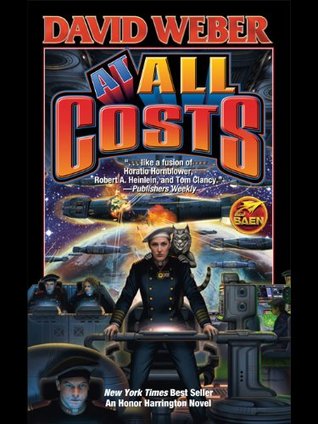
At All Costs, by David Weber

Today I'm looking at the eleventh book in the Honor Harrington series, At All Costs. As with a lot of the other books as I've progressed through the series, this book is considerably longer and I think part of it is simply bloat. I found at least a few examples of stuff thrown into the book which probably could have been left out or trimmed down without losing too much of the book. There's also more of the subplots from elsewhere in the Honorverse getting woven into the main story and I'm suspecting I probably should have gone to read those side stories as well because they're starting to seriously affect the main storyline. I remember when Mesa and Manpower had first been introduced to me, having just read the main Honor Harrington books and it felt a little out of nowhere that there was this whole additional plotline.

With as long and occasionally bloated as this book feels, though, this book spends a lot of time making things happen. Which isn't to say that the other books didn't have major events, but I feel like this was a major turning point in the series because the Maticore-Haven conflict is getting resolved while the Manpower and Solar League plotlines are becoming more important. I'll have to see if my feelings about the series are right as I continue.

Usual warning to my kind and gentle readers. I will try to discuss the book in as spoiler-free a manner as possible, but as I'm eleven books in it's difficult to talk about a book intelligently without mentioning some spoilers. If you wish to avoid them please leave now. 

One of the things I was honestly a little on the fence about was the awesome space battles. I think this book, more than any other in the series, has had the most space battles in it. And that's part of why I was all for this series in the first place. Give me a bunch of ships with missiles and lasers and I'll be pretty darn happy. Unfortunately, the space battles in this book start getting really repetitive after a while. I noticed in particular that Dave has this really bad habit of going through the number of missiles in a salvo, which bloats his description of the battle by a considerable amount. Seriously, a lot of the battles include a passage where Dave says, ''The Manticorans launched so many thousands of missiles. This number of them were decoys. This number of them were recon pods. But this many were live warheads. Haven countermissiles took out this many. Point defense took out this many. This number lost target lock and wandered off. This many missed. And this many hit the enemy ships. And then the enemy ship exploded.''

Like, I appreciate that he's going through the effort of making the battles as detailed and realistic as possible, but at the same time I really didn't want to hear Dave prattle off a bunch of numbers as well. And this happens at least three or four times in the book, possibly more because I honestly lost count. The result was it made the battles feel a lot longer and a lot less interesting to me, which I thought was a shame because it was the space battles that had me interested in the book in the first place.

As I said, there are also major plot developments in the rest of the book. For example there's the Manticore-Haven war which starts up again, then heads towards another peace negotiation, and then turns into a shooting war again and after the events of this book, I suspect they'll have no choice but to agree to a ceasefire, but it's hard to say. And, as I mentioned, there's the plot involving Manpower and how they apparently are involved much deeper than anyone would expect.

I do wish that the Manpower plot had been introduced and expanded on more in the main books. I'm sure I can go hunt down the supplemental books to find out about the genetic slave trade, all the horrors involved with it, and the grand galactic schemes the board of Manpower has going on, but since it's affecting these books I wish I'd had more of an introduction.

Otherwise, I think this book was pretty good. The series is definitely different from when I started with On Basilisk Station, but I'm still enjoying the series and eager to continue reading it.

- Kalpar

Tuesday, September 5, 2017

March Upcountry, by David Weber and John Ringo

Today I'm looking at the first book in a series co-written by David Weber and John Ringo. If you've spent any time at all looking at my blog, you're probably aware that I've spent a lot of time reading Weber's books. Specifically anything related to the Bolo franchise he's written, and a significant number of the Honor Harrington books. I have a little bit of experience with John Ringo as well, since he wrote Road to Damascus, one of the Bolo books which I had mixed feelings about. But since I could get this book for free from the library, I figured it was worth at least the time to check it out and see if it was any good.

March Upcountry is the first in the Empire of Man series, which I presume follows the adventures of Prince Roger MacClintock. Roger is third in line to the throne and will eventually be replaced in the line of succession by the children of his older siblings, so he's always been superfluous to requirements for the royal family. As a result, Roger has grown up to be a spoiled dandy, more obsessed with his good looks and clothing than anything particularly useful. Much to Roger's dismay his mother sends him on a diplomatic mission to a backwater planet of the empire, mostly to get him out from underfoot. But an assassination attempt on Roger's ship results in Roger and a company of his bodyguards being stranded on an even more remote planet, Marduk.

Marduk is only barely part of the Empire, most of the planet being covered by dense jungles filled with populations of hostile indigenous aliens. To make matters worse, the Saints, environmental extremists and enemies of the Empire, have sent a fleet into the system, which means Roger and Bravo Company of the Bronze Battalion have to land secretly on the surface of Marduk, and somehow manage to trek overland to the tiny space port to call for rescue.

This book is mostly about the challenges Bravo Company faces trying to survive on Marduk and make its way halfway across the planet to get to the spaceport, and Roger's growth from a spoiled dandy into a responsible and capable military officer. Both plots are pretty interesting and handled competently, so I have nothing to complain about there. Having read a ton of military sci-fi including the always diverse Warhammer 40k universe, I'm pretty familiar with both of these plots but I at least enjoyed them. I do kind of wish, considering how darn long this particular book was, that they had gotten Roger and Bravo Company off of Marduk at the end of the book, rather than leaving them only partway to their first goal. I'm just not sure how much more different the second book can be since they'll still be making their way through the jungle, trying to get to the spaceport.

There are some signs that this is definitely Weber and Ringo's work, if only because the native fauna on Marduk has six limbs each. (Dave seems to really like giving creatures six limbs.) And the space combat felt almost like I was listening to an Honor Harrington book. Since I was actually reading an Honor Harrington book at the same time it got more than a little confusing for me because I had to remember which book I was reading!

Plus there's also the Saints who I'm sure will become more important in later books in the series but had at best a cameo in this book. The Saints are extremely militant environmentalists who are pretty much a combination of the worst parts of the People's Republic of Haven in Honor Harrington, and the bad guys in Ringo's Road to Damascus. Apparently they have chaplains whose goal is to minimize harm to the environment and override a spaceship captain's decision if it would cause too much harm. Also the Saints apparently have worlds they've actively been de-terraforming and basically run them as slave labor camps where starving political prisoners attack dandelions with wooden tools. I just feel that they're almost too cartoonishly villainous to be taken seriously, especially considering Ringo's pronounced conservative streak and Weber's strong pro-military and vaguely libertarian streak as well.

On the flip side, the protagonists definitely influence the development of several indigenous cultures on Marduk and give them access to pieces of advanced technology. The characters also mention bringing sociological adjustment teams and more advanced technology to Marduk to help integrate the native population into the empire. This is seen as a good thing but I'm not entirely sure that it is. On the one hand, there are definite benefits to bringing advanced technologies, especially medicine, to areas without as great a technological base to improve the local quality of life. On the other hand, this has a very strong imperialist ring to it and I'm not sure I like the reasons why the main characters are interested in helping the inhabitants of Marduk. It does leave me with a feeling of ambivalence regarding the book's politics.

Overall, the book is okay but there are some warning signs that it might go into some very unpleasant territory later on with crazy environmentalists. Out of the many other military sci-fi books I've read, this one was at least enjoyable. If you like this sort of crazy pulp, maybe you'll like this as well.

- Kalpar

Thursday, March 30, 2017

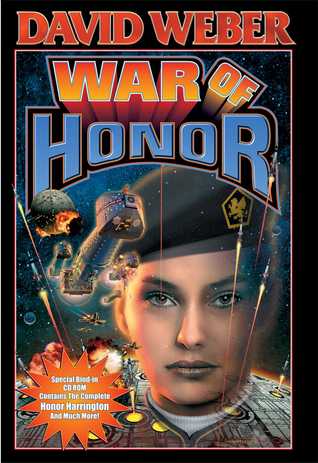
War of Honor, by David Weber

Today I'm looking at War of Honor, the tenth book in the Honor Harrington series and some problems which I've noticed before are starting to become really glaring as the series goes on. On the one hand, I still like a lot of the characters and the universe of the books so I'm still reading them. (Plus I already bought a lot of the rest of the books in this particular series.) So I'm left wondering what to think about this series as the books get longer and longer, the plots get more and more complex, and the issues which were minor before become much larger as the series goes on. It's certainly not easy to watch a series I enjoy seem to flounder like this.

Usual disclaimer to fair and gentle readers. Some amount of spoiling will happen below because with nine books already gone it's almost impossible to talk about anything that's happened. If you wish to avoid spoilers please avert your eyes now. 

War of Honor picks up about four years after Ashes of Victory left off. The Star Kingdom of Manticore and the reborn Republic of Haven have been at an uneasy truce while negotiations over a permanent peace agreement have dragged on interminably. As part of the truce, the Star Kingdom's government, now in the hands of a coalition of the Conservative, Liberal, and Progressive parties after the death of Centrist Lord Cromarty at the end of the last book, has drastically reduced funding for the Royal Navy and cut back on not only active ships but also construction of ships, much to the frustration and dismay of many Centrists, Honor Harrington and Alexander Hamish included. Relieved of their naval commands, both Honor and Hamish have been deeply involved in the Star Kingdom's politics and have forged a close working relationship with Queen Elizabeth III.

As things almost always do in these books, a bad situation get worse, the midden hits the windmill, and it's up to Honor to save the day in some manner. And I wouldn't have it any other way. I think part of the problem, though, is that Honor is so far up the chain of command she's no longer in charge of a ship or a group of ships. She's a full-blown admiral and in command of fleets of ships. So when she's out in the field now, there are whole areas of space that become her responsibility and dozens of subordinates. And we do get to see those subordinates do things, such as the misadventures of the ship Jessica Epps in Silesia and the growing tensions with the Andermani Empire. But it does mean we get to see less of Honor out in the field, taking charge of things, when the series has her name on it. Which isn't to say hearing about people like Eloise Pritchart isn't interesting, she's a good character as well, but the series has definitely grown beyond Honor at this point.

As I mentioned earlier, there are some issues which have grown to be rather significant as the series has gone on. A big example is my perennial problem with Weber's writing: show, don't tell. There's an event mentioned in this book, the Manpower Incident, which has something to do with the genetic slave trade and connections with members of the Manticoran ruling parties which caused a huge scandal in the Kingdom. But we don't actually get to see this event within the book. I did some digging and I found out it's actually covered in a short story anthology set within the same universe which I have not read. And I'm not sure how I feel about that. On the one hand, it kind of makes sense, considering how insanely big Weber's made his net of plot threads, to have different books to handle different parts of the universe. On the other hand, it gets really confusing when the characters are mentioning events I have had absolutely no inkling about or characters I haven't met before suddenly come into the narrative. At least, I'm pretty sure I haven't met them before. There are so many darn characters in this series it's hard for me to keep track sometimes.

So I'm not sure how much stuff that should have been shown in this book wasn't just shown in another book and now I'm wondering how many other books I'm going to have to hunt down and read. But I still have a sneaking suspicion that things that should have been shown were just told to us instead. And as Weber starts cramming in all these other plotlines like a new wormhole junction and the genetic slave trade, I'm worried that the main plotline is going to get muddled as a result.

Another issue I have is how apparently every politician who isn't some flavor of space-libertarian is evil and just waiting for an opportunity to abuse their power. I'm probably not representing this correctly but that's how it's coming across to me. To provide a short summary you have five major parties. The Crown Loyalists, whose platform seems to be pro-monarch, no matter what. Then there's the Centrists, Conservatives, Liberals, and Progressives. The Conservatives are almost entirely hard-right aristocrats who want to bring back the semi-feudal nature of the Star Kingdom and the old rights of the aristocracy. The Liberals and Progressives are both left of center politically speaking, although the Progressives are closer to center. They both favor varying degrees of economic and social reform to adjust imbalances in wealth equality in the Star Kingdom, their biggest difference seems to be their approach to Haven. The Liberals want to ignore the problem until it goes away, the Progressives want to make some sort of deal with Haven. And finally there are the Centrists who favor limited government, the flat income tax required by the Manticore constitution, and strong funding for the Royal Navy. In many ways they come across as libertarian except for their strong pro-military stance, although this is from my experience of libertarians being anti-military as well as anti-government, I could be wrong.

Where this gets frustrating is that almost everyone who isn't part of the Centrists or Crown Loyalists comes across as some card-carrying, moustache-twirling villain who's in government just to get as many kickbacks as possible before absconding with millions of dollars. Or in one case hopelessly naive and willing to compromise their principles if it'll keep them in power and get them what they want in the short-term. We really only see one member of the Liberal Party, Catherine Montaigne, who has any real moral backbone and she explicitly doesn't believe in the economic equality ''claptrap'' that the party platform includes. And several of the social programs which the Liberal and Progressive parties fund to help improve life in the Star Kingdom are explicitly overfunded so members of the government can skim amounts off the top for their own personal gain in a blatant example of embezzlement and malfeasance.

The result is an image that feels far too...simplistic to me. There can be and currently are long and ongoing debates over what exactly the role of the government should play in the economy. Personally I'm a social democrat so I tend to agree with the more interventionist approach to the government and the economy. Which isn't to say I don't recognize where intervention and regulation can go to far and there needs to be a certain degree of freedom. And there can be some strong arguments made for a more hands-off approach. But I wouldn't say people on either side of the argument are inherently bad. I think it's very unlikely that most people who support government programs to help improve the welfare of its citizens see it as opportunities to skim a bunch of money off the top for themselves. And I wouldn't accuse people who oppose social welfare spending as being heartless bastards who just hate the poor and see them as worthless parasites. I know some people who genuinely think like that, but I'm willing to extend the benefit of the doubt to other people.

In this book, however, it feels very black and white. It's implied that not all the members of parliament that aren't Centrists or Crown Loyalists are bad people, but we don't really get to see that. One of the things I've really liked about this book is that Manticore and Haven weren't all good or all bad. There were bad people on Manticore's side and good people on Haven's side and we could like and respect both sides even if the conflict was misguided. But with how Manticore's internal politics are portrayed in this book, it feels like all nuance has gone out the airlock and we've either got heroic statesmen or craven politicians. I just wish for more of a nuance.

Overall this book is okay, and I like seeing characters I like and I still enjoy the universe, but I worry that it's getting to be too big a project and also that the problems like show don't tell are starting to become rather large issues in the series. Not only did we have the ongoing conflict between Manticore and Haven, but we had the genetic slave trade, the expansion of the wormhole junction, Manticore's internal politics, Silesia, and growing conflict with the Andermani Empire. The result was it feels like Weber's trying to take on too much in one book. It certainly makes the universe feel deep and complex, but it makes the book that much more difficult to follow as well. Because I'm invested in the series I'll probably keep trooping through with it, but I definitely understand why some people would want to give up at this point.

- Kalpar

Tuesday, December 6, 2016

Ashes of Victory, by David Weber

This week I'm continuing with the Honor Harrington series with what's the ninth book, Ashes of Victory. The biggest thing I've noticed with this series is I'm only continuing to read it because I like the characters and I want to see what happens to them as time goes on. I hate to say it, but I've noticed the writing has gotten weaker over time and while I'm still enjoying the series and getting to see Honor and the cast of eight million other characters do lots of cool stuff, I can see where there are some problems coming up. The biggest is the issue of show don't tell, which has been happening a lot as the series progresses. And like Sursum Ursa said, there's a lot of exposition being thrown around as well. Well, and Honor's taking a back seat when she's...you know...the main character. On the one hand it kind of makes sense because she's a full admiral and a duchess now and intimately involved in the political operations of not only Manticore but Grayson as well, but on the other I kind of miss seeing her out in the field, leading ships into battle.

Usual disclaimer, I'll be talking with spoilers after this point in the review. Well, okay, I kind of spoiled earlier but there's no helping this. Honestly if you're not this far into the series you're probably not going to be impressed with this book because it's...okay. Like, I liked it but it's mostly because I liked the characters more than anything else. Also I'm starting to ramble. Anyway, spoilers, beware, so on and so forth.

So I'll briefly cover what happens to Honor over the course of the book. After successfully managing the largest prison break in history, evacuating some half a million people from the prison camps on Hades, Honor has returned to wild acclaim by the members of the Alliance. Because she lost her cybernetic implants, Honor is going to be spending considerable time recuperating and gets sent back to Manticore to teach tactics at the military academy at Saganami Island. She's also given a new duchy since her cousin was granted the previous Earldom of Harrington, and gets some people to work on sign language for treecats which allow them to communicate with humans, something previously not possible. So it's a pretty full docket and Honor's very much on the sidelines for most of the book.

So if Honor's on the bench, where is the rest of the action happening? Well quite frankly all over the place. You've got the Alliance military, in all its disparate locations, who finally have enough of the new weapons to make a decisive change in the war and are getting ready for the next big push. There are plots going on within Grayson which becomes a major issue later in the book. And there are plots galore going on back in Haven as distrust between Pierre and Secretary of War McQueen continues to grow. It's very complex to say the least so it kind of feels like a bridge between what was happening earlier and what Weber has planned afterwards. But that remains to be seen on my end.

As I said, my biggest problem is Weber tends to tell us things rather than show them. The very best example I have in this book is the battle between McQueen and Pierre that finally breaks out in the capital of Haven and leaves Oscar Saint-Just as the man in charge of the People's Republic of Haven. Now, this is a huge event. Pierre's been in this series, at least being mentioned, since book one. We've been watching McQueen manage the Navy and get them back on the offensive, along with her own plans knowing that Pierre and Saint-Just are planning to betray her when they no longer need her. McQueen isn't really as prepared as she'd like to be, but she knows she doesn't have the luxury of waiting anymore.

I mean, this is huge! McQueen launches her coup, there's fighting in the streets, Pierre gets killed by a band of marines, and Saint-Just only manages to escape with his life. McQueen locks down in the Octagon, the military nerve center of the PRH, and takes numerous hostages to prevent Saint-Just from storming the place. Unfortunately, she hadn't counted on him planting a nuke in the basement and actually using it to resolve the situation. This is a huge change in the political scene for the universe.

...but we find out about it after the fact. Like...this is what's so insanely frustrating. We get to see McQueen give the launch order and then later we're told what happened. Pierre and McQueen both die offscreen and it feels very glossed-over. This book would have been so much more interesting if Weber had taken the time to actually write out the events of the coup, at least some of them, than telling us what happened. And there are plenty of other examples, not just in this book but in other books as well. The taking of Trevor's Star which happened between books was another good example which confused me then. Like, I get that there's a lot going on and Weber's created an insanely detailed universe, but I feel like it's starting to get to be too much and we're just getting lists of things that are happening rather than actual events.

There's also a lot of people standing or sitting around talking about things. I noticed it less because I was reading the book rather than listening to it, but that was a huge complaint I had about the Dune series which made me stop listening to it entirely. So I guess it's a good thing that I'm reading these books rather than listening to them. Because it's just a lot of people sitting around and talking about things happening. I think this is a problem of space opera specifically, but somehow I still love the genre in spite of that problem.

Overall the book's okay. I think I enjoyed it because I've come to expect a ton of long debates about politics or economics and less space battle action. And there is a lot less space battle action in this book than in most of the other ones. It's definitely one of the less strong of the books and I think newcomers to the series aren't going to start here, but if you're interested in the series and you've made it this far, well you're probably willing to go a little further.

- Kalpar

Tuesday, November 22, 2016

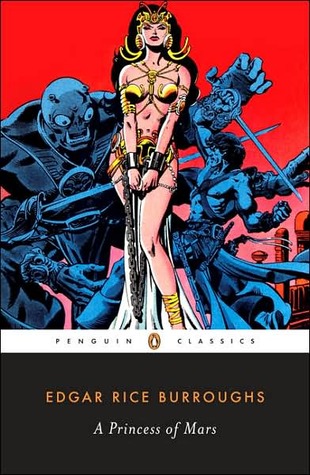
Raiding the Stacks: A Princess of Mars, by Edgar Rice Burroughs

Today I'm delving into another old book, in this case A Princess of Mars by Edgar Rice Burroughs. Originally published in serial form, like most novels at the time, and later collected in book format, A Princess of Mars is the first in the wildly popular series featuring the adventures of John Carter on the planet Mars, or as the inhabitants call it, Barsoom. In addition to the John Carter series, Burroughs was also creator of the Tarzan series and I can see where there might be some overlap between the two. Strong, muscular men who go around without shirts on, saving women and fighting bad guys. Although that's a whole sub-set of pulp adventure novels that used to be wildly popular if they weren't terribly nuanced.

The plot follows the adventures of the aforementioned John Carter who, while prospecting for gold in Arizona after the Civil War, stumbles into a cave to escape from Apaches. Carter finds himself unable to move and then collapses into sleep. Somehow he finds himself standing outside himself and is then transported to Mars, a dying planet where the inhabitants, the green and red races of Martians, are locked in endless battles over dwindling resources. Because Mars has much lower gravity than Earth, Carter finds himself able to kill Martians twice as big as him with his bare hands and able to jump thirty feet in the air. He quickly rises to prominence as a warrior among the Martians and meets and falls in love with Dejah Thoris, a Martian princess. Carter spends ten years living on Mars and then, just as mysteriously, ends up right back on Earth.

The book actually focuses more on Carter's early adventures, his arrival on Mars, integration into Martian society, and eventual rise to prominence. The story then abruptly glosses over nine years of his time on Mars before his return. Which is clever in a way because it left plenty of room for Burroughs to write sequels of Carter's adventures on Mars. The book does a pretty good job of introducing the reader to the world of Mars that Burroughs has created, leaving some room for expansion, if being basically a bunch of exposition lobbed at you.

I was actually able to pin this book down to the decade it was written because of the presence of radium in the book, which I thought was kind of neat. Specifically radium is the Applied Phlebotinum of choice for the book and is used for all sorts of things from weapons to airship engines. There was this really big fad in the 1910's to put radium in everything, including toothpaste, on the logic it was new and it glowed, therefore it must be good! Unfortunately a lot of people then died of cancer because of this rampant use of radium, but it does serve as a means to date the book.

So how does the story hold up compared to modern times? Not terribly well. There is a typical, subtle sort of racism in that John Carter, a powerful white man from Virginia, is a better warrior than anyone else on Mars and is the absolute best at everything. It definitely falls into Mighty Whitey territory. Also, as is typical of pulp adventures from this era there is a ridiculous amount of people who are naked all the time. Which is something I just don't understand. Clothes are useful! They have pockets which let you hold things! Like pocket watches! And there's a lot of fighting and killing and dying, as well as some old-fashioned sexism. It may have been progressive or scandalous when it came out, but it's pretty tame by today's standards.

Is it worth reading? If you like old-fashioned pulp adventures from the early twentieth century, then sure, go right ahead. As much as I like pulp, I have to say this isn't quite the sort of pulp I like. I've never really gone in for the heroic barbarian type so it makes sense for me to be less than enthused with the idea. But if you like you some techno-barbarians? Probably for you.

- Kalpar

Tuesday, September 13, 2016

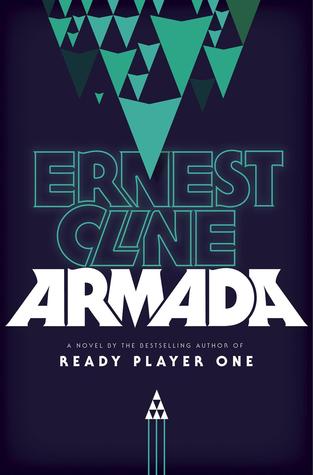
Armada, by Ernest Cline

This week I'm taking a look at Armada, by Ernest Cline which is very unabashedly a reinterpretation or, I guess reimagining would be more appropriate, of The Last Starfighter, a classic 80's science-fiction film. For people who haven't seen The Last Starfighter, I recommend watching it because I remember it as rather enjoyable. But to provide a brief summary here: the plot of The Last Starfighter is that a video game is utilized by a group of aliens as a covert training and recruitment device to find candidates to become Starfighters, who will protect the galaxy. Alex Rogan, an ordinary human teenager living in a trailer park manages to beat the game and gets recruited, eventually saving the day. It's a pretty standard condensed hero's journey, but serviceable.

Armada follows the same basic premise, although with a dash of Ender's Game thrown in. A popular video game called Armada is actually a training tool by the Earth Defense Alliance to train and recruit potential pilots to help repel an alien invasion, and the game has been used to control drones before in actual battles with aliens. Zack Lightman, an ordinary high school student who plays Armada obsessively and is ranked 6th in the entire world, begins seeing alien spacecraft in the sky outside school. He initially dismisses it as a hallucination but is eventually recruited by the Earth Defense Alliance to join the war effort. It seems the aliens are finally preparing for a final all-out assault and humanity will soon be engaged in a final, epic battle for survival.

If the story was just that, I'd honestly think this book would be okay. It takes some long-existing ideas and combines them. I'd say it doesn't really do anything that hasn't been done before in some shape or form, but that's not necessarily a bad thing. It's a serviceable science-fiction story with a hero's journey arc. It's a formula that's worked before and probably will continue to work well into the future.

The problem I have is that Zack Lightman is a character I desperately wanted to punch in the face repeatedly and honestly isn't a protagonist I like terribly much. The reason is because he comes across, especially in the first third of the book or so, as a spoiled brat. Okay, yes, he grew up without his father who died in an explosive accident when he was just a baby, and growing up with just his mom was tough. But he has so many other benefits that any time I hear him complain about anything it sounds like typical teenage whining without realizing how well off they actually are.

I'm actually going to do some comparison to Alex Rogan, the protagonist from Last Starfighter, because the book itself invites the comparison and we have two fairly similar situations. Alex, as I mentioned, lives in a trailer park, which carries the connotation of soul-crushing poverty in America. Zack, however, lives in an actual honest-to-goodness house with his mom so that's advantage number one. Secondly, Alex is desperately trying to get into college so that he can get a step up and try to escape the trap of poverty associated with where he lives, only to get rejected. Zack, who is two months away from graduation mind you, hasn't even bothered to apply to any colleges and isn't really looking into going to college. This is despite the fact his mother has, over the years, saved up enough for him to be able to go to almost any school he wanted and get a Bachelor's and his mother begging him to go to college. The only thing keeping Zack from going to college is his own lack of motivation.

On top of that Zack has an extremely cushy after-school job. Instead of bagging groceries or flipping burgers or any of a dozen other soul-crushing minimum wage jobs countless teenagers have had to do, Zack works in a gaming arcade. A gaming arcade run by an eccentric millionaire who runs the store as a hobby at a loss, rather than as an actual business. As a result Zack spends, in his own words, about 10% of the time actually doing work and the remaining 90% of the time goofing off. As I haven't watched The Last Starfighter in forever, I can't remember if Alex had a job or not, but I'm damn sure it involved far more actual work rather than getting paid to hang out and play video games. And Zack certainly spends an inordinate amount of time playing video games, admitting he's let his GPA drop a full point because of the time he's dedicated to playing Armada.

So honestly, I just want to punch Zack in the face every time he starts whining about how hard his life is. Because it really isn't. He isn't some down-on-his-luck protagonist who's trying to get by but just can't seem to get a lucky break. He's a spoiled kid who's got plenty of support and encouragement and opportunities, and is squandering them to sit on his butt and play video games. I mean, fortunately playing video games is exactly the skill needed to save the day, but there are plenty of other people who are good at video games so it hardly makes Zack special.

And so Zack's what makes me not like the book. The fact that he's a protagonist I simply cannot stand makes me dislike other things that happen in the book. For example, there's Alexis, the obligatory girl for the protagonist to meet, fall in love with, and get as a sort of bonus after saving the day at the end of the story. It's a trope that's existed since before time itself and you see it coming a mile away because you know how the story goes. (There are extreme problems with this trope in general, but if I go into them this will stop being about this book so we'll save it for another time.) So I'm sitting here, listening to Wil Wheaton read this book, and I can see it coming a mile away. And I can't help but think, ''No, Zack, you don't deserve the hot, nerdy goth girl. You haven't earned it!'' Is this annoyingly petty of me? Yes. Very much so. But it shows how much I'm annoyed with the main character.

And then Zack messes up. This is another trope that's been around for forever and it might have a name but right now I can't think of what it'd be called so we'll just go with No Consequences for Heroes. Basically we have our designated hero who does something they shouldn't. In military settings they usually disobey a direct order and the result is that something bad happens. In the case of Armada, Zack chases an enemy drone into a hangar and ends up destroying a stockpile of about five hundred drones, which are badly needed for the coming war with the aliens. Now, normally Zack would be facing a court martial and probably get booted out of the EAD, or possibly even executed depending on how serious the authority figures would be feeling. But since Zack is our designated hero, even though he's made a horrible mistake and should suffer some sort of consequence for his actions, he just gets off with a warning. Again, this has been used before in plenty of other texts, Harry Potter springs to mind, but since I don't like the main character it annoys me far more than it should.

Oh, and did I mention Zack describing his own mother as ''smoking hot''? Because that's a thing that happens too. I certainly didn't want to hear him say that because it's creepy as hell, but it's there. He admits to having a bit of an Oedipus Complex. If you didn't have reason enough to hate him.

So what's the result for me? I probably would have thought this book was okay. The plot isn't terribly new or ground-breaking and almost formulaic at points, but that's okay. It works, and that doesn't mean formulas can't be enjoyable. However, because Zack comes across as a spoiled teenager without an ounce of motivation in his body who just wants to spend the rest of his life slacking off and playing video games, I don't really have any sympathy for his problems. Life in suburban Oregon is boring and you wish you could be somewhere else? Well maybe if you applied yourself and got into college, rather than playing video games every night, then you might be finding a new and exciting way out of here. Most of the problems Zack has are his own damn fault and I just have no sympathy for him as a result. And in a protagonist-driven story that's a critical weakness which leaves me with relative distaste for this book.

- Kalpar

Thursday, August 4, 2016

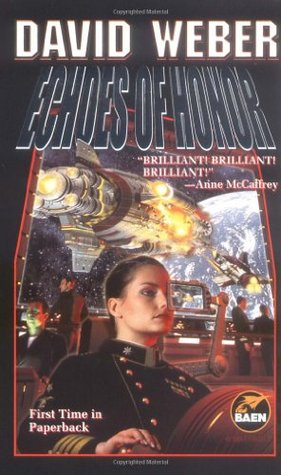
Echoes of Honor, by David Weber

This week I'm talking about the...eighth. Wow, really? Eighth book? Didn't realize I was that invested in the series. Anyway, we're looking at the eighth book in the Honor Harrington series and I'm really starting to see where other people, such as Sursum Ursa, have some deep complaints about this series. Don't get me wrong, it's still a pretty fantastic series and there are some really awesome moments, but the book series seems to be growing increasingly exposition-y and with a fresh new crop of plotlines to make a patch of kudzu vine look tame by comparison. I still think it's a good series, but it's definitely lacking the tight character-driven science-fiction which made up the earlier books in the series and suffering, like some other space operas I've been either reading or listening to, from a strong need to show instead of tell.

Obligatory Warning for Dear and Gentle Readers: As we're eight books in it's almost impossible to talk about the book in some meaningful way without going into specific details. The above paragraph provides a good summary of my opinions if you wish to avoid spoilers. 

Echoes of Honor is the first book in this series to be subdivided into separate books, which I think is an organizational choice by Weber more than anything else. Half of the books focus on Honor Harrington and her adventures, while the other half focus on...literally everything else going on in the galaxy right now, albeit in fairly circumscribed manner. The book also covers about a year and a half of time which is a little strange because it doesn't feel that long reading it and I began feeling like maybe other things are happening that I'm just not aware of.

The book begins with a section focusing on literally everyone else, which is kind of weird because instead of focusing on the main character we're treated to an absurd amount of plotlines you have to digest, some of which aren't developed until presumably later novels. The book begins with Haven releasing video of Honor's execution and the response of Honor's parents, and her friends both on Grayson and Manticore and the sorrow both star kingdoms share at losing one of their best commanders. The loss is somewhat muted, however, as anyone who's come this far has probably read the last book and knows that Honor's alive and well. In fact, the very next chapter features the Havenite minister of propaganda gloating over what a good computer simulation job they did with Honor's execution. So while it's useful to see the sorrow and anger of Manticorans and Graysons, it feels a little weird knowing Honor's alive the whole time.

The first part of the book also spends an inordinate time talking about the space economy. Seriously, there are whole discussions and internal reflections on how the economy of Manticore is doing and how it's beginning to strain under the burden of wartime necessity. A large amount of resources are going towards military needs, putting civilian needs on hold although apparently it's not quite yet to rationing, and Manticore is considering the horror of a progressive income tax. (More on that in a minute.) And while it certainly would be a realistic argument that people in those positions of power would have, it's not exactly what I'm interested in when it comes to space operas.

The story is also turning into a patch of kudzu for me because there's so much going on that it's becoming increasingly difficult to keep track of everything. There are so many characters from so many factions that I'm about ready to start making dossiers for all the characters just so I can keep track of them. There's also the introduction of a plot revealing a secret to Grayson's genetic heritage which is played up as this really big deal but then...isn't talked about again. Which could mean it's being saved for a later book, but if it isn't it will ultimately be padding.

And let me take a moment, without getting too political, to state that the argument flat taxes and low government regulation of business is good for the economy. In the short term. In the long term...well it gets far more complicated. Basically members of the Manticore government attribute their great wealth, which had previously been attributed to their high industrial base and location on prime trade routes, to a flat income tax and low regulation. Granted, I seem to fall more in the Keynesian camp when it comes to economic interpretation, but there are problems with this argument. It's kind of been hinted at before, but we're getting to the point in the series where I'm starting to wonder if maybe the Manticorans actually are the plutocrats the Havenites keep accusing them of being. If this was intentional it's very interesting, but I have a feeling it might not have been.

All of this stuff that happened above, mind you, is before we get back to Honor and seeing what she's doing. I can greatly sympathize with Ursa's frustration and wanting to shout ''Where's Honor?!'' while reading the book. And seeing Honor is definitely worth the wait, but I kind of wish the series stayed more focused on one plot rather than drifting all over the place. Which ties into the problem where the book tends to tell rather than show in a lot of places. I'm wondering if this is a problem with space opera as a genre rather than just the Harrington and Dune series, but there are things I really wish they'd show rather than telling us about, especially in reflections by characters. When the book gets into the active tense, it's really enjoyable and Weber is a master at building up the tension to an emotional release point, but that doesn't happen enough in the book for my tastes.

Overall the book is okay. There are some really good parts and I, personally, am too invested in the series to be willing to quit now, but I can see where there are some problems which I suspect will only be exacerbated as the series goes on.

- Kalpar

Tuesday, May 17, 2016

Dune Messiah, by Frank Herbert

This week I'm reviewing Dune Messiah which is the second in the incredibly expansive Dune series. At least the second in order of publication. Like many long-running series there are now prequels and sequels galore so it's kind of confusing. So in my own way I'm attacking it in the manner that I feel best. The thing that surprised me the most was this book was actually significantly shorter than Dune, coming in around the three hundred page mark, opposed to Dune's six hundred pages. The result is this story feels rather abbreviated, especially when it's taking place and expanding upon the fairly detailed world of the Dune series.

 Dune Messiah is set roughly twelve years after the end of Dune. Paul Atrides is on the throne as emperor of the galaxy and his Freman legions are conquering the galaxy under the banners of jihad. However already the top tiers of Freman society are becoming fat and complacent with the spoils of victory that conquest has brough them, and more worryingly the edges are beginning to fray around Paul's empire. Most importantly, though, there is a plot among the Spacer Guild, the Bene Gesserit, and Bene Tleilax to overthrow Paul and reestablish the old order. This book starts off promising with a lot of really good plot threads that could be interesting stories, but I felt like they were ultimately squandered within the book and not capitalized properly.

The biggest thing that I noticed, and it may just be because I was listening to it rather than listening, is this book spends a lot of time navel-gazing. Well, that's me putting it charitably. I could call it something else but we'll leave it at that for the post. There's a lot of pseudo-philosophy on religion and politics and prophecy and the interplay between those forces and how they affect everything, but the result is we don't really get to see how it's affecting the empire. We're told it's happening, but wTe don't really see it. That was kind of a problem with Dune as well, despite its verbosity, it spends a lot of time telling us about things rather than showing them to us. I'll admit it can be a challenge when you're doing world-building, but we spend a lot of time watching people sit around in meetings talking about or reminiscing about things that have happened rather than watching them actually do those things they're talking about. It just adds onto the feeling we're spending time contemplating our navels rather than determining the fate of a galaxy-spanning empire.

There also isn't a lot of dramatic tension in the book either, despite there being a plot to topple or otherwise eliminate Paul from a position of power. It's made explicit from the start of the book that Paul is capable of seeing the future, which makes acting against him directly difficult. The plotters therefore utilize other oracles, such as Guild Navigators, to provide a shield against Paul's visions. Basically Paul can't see other oracles in his own visions, or actions involving oracles. Except even with this blind spot Paul sees through their plots very easily and makes rapid moves to neutralize the threats while trying to figure out the best path to create the optimal future. There's just no real tension because we know Paul's going to get his way in the end, even if he himself dies. The use of historians analyzing the story as a framing device just really cuts down on the dramatic tension and makes it less interesting as a story.

Ultimately, the world of Dune is very rich and complex and interesting, and you could easily craft very interesting stories about the different powers within the universe and how they're interacting in their quest for dominance. To an extent Dune Messiah tries to do that, but I can't say it does it terribly well. Instead of being shown things happening, we're told things are happening instead. Instead of political intrigue and massive battles on distant worlds, we're told about these things second hand. The philosophizing doesn't really help and just adds to the fact that we're sort of sitting around passively with the characters while tons of action is occurring elsewhere. I'm hoping the series gets better, but I'll just have to see.

- Kalpar

Tuesday, April 26, 2016

The Better Part of Valor, by Tanya Huff

This week I'm taking a look at The Better Part of Valor, which apparently is the second in a series of science-fiction books written by Tanya Huff. These books, I think, follow the adventures of Staff Sergeant Torin Kerr, a member of the Confederation Marine Corps. I imagined this would be a pretty by the numbers space opera pulp adventure nonsense which I have a special fondness for, but there's something about this book that just doesn't sit right with me for some reason. I'll try to define it in the post, but I think it's a lot of little things that add up in the long run.

The biggest problem, and I'm really trying not to hold this against the book, is that this is actually the second book and this is where I came into the series. This is definitely my fault as a reader and I probably should have started at the beginning rather than jumping in. I say this because I rapidly felt out of my depth as the book continued and I spent a lot of time trying to figure out what exactly was going on and the backstory to the world. Fortunately there was a fair amount of exposition included to make me not completely lost, but I was left with the feeling I should have listened to the first book instead.

The plot basically goes that Sergeant Kerr has been ''recruited'' by a major general for a top-secret reconnaissance mission. A very large and mysterious ship has been discovered floating out in space, which doesn't match any known Confederacy, Alliance, or Other ships. A squad of twelve marines is being put together, along with a hotshot marine captain of a politically important species in the Confederacy parliament, to investigate the ship and find out what the heck it is and who sent it. If you've been around sci-fi as long as I have, you know we're just waiting for something to happen on the ship. Personally I was betting money on horrifying face-eating aliens, but the result was more..subtle.

One of the things I was confused about was whether the author meant for this book to be a parody or not. There are a couple of things that kind of felt like it should be a parody, such as one of the characters totally expecting the big, friendly marine everyone likes to buy the farm on this operation and being super mad about it. It's almost like he can see the red shirts they're wearing. There's also everyone chanting ''Ours is not to reason why'' when confronted with something they don't fully understand. Although personally that saying bothers me because that saying refers to a military disaster that happened because someone failed to reason why. And finally there's the incredibly vain, out of touch, Zapp Brannigan-esque marine captain who butts heads with the competent Sergeant Kerr. I will say I liked the Will Shatner voice the reader affected to read that character's lines, but it also made it feel like a parody even more. The problem is there were a bunch of serious things too that felt like the author was trying to play everything straight.

There are also things that just don't make sense, further made obvious by the characters pointing them out. For example, to put the marine team together for this mission the major general decides to pull twelve different marines from twelve different units on the logic that the media doesn't follow individual marines so it'll help keep this mission a secret. This of course proves entirely wrong as the idiot captain let word slip to the media, who followed Sergeant Kerr to the super secret mission anyway and could have, conceivably, just followed Sergeant Kerr without being tipped off. And as Kerr herself points out, they don't have a lot of time to put twelve different marines into a functioning combat unit, a disadvantage when you're going into a ship possibly infested with face-eating aliens. I think you probably could have pulled a squad of twelve or even a full platoon of about thirty to fifty marines and discreetly shipped them somewhere else via military transport. I mean, the galaxy is a big place and I'm sure the Confederacy military is a fairly large organization with millions of people. The media can't possibly devote their time to following platoon sized units being moved around. It'd be a little odd, sure, but not unusual. Or heck, just move an entire unit like a regiment, and then pull a company or platoon or squad or whatever you need while the regiment's on shore leave or whatever.

Another thing that doesn't make sense is the level of freedom and access the media has to the military in this series. This is explained that the majority of races in the Confederacy are actually pacifists and so they don't understand military needs. Which is why when war broke out with the Others, the Confederacy recruited humans and a couple other warlike species to make the Navy and Marine Corps. And apparently the media can force the military to tell them everything going on in any military operation anywhere in the galaxy, but the reporters aren't required to answer any questions the military asks them unless they want to. Like, I understand that your main enemy, so far as you know, isn't capable of communicating with you on an understandable level, but it makes sense to not have the media telling all your military secrets to anyone who will listen.

Finally there's a whole subplot where Sergeant Kerr deals with a civilian salvage pilot who actually found the mysterious ship in the first place. They start out not liking each other and Kerr makes it abundantly clear she doesn't like the salvage pilot from the start. But by the end we have an ''Oh look, they really do like each other!'' Moment. So my question is, where the hell did this trope come from? Someone told me to blame Jane Austen, but seriously why should characters who can't stand each other want to get together by the end of a book? There should be some reason they're attracted but if you don't like someone, you don't like someone. I just never really understood it and it's a larger issue because it's used in a lot of other works, but it was sort of another detail that bothered me.

Overall I feel like this book is okay at best, but not terribly good. Leaving aside my confusion at entering the series partway in, there are just a lot of other things in the series that don't make sense. On top of that I'm not entirely sure if this is trying to be a parody or if it's trying to be played straight. If it's being played straight it's almost too melodramatic for its own good, and if it's a parody it's too subtle to be very funny. Personally it just doesn't fire on enough cylinders to be worth pursuing further.

- Kalpar

Tuesday, March 29, 2016

Dune, by Frank Herbert

This week I'm taking a second look at what's widely considered to be a landmark book in the genre of science-fiction, Frank Herbert's Dune, a gigantic space opera that if nothing else is responsible for giving us the idea of spice as a tradeable commodity in the space future which has turned up in other sci-fi works. This is actually the first of an almost insane number of books and I'm planning on downloading more audiobooks in this series from the library when I get the chance, just to see what all the fuss is about.

As I said, this is actually a second look at the series for me because I originally read read Dune back in high school and I remember not really liking it terribly much. Taking a second look at it I'd say that the book has grown on me somewhat and I've got a better understanding of it, but I can still see where it has some serious problems. Dune has been occasionally described as the Lord of the Rings of space opera, and I can see the parallels between the two works. Both have insanely detailed universes with thousands of years of backstory and lore that are hinted at indirectly through the narrative but you never really learn specifically what those things are. For example, there's the Butlerian Jihad against thinking machines, which is mentioned in passing as ancient history in the remote past, but we never learn more than the barest details. (At least in this book, anyway.) There's also an extensive vocabulary, some of them words Herbert created, some of them not, which are included in a not always helpful glossary in print editions of the book. The result is Herbert creates a world, much like Middle Earth, that feels like it has considerable depth. You may not entirely understand what's going on and spend an inordinate time in appendices and apocrypha trying to sort through and understand details, but it's a world with as much depth and complexity as our own. If nothing else, Dune is a masterpiece in the exercise of world-building. Or more properly galaxy-building.

For those of you unfamiliar with the plot of Dune, the story focuses around Paul Atreides, heir to the Duchy of Atreides who's also the Chosen One. The actual term is kwizats haderach but it's just easier to say Chosen One. So the story focuses, at least partly on Paul becoming said Chosen One, which is okay but I think it's honestly the weaker of the plot lines. The other one is an economic and political drama focusing around the planet Arrakis where House Atreides is sent. Arrakis is a desert world and the only source of melange spice which extends human life and is extremely addictive, making it the most valuable resource in the universe. House Atreides stands to make a great amount of money from being the governors of Arrakis, however it is a trap by their old enemies, the Harkonnens, who plan to shatter their power and eliminate the Atreides. What ensues is a battle between Harkonnen and Atreides for control of Arrakis and, ultimately, the spice.

One of the biggest complaints I have about the book, and has been mentioned by other people who have read it, is that the book really doesn't allow suspense to exist in the book. For example: within the first three chapters of the book we know that House Atreides is going to Arrakis; we know that it's secretly a trap House Harkonnen has made with the help of the Emperor to crush House Atreides; we know that House Atreides knows that it's a trap by House Harkonnen and the Emperor to crush their power and are planning accordingly; we know that House Harkonnen knows that House Atreides knows that it's a trap and so has a secret traitor planted which who we're immediately told who it is and why they're betraying House Atreides. Seriously, that's all in the first three chapters, and it only gets worse as the book goes on and Paul starts being able to see the future. And of course every chapter starts with a quotation from a work about Paul's life afterwards so you know he's going to make it out okay, more or less. So it definitely removes any sense of suspense in the book and I can see where it would get difficult to read.

Another issue, leaving aside the insane amount of world-building and vocabulary-dumping, is that we're often given different characters' internal monologues, sometimes multiple characters during the same chapter. It's perfectly fine to tell stories from the perspectives of multiple characters and it's been done before and since, but in this case the shifts can be downright jarring and confusing at times because they happen with little warning. So much like Lord of the Rings, its writing is not necessarily the book's strongest suit and if it weren't for the amount of work Herbert had put into the book's universe it probably would have been mediocre at best.

As for the audio book in specific, the biggest problem I had was the narration. For whatever reason the people who created the version I listened to decided to get multiple voice actors to provide voices for characters in the novel. However, the voice actors are used fairly infrequently so the regular narrator has to take over for at least half the book, possibly more, and provide a variety of voices for the characters. I can even cite an example where in the space of one chapter they went from using just the narrator to using the voice actors to using the narrator again to using the voice actors again. And it had a weird side effect for me by providing two separate interpretations for one character. Specifically the voice actor they got for Baron Harkonnen had a very deep, manipulative, evil genius voice that makes you feel like he's a force to be reckoned with. However, the voice the narrator used makes Harkonnen come across as a bumbling old fool with delusions of power rather than the mastermind. It's...confusing to say the least and I really wonder why the creators of this audiobook decided to shell out for voice actors if they were only going to use them for only part of the book.

Overall, Dune is okay and while I can understand the fascination and adoration it receives, I wouldn't say it's fantastic. Herbert put an insane amount of work into building the universe of his story and making it feel like a real, breathing, living world. However the writing can be weak or confusing, the plotlines aren't as richly developed as they could be, and Herbert basically tells us what's going to happen before it happens so there's no real suspense to the story. If you like space operas there's probably stuff in here you'll enjoy, but I can see how it would have a limited appeal.

- Kalpar

Thursday, November 19, 2015

The Darkling Wind, by S.P. Somtow

This week I'm finishing the series referred to as The Chronicles of the High Inquest with the final book, The Darkling Wind. Again, as this is pretty soon after my review of the previous book, Utopia Hunters, it's because my friend foisted the last two upon me at once and I'd like to return these books in a timely manner. Largely because I hate people who borrow books for two years and then never read them. Anyway, this is the very last of a rather odd series of books which by the author's own admission is a five book trilogy contained in four novels.

I'll begin by saying that everything that happens in the previous three books definitely feels like it's been building up to the final book. And it opens very triumphantly with prologues and a dramatis personae of the seven Inquestors at the center of this story so it certainly feels like you're getting into an epic adventure. The problem I had was as you start getting into the novel it felt less like an epic adventure and more like a chore. The one thing I noticed about this book was that it dragged for so long. I think it ties back to that the ultimate fate is sort of known to the reader. We know the Inquest falls, mankind enters a ''dark age'' of sorts, and the facts about the Inquest become shrouded in myth and legend. We're told as much in the prologue, we know what the ultimate ending is going to be. It's not a matter of if the Inquest is going to fall, it's just a matter of how. Sort of like in the third of those movies which shall not be named. We already knew the Jedi were going to be wiped out and Anakin Skywalker was going to become Darth Vader, we just didn't know the how. And so while you've got characters walking around, fighting over the fate of the galaxy, I just couldn't get invested in the conflict because I knew how it was going to end. The fact that at one point one character explicitly says he doesn't care about the Inquest and their war made it even more difficult for me to care as a reader.

During this war there are also half-hearted attempts at arguing philosophy and the characters themselves even state they're bored with going over the same arguments again and again. No, literally, one character actually says that. So hearing them argue about philosophy when they themselves aren't even really interested is tedious at best. And you might even say it's not really an argument because one side wants to perpetuate the Inquest with their ''compassion'' and pretend wars, while the other wants to end the Inquest and doesn't really offer anything as a replacement. Granted, humanity doesn't really need the Inquest as far as I'm concerned because they don't accomplish anything useful, But I feel like the Shadow Inquest's arguments are underdeveloped to say the least. Mostly ''The Inquest is bad. We should stop them.'' So it sort of lurches along and eventually the Inquest just...self-destructs. And that's it. We're done. War's over. All the Inquestors are dead. Just like that. It feels very anti-climatic considering the pomp that went into launching the book.

The absolute final ending is a little interesting but also confusing. Well, the confusing part involves time-travel and people in stasis and I don't entirely understand it so let's not worry about it too much. But at the very end there are two short appendices which in a very weird way claim that the entire thing is mythological claptrap and in our enlightened future age we're not even sure that the Inquest exists or not. It's a little meta considering that Somtow himself is writing these stories, and then appendices to these stories, claiming that they're all made up. It's...interesting to say the least.

Basically when I was reading this book I just couldn't wait for it to be over, and I'm a little surprised I made it through the entire thing if I'm being honest. It just sort of ends and you're finally glad the ordeal is over more than anything else. Personally I feel kind of bad because these books mean a lot to my friend, but for whatever reason I'm just not getting the appeal.

- Kalpar

Thursday, November 5, 2015

Utopia Hunters, by S.P. Somtow

This week I'm reviewing the third book in the series which is referred to, by my friend anyway, as The Inquest. I will also be reviewing the fourth book later this month because my friend foisted the last two books upon me at once so I want to read them as quickly as possible and return them because unlike certain other slackers I could name, I try to return books loaned to me in a timely manner. Anyway, for my readers who haven't read my reviews of the previous two novels, you can find Light on the Sound here, and The Throne of Madness here. Onwards with Utopia Hunters.

To provide a bit of a refresher for people, The Inquest occurs in a distant future where humanity is scattered across the galaxy, inhabiting thousands or perhaps millions of worlds. The only thing connecting all of humanity is their rule by the distant Inquest, viewed by most people as immortal god-kings, watching humanity from their starship palaces as they drift through the galaxy. However, figuring out even that much is a little difficult in the beginning if you start with Light on the Sound. As I've said in my previous reviews, Somtow has a habit of interspersing lengthy passages of purple prose with some refreshingly direct exposition, but until this book I had felt like I was missing some vital pieces of the puzzle. I had an overall idea of what seemed to be going on, but I feel much more aware thanks to Utopia Hunters.

The book is a collection of short stories set within Somtow's universe, some of which feel relevant to what's going on, some of which don't. With Somtow's writing I almost feel like I have to guess what bits are going to be relevant and what bits won't be later on, and if I'm wrong I have to go back and poke around again. The short stories to me seem rather unrelated, and having one of the main characters say she doesn't understand why people keep telling her stories makes me ask the same question. Surrounding this is the frame story of Jenjen, a lightweaver artist who has come in contact with the Inquest and, much like us ordinary humans, is desperately trying to understand their seemingly ineffable motivations. To the book's credit, the short stories do manage to shed some light on that, as well as the Inquest's terrible flaws. I finally got confirmation of several things I suspected before in Throne of Madness, which leaves me rather disliking the Inquest as an institution overall. Hopefully this book will have provided useful information for the final book in the series.

Most importantly we're told the Inquest's philosophy, which I had kind of guessed at before but was trying to piece together from disparate bits of information. Basically, the Inquest believes that humanity needs chaos from time to time to keep from becoming stagnant or entering the dead-ends of utopias. So the Inquest (in their compassion) has taken it upon themselves to create ''war'' from time to time in the galaxy and shoulder all the guilt for killing people. Basically the Inquestors play a game called makrรบgh, and based on who wins or loses certain planets will be destroyed to keep humanity from becoming stagnant. And in their compassion (that gets repeated a lot) the Inquest tries to mitigate the destruction by shipping as much of the population off-world in people bins before they totally destroy the planet. To summarize: The Inquest blows up planets from time to time to keep things from getting too boring for humanity.

As my readers may have guessed, this annoys me to no end because this is the Broken Window Fallacy taken to the extreme. For those of you unaware of the Broken Window Fallacy, it runs a little something like this. There's a bakery in the center of town, and one day some yahoo chucks a brick through the front window of the bakery, completely shattering it. The people of the town gather around and make the usual comments of kids these days. However, one person speaks up and says maybe the vandal did a good thing for the community. Because now the baker has to buy a new window, which is money that will go into the pocket of the window-glazier. The window-glazier in turn will spend that money on other things, causing a ripple of productivity to go through the community. So perhaps, a little destruction can be good for the economy! The purpose of this thought exercise is to explain the economic booms in the United States, Europe, and Japan after World War II. Perhaps the destruction of World War II caused such a need for capital to be spent that it allowed economies around the world to prosper.

The simple fact of the matter is that this idea is utterly fallacious on every scale. On the micro scale, the fact that the baker has to buy a new window doesn't help the baker. He's now out the money he needs for the new window. Money which he could have spend on new equipment for his bakery, or a new suit of clothes, or any number of other things. Instead that capital is spent on repairing things that they shouldn't need to fix in the first place. With World War II, the economic prosperity for the United States can be explained by the absolute destruction of the industrial infrastructure of pretty much every other nation in the world at the time, leaving the United States the sold industrial superpower. However, extensive investment under the Marshall Plan ensured that Europe and Japan were also able to quickly recover their industrial power. All the resources that are used in a war on things like planes, tanks, guns, bombs, and so on, are resources that can't be used elsewhere and for possibly better purposes. Wanton destruction is only detrimental when it's inflicted. The Inquest's approach of randomly destroying planets in an effort to keep humanity from becoming stagnant is perhaps worse than the Broken Window Fallacy because humanity doesn't even get anything tangible out of it. It seems to be destruction for destruction's sake, which is completely pointless and wasteful.

The worst part is that the Inquestors insulate themselves from the destruction they cause, and Jenjen actually calls them out about it in the book. A lot of Inquestors surround themselves with art in various forms. Paintings, sculptures, music. The idea is to keep from ever having to think about the destruction they cause. There are people whose sole job is to remind Inquestors of the worlds they've destroyed, but they seem to often be shunted aside so as not to harm the Inquestors' delicate sensibilities. It's like the Inquest are children who are given the power to do anything they wanted, and they decide to use that power to burn anthills down, call it compassion because the ants have to leave their hill, and then assuage their guilt over the whole matter with pretty things.


My friend has told me we're not supposed to like the Inquest, but it makes me wonder about these books to some degree. Because ultimately liking characters helps you get invested in a story and care about whether they succeed or fail. Since I don't care one bit for the Inquest I rather hope that they collapse with the oncoming civil war and absolutely nothing is left in their wake. Humanity is left to ponder the galaxy without the Inquest, and considering the Inquest seems to do nothing but burn planets, I think the galaxy will be much better off. We'll just have to see what the next books brings.

- Kalpar