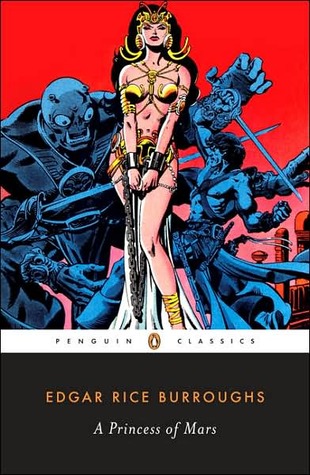
Today I'm delving into another old book, in this case A Princess of Mars by Edgar Rice Burroughs. Originally published in serial form, like most novels at the time, and later collected in book format, A Princess of Mars is the first in the wildly popular series featuring the adventures of John Carter on the planet Mars, or as the inhabitants call it, Barsoom. In addition to the John Carter series, Burroughs was also creator of the Tarzan series and I can see where there might be some overlap between the two. Strong, muscular men who go around without shirts on, saving women and fighting bad guys. Although that's a whole sub-set of pulp adventure novels that used to be wildly popular if they weren't terribly nuanced.
The plot follows the adventures of the aforementioned John Carter who, while prospecting for gold in Arizona after the Civil War, stumbles into a cave to escape from Apaches. Carter finds himself unable to move and then collapses into sleep. Somehow he finds himself standing outside himself and is then transported to Mars, a dying planet where the inhabitants, the green and red races of Martians, are locked in endless battles over dwindling resources. Because Mars has much lower gravity than Earth, Carter finds himself able to kill Martians twice as big as him with his bare hands and able to jump thirty feet in the air. He quickly rises to prominence as a warrior among the Martians and meets and falls in love with Dejah Thoris, a Martian princess. Carter spends ten years living on Mars and then, just as mysteriously, ends up right back on Earth.
The book actually focuses more on Carter's early adventures, his arrival on Mars, integration into Martian society, and eventual rise to prominence. The story then abruptly glosses over nine years of his time on Mars before his return. Which is clever in a way because it left plenty of room for Burroughs to write sequels of Carter's adventures on Mars. The book does a pretty good job of introducing the reader to the world of Mars that Burroughs has created, leaving some room for expansion, if being basically a bunch of exposition lobbed at you.
I was actually able to pin this book down to the decade it was written because of the presence of radium in the book, which I thought was kind of neat. Specifically radium is the Applied Phlebotinum of choice for the book and is used for all sorts of things from weapons to airship engines. There was this really big fad in the 1910's to put radium in everything, including toothpaste, on the logic it was new and it glowed, therefore it must be good! Unfortunately a lot of people then died of cancer because of this rampant use of radium, but it does serve as a means to date the book.
So how does the story hold up compared to modern times? Not terribly well. There is a typical, subtle sort of racism in that John Carter, a powerful white man from Virginia, is a better warrior than anyone else on Mars and is the absolute best at everything. It definitely falls into Mighty Whitey territory. Also, as is typical of pulp adventures from this era there is a ridiculous amount of people who are naked all the time. Which is something I just don't understand. Clothes are useful! They have pockets which let you hold things! Like pocket watches! And there's a lot of fighting and killing and dying, as well as some old-fashioned sexism. It may have been progressive or scandalous when it came out, but it's pretty tame by today's standards.
Is it worth reading? If you like old-fashioned pulp adventures from the early twentieth century, then sure, go right ahead. As much as I like pulp, I have to say this isn't quite the sort of pulp I like. I've never really gone in for the heroic barbarian type so it makes sense for me to be less than enthused with the idea. But if you like you some techno-barbarians? Probably for you.
- Kalpar
Showing posts with label Raiding the Stacks. Show all posts
Tuesday, November 22, 2016
Thursday, November 17, 2016
Raiding the Stacks: The Lost World, by Sir Arthur Conan Doyle
So this week I'm doing something I haven't done in a very long time and dug up a very old sci-fi classic. Well, I say sci-fi although it's fairly tame compared to H.G. Wells or Jules Verne. Anyway, this week I'm talking about The Lost World by Sir Arthur Conan Doyle, which I borrowed in audio format from the library. Doyle is most famous, of course, for Sherlock Holmes but The Lost World is no less important because it has given a name to a whole subset of the adventure genre.
Lost World fiction involves an isolated location, either a plateau, cave, or mountain range deep somewhere in an ''unexplored'' continent, or equally common an isolated island. Often a lost civilization or species previously believed to be extinct (dinosaurs being the most common) are contained in this secluded, mysterious, and fantastic location. Although less common nowadays because of increased cartographical knowledge, it still works as a period piece and has found its way into plenty of pulp adventures, which I'm definitely a fan of.
The Lost World involves Professor Challenger who claims to have found a plateau in the Amazon rainforest with living examples of previously thought to be extinct species, including dinosaurs. As this is an extraordinary claim there are demands for evidence and one of Challenger's critics, Professor Summerlee, sets off into the Amazon with Lord John Roxton and reporter Edward Malone, before having their expedition hijacked by Challenger. They eventually discover Challenger's plateau and a world filled with dinosaurs, ape men, and an isolated tribe of humans. There are some thrilling adventures and everyone manages to make it back home to England, with much congratulations all around.
The book feels pretty standard for a jungle adventure of the 1910's. There are brave white men, piercing the mysteries of an ''unexplored'' and ''savage'' continent, dealing with physical danger and the occasional treachery of non-white people. And there is really a lot of unfortunate racism in the book, although that honestly should be expected considering when it was written and who was doing the writing. There are still some pretty cringe-worthy parts, such as when the survivors of a group of ape-men are forced into slavery by the group of humans on the plateau. Now, while the ape-men had been killing humans for years, it still doesn't feel right to commit something very close to genocide and systematic slavery.
The science on the dinosaurs is also pretty dated. This was during the era when it was assumed dinosaurs were all large and fairly stupid creatures to explain why they all went extinct. In fact, it wasn't until the late twentieth century that the stereotype of dinosaurs as being incredibly stupid creatures was replaced by our current understanding. So it's definitely odd to see, especially anyone more familiar with the post-Jurassic Park era.
Overall I'd say the book is okay. It's interesting from a historical viewpoint but I don't know if it's got that much else going for it. There are plenty of other Lost World genre stories, some of which are probably more entertaining than this one, if with slightly less purple prose.
- Kalpar
Lost World fiction involves an isolated location, either a plateau, cave, or mountain range deep somewhere in an ''unexplored'' continent, or equally common an isolated island. Often a lost civilization or species previously believed to be extinct (dinosaurs being the most common) are contained in this secluded, mysterious, and fantastic location. Although less common nowadays because of increased cartographical knowledge, it still works as a period piece and has found its way into plenty of pulp adventures, which I'm definitely a fan of.
The Lost World involves Professor Challenger who claims to have found a plateau in the Amazon rainforest with living examples of previously thought to be extinct species, including dinosaurs. As this is an extraordinary claim there are demands for evidence and one of Challenger's critics, Professor Summerlee, sets off into the Amazon with Lord John Roxton and reporter Edward Malone, before having their expedition hijacked by Challenger. They eventually discover Challenger's plateau and a world filled with dinosaurs, ape men, and an isolated tribe of humans. There are some thrilling adventures and everyone manages to make it back home to England, with much congratulations all around.
The book feels pretty standard for a jungle adventure of the 1910's. There are brave white men, piercing the mysteries of an ''unexplored'' and ''savage'' continent, dealing with physical danger and the occasional treachery of non-white people. And there is really a lot of unfortunate racism in the book, although that honestly should be expected considering when it was written and who was doing the writing. There are still some pretty cringe-worthy parts, such as when the survivors of a group of ape-men are forced into slavery by the group of humans on the plateau. Now, while the ape-men had been killing humans for years, it still doesn't feel right to commit something very close to genocide and systematic slavery.
The science on the dinosaurs is also pretty dated. This was during the era when it was assumed dinosaurs were all large and fairly stupid creatures to explain why they all went extinct. In fact, it wasn't until the late twentieth century that the stereotype of dinosaurs as being incredibly stupid creatures was replaced by our current understanding. So it's definitely odd to see, especially anyone more familiar with the post-Jurassic Park era.
Overall I'd say the book is okay. It's interesting from a historical viewpoint but I don't know if it's got that much else going for it. There are plenty of other Lost World genre stories, some of which are probably more entertaining than this one, if with slightly less purple prose.
- Kalpar
Thursday, July 10, 2014
Raiding the Stacks: From the Earth to the Moon, & Around the Moon, by Jules Verne
Overall this work is in many ways very classic Verne and actually remind me of both 20,000 Leagues Under the Sea and Journey to the Center of the Earth. In the first respect, this novel is filled with an almost pedantic attention to scientific detail, much like 20,000 Leagues Under the Sea, which makes these stories in some cases prophetic about our eventual endeavors to reach the moon. On the other hand, these novels are also filled with a lot of oddball science that, although seeming cutting edge in the late 1800's, seems downright laughable today, much like Journey to the Center of the Earth. I will admit that the more technical aspects are definitely more difficult to read through, but it shows the Verne was keeping abreast of the latest scientific thought of his day.
What is particularly uncanny about this set of novels is that Verne writes about the Americans raising money to launch a projectile towards the moon and furthermore launching it from a location in Florida near Tampa. (Granted Cape Canaveral is on the opposite side of the peninsula, but what's a hundred-odd miles between friends?) And there is, of course, a very good reason for this. As Verne predicted, the most efficient way to send something towards the moon is to launch it from somewhere within the 28th Northern and Southern parallels. Florida and Texas were the only two states at the time below the 28th Northern parallel. (Hawaii of course is almost entirely below the 28th parallel but would not be annexed until 1898.) What is equally impressive was Verne's ability to calculate the necessary escape velocity of 11.2 km/s given the information and methods available to him at the time. In these respects the novel was rather prophetic, but it definitely starts to break down from there.
When you get into the later parts of the novel the science definitely starts to break down, although I guess you can't really judge Jules Verne for relying upon what was their best working knowledge in the 1860's. After all, new discoveries in science are being made all the time, constantly revising our understanding of the universe around us. Ideas such as the moon being oblong-shaped like an egg, that it contains some traces of atmosphere, and that it must have been inhabited at some point, seem downright silly in retrospect, but they were probably considered cutting-edge in the day. I personally found the assumption by the characters that we would one day launch a mission to the surface of the sun and develop machines to straighten the earth's axial tilt particularly funny. It seemed to capture the essence of the belief of the late nineteenth century that there was absolutely nothing that science could not achieve, given sufficient time and resources.
Overall these two books were kind of funny with the insanely optimistic belief in science and technology, as well as the assumption that only the Americans would be brash enough to attempt to take a trip to the moon. However, the extreme focus on science and mathematics really takes away from the story in many respects and it actually takes away from the story.
- Kalpar
Thursday, May 30, 2013
Raiding the Stacks: Le Morte d'Arthur, by Sir Thomas Malory
So I decided to go old school again this week and read Le Morte d'Arthur, and let me tell you it was definitely a challenge. Before I get started with the review, let me provide some background. Within English literature Le Morte d'Arthur is probably the definitive source for most of what you know about Arthurian legend. Certainly there are other sources, such as the tale of Sir Gawaine and the Green Knight, but every modern retelling from T.H. White's The Once and Future King to the musical Camelot draw upon Le Morte d'Arthur as source material. Truly this book is responsible for many people's understanding of King Arthur and his knights.
The book itself tends to be rather schizophrenic, and for good reason. Le Morte d'Arthur is actually a collection of many other Arthurian legends, some of which had existed for hundreds of years before Malory decided to record them in his opus. In addition, the book was only published posthumously and the printer, William Caxton, did a rather clumsy job editing the text. This has lead to some mechanical issues which can make the text rather difficult to read and it has a tendency to reiterate points already made before. The best way to approach this book is to treat it as an anthology that spans hundreds of years of European history.
The biggest challenge I had with this book, and this is an issue I've had with other works like The Aeneid and The Illiad where it tends to contain a lot of very repetitive fighting. People proffer to joust and then strike many sad strokes and smite on the left hand and on the right hand and win much worship. I understand that these rather repetitive elements exist so that bards and troubadours could easily remember these stories when they were telling them to nobility, but it becomes very tedious to read as a twenty-first century audience. The largest portion of this book, the story of Sir Tristan, has a significant amount of such fighting and became a forced march at some points. Again, this is really a product of the story being hundreds of years old, but it makes it very difficult for a twenty-first century reader anyway.
The other thing that really surprised me was the fact that there was a great level of corruption within Arthur's court from the very beginning, which ultimately leads to the fall of the Round Table. Many of you are probably aware of the adulterous relationship between Sir Lancelot and Queen Guinevere, but that is not the only disreputable act committed by men who are, ostensibly, the flower of knightly chivalry. Sir Gawain and his brothers, for example, murder Sir Lamorak over a blood feud and numerous other petty quarrels seem to constantly strain the peace of Arthur's realm. Perhaps what was most surprising to me was the fact that Arthur willingly had sex with his sister, Morgan la Fey, thus conceiving his son and nephew Sir Mordred. In most of the versions I had read previously, which were the type cleaned up to make them appropriate for young boys, Morgan la Fey is portrayed as enchanting or deceiving Arthur because she's evilly plotting the downfall of Arthur's reign, almost as soon as it begins. Really, despite the glory and chivalry of Arthur's knights it seems like Camelot was doomed from the very beginning because of the sins that rotted it from the inside out.
Some portions of this book I think modern audiences could still really enjoy. I know I enjoyed the story of Sir Gareth and the portion dedicated to the quest for the Holy Grail, but other portions like Arthur's war with the Emperor Lucius and the tale of Sir Tristan drag because of their repetitive nature. I would recommend on the whole though, that only the serious Arthur scholar read the whole of Le Morte d'Arthur. I think the more casual fans would be better served by reading many of the excellent adaptations which have come along in the intervening five centuries.
- Kalpar
Thursday, March 28, 2013
Raiding the Stacks: The Aeneid, by Virgil
| Aeneas flees the sack of Troy |
The Aeneid was written at a very critical time in Roman history and had a very important purpose for the Roman people. It was at this time that Augustus Caesar had defeated all of his rivals and transformed the Roman Republic into the Roman Empire, although the Roman Republic had been an empire in all but name as John Green has pointed out elsewhere. With the dramatic addition of an imperial court and the chaos of the preceding civil wars, many Romans had begun to wonder about their identity as Romans and had lost faith in the might of Rome. In addition, many Romans, well the Romans who were in charge, were concerned with the decay of morals and increased sexual licentiousness and Rome's traditional founding myths, filled with the rape of the Sabine women, the fratricide of Romulus, and the general bad behavior of Rome's first kings, were no fit examples for the Roman people. So Virgil sought to create a new origin myth for the Roman people with an emphasis on the traditional Roman value of pietas, or devotion to duty to one's country or family, which Aeneas exhibits throughout the epic.
In creating an origin myth for the Romans, Virgil drew on the great epics of Homer, the Iliad and the Odyssey for content and if you aren't familiar with those then I'd suggest you go read them first. (Although at least with the Iliad many chapters can be omitted because of their repetitive nature.) Just as the Iliad in many ways defined Greek virtues and what it meant to be Greek, regardless of your city-state, the Aeneid extols the virtues of duty to country and skill at warfare which were seen as vital for the continued survival of the Roman state. At many points Aeneas is tempted to cease his quest to found a city in Italy that shall be the wellspring of the Roman people, especially with Dido of Carthage, but he continues on his divinely-appointed fate regardless. (Although with a few swift prods in the buttocks by the gods.) Furthermore Aeneas and his entourage do a lot of fighting. A lot. To the point where much like the Iliad it's people I have never met before getting killed by other people I have never met before and as a result have no reason to care about the conflict. I am aware I am judging a two thousand year old poem by the standards of today, but I still find it difficult to get invested into the battle scenes when it consists of one scene characters. Much like the very combat-heavy chapters of the Iliad, such scenes could probably be omitted by most readers.
Another interesting element that I noticed in the Aeneid was frequent mention of the importance to observe the proper burial rites, lest the souls of the dead be left wandering the shores of the river Styx for a hundred years. I don't think Rome had a particular problem with safe burial practices at this time, with laws prohibiting burial within city limits for sanitation purposes, but it's odd how frequently proper due to the dead is mentioned within the story and people go to great lengths to retrieve the corpses of their comrades and provide them proper tombs. I suppose it is possible that observance of such rites was another virtue that Virgil was attempting to emphasize, but I have seen no such statements in the extensive interpretations of the Aeneid since its creation.
While the Aeneid is firmly cemented as a "classic", I think it's really only interesting to people who have an interest in classical history or mythology and doesn't have as much to offer to modern audiences. While duty to one's family and country are admirable traits to an extent, taking them to selfless levels can have dire consequences. If you're interested in Rome then I'd recommend looking at it, but for the most part it can safely be ignored.
- Kalpar
Thursday, February 28, 2013
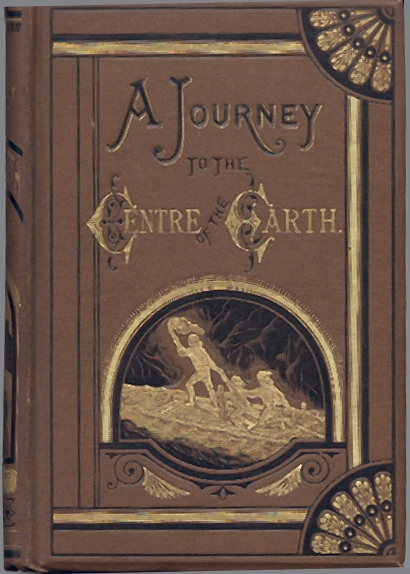
Raiding the Stacks: A Journey to the Center of the Earth, by Jules Verne
Well it's the last week of the month again, so that means I dig into the old and dusty public domain books to find something to talk about. This time I return to the works of Jules Verne and his fairly short novel, A Journey to the Center of the Earth, which is exactly what it says on the tin. There are some people, and they take a journey to the center of the Earth. As it's been mentioned on Wikipedia, this book really does not work as well as some of Verne's other stories. In the case of Twenty Thousand Leagues Under the Sea, Verne imagined a lot of what a modern submarine might look like with its electric appliances. In the case of Journey to the Center of the Earth the story relies on geological hypotheses which are definitively proven incorrect today and so it makes for a rather unbelievable story. As a work of science fiction, ignoring the inaccuracies, I am not sure if this story is strong enough to endure.
The story follows the adventures of Professor Lidenbrock, a renown German geologist who has obtained a note from an Icelandic alchemist of the sixteenth century who claims to have gone to the center of the world through an extinct volcano in Iceland. Taken along with Professor Lidenbrock is his nephew, Axel, and their Icelandic guide, Hans. (I should point out that in my translation Professor Lidenbrock's name to Professor Hardwigg and Axel's name to Harry.) Despite Axel fully expecting them to encounter terrific heat as they delve into the depths of the earth, they find countless tunnels and galleries which are all at a very comfortable temperature. Eventually they even find an entire ocean over a hundred miles beneath the surface of the earth and evidence that a number of creatures from previous time periods may still exist in the bowels of the earth.
This book is definitely a work from Verne. There are a couple of almost fanboy-glee passages dedicated to the wonders of electricity and its superiority over gas and coal which is a very distinct Verne fingerprint in the stories I have read. Furthermore, a lot of the story seems to focus on the fantastic and almost impossible things that Professor Lidenbrock, Hans, and Axel encounter on their journeys. Several chapters are dedicated to the wonders of Iceland (which is a pretty cool place and I think I'd like to go someday) to the countless mineral treasures observed within the bowels of the earth. Verne even works in what was some cutting-edge paleontology in 1864 with a number of fossils, including human fossils discovered rather recently in Europe. While much of this is rather fascinating it bears the very distinct marks of being from the nineteenth century and suffers as a result.
First of all, the premise is, of course, fanciful at best now because we know beyond a doubt that the center of the earth is filled with lots of lava at thousands of degrees in temperature which is impossible for humans to breach. Hell, we haven't gotten further than about 1.2 kilometers into the earth's crust and that still leaves roughly another four kilometers to get to the mantle, at its thinnest point! Getting further within the earth appears to be simply impossible because temperature increases to a point where humans cannot survive. As a result, Verne's story looks rather foolish by comparison. In regards to Verne's foray into paleontology he is, once again, proven wrong by the advance of time and research. Unfortunately Verne constantly refers to the Great Flood, you know, the one in the Bible with Noah. The one that didn't happen. I understand that Verne is merely a product of his times when people, well a larger number of people, thought Genesis really happened, but when your entire understanding of geology and paleontology is dependent on separating time between before and after the great flood, it casts some serious doubts onto your understanding of the fields.
Among the other issues was a mention of a race of giants apparently thought to exist in the fossil record during the 1860's and the characters discovering one such member of the species during their adventures. I am not really sure where such ideas originated but obviously such humans never existed, at least according to our knowledge of today, besides which twelve foot high humans are impractical because of the square-cube law. Finally there was the problem with our characters' escape through a volcano with the description that they were surrounded by boiling water during their ascent. Aside from the fact that lava is, as I mentioned, thousands of degrees in temperature, but if our characters were exposed to temperatures very close to water's boiling point they would very definitely be dead. It is an unfortunate misunderstanding on the part of Verne, but completely shatters any suspension of disbelief for the reader.
Ultimately I would advise passing this story up for my readers. It simply has not aged well and its scientific foundation is rocky at best. Twenty Thousand Leagues Under the Sea is much better in comparison to how its research has stood the test of time and is probably the better of Verne's classics.
- Kalpar
The story follows the adventures of Professor Lidenbrock, a renown German geologist who has obtained a note from an Icelandic alchemist of the sixteenth century who claims to have gone to the center of the world through an extinct volcano in Iceland. Taken along with Professor Lidenbrock is his nephew, Axel, and their Icelandic guide, Hans. (I should point out that in my translation Professor Lidenbrock's name to Professor Hardwigg and Axel's name to Harry.) Despite Axel fully expecting them to encounter terrific heat as they delve into the depths of the earth, they find countless tunnels and galleries which are all at a very comfortable temperature. Eventually they even find an entire ocean over a hundred miles beneath the surface of the earth and evidence that a number of creatures from previous time periods may still exist in the bowels of the earth.
This book is definitely a work from Verne. There are a couple of almost fanboy-glee passages dedicated to the wonders of electricity and its superiority over gas and coal which is a very distinct Verne fingerprint in the stories I have read. Furthermore, a lot of the story seems to focus on the fantastic and almost impossible things that Professor Lidenbrock, Hans, and Axel encounter on their journeys. Several chapters are dedicated to the wonders of Iceland (which is a pretty cool place and I think I'd like to go someday) to the countless mineral treasures observed within the bowels of the earth. Verne even works in what was some cutting-edge paleontology in 1864 with a number of fossils, including human fossils discovered rather recently in Europe. While much of this is rather fascinating it bears the very distinct marks of being from the nineteenth century and suffers as a result.
First of all, the premise is, of course, fanciful at best now because we know beyond a doubt that the center of the earth is filled with lots of lava at thousands of degrees in temperature which is impossible for humans to breach. Hell, we haven't gotten further than about 1.2 kilometers into the earth's crust and that still leaves roughly another four kilometers to get to the mantle, at its thinnest point! Getting further within the earth appears to be simply impossible because temperature increases to a point where humans cannot survive. As a result, Verne's story looks rather foolish by comparison. In regards to Verne's foray into paleontology he is, once again, proven wrong by the advance of time and research. Unfortunately Verne constantly refers to the Great Flood, you know, the one in the Bible with Noah. The one that didn't happen. I understand that Verne is merely a product of his times when people, well a larger number of people, thought Genesis really happened, but when your entire understanding of geology and paleontology is dependent on separating time between before and after the great flood, it casts some serious doubts onto your understanding of the fields.
Among the other issues was a mention of a race of giants apparently thought to exist in the fossil record during the 1860's and the characters discovering one such member of the species during their adventures. I am not really sure where such ideas originated but obviously such humans never existed, at least according to our knowledge of today, besides which twelve foot high humans are impractical because of the square-cube law. Finally there was the problem with our characters' escape through a volcano with the description that they were surrounded by boiling water during their ascent. Aside from the fact that lava is, as I mentioned, thousands of degrees in temperature, but if our characters were exposed to temperatures very close to water's boiling point they would very definitely be dead. It is an unfortunate misunderstanding on the part of Verne, but completely shatters any suspension of disbelief for the reader.
Ultimately I would advise passing this story up for my readers. It simply has not aged well and its scientific foundation is rocky at best. Twenty Thousand Leagues Under the Sea is much better in comparison to how its research has stood the test of time and is probably the better of Verne's classics.
- Kalpar
Saturday, February 2, 2013
An Epic Response to Kalpar's Epic Post Concerning the Epic of Gilgamesh. Epic.
Stupid title aside, and at the risk of the blog sounding like a mutual masturbation party, I really enjoyed reading Kalpar's post on the Epic of Gilgamesh. I found that he nailed a lot of the reasons why Ancient literature is so fascinating and why it does need to be studied: namely that in attempting to understand it and interpret it, we peel back layers of storytelling that inform us of the situation and the culture surrounding the authors.
The part that most caught my eye was near the end of that post, concerning the connection between the Torah and the Epic of Giggles. As some of you may know, while Kalpar and I were at university together, I spent my 4 years picking up a degree in theology; oddly enough I found a direct use for that degree right out of college and currently teach religion at one of the local high schools in the area, specializing in Scriptural studies. In teaching my students one of the things I try to focus on near the start of our studies of the Torah and the rest of the Old Testament is learning how to peel back the layers of ancient literature to get to the lessons and meaning of the story buried underneath. One point that Kalpar made (and the point that will be the premise of much of the rest of this post) was that Giggles' view of cities (that they are the center of civilization, etc.) is a notably different one from the view of urban life found in the Old Testament. A bit more context might help to explain why two civilizations who grew up very near to each other would have such radically different views of the way people should live.
For those of you who have little to no knowledge of the Scriptures, let me go all middle-ages-monk up in here and illuminate things a little for you. Much of what we now call the Old Testament was not written as a historical record or by some ancient Hebrew journalist recording the events as the occurred exactly as they occurred. Much of the Old Testament was written down during a period of time in Jewish history known as the Babylonian Exile. Long story short, Babylon was the major power in the Middle Eastern region during the 6th century BC. Babylon is essentially running a protection racket against Judah and when Judah's king decides not to pay, Babylon comes in, sacks Jerusalem, burns down the Temple of Solomon, and hauls off most of the population to exile in Babylon. The message was a common one in the ancient world, (see the Roman attack on Jerusalem about 600 years later) and which meant that the Babylonians (and by proxy their gods) were stronger than the Jews.
Again, it is at this point in their history, between 587 and 537 BC that the Jews are setting these stories down. However, to some extent they have an agenda in mind; their aim is to remind themselves and future generations that their God is the only god and from a theological standpoint, they lost to the Babylonians because they had not been upholding their end of the Covenant of Sinai.Therefore, in the minds of the Jews the emphasis needed to be placed on putting a total dependence back on God if they had any hope of getting themselves out of the Exile. As these stories were set down, they are filtered through this need to ensure that Judah recognizes its reliance on God and this is where we get the disdain for cities and urban, settled living.
Now, to a large extent the Sumerians and Babylonians who carried Giggles' story were right to say that cites bring about civilization. After all, for a society to grow, have an economy, research technologies and advance it requires settled living based on agriculture and some form of barter and trade. This provides enough additional resources to allow some members of society to do things which don't focus on the basic needs of survival and then the civilization can grow and advance. However, this creates two problems for the Jewish authors of the OT. First, where cities cause wealth and prosperity and advancement, they also cause crime, poverty, anonymity and a class structure and hierarchy which is very difficult to break. For the ancient Hebrews, a lot of these things were situations which risked violating, if not directly doing so, the Covenant with God. In slightly more modern language, it created a culture of sin. Much of the latter parts of the Old Testament, especially the prophetic books deal with the problems caused by that settled, urban living. The second problem it causes is a sense of self-reliance. It would seem odd to a modern western individual, that a sense of self reliance would be contrary to what any good God would want for his creation; however, bear in mind that the Jews see the Exile as a result of too much self-reliance and that the remedy for the Exile is total reliance on God to bail them out. We see time and time again in the Scripture that when the Jews are wandering around and are more nomadic, they do have to rely more-so on divine providence than if they were living in settled communities with a system of government/priests/etc. In these nomadic cases, things tend to go better for them. However, when they settle down and start causing the problems mentioned previously, then things start to deteriorate.
I would like to qualify a few of the things I have said. One, no one is advocating a return to a nomadic lifestyle. Organized, urban living is here to stay, and for the benefits mentioned above, it should be. Secondly, no one is advocating a lack of self-reliance or self-support. That also, at least in modern western society, is necessary for individual growth and the growth of society at large. The point I am making is that the Jews have their own agenda in writing these stories down, and hopefully in the course of reading this you have some greater understanding as to why. And I would also like to point out, that to some extent the Jews of the 500s BC still have a point in 2013. There are problems (e.g. poverty, crime, set class structures, etc) with an urban-based society that continue to exist today and still stem from the same root causes. One of the challenges the Jews were failing to live up to was the challenge to address these problems and take care of people who were suffering under those burdens; I would argue that we are certainly still struggling with that as well. Furthermore, an over-emphasis on self-reliance and the self-made-man can blind one to the real sense that we are all co-dependent on people we can't even see or imagine. Some greater sensitivity to how tugging the web in one point affects all the other strands as well would not be amiss in our interconnected age.
I want to conclude with an apology in both senses of the word. First, I apologize for the length of the post (understanding Scripture is something I am passionate about) and if at any point I may have seems disrespectful of anyone's belief structure. God knows I am not looking to start shit with a post on a blog on the internet. Second, I wish to apologize, in the sense of giving an account or explanation for, my reason for posting this. I do think that theistic or atheistic, the Scriptures we carry today still have a great deal of meaning and challenge presented to us. We have solved very few of the problems the Bible presents us with, and often we have multiplied the problems. If we know how to read that book and understand it and let it speak to us on its own terms and not necessarily on ours, then I think a lot of good can come from those pages.
Defender of the Faith
- Carvan
Labels:
Carvan,
Epic of Gilgamesh,
History,
Raiding the Stacks,
Torah
Thursday, January 31, 2013
Raiding the Stacks: Epic of Gilgamesh
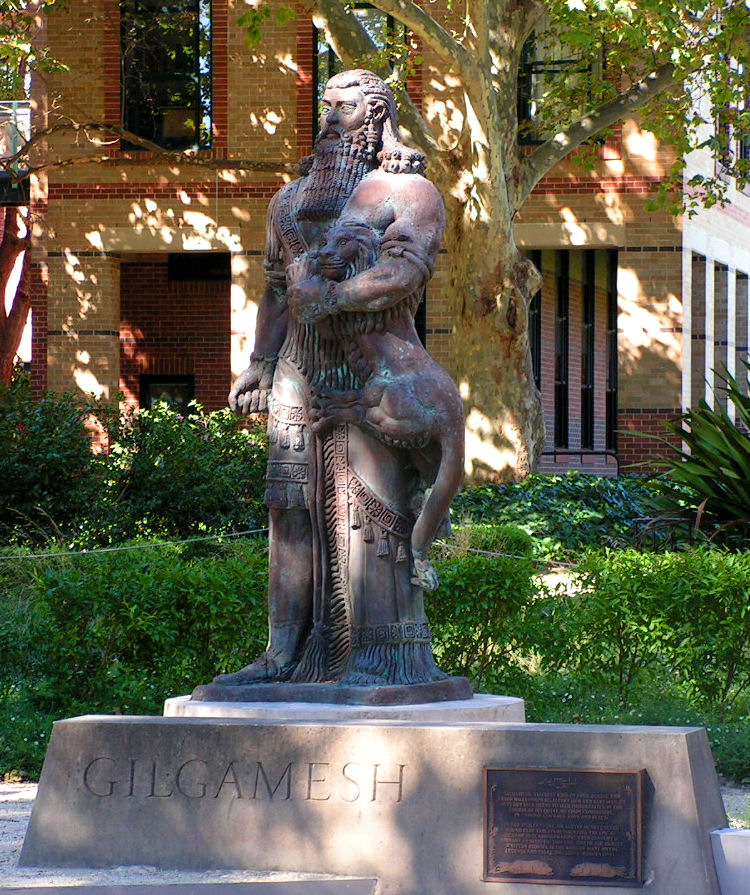
So for this month's Raiding the Stacks I decided to go way way back to the beginning of the written word with the Epic of Gilgamesh! Well, okay, about two or three thousand years after we started writing things down, but the Epic of Gilgamesh is roughly four thousand years old and is the oldest story known to modern humans. Of course we only know the epic in a highly fragmented form today, even clay tablets can be worn down by time, but the the exploits of Gilgamesh and his friend Enkidu remain relevant to a twenty-first century audience.
The Epic of Gilgamesh, as we know it today, appears to be a collection of fragments from earlier stories of Mesopotamian civilizations. (I am referencing largely the gloss from the free version for the Kindle from Amazon in this paragraph.) Mesopotamia saw a number of successive civilizations whose cultures built upon and expanded the previous cultures. As such the story of Gilgamesh, at least according to scholarly research, is a retelling and elaboration of previous stories that existed in previous cultures. Evidence of this gradual retelling includes the existence of Gilgamesh's companion Enkidu who appears to be the hero of an earlier story that was melded with the later story of Gilgamesh.
In regards to the plot, which as I mentioned is largely fragmented, we begin with Enkidu who is created by the gods as a rival to Gilgamesh but lives out in the fields as a wild animal. Eventually Enkidu is brought to civilization and after an initial fight with Gilgamesh becomes his boon companion. Eventually, after many adventures, Enkidu is struck down by the goddess Ishtar and dies which prompts Gilgamesh to undertake a final great quest to find the secret of immortality and escape the clutches of death himself. Ultimately Gilgamesh is fruitless in his quest for immortality and is advised to not only enjoy life now, but ensure the proper observation of burial rites to ensure the well-being of the spirits of the dead.
The story of Gilgamesh is, as most stories we have from years with BCE behind them, a myth. Now, I should point out that myth from a historical and anthropological perspective has a very different meaning from the regular English vernacular. In the case of the vernacular a myth is something fantastical which has no existence in reality; Bigfoot and the Loch Ness Monster for example. From an anthropological and historical perspective, however, myth generally means a story which is passed down within a culture that attempts to convey specific information to succeeding generations. Myths are especially useful for cultures without a formal education system because they can convey to successive generations important practices necessary for survival. In the example of the Gilgamesh myth it conveys a few very important messages in its content.
First, as I mentioned before, the Epic of Gilgamesh talks about the importance of observing burial rites to ensure the well-being of the spirits of the dead as well as the importance of enjoying life while you can. The second message, which was gone about at great length in the gloss of one of the versions I read, was the importance of cities and civilized life for mankind. This particular message is included in the story of Enkidu and his gradual evolution from little more than a beast of the field to a civilized and cultured warrior. This is of particular interest from an anthropological standpoint because this message is actually contrary to the message contained within the Torah. The Hebrew scriptures, for the most part, idealizes a pastoral and nomadic existence and disparages a life of cities and toil. Specific mention is made of Cain, who is cursed to toil forever by the Hebrew god and is the founder of the first city. It is a very interesting contrast between two geographically similar cultures and I think it's an interesting field for future research.
Ultimately the Epic of Gilgamesh attempts to answer humanity's persistent questions regarding our mortality and it seems in four thousand years we haven't come up with many more answers. I must admit that because of its largely fragmented form the epic makes for fairly poor reading, and its interest is largely from a historical and anthropological perspective. While it was a very interesting research project for myself, I must admit it probably would not have much interest for a majority of my readers.
- Kalpar
The Epic of Gilgamesh, as we know it today, appears to be a collection of fragments from earlier stories of Mesopotamian civilizations. (I am referencing largely the gloss from the free version for the Kindle from Amazon in this paragraph.) Mesopotamia saw a number of successive civilizations whose cultures built upon and expanded the previous cultures. As such the story of Gilgamesh, at least according to scholarly research, is a retelling and elaboration of previous stories that existed in previous cultures. Evidence of this gradual retelling includes the existence of Gilgamesh's companion Enkidu who appears to be the hero of an earlier story that was melded with the later story of Gilgamesh.
In regards to the plot, which as I mentioned is largely fragmented, we begin with Enkidu who is created by the gods as a rival to Gilgamesh but lives out in the fields as a wild animal. Eventually Enkidu is brought to civilization and after an initial fight with Gilgamesh becomes his boon companion. Eventually, after many adventures, Enkidu is struck down by the goddess Ishtar and dies which prompts Gilgamesh to undertake a final great quest to find the secret of immortality and escape the clutches of death himself. Ultimately Gilgamesh is fruitless in his quest for immortality and is advised to not only enjoy life now, but ensure the proper observation of burial rites to ensure the well-being of the spirits of the dead.
The story of Gilgamesh is, as most stories we have from years with BCE behind them, a myth. Now, I should point out that myth from a historical and anthropological perspective has a very different meaning from the regular English vernacular. In the case of the vernacular a myth is something fantastical which has no existence in reality; Bigfoot and the Loch Ness Monster for example. From an anthropological and historical perspective, however, myth generally means a story which is passed down within a culture that attempts to convey specific information to succeeding generations. Myths are especially useful for cultures without a formal education system because they can convey to successive generations important practices necessary for survival. In the example of the Gilgamesh myth it conveys a few very important messages in its content.
First, as I mentioned before, the Epic of Gilgamesh talks about the importance of observing burial rites to ensure the well-being of the spirits of the dead as well as the importance of enjoying life while you can. The second message, which was gone about at great length in the gloss of one of the versions I read, was the importance of cities and civilized life for mankind. This particular message is included in the story of Enkidu and his gradual evolution from little more than a beast of the field to a civilized and cultured warrior. This is of particular interest from an anthropological standpoint because this message is actually contrary to the message contained within the Torah. The Hebrew scriptures, for the most part, idealizes a pastoral and nomadic existence and disparages a life of cities and toil. Specific mention is made of Cain, who is cursed to toil forever by the Hebrew god and is the founder of the first city. It is a very interesting contrast between two geographically similar cultures and I think it's an interesting field for future research.
Ultimately the Epic of Gilgamesh attempts to answer humanity's persistent questions regarding our mortality and it seems in four thousand years we haven't come up with many more answers. I must admit that because of its largely fragmented form the epic makes for fairly poor reading, and its interest is largely from a historical and anthropological perspective. While it was a very interesting research project for myself, I must admit it probably would not have much interest for a majority of my readers.
- Kalpar
Thursday, December 20, 2012
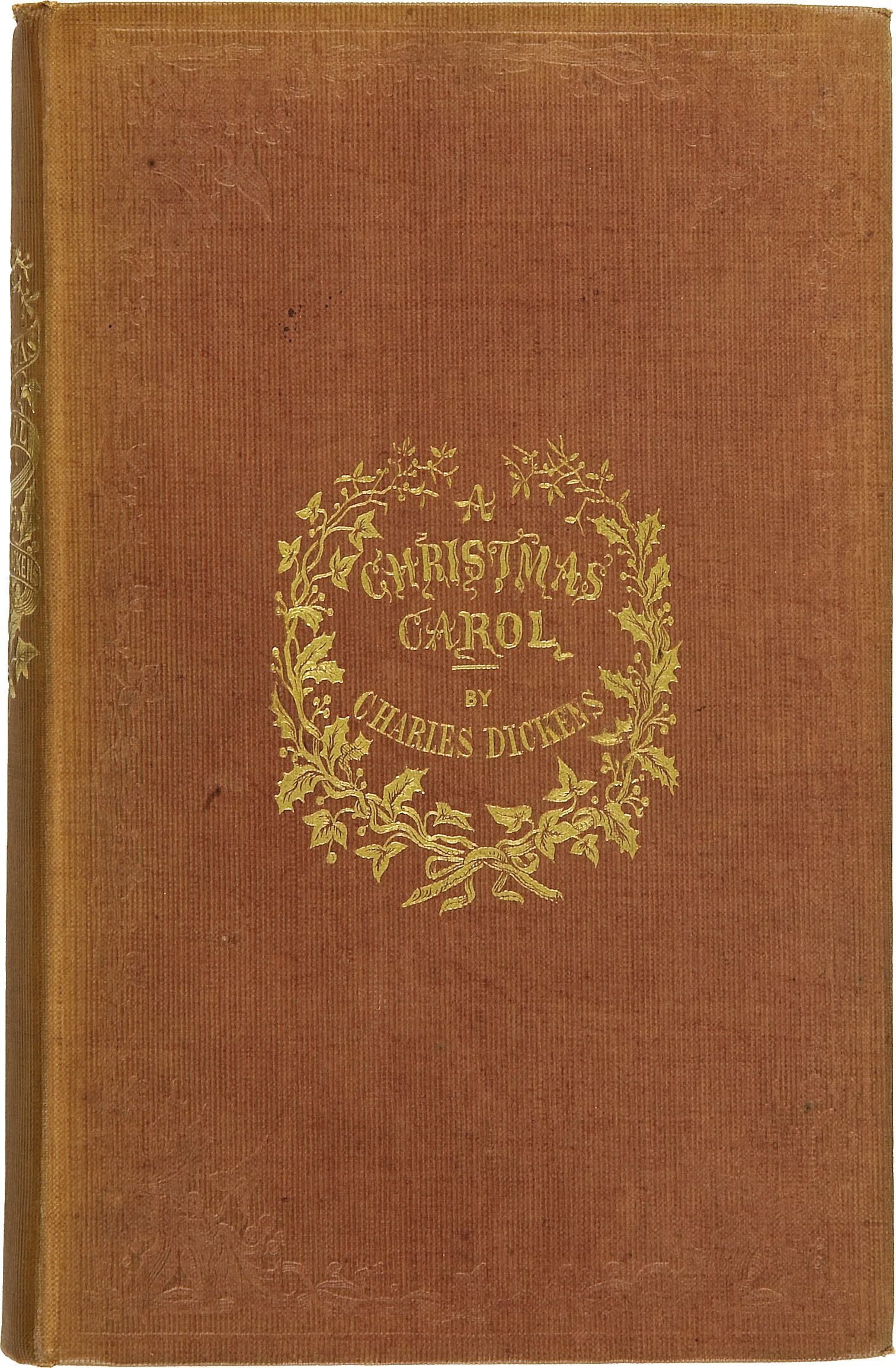
Raiding the Stacks: A Christmas Carol, by Charles Dickens
Our Raiding the Stacks feature comes a little early this month in preparation for Christmas. This month we're taking on the out-of-copyright classic, A Christmas Carol, by Charles Dickens. Now, I'm sure all my dear readers know this plot forwards and backwards, so I won't go through the plot of this story. In fact, A Christmas Carol is by far and away my favorite Christmas story. But instead of talking about the plot, I want to talk about the importance of A Christmas Carol to the development of Christmas as a holiday that we know and love today. Despite having been written over a hundred and fifty years ago, A Christmas Carol remains a central part of many people's Christmas traditions and its message of charity and goodwill towards our fellow man is still a timely message.
By the early nineteenth century, Christmas had become a relatively unimportant holiday that was rarely celebrated. In previous centuries Christmas had a strong religious focus and was celebrated largely in a community setting with events such as the wassail, but in an increasingly urban population the old celebrations had significantly reduced significance. What is important about A Christmas Carol is that it invented, almost from whole cloth, many of the traditions that we perpetuate today. Family gatherings, songs and games, turkey dinners, and charity towards the less fortunate are all aspects that Dickens wove into A Christmas Carol and remain essential parts of our current celebrations. In addition, the message of charity towards the less fortunate and the need for social change remains important today, perhaps even more so because of the ongoing global economic recession.
In regards to the actual text itself, it's a rather short story. I know, I was surprised too! Something short from Dickens! The weird thing is it feels far too short for a well-developed story. All of the essential elements of the story are there, of course: Scrooge, the ghosts, Bob Crachit and Tiny Tim. The problem is that the story feels almost fragmented to me, with many important pieces of dialog glossed over in a paragraph. While I understand that this is a short story, which enabled Disney to make a very short special with their classic characters, I felt like it could have been just the slightest bit longer to provide more depth to the characters and situations. Of course plenty of people have obviously enjoyed this story for a century and a half, otherwise we wouldn't have it today, I just wish it took longer than about two hours for me to read the story. I honestly think that you'd be better off going with one of the many film adaptations as part of your holiday traditions
If you really want to enjoy this Christmas classic this year, I definitely recommend either A Muppet Christmas Carol, or Scrooged with Bill Murray. The Muppet version has plenty of awesome songs that you'll remember throughout the Christmas season, and Scrooged is a hilarious 1980's update of the classic tale. Obviously there are dozens of adaptations and versions you can watch with your family and friends this Christmas and I encourage you to find one that you love. I hope you all have a wonderful Christmas this year and I leave you with this song from A Muppet Christmas Carol.
- Kalpar
By the early nineteenth century, Christmas had become a relatively unimportant holiday that was rarely celebrated. In previous centuries Christmas had a strong religious focus and was celebrated largely in a community setting with events such as the wassail, but in an increasingly urban population the old celebrations had significantly reduced significance. What is important about A Christmas Carol is that it invented, almost from whole cloth, many of the traditions that we perpetuate today. Family gatherings, songs and games, turkey dinners, and charity towards the less fortunate are all aspects that Dickens wove into A Christmas Carol and remain essential parts of our current celebrations. In addition, the message of charity towards the less fortunate and the need for social change remains important today, perhaps even more so because of the ongoing global economic recession.
In regards to the actual text itself, it's a rather short story. I know, I was surprised too! Something short from Dickens! The weird thing is it feels far too short for a well-developed story. All of the essential elements of the story are there, of course: Scrooge, the ghosts, Bob Crachit and Tiny Tim. The problem is that the story feels almost fragmented to me, with many important pieces of dialog glossed over in a paragraph. While I understand that this is a short story, which enabled Disney to make a very short special with their classic characters, I felt like it could have been just the slightest bit longer to provide more depth to the characters and situations. Of course plenty of people have obviously enjoyed this story for a century and a half, otherwise we wouldn't have it today, I just wish it took longer than about two hours for me to read the story. I honestly think that you'd be better off going with one of the many film adaptations as part of your holiday traditions
If you really want to enjoy this Christmas classic this year, I definitely recommend either A Muppet Christmas Carol, or Scrooged with Bill Murray. The Muppet version has plenty of awesome songs that you'll remember throughout the Christmas season, and Scrooged is a hilarious 1980's update of the classic tale. Obviously there are dozens of adaptations and versions you can watch with your family and friends this Christmas and I encourage you to find one that you love. I hope you all have a wonderful Christmas this year and I leave you with this song from A Muppet Christmas Carol.
- Kalpar
Thursday, November 29, 2012
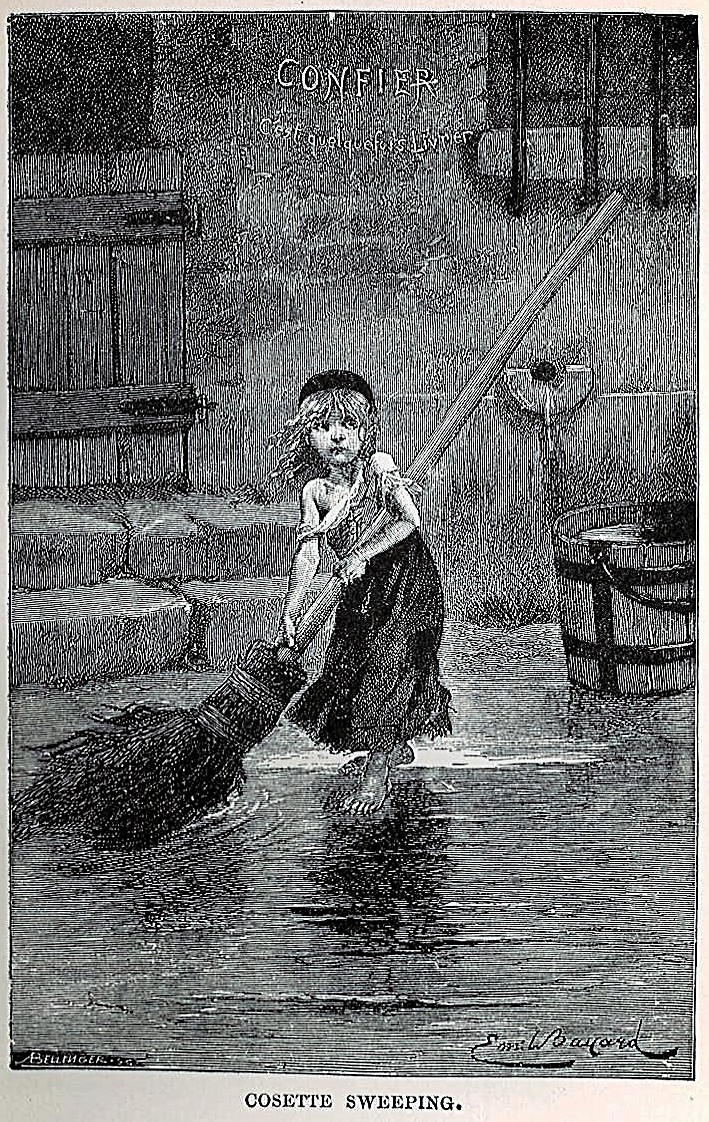
Raiding the Stacks: Les Miserables, by Victor Hugo
This week I've decided to do something a little different than I usually do here at Kalpar's Arsenal. As my long-time readers are no doubt aware by now, I've been making an effort to continue my Raiding the Stacks feature where I read public-domain books on my kindle and review them for the reading pleasure of my two fans. Normally I've been sticking with books that would still count as science fiction or fantasy but this week I've decided to take a look at Victor Hugo's opus, Les Miserables.
As my readers are probably aware, a movie version of the musical Les Miserables is due to come out next month and I am just the slightest bit excited about it. I saw a stage production of the musical a very long time ago and ended up loving it immensely, putting it on the very short list of musicals I like. Since the movie was coming out very soon I decided this was an optimal time to go and read the original novel by Victor Hugo upon which the musical is based. I am forced to admit, that I found reading Les Miserables a considerable challenge, and not just because it's a long book. As the Nostalgia Chick has pointed out before, Les Miserables is one of the longest books ever written, and paper editions come in at around a thousand pages. "But Kalpar!" my reader is probably saying, "How can length possess a challenge to you? You've read other bricks of text like the Song of Ice and Fire series and the Gaunt's Ghosts series. How can a thousand page book pose such a challenge for you?" Well, dear reader, I thank you for your concern but it was not simply its length, but the sheer density of Hugo's tome that gave me one of my most difficult reading challenges to date.
The way I approach Les Miserables, I divide the book into roughly two parts. The first part consists of the actions of the characters we know and love from the musicals: Jean Valjean, Inspector Javert, Fantine, the Thenardiers, Cosette, Marius, and Enjolras and his band of rebels. The parts that actually contain the characters and focus on their development, their interactions, and the continuation of their plots is really interesting and I flew through those parts of the books. If Les Miserables had consisted of purely a focus on the characters, then I would have found this as compelling and interesting to read as other the other, many doorstoppers I have tackled. The problem is that Hugo frequently diverts himself from the compelling characters of his novel and decides to talk at great length about whatever subject he pleases.
Now, in the sake of fairness I will admit that I have read, on the internet, that some people enjoyed Hugo's essays on subjects as varied as the Battle of Waterloo, the Paris sewer system, and the development of French slang. The fact that Les Miserables was a best-seller when it was published in 1862 and remains a popular book suggests that a significant number of people still enjoy Hugo's writing. (Although I suspect the nineteenth century audience enjoyed it because they didn't have TV or Internet to entertain them.) Even considering the opinions of unknown people I've vaguely heard about from somewhere, Hugo's essays are extremely boring and, in my opinion, frequently do not contribute to the development of the plot. Even in the case of Hugo's lecture on the Paris sewers, which prefaces Jean Valjean and Marius's escape into them, it really does not need to be over fifty pages long and go over the history of the sewers of Paris from the 1400's. At best, I found Hugo's essays an entertaining distraction, at worst a complete derailing of the book's momentum.
The book's real strength, as I have mentioned before, lies in its characters and the parts when Hugo deigns to focus on them. Granted, I found the whole love affair between Marius and Cosette somewhat childish, especially considering during the book they have never spoken to each other and yet remain madly and deeply in love. I guess it's no worse than some of the other romance plots that have come out in the hundred and fifty years since Hugo wrote this book. A theme which I found rather interesting, although it was never really expanded upon, was the tendency of characters to put their complete faith in something other than god and for that faith to be utterly shattered in some way through the course of the book. Marius puts faith in his father and Thenardier, only to discover that Thenardier is really a despicable bottom-feeder and criminal. Even knowing the truth about Thenardier, Marius feels compelled to at least assist Thenardier. On the other hand we have Javert, who puts his complete faith in the law, as well as the infallibility of anyone who is a part of the "establishment" and the inherent wickedness of anyone on the wrong side of the law. This faith is shaken throughout the course of the book when Javert discovers that the mayor Monsieur Madeleine is the escaped convict Jean Valjean, and utterly shattered when Jean Valjean has Javert at his mercy and spares Javert's life. Javert's worldview is so utterly shattered that he finds it impossible to continue to live and throws himself into the Seine. But perhaps the character that resonated the most with me, personally, was Jean Valjean himself towards the very end of the book. As Cosette and Marius enter marital bliss, Jean Valjean convinces himself that he does not deserve to join in their happiness and refuses to forgive himself for sins committed long ago. Even though we the readers know he has atoned for those sins, Jean Valjean refuses to believe he has earned the happy life that he could easily take. It was truly heart-rending to see Jean Valjean put himself through that experience and it managed to touch even my shriveled and cynical heart.
For a reader interested in the characters of Les Miserables and their individual stories, I would recommend sticking to an abridged version of the book or enjoying an adaptation of the stage musical. Both are excellent options that don't loose too much in the adaptation process and allow you to really focus on the characters and let you fall in love with or in some cases really despise them. I'm certain that for many years there will still be a strong academic interest in the unabridged version of Les Miserables (much as there continues to be academic interest in the unabridged version of Moby Dick) but I don't think the average twenty-first century audience will really be interested in most of Hugo's diversions. By all means, feel free to tackle the challenge of completing Les Miserables, but it's really one of the best examples of how dense nineteenth century literature can become.
If I can convince Carvan, another major fan of Les Miserables, to go to the movie, then we might do a joint review of it in the future. Plus, I wrote it down so he can't back out! Hopefully we'll let you know what we think about it and will be able to provide our own opinions. Come back next week when I wax nostalgic about The Hobbit.
- Kalpar
Thursday, October 25, 2012
Raiding the Stacks: Twenty Thousand Leagues Under the Sea, by Jules Verne
This week I want to talk about Twenty Thousand Leagues Under the Sea, the classic novel by Jules Verne. I actually have a personal history with this book, first discovering it in the famous 1954 Disney movie adaptation at my local library back in the 1990's. When I was around ten or eleven I decided to read the original text of this novel and I remember it being a pretty good book. However, I'm afraid I had my nostalgia for this novel dampened with my re-reading.
Now, before I get into the book review proper, I want to admit that I may have gotten a bad translation which my good friend Anya suggested might be a problem with the book. If you do choose to go read Twenty Thousand Leagues I would suggest you explore a number of different translations.
My main problem with this book is it feels incredibly outdated in terms of its subject matter. Significant portions of this book consists of our narrator, Pierre Aronnax, detailing the various aquatic lifeforms he discovers during his adventures on the Nautilus. And I think for the nineteenth and early twentieth centuries this would be downright fascinating for the readers. Captain Nemo, Professor Aronnax, and the crew of the Nautilus go from the warm waters of the Pacific to the ice-choked waters of the South Pole and Aronnax provides incredibly detailed descriptions of the mammals, fishes, mollusks, and cephalopods they encounter. For an audience that has never before encountered the distant locations described in the novel and the strange lifeforms that live there, this has got to be fascinating stuff. However, this attention to detail becomes, in my opinion, a weakness for late twentieth and twenty-first century audiences. Today there are countless documentary films and television shows about the animals that live in the ocean and in Antartica which are widely available to modern audiences. I think that these far more visual mediums are a far better means of learning about the biological subject material covered in Twenty Thousand Leagues.
The other main fascination of Twenty Thousand Leagues Under the Sea seems to be with the technology contained within the Nautilus. Again, I think this is a result of time and technology advancing past the novel. The Nautilus is powered entirely by electricity provided by sodium-mercury batteries and is capable of out-performing the conventional steam-powered ships of the era. With electric power still in its infancy, I can understand how a nineteenth century audience could be fascinated by the idea of electric ovens and electric lighting. However, for a twenty-first century audience electric appliances are considered commonplace. Heck, we have submarines powered by nuclear fission now, something that would probably astound Verne's original audience. It's really not Verne's fault that the book has become less fantastic as time progressed, and I am impressed he believed electricity could be harnessed for such every day purposes in the future, but it definitely takes away much of the original wonder in Twenty Thousand Leagues.
There is one comment which I would like to make about this book, and it centers around the character of Captain Nemo. Throughout the novel we learn that Captain Nemo provides funding to various rebel groups fighting against imperialist forces in the nineteenth century. In specific we see Nemo provide a vast sum of money to Cretan rebels fighting against Ottoman occupation and it is heavily implied he provides such support to other rebel groups across the globe. Captain Nemo takes his campaign of vengeance even further and actively attacks the warships of imperialist powers. What is perhaps most important about this conflict is that we are never told where Nemo is from or who the imperialists he fights are. (Granted, in the sort-of sequel The Mysterious Island it is revealed that Captain Nemo was originally an Indian Raj, but we receive no such information in Twenty Thousand Leagues Under the Sea.) In the climatic battle where Nemo attacks and sinks a warship with the Nautilus it is explicitly stated that the ship is flying no flag. Since both parties have ambiguous origins it remains powerful commentary against European imperialist practices in general and a warning of how far oppressed peoples will go to avenge the injustices suffered at the hands of their oppressors.
Overall, I would say it is best to pass Twenty Thousand Leagues Under the Sea by, but not because the book is in any way flawed or badly written. Instead I think that the technology and biological discoveries that were so fascinating to nineteenth century audiences have become incredibly commonplace to twenty-first century audiences. As a criticism of European imperialist and colonial practices, Twenty Thousand Leagues Under the Sea simply does not go into sufficient depth and I feel that theme takes a decided back-seat to the biological and technological wonders of Nemo's world. I must sadly consign Verne's work to the category of works informative of past perspectives, but less relevant to modern audiences.
- Kalpar
Now, before I get into the book review proper, I want to admit that I may have gotten a bad translation which my good friend Anya suggested might be a problem with the book. If you do choose to go read Twenty Thousand Leagues I would suggest you explore a number of different translations.
My main problem with this book is it feels incredibly outdated in terms of its subject matter. Significant portions of this book consists of our narrator, Pierre Aronnax, detailing the various aquatic lifeforms he discovers during his adventures on the Nautilus. And I think for the nineteenth and early twentieth centuries this would be downright fascinating for the readers. Captain Nemo, Professor Aronnax, and the crew of the Nautilus go from the warm waters of the Pacific to the ice-choked waters of the South Pole and Aronnax provides incredibly detailed descriptions of the mammals, fishes, mollusks, and cephalopods they encounter. For an audience that has never before encountered the distant locations described in the novel and the strange lifeforms that live there, this has got to be fascinating stuff. However, this attention to detail becomes, in my opinion, a weakness for late twentieth and twenty-first century audiences. Today there are countless documentary films and television shows about the animals that live in the ocean and in Antartica which are widely available to modern audiences. I think that these far more visual mediums are a far better means of learning about the biological subject material covered in Twenty Thousand Leagues.
The other main fascination of Twenty Thousand Leagues Under the Sea seems to be with the technology contained within the Nautilus. Again, I think this is a result of time and technology advancing past the novel. The Nautilus is powered entirely by electricity provided by sodium-mercury batteries and is capable of out-performing the conventional steam-powered ships of the era. With electric power still in its infancy, I can understand how a nineteenth century audience could be fascinated by the idea of electric ovens and electric lighting. However, for a twenty-first century audience electric appliances are considered commonplace. Heck, we have submarines powered by nuclear fission now, something that would probably astound Verne's original audience. It's really not Verne's fault that the book has become less fantastic as time progressed, and I am impressed he believed electricity could be harnessed for such every day purposes in the future, but it definitely takes away much of the original wonder in Twenty Thousand Leagues.
There is one comment which I would like to make about this book, and it centers around the character of Captain Nemo. Throughout the novel we learn that Captain Nemo provides funding to various rebel groups fighting against imperialist forces in the nineteenth century. In specific we see Nemo provide a vast sum of money to Cretan rebels fighting against Ottoman occupation and it is heavily implied he provides such support to other rebel groups across the globe. Captain Nemo takes his campaign of vengeance even further and actively attacks the warships of imperialist powers. What is perhaps most important about this conflict is that we are never told where Nemo is from or who the imperialists he fights are. (Granted, in the sort-of sequel The Mysterious Island it is revealed that Captain Nemo was originally an Indian Raj, but we receive no such information in Twenty Thousand Leagues Under the Sea.) In the climatic battle where Nemo attacks and sinks a warship with the Nautilus it is explicitly stated that the ship is flying no flag. Since both parties have ambiguous origins it remains powerful commentary against European imperialist practices in general and a warning of how far oppressed peoples will go to avenge the injustices suffered at the hands of their oppressors.
Overall, I would say it is best to pass Twenty Thousand Leagues Under the Sea by, but not because the book is in any way flawed or badly written. Instead I think that the technology and biological discoveries that were so fascinating to nineteenth century audiences have become incredibly commonplace to twenty-first century audiences. As a criticism of European imperialist and colonial practices, Twenty Thousand Leagues Under the Sea simply does not go into sufficient depth and I feel that theme takes a decided back-seat to the biological and technological wonders of Nemo's world. I must sadly consign Verne's work to the category of works informative of past perspectives, but less relevant to modern audiences.
- Kalpar
Thursday, September 27, 2012
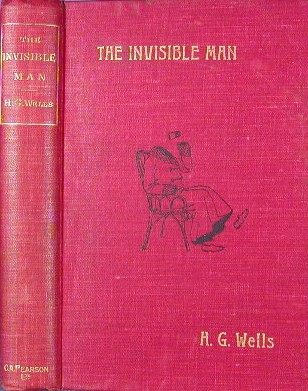
Raiding the Stacks: The Invisible Man, by H.G. Wells
Once again we return the origins of science fiction with another novel by Mr. Wells, The Invisible Man. Again, much like The Time Machine this story is rather short compared to much of my regular reading, but remains a frequently referenced classic of the science fiction genre. However, I must state that unlike The Time Machine, The Invisible Man hasn't had as wide an influence on the science-fiction genre and remains overshadowed by Wells's other works.
The plot follows the titular Invisible Man who enters the village of Iping one February day and takes up rooms at a local inn. He remains extremely aloof and becomes a subject of much curiosity and discussion among the people of Iping. Eventually the fact that the Invisible Man is, well, invisible comes to light and the Invisible Man (aka Griffin) goes on a crime spree. Eventually he flees further south in Sussex and the law is faced with the question of how to arrest an invisible man, if he even exists at all.
Overall I'd say the main problem with The Invisible Man is that our main character, Griffin, is pretty much an asshole, if not a clinical psychopath. Griffin only cares about his own needs and desires, constantly resorting to petty theft and intimidation to meet his needs of food, clothing, and shelter. Griffin goes so far as to plan a reign of terror which he will enforce by personally executing people who oppose him. Any sympathy for Griffin, as unlikely as that seems, is well and truly gone by the second half of the novel. I found it rather difficult to continue at points in the story simply because of Griffin's personality.
An argument could definitely be made that Wells is exploring how a lack of consequences affects people in his novel. Unfortunately if this was the goal of his novel it does not convey very well at all. What little glimpses we get of Griffin's personality before he takes the invisibility formula are not flattering. While the invisibility formula may have exacerbated Griffin's psychopathy, I think if he knew he could escape the consequences (invisible or not) he would have engaged in criminal acts anyway. We are left with an ambiguous ending where another character is slowly working on decoding Griffin's notes and he could use the information within for good or ill. However, the fact that this character keeps the fact that he has the notes a secret bodes poorly for future uses of Griffin's discoveries.
Overall I think The Invisible Man is one of the mediocre works of Wells. While it explores an (even then) old concept in a new way, any message on the ethical application of such a technology remains overshadowed by Griffin's psychopathy. Furthermore its influence on the genre is nowhere near the proportions of The Time Machine or War of the Worlds. I'd say even the more dedicated science-fiction readers can afford to skip this novel.
- Kalpar
The plot follows the titular Invisible Man who enters the village of Iping one February day and takes up rooms at a local inn. He remains extremely aloof and becomes a subject of much curiosity and discussion among the people of Iping. Eventually the fact that the Invisible Man is, well, invisible comes to light and the Invisible Man (aka Griffin) goes on a crime spree. Eventually he flees further south in Sussex and the law is faced with the question of how to arrest an invisible man, if he even exists at all.
Overall I'd say the main problem with The Invisible Man is that our main character, Griffin, is pretty much an asshole, if not a clinical psychopath. Griffin only cares about his own needs and desires, constantly resorting to petty theft and intimidation to meet his needs of food, clothing, and shelter. Griffin goes so far as to plan a reign of terror which he will enforce by personally executing people who oppose him. Any sympathy for Griffin, as unlikely as that seems, is well and truly gone by the second half of the novel. I found it rather difficult to continue at points in the story simply because of Griffin's personality.
An argument could definitely be made that Wells is exploring how a lack of consequences affects people in his novel. Unfortunately if this was the goal of his novel it does not convey very well at all. What little glimpses we get of Griffin's personality before he takes the invisibility formula are not flattering. While the invisibility formula may have exacerbated Griffin's psychopathy, I think if he knew he could escape the consequences (invisible or not) he would have engaged in criminal acts anyway. We are left with an ambiguous ending where another character is slowly working on decoding Griffin's notes and he could use the information within for good or ill. However, the fact that this character keeps the fact that he has the notes a secret bodes poorly for future uses of Griffin's discoveries.
Overall I think The Invisible Man is one of the mediocre works of Wells. While it explores an (even then) old concept in a new way, any message on the ethical application of such a technology remains overshadowed by Griffin's psychopathy. Furthermore its influence on the genre is nowhere near the proportions of The Time Machine or War of the Worlds. I'd say even the more dedicated science-fiction readers can afford to skip this novel.
- Kalpar
Thursday, August 30, 2012
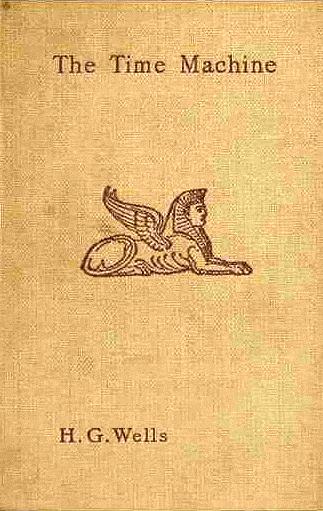
Raiding the Stacks: The Time Machine, by H.G. Wells
One thing that really surprised me about The Time Machine was its relative brevity as a novel. The book is extremely concise, but I don't think it suffers at all because of its brevity. Wells does an excellent job of telling the story in a precise manner and doesn't introduce subjects without adequate explanation. There is definitely an open ended feeling to the conclusion of this story, but it serves as a call to action for the reader in the hope that maybe the future the Time Traveller faced in 807,201 CE can be avoided. I would say that many of my readers could easily finish The Time Machine in a day and I highly recommend you find a copy.
Perhaps the most important thing about The Time Machine is the fact that its overarching message is incredibly relevant to the current economic and social anxieties, despite being written over a hundred years ago. As you probably know, the world of 802,701 CE consists of two races, the Eloi and the Morlocks. The Eloi live on the surface world and enjoy a life of leisure, while the Morlocks live beneath the surface and are responsible for maintaining the Eloi's lifestyle through a lifetime of hard work. What is interesting, though, is that the Eloi are little more than cattle for the Morlocks, and while it may be a good life while you're alive, at the end of the day you're still hamburger. Wells explicitly states that the Morlocks are the eventual descendants of the Have-nots, the oppressed working classes who manned the factories of Wells's era. The Eloi, on the other hand, are the descendants of the elite Haves, who eventually have little more mental facilities than children as a result of their idle lifestyle. In our current era of the 99% vs. 1%, The Time Machine remains a highly relevant social commentary as well as a warning to the 1% that the oppressed masses don't always stay that way.
Overall The Time Machine is a short, very easy read and an excellent commentary on the growing economic gap between the rich and poor. Although written over a century ago, Wells's work has once again become a relevant social commentary on our economic structure. Although it offers no solutions for avoiding the future of 802,701 CE, The Time Machine leaves the reader wondering if perhaps the future can be changed by our actions in the present.
- Kalpar
Thursday, July 26, 2012
Raiding the Stacks: Dracula, by Bram Stoker
About a month ago I was at a party and a friend of a friend mentioned Bram Stoker's classic vampire novel, Dracula, and mentioned it was much easier to read than Frankenstein. Having struggled through Frankenstein back when I was in high school, I decided to give Dracula a go and include it in my ongoing "Raiding the Stacks" feature. I will admit that it was overall still fairly difficult for me to read but I do not regret making the effort.
If you don't know the plot of Dracula then you've been missing for the past hundred years and I'd like to welcome you to the internet. Seriously, everyone knows at least the barest outlines of the plot by now: Count Dracula is a vampire, he leaves his home in Transylvania to go to England, sucks the blood of pretty women, and gets hunted down by Professor Van Helsing and his band of compatriots. It's a story that's been told, retold, deconstructed, reconstructed, and parodied countless times since its release in 1897. What Dracula has going for it is that it is the vampire novel and defined many tropes which are still with us today in vampire-related fiction.
The story of Dracula is told in what I have learned is the epistolary format, where the story is told as a collection of letters, diaries, and telegrams generated by the characters within the story as they record the events of the plot. For roughly the first half of the book we get to watch the characters trying to make sense of a series of very strange events, and it's sort of like a mystery watching various pieces of information come together. However, considering how well-known the basic plot is it's not much of a mystery, but I at least was still guessing at some parts because I didn't know everything. The book's a little slow to pick up because the different characters are piecing together their information and figuring out what exactly they're fighting, but once you get into the second half it's pretty non-stop and the action doesn't end until the very last page. I felt like the book could have used a little more closure at the end but at least it didn't suffer ending fatigue.
The one thing that sticks out in my mind about this story is that Dracula's powers and weaknesses don't seem to be very well-defined, or in some cases include facts that haven't been included in later vampire stories. For example, if a vampire's in his casket apparently a branch of wild rose across it will prevent him from leaving. Also, the heart of a vampire does not have to be destroyed by a wooden stake (although Van Helsing seems to prefer them) and in a pinch a good bowie knife will do. In addition Dracula walks around in the sunlight a couple of times during the story, but at other times is confined to his coffin during the day and there's no real explanation as to why this is the case. But the most well-defined powers and weaknesses remain with us: a vampire's ability to turn into a bat or dust as well as their ability to command wolves and other creatures; their weakness to garlic, a crucifix, and other holy items; and the need for vampires to regularly rest in the soil where they were buried. Many of these tropes remain part of vampire lore today, although I don't think the vampires that the I Smell Sheep flock read about are exactly the same.
I will say that the one thing I really liked about this story was that the vampires are monsters that have to be defeated by man. Yes, the vampire has powers beyond our comprehension and can even hypnotize humans into doing his bidding, but the vampire can only think about himself and his own goals.We humans are not only able to work together and work for a good greater than ourselves, but we are capable of working together to accomplish those goals. It is only through the combined efforts and unique skills of the members of Professor Van Helsing's team that they're able to track down and not only defeat Dracula, but raze his lair as well. Vampires may think they are better than us and hold us in contempt, but they are little more than animals that only deserve to be hunted down to extinction.
If you're curious about the origins of vampire fiction Dracula is the book to go to, and if you want to write your own vampire novel it can definitely give you some ideas. You definitely shouldn't be rooting for the vampires, though, you should be rooting for the kickass vampire hunters like Professor Abraham Van Helsing or Texan Quincey Morris. If nothing else, this book reminds us that through hard work and cooperation we humans can band together and defeat the monsters.
- Kalpar
If you don't know the plot of Dracula then you've been missing for the past hundred years and I'd like to welcome you to the internet. Seriously, everyone knows at least the barest outlines of the plot by now: Count Dracula is a vampire, he leaves his home in Transylvania to go to England, sucks the blood of pretty women, and gets hunted down by Professor Van Helsing and his band of compatriots. It's a story that's been told, retold, deconstructed, reconstructed, and parodied countless times since its release in 1897. What Dracula has going for it is that it is the vampire novel and defined many tropes which are still with us today in vampire-related fiction.
The story of Dracula is told in what I have learned is the epistolary format, where the story is told as a collection of letters, diaries, and telegrams generated by the characters within the story as they record the events of the plot. For roughly the first half of the book we get to watch the characters trying to make sense of a series of very strange events, and it's sort of like a mystery watching various pieces of information come together. However, considering how well-known the basic plot is it's not much of a mystery, but I at least was still guessing at some parts because I didn't know everything. The book's a little slow to pick up because the different characters are piecing together their information and figuring out what exactly they're fighting, but once you get into the second half it's pretty non-stop and the action doesn't end until the very last page. I felt like the book could have used a little more closure at the end but at least it didn't suffer ending fatigue.
The one thing that sticks out in my mind about this story is that Dracula's powers and weaknesses don't seem to be very well-defined, or in some cases include facts that haven't been included in later vampire stories. For example, if a vampire's in his casket apparently a branch of wild rose across it will prevent him from leaving. Also, the heart of a vampire does not have to be destroyed by a wooden stake (although Van Helsing seems to prefer them) and in a pinch a good bowie knife will do. In addition Dracula walks around in the sunlight a couple of times during the story, but at other times is confined to his coffin during the day and there's no real explanation as to why this is the case. But the most well-defined powers and weaknesses remain with us: a vampire's ability to turn into a bat or dust as well as their ability to command wolves and other creatures; their weakness to garlic, a crucifix, and other holy items; and the need for vampires to regularly rest in the soil where they were buried. Many of these tropes remain part of vampire lore today, although I don't think the vampires that the I Smell Sheep flock read about are exactly the same.
I will say that the one thing I really liked about this story was that the vampires are monsters that have to be defeated by man. Yes, the vampire has powers beyond our comprehension and can even hypnotize humans into doing his bidding, but the vampire can only think about himself and his own goals.We humans are not only able to work together and work for a good greater than ourselves, but we are capable of working together to accomplish those goals. It is only through the combined efforts and unique skills of the members of Professor Van Helsing's team that they're able to track down and not only defeat Dracula, but raze his lair as well. Vampires may think they are better than us and hold us in contempt, but they are little more than animals that only deserve to be hunted down to extinction.
If you're curious about the origins of vampire fiction Dracula is the book to go to, and if you want to write your own vampire novel it can definitely give you some ideas. You definitely shouldn't be rooting for the vampires, though, you should be rooting for the kickass vampire hunters like Professor Abraham Van Helsing or Texan Quincey Morris. If nothing else, this book reminds us that through hard work and cooperation we humans can band together and defeat the monsters.
- Kalpar
Thursday, May 31, 2012
Raiding the Stacks: The War of the Worlds, by H.G. Wells
Ah yes, the long-awaited return of Kalpar's Raiding the Stacks feature, where this week we look at The War of the Worlds by H.G. Wells. War of the Worlds is a landmark science-fiction book which pioneered some science fiction tropes while at the same time being very thoroughly a product of its era. And while the book itself is extremely dated, reflecting the prejudices of the late 19th century, it remains a timeless story that taps into our primal fears as a species. The War of the Worlds offers a tantalizing glimpse into the heart of the British Empire at its height, as well as showing that even after a century people are in some respects the same.
The War of the Worlds was originally published in 1898 and is actually part of a larger literary movement that was popular in Britain at the time. From the 1870's up until the First World War an entire genre of "invasion literature" existed in which the British Isles, heart of the greatest empire on earth at the time, were invaded by some malicious enemy. Traditionally these enemies would be Germans or French or some other rival empire, but Wells chose to make his invaders from Mars, adding a new dimension to the invasion narrative. Furthermore Wells created many science-fiction themes about Mars that would last for many years in the genre: the idea that Mars was an arid and dying world, inhabited by an ancient and technologically advanced culture. Fleeing an increasingly unsustainable home, the Martians launch an invasion fleet to prepare Earth for Martian colonization. From War of the Worlds to Independence Day the idea of aliens needing the resources of our planet remains a persistent science-fiction trope which will probably be used in future stories.
An interesting note is that War of the Worlds also tapped into a common belief that the world would end at midnight on 31 December, 1899, and apparently there were numerous stories written at the time about such an Armageddon. If current trends such as Y2K and Mayan Calendar panics are any indication, humanity's fascination with its own destruction is nothing new.
Now I do have on major complaint about War of the Worlds, specifically the fact that all of the Martian space capsules land in southern England and I think that really displays the provincial bias of the author. Was Britain a powerful empire in 1898? Well of course, but that's not to say that other nations such as France, Germany, Japan, and the United States wouldn't present a threat for Martian invaders. Also, you know what, let's look at the map.
Now if you'll notice, the British Isles are a little itty bitty piece of land up there in the top of the map. If you were an invading army from space trying to safely land your soldiers where would you send them? I don't know about you, but my first choice is smack dab in the middle of the Sahara in Africa. Especially since the Martian plan hinges on not landing in water. I mean, maybe I'm being picky with geography, but even North America makes a more attractive target than trying to hit the south of England.
Complaints aside, The War of the Worlds actually offers some chilling insights into twentieth century warfare. For example, the Martians use a poisonous gas known only as Black Smoke to kill large numbers of humans, which weirdly predicts the use of poison gas in World War I. In addition the Martians' primary targets are stores of ammunition, telegraph lines, and railroad tracks, which severely hamstrings the humans' defense and disrupts their lines of communication, standard military strategies even today. The Martians also adopt a campaign of fear and intimidation to break human morale and gain a quick victory, tactics utilized by both sides during World War II. Finally, the chapters dedicated to the description of the plight of refugees fleeing the Martian advance seemed incredibly real to me and could easily be about refugees in any of the countless conflicts, both great and small, that have occurred over the past century. I don't know how Wells managed to predict many of the tactics and consequences of twentieth century warfare, but it's an interesting harbinger of industrial warfare.
Perhaps the most influential aspect of War of the Worlds is that it codified the alien invasion for countless science-fiction stories for over a hundred years. The aliens arrive, determined to conquer our planet (or simply use its resources), and initially all of humanity's military forces are powerless to stop them. All hope is lost and it appears the age of humanity has come to an end. However, through some small miracle, whether the common cold in The War of the Worlds, a computer virus in Independence Day, or the simple fact that 70% of the world is covered in something deadly to the aliens in Signs, humanity manages to exploit this small advantage and defeat the alien invaders. (Granted, in War of the Worlds human agency is entirely irrelevant.)
It may be dated, it may be verbose, and it may utilize outdated science, but The War of the Worlds is the alien invasion story, in many ways the literal grandfather of countless science-fiction tropes we know and love today. If you're interested in exploring the history of sci-fi, as well as an interesting view at the late nineteenth century. I'd definitely recommend this book for history nerds and hard-core sci-fi fans but casual readers might be less interested.
- Kalpar
The War of the Worlds was originally published in 1898 and is actually part of a larger literary movement that was popular in Britain at the time. From the 1870's up until the First World War an entire genre of "invasion literature" existed in which the British Isles, heart of the greatest empire on earth at the time, were invaded by some malicious enemy. Traditionally these enemies would be Germans or French or some other rival empire, but Wells chose to make his invaders from Mars, adding a new dimension to the invasion narrative. Furthermore Wells created many science-fiction themes about Mars that would last for many years in the genre: the idea that Mars was an arid and dying world, inhabited by an ancient and technologically advanced culture. Fleeing an increasingly unsustainable home, the Martians launch an invasion fleet to prepare Earth for Martian colonization. From War of the Worlds to Independence Day the idea of aliens needing the resources of our planet remains a persistent science-fiction trope which will probably be used in future stories.
An interesting note is that War of the Worlds also tapped into a common belief that the world would end at midnight on 31 December, 1899, and apparently there were numerous stories written at the time about such an Armageddon. If current trends such as Y2K and Mayan Calendar panics are any indication, humanity's fascination with its own destruction is nothing new.
Now I do have on major complaint about War of the Worlds, specifically the fact that all of the Martian space capsules land in southern England and I think that really displays the provincial bias of the author. Was Britain a powerful empire in 1898? Well of course, but that's not to say that other nations such as France, Germany, Japan, and the United States wouldn't present a threat for Martian invaders. Also, you know what, let's look at the map.
| Yeah, I use Gall-Peters Projection. What of it? |
Complaints aside, The War of the Worlds actually offers some chilling insights into twentieth century warfare. For example, the Martians use a poisonous gas known only as Black Smoke to kill large numbers of humans, which weirdly predicts the use of poison gas in World War I. In addition the Martians' primary targets are stores of ammunition, telegraph lines, and railroad tracks, which severely hamstrings the humans' defense and disrupts their lines of communication, standard military strategies even today. The Martians also adopt a campaign of fear and intimidation to break human morale and gain a quick victory, tactics utilized by both sides during World War II. Finally, the chapters dedicated to the description of the plight of refugees fleeing the Martian advance seemed incredibly real to me and could easily be about refugees in any of the countless conflicts, both great and small, that have occurred over the past century. I don't know how Wells managed to predict many of the tactics and consequences of twentieth century warfare, but it's an interesting harbinger of industrial warfare.
Perhaps the most influential aspect of War of the Worlds is that it codified the alien invasion for countless science-fiction stories for over a hundred years. The aliens arrive, determined to conquer our planet (or simply use its resources), and initially all of humanity's military forces are powerless to stop them. All hope is lost and it appears the age of humanity has come to an end. However, through some small miracle, whether the common cold in The War of the Worlds, a computer virus in Independence Day, or the simple fact that 70% of the world is covered in something deadly to the aliens in Signs, humanity manages to exploit this small advantage and defeat the alien invaders. (Granted, in War of the Worlds human agency is entirely irrelevant.)
It may be dated, it may be verbose, and it may utilize outdated science, but The War of the Worlds is the alien invasion story, in many ways the literal grandfather of countless science-fiction tropes we know and love today. If you're interested in exploring the history of sci-fi, as well as an interesting view at the late nineteenth century. I'd definitely recommend this book for history nerds and hard-core sci-fi fans but casual readers might be less interested.
- Kalpar
Thursday, February 2, 2012
Raiding the Stacks: Around the World in Eighty Days
So as promised, here is my review of Around the World in Eighty Days by Jules Verne, first published in 1873. What makes this novel unique for Jules Verne was it lacked in the more fantastical elements of his other works, such as 20,000 Leagues Under the Sea and Journey to the Center of the Earth. However it is one of Verne's more famous books and has inspired numerous people to travel across the world and attempt to beat the record. The first person to do so was female reporter Nellie Bly, working for the New York World in 1889. Ms. Bly managed to complete the journey in 72 days, proving that such a feat was possible. (Special thanks goes to my friend fuzzypickles for reminding me about Ms. Bly.)
To the twenty-first century reader the challenge of crossing the world in eighty days seems unremarkable. With daily intercontinental flights by numerous companies across the globe, it's possible to cross the world in less than eight days, never mind eighty. However, it is important for a twenty-first century audience to remember the time period in which this book was written. It was the combination of a number of recent developments, intercontinental railroads, the Suez canal and regular oceanic steamship travel which enabled such a feat to be undertaken. It proved that the world, which previously could have taken a year to travel by ship, could now be done in a quarter of the time. In a way the world had shrunk as well. Raw materials from Africa and India would be used in Europe and shipped back as manufactured goods. News could travel by telegraph across the United States in a matter of minutes rather than days. Eventually people from places as far off as Australia and Kenya would find themselves fighting in a war over the assassination of an Austrian Archduke. In a way, Around the World in Eighty Days is a harbinger for the global market and political stage of the twentieth and twenty-first centuries.
Now I'm sure my readers are sitting down and saying, "Oh well that's all very well and find, but Kalpar! What is this book really about?" Well I would first respond by saying that it's about a group of people who travel around the world in eighty days. After you stopped punching and yelling at me, I would explain it is more specifically about the attempts of an English gentleman, Phileas Fogg, and his French valet, Passepartout to circumnavigate the globe in eighty days. Mr. Fogg is an extremely meticulous gentleman who operates like clockwork, leaving his house at eleven thirty every day and returning at midnight. His only activities consist of going to the Reform Club and playing cards with his gentleman friends. It is during one such card game that they discuss the possibility of traveling around the world within eighty days. Phileas Fogg, because he likes a challenge, wagers half of his fortune that he can perform the act and sets off immediately. Fogg and Passepartout run into a number of adventures along the way, mainly because of Mr. Fix a detective of Scotland Yard. Mr. Fix pursues Fogg across the globe because Fogg matches the description of someone who stole a considerable sum of money from the Bank of England and puts numerous obstacles in Fogg's way. Fogg and Passepartout also rescue a woman named Aouda during their adventures in India and she follows her rescuers as they continue around the globe.
The book also offers intriguing glimpses of the British Empire and America from an outsider's perspective, although being a nineteenth century novel it makes numerous generalizations on various nationalities. Regardless I find it a great window into the late nineteenth century world ranging from Europe to Japan, if only from a historical perspective.
Sadly, as a novel, I feel like the book failed to engage me. Phileas Fogg as a character is described as utterly devoid of emotion and so little remains known about him that I had a hard time connecting to him as a character. As the deadline for completing the race draws closer and closer and the remainder of Fogg's fortune continues to dwindle I feel...nothing. The book itself describes Fogg as little more than a robot, at least as far as the narrator and other characters are concerned. If he's worried about losing what's left of his fortune, the reader is given no sign so I find it almost impossible to become emotionally invested in him as a character. Passepartout, who I have to admit is the chief cause of numerous setbacks on their journey, is at least a character and gets emotional over their advantages and setbacks. As for the romance between Aouda and Fogg it feels practically forced. Yes, Fogg helped rescue her from a religious sacrifice and has seen to her every need from that point but the book describes Fogg doing this in an automatic fashion. When someone's as emotionally distant as Fogg it's usually hard for anyone to become emotionally attached to them so Aouda becoming infatuated with Fogg seems odd to me. Granted this is no better than my opinion but whatever.
Ultimately unless you're really really interested in reading about the nineteenth century, I'm going to have to suggest passing this book by. I felt like the characters lacked a certain depth and it was very hard for me to get invested in the race against time. Finally there's a plot hole that kind of bugs me at the end, so I'll go ahead and spoil it because the book's over 100 years old so you can't yell at me for that.
Okay, so as my readers may know, out in the middle of the Pacific Ocean is the International Date Line.
For those of you unfamiliar with the IDL, basically it separates today from tomorrow and how it makes it possible for me to be writing this article on a Friday evening while my friend in Liverpool, England is for some reason awake at 4:13 in the morning on Saturday. Prior to the nineteenth century human transportation wasn't fast enough for time zones and the date line to matter much, but with the advent of steam-powered transportation trains suddenly could arrive before they left. As a result the world was divided into twenty-four different time zones each representing twenty four hours of the day, however except for one hour the entire world is going to be split between two days. To make this entire mess somewhat tidier they invented the International Date Line which divides the use of two calendar days on the earth. Anyway, if you cross the line from east to west, for example traveling from the United States to Tokyo, you add one day to the calendar and jump forward to tomorrow. However, if you travel from west to east, departing China and heading for Mexico, you subtract one day and repeat yesterday.
The reason I go through all of this is because Fogg and company cross the Date Line on their travels and end up being able to meet the deadline because they gained an extra day crossing the line. Now while the International Date Line would not be established until after when the novel is supposed to take place, it was at least informally in effect. Now Fogg and company aren't really affected by this during their journey in America because the trains leave on a daily basis but the ship they were supposed to take from New York to Liverpool left on a specific date and the book clearly states they miss the ship by fifteen minutes. Except if they gained a day, which is what saves them in the end, shouldn't they have arrived in New York a day early? I wouldn't make such a big deal if it wasn't the plot point that saved them in the end of the novel.
Ultimately I like this book for its historical value but otherwise it's unremarkable as a book in my opinion. If you really want to see this adventure I'd suggest looking at one of the many adaptations of the book into movie form.
Except for this one. This one's just dumb.
- Kalpar.
To the twenty-first century reader the challenge of crossing the world in eighty days seems unremarkable. With daily intercontinental flights by numerous companies across the globe, it's possible to cross the world in less than eight days, never mind eighty. However, it is important for a twenty-first century audience to remember the time period in which this book was written. It was the combination of a number of recent developments, intercontinental railroads, the Suez canal and regular oceanic steamship travel which enabled such a feat to be undertaken. It proved that the world, which previously could have taken a year to travel by ship, could now be done in a quarter of the time. In a way the world had shrunk as well. Raw materials from Africa and India would be used in Europe and shipped back as manufactured goods. News could travel by telegraph across the United States in a matter of minutes rather than days. Eventually people from places as far off as Australia and Kenya would find themselves fighting in a war over the assassination of an Austrian Archduke. In a way, Around the World in Eighty Days is a harbinger for the global market and political stage of the twentieth and twenty-first centuries.
Now I'm sure my readers are sitting down and saying, "Oh well that's all very well and find, but Kalpar! What is this book really about?" Well I would first respond by saying that it's about a group of people who travel around the world in eighty days. After you stopped punching and yelling at me, I would explain it is more specifically about the attempts of an English gentleman, Phileas Fogg, and his French valet, Passepartout to circumnavigate the globe in eighty days. Mr. Fogg is an extremely meticulous gentleman who operates like clockwork, leaving his house at eleven thirty every day and returning at midnight. His only activities consist of going to the Reform Club and playing cards with his gentleman friends. It is during one such card game that they discuss the possibility of traveling around the world within eighty days. Phileas Fogg, because he likes a challenge, wagers half of his fortune that he can perform the act and sets off immediately. Fogg and Passepartout run into a number of adventures along the way, mainly because of Mr. Fix a detective of Scotland Yard. Mr. Fix pursues Fogg across the globe because Fogg matches the description of someone who stole a considerable sum of money from the Bank of England and puts numerous obstacles in Fogg's way. Fogg and Passepartout also rescue a woman named Aouda during their adventures in India and she follows her rescuers as they continue around the globe.
| Map of their route taken from Wikipedia. |
Sadly, as a novel, I feel like the book failed to engage me. Phileas Fogg as a character is described as utterly devoid of emotion and so little remains known about him that I had a hard time connecting to him as a character. As the deadline for completing the race draws closer and closer and the remainder of Fogg's fortune continues to dwindle I feel...nothing. The book itself describes Fogg as little more than a robot, at least as far as the narrator and other characters are concerned. If he's worried about losing what's left of his fortune, the reader is given no sign so I find it almost impossible to become emotionally invested in him as a character. Passepartout, who I have to admit is the chief cause of numerous setbacks on their journey, is at least a character and gets emotional over their advantages and setbacks. As for the romance between Aouda and Fogg it feels practically forced. Yes, Fogg helped rescue her from a religious sacrifice and has seen to her every need from that point but the book describes Fogg doing this in an automatic fashion. When someone's as emotionally distant as Fogg it's usually hard for anyone to become emotionally attached to them so Aouda becoming infatuated with Fogg seems odd to me. Granted this is no better than my opinion but whatever.
Ultimately unless you're really really interested in reading about the nineteenth century, I'm going to have to suggest passing this book by. I felt like the characters lacked a certain depth and it was very hard for me to get invested in the race against time. Finally there's a plot hole that kind of bugs me at the end, so I'll go ahead and spoil it because the book's over 100 years old so you can't yell at me for that.
Okay, so as my readers may know, out in the middle of the Pacific Ocean is the International Date Line.
| This motherfucker right here. |
The reason I go through all of this is because Fogg and company cross the Date Line on their travels and end up being able to meet the deadline because they gained an extra day crossing the line. Now while the International Date Line would not be established until after when the novel is supposed to take place, it was at least informally in effect. Now Fogg and company aren't really affected by this during their journey in America because the trains leave on a daily basis but the ship they were supposed to take from New York to Liverpool left on a specific date and the book clearly states they miss the ship by fifteen minutes. Except if they gained a day, which is what saves them in the end, shouldn't they have arrived in New York a day early? I wouldn't make such a big deal if it wasn't the plot point that saved them in the end of the novel.
Ultimately I like this book for its historical value but otherwise it's unremarkable as a book in my opinion. If you really want to see this adventure I'd suggest looking at one of the many adaptations of the book into movie form.
Except for this one. This one's just dumb.
- Kalpar.
Thursday, January 26, 2012
Coming Attractions: Raiding the Stacks
All right, all right, so this is a bit of a deviation from my regular posts, but I feel like I owe my two readers a little bit of an explanation before I start with this new feature I have in mind. So over the Crimbo season I got a bunch of money from relatives because it's easier for them to just give me money than figure out what I like. As I result I decided to get a Kindle Fire, partly because a number of authors we review send me e-copies of their books to read and I have a hard time reading books on the computer. Generally the temptation to run off onto the Internet and look up weird stuff on Wikipedia is really strong. Granted, the web-browsing abilities of the Kindle Fire that remains a kind of problem but it loads up faster than my computer and is easier to carry around. Also, I read a lot of books. Seriously, I'm running out of shelf space again and I got a brand-new bookcase like four months ago. Since I'm ostensibly trying to move out at some point, a Kindle is a really good choice for me because it's easier to move than a whole ton of books and a bulky bookcase.
I should mention that I am a huge fan of physical books and deciding to get an e-reader was a hard decision for me. I love the feel of books, the smell, the physical presence of a stack of books. Maybe I'm an unapologetic biblophile but there's a certain substance to physical books that e-readers just sort of lack for me. However the benefits of significantly decreased space and the decreased costs of books make a very good economic decision for me at this time. What really sold me on it, though, was the availability of out-of-copyright books for free. Granted for them to be out of copyright they're generally over a hundred years old but there are plenty of books I look forward to reading for free with this feature. (If you're more a fan of the Nook than the Kindle, Barnes and Noble also has out of copyright books available for free.)
Among these out-of-copyright books are the works of Jules Verne and HG Wells, gentlemen I like to refer to as the grandfathers of science fiction. While the books that they wrote were not called science fiction at the tie, they definitely are precursors to the genre as it exists today and in some cases are excellent steampunk adventures. (Although maybe the fact that they were written during the Age of Steam excludes them from being steampunk but that's a debate for a different day.) Anyway I shall be bringing reviews of their books, and other novels, to the Arsenal in a new feature I call Raiding the Stacks.
Just for future reference any book that I'm going to review for Raiding the Stacks first must be out of copyright and available through Amazon, if only for the technical reason I need to be able to get a copy of it for my Kindle. The other requirement I'm going to place is that it has to sort of fit in with the Arsenal's theme of awesome manliness and gentleman adventurers, or the genre of fantasy/sci-fi. While I certainly could go read Pride and Prejudice because it's out of copyright and available I sure as hell am not going to read it. Yes, yes, all you Mr. Darcy fangirls can yell at me all you want but I think you're in the wrong place. THIS IS A PLACE FOR AWESOME THINGS! NOT CRITIQUES OF ROMANCE NOVELS! NO WE MUST HAVE ADVENTURES! So you take your Jane Austen books and...read them somewhere else. Yeah. I showed you. What was I doing? Oh, right, Raiding the Stacks. I might also look at some books like Dracula, The Three Musketeers and Les Miserables because I'm interested in reading those books and they too are free. Granted with Les Mis if I get stuck I'm probably going to put it down, say at least I tried, and go enjoy the musical. And man, is that a manly musical.
As a final point I should say that a lot of these books, mostly written by white men in the 1800's or earlier, very casually make racist and sexist remarks. As a citizen of the 21st century I recognize that all forms of discrimination are wrong. (Except against robots. And elves. Hate those guys.) So I will recognize and admit that racist and sexist remarks will come up from time to time in these books as a product of their authors and the time period. Most of these remarks though are casual bigotry and fit in with the assumptions of the time period so I will not condemn a book because its author didn't know any better. That being said, if the purpose of a work is entirely to promote a bigoted standpoint, such as The Birth of a Nation, then I'm going to condemn it on those grounds. A significant number of books, even from when bigotry was cool, don't have that agenda so I'm probably not going to bring it up. Again, bigotry is wrong and uncool and I accept that people in the olden days did that, but I'm not going to condemn them on that point unless they're attempting to actively spread their bigotry through their work.
Anyway, next week I shall be looking at Around the World in Eighty Days by Jules Verne which, while it doesn't have any sci-fi elements does have one man racing around the world on a bet simply to prove he can.
- Kalpar
| What do you mean I'm almost out of shelf space again? I just got this one! |
I should mention that I am a huge fan of physical books and deciding to get an e-reader was a hard decision for me. I love the feel of books, the smell, the physical presence of a stack of books. Maybe I'm an unapologetic biblophile but there's a certain substance to physical books that e-readers just sort of lack for me. However the benefits of significantly decreased space and the decreased costs of books make a very good economic decision for me at this time. What really sold me on it, though, was the availability of out-of-copyright books for free. Granted for them to be out of copyright they're generally over a hundred years old but there are plenty of books I look forward to reading for free with this feature. (If you're more a fan of the Nook than the Kindle, Barnes and Noble also has out of copyright books available for free.)
Among these out-of-copyright books are the works of Jules Verne and HG Wells, gentlemen I like to refer to as the grandfathers of science fiction. While the books that they wrote were not called science fiction at the tie, they definitely are precursors to the genre as it exists today and in some cases are excellent steampunk adventures. (Although maybe the fact that they were written during the Age of Steam excludes them from being steampunk but that's a debate for a different day.) Anyway I shall be bringing reviews of their books, and other novels, to the Arsenal in a new feature I call Raiding the Stacks.
Just for future reference any book that I'm going to review for Raiding the Stacks first must be out of copyright and available through Amazon, if only for the technical reason I need to be able to get a copy of it for my Kindle. The other requirement I'm going to place is that it has to sort of fit in with the Arsenal's theme of awesome manliness and gentleman adventurers, or the genre of fantasy/sci-fi. While I certainly could go read Pride and Prejudice because it's out of copyright and available I sure as hell am not going to read it. Yes, yes, all you Mr. Darcy fangirls can yell at me all you want but I think you're in the wrong place. THIS IS A PLACE FOR AWESOME THINGS! NOT CRITIQUES OF ROMANCE NOVELS! NO WE MUST HAVE ADVENTURES! So you take your Jane Austen books and...read them somewhere else. Yeah. I showed you. What was I doing? Oh, right, Raiding the Stacks. I might also look at some books like Dracula, The Three Musketeers and Les Miserables because I'm interested in reading those books and they too are free. Granted with Les Mis if I get stuck I'm probably going to put it down, say at least I tried, and go enjoy the musical. And man, is that a manly musical.
As a final point I should say that a lot of these books, mostly written by white men in the 1800's or earlier, very casually make racist and sexist remarks. As a citizen of the 21st century I recognize that all forms of discrimination are wrong. (Except against robots. And elves. Hate those guys.) So I will recognize and admit that racist and sexist remarks will come up from time to time in these books as a product of their authors and the time period. Most of these remarks though are casual bigotry and fit in with the assumptions of the time period so I will not condemn a book because its author didn't know any better. That being said, if the purpose of a work is entirely to promote a bigoted standpoint, such as The Birth of a Nation, then I'm going to condemn it on those grounds. A significant number of books, even from when bigotry was cool, don't have that agenda so I'm probably not going to bring it up. Again, bigotry is wrong and uncool and I accept that people in the olden days did that, but I'm not going to condemn them on that point unless they're attempting to actively spread their bigotry through their work.
Anyway, next week I shall be looking at Around the World in Eighty Days by Jules Verne which, while it doesn't have any sci-fi elements does have one man racing around the world on a bet simply to prove he can.
- Kalpar
Subscribe to:
Posts (Atom)