Today I'm looking at the first in a series about the Ministry of Peculiar Occurrences, Phoenix Rising, a steampunk series by Pip Ballantine. I was drawn to this series initially because it seemed to have multiple things I was interested in, namely steampunk and mysterious government agencies that deal with the unusual. (There is a reason I am a huge fan of Warhouse 13.) This book actually started off pretty promisingly with one of our main characters, Wellington Books, Esq., chained to a dungeon wall and about to be tortured by the nefarious House of Usher. Only to be rescued by a timely explosion set by Agent Eliza Braun who has a fondness for weapons and dynamite. Unfortunately the book kind of goes downhill from there and becomes a jumbled mess. As this is the first in a series it sets up conflict for later books, but I feel like the plot created for this introductory novel is haphazard, thrown together, and ultimately unsatisfying.
The setup is classic buddy cop which, if we're being completely honest, works. Wellington Books is the brains (probably why his last name is Books), typical strait-laced individual from England with an aristocratic heritage. Eliza Braun is the muscle, further emphasized by the reader pronouncing her last name ''brawn'' instead of ''brown'', which is what I thought it would be but I'm a Germanophile. She's a bit of a loose cannon, solving problems with explosives, and is far more relaxed coming from the frontier colony of New Zealand. Now these two different personalities are going to be forced to work together! Yeah, I know, it's a very stereotyped buddy cop, odd couple sort of set up that's been done so many times it's practically cliché. But. It works. And to be honest I like the characters so that's at least something the book has working for it.
The problem mostly seems to be, as I said, with the plot. The book starts out with Wellington being rescued by Eliza from the House of Usher, the long-standing enemies of the Ministry of Peculiar Occurrences. Since Wellington is the chief archivist for the Ministry and privy to numerous secrets he's obviously a valuable prize, but what exactly the House of Usher wants with him is never really explored. In fact the House of Usher pretty much disappears from the novel after that. There are two scenes where they show up, but in both cases they die very quickly and what exactly their plans are remains unknown. This is frustrating to me because I feel like the first novel in a series shoulders the biggest burden in establishing the universe of the series. So I'm left asking questions like, ''Who is the House of Usher? What do they want? What are their goals? Why are they enemies of the Ministry? Are they just big Edgar Allen Poe fans?'' None of these questions get answered and it's just really frustrating to have some people you think are going to be villains but are hardly in the story at all.
The main antagonist for this book is the Society of the Phoenix whose goals are also...poorly defined. Wellington and Eliza are investigating an abandoned case that Eliza's former partner was working on before he disappeared and then turned up stark raving mad. They think there's a connection to grisly murders where people showed up either completely flayed, completely exsanguinated, or completely de-boned. ...sorry, I don't know of a fancy word meaning all of somebody's bones are gone. But why these murders are happening and how they're connected to the Society is vague even to the characters and they spend considerable time stumbling around in the dark. For most of the book we're not really sure what the Society is or what their goals are either. There's some sort of vague mention of wanting to preserve the British Empire but it remains mostly vague. The book is set in the 1890's when the British Empire is still at its height, if being challenged by newer powers on the scene, so why they think the empire's in decline remains elusive. Also how they intend to maintain the power of the Empire is also vague.
And on the one hand, it's okay for the characters to not know a lot as they're investigating a mystery, but by the end I'd have appreciated some more detail. The Society's evil plan is eventually revealed but why they're doing what they're doing is never explained. It's all very well and fine to build a giant death ray, army of mechanical monsters, or killer cheeses, but it's helpful to have a reason. It's almost like the Society was bound to fail because they weren't entirely sure what they were doing either, which doesn't make for terribly good villains.
There are also numerous plot threads which are left for later books to pick up, which are slightly more infuriating because there are so many of them. First of all, there are forces within the British government who wish to shut the Ministry down and are engaging in a clandestine campaign for that purpose. Secondly, there's an unknown force, pulling the strings of possibly both the Society and the House of Usher, but what they're planning is still frustratingly vague beyond being bad guys. And then there are aspects of both Eliza and Wellington's backstories that are mentioned but not really explained and I'm sure will be gone into detail later. For example, why is Eliza exiled from New Zealand? Is serving in England really an exile for her? What's that all about? Also why is Wellington afraid of guns? I assume it's tied to his military service which is referenced in passing but it was mentioned to briefly I actually thought I'd imagined it until the authors brought it back again. There are just so many things tossed in that it makes the story that much more of a jumble.
Ultimately this book's plot is a mess. As interesting as the characters are, the motivations of the villains remain vague and ambiguous for most of the book and that makes the stakes unknown. We don't know if it's the fate of the world or just the fate of Mrs. Miggins Pie Shop. I mean, both could be bad but I think the fate of the world slightly outweighs the fate of the pie shop. I honestly don't know if I'll continue listening to this series or not because of how downright confusing everything was.
- Kalpar
Thursday, December 22, 2016
Tuesday, December 20, 2016
Command and Control: Nuclear Weapons, the Damascus Incident, and the Illusion of Safety, by Eric Schlosser
Today I'm looking at Command and Control by Eric Schlosser which is divided into roughly two parts. The first part deals with the Damascus Incident in 1980 where a Titan II missile, armed with a nuclear warhead, exploded within its own silo outside the rural town of Damascus, Arkansas. The other half of the book deals with a significant chunk of America's history with nuclear weapons from the Manhattan Project of World War II, to what little information is available about current U.S. deployments of atomic weapons. The result is a very frightening picture of how the most lethal and dangerous weapons humanity has ever created, capable of wiping out life on the planet, have nearly done so through human error and it's almost sheer luck that the Cold War passed without an atomic exchange between the United States and the Soviet Union.
The biggest thing I question about this book is Schlosser's decision to divide the focus of the book. The book starts with the beginning of the Damascus Incident where a technician, adjusting fuel levels inside the rocket, dropped a socket from a gantry. The socket then bounced off the missile but not before piercing its skin and creating a fuel leak. The situation only got worse from there. The book then shifts focus and goes back to the Manhattan project and the very first atomic weapons, which were such extremely ramshackle affairs that it's almost a miracle they worked. Schlosser then talks about the ensuing fight among the armed forces for control of the atomic stockpile, which in 1946 consisted of approximately one functional bomb.
At the start of the book it's kind of a weird division because you jump back and forth between the narrow story of a situation rapidly getting out of hand at Damascus and the broader history of America's atomic weapons policy. Over time I sort of understood why Schlosser made the decision. As the staff at the missile silo try to resolve the problem before an accidental atomic detonation occurs, they run into the extensive bureaucracy of Strategic Air Command which wastes precious hours dallying about how to best solve the problem before coming up with a solution the people on the ground find confusing or downright stupid. Schlosser then spends time explaining how exactly that bureaucracy, which was originally created to prevent unauthorized use of atomic weapons, came into existence. Schlosser also spends a good chunk of the book going into a lot of close calls and near misses, including a time we scattered plutonium dust over Greenland, which illustrates how the Damascus Incident, rather than being an unusual outlier, was actually uncomfortably close to the mean.
It does raise the question of why Schlosser chose to focus on Damascus out of all the other examples. It is fairly late in the Cold War, which means numerous policies that had been developed through the fifties and sixties would now be in place. Furthermore it's an example of an obsolete weapon system, utilizing highly dangerous liquid fuels in leaking, poorly maintained rockets which made an accident almost guaranteed. It is nearly miraculous that the warhead, which was blown out of the silo and landed in the Arkansas countryside after flying a thousand feet into the air, was mostly intact and did not contaminate miles of Arkansas. But compared to numerous other examples from Greenland to Morocco to airbases in the United States, Damascus is just one of countless examples of things inevitably going wrong. It is only that with atomic weapons the risk is so, so much greater.
The impression I got most from this book is how dangerously uncontrolled America's atomic arsenal has been in the past and continues to be. The first atomic bombs were almost ad hoc in their construction and certainly should not have been loaded into bombers which would then fly on alert in case the Russians launched a surprise attack. The fact that B-29 and B-52 bombers have a frightening tendency to crash or catch on fire, especially as their flight times began to rack up thanks to constant airborne alerts, makes it no less distressing. There are unfortunately multiple incidents where a fire or crash of a B-52 bomber imperiled its nuclear payloads and in some cases spread plutonium dust over a wide area. To say nothing of bombs which were accidentally released through a crewman pulling the wrong lever at the wrong time.
On top of this considering how tense relations between the United States and Soviet Union were through the Cold War, as well as an almost fatalistic assumption that an atomic war wasn't a matter of if so much as when, it's almost a miracle that we're sitting here right now with only two atomic bombs having been used in warfare to date. (And hopefully it stays that way.) After all, an important contributing cause of World War I was the widespread assumption in Europe that a war was bound to break out sooner or later to the point it became a self-fulfilling prophecy. The almost constant accidents involving atomic weapons, as well as numerous false alarms caused by aging computers or faulty detection systems for organizations such as NORAD, and scant security the military employed around atomic weapons, made atomic war all that much easier to cause by accident. Most chilling of all, the lack of Strategic Air Command for any plan beyond a devastating first strike against the Soviet Union, with thousands of warheads, means even the American high command either did not plan for or did not expect to confront whatever happened after the missiles had landed.
Overall I think this book was rather interesting, even if I was sort of confused by Schlosser's organization. As I said, it makes a lot more sense as you get further into the book and gives you a better understanding of how the atomic arsenal has been managed in the United States. The Damascus Incident goes from being an incredibly terrifying and dangerous situation to almost being downright mundane. Make no mistake, we got off lucky and even then one serviceman was killed and several others were seriously wounded, but it's almost typical of all the other close calls we've accumulated over the years. If this is a subject you're interested in I'd definitely recommend checking it out.
- Kalpar
The biggest thing I question about this book is Schlosser's decision to divide the focus of the book. The book starts with the beginning of the Damascus Incident where a technician, adjusting fuel levels inside the rocket, dropped a socket from a gantry. The socket then bounced off the missile but not before piercing its skin and creating a fuel leak. The situation only got worse from there. The book then shifts focus and goes back to the Manhattan project and the very first atomic weapons, which were such extremely ramshackle affairs that it's almost a miracle they worked. Schlosser then talks about the ensuing fight among the armed forces for control of the atomic stockpile, which in 1946 consisted of approximately one functional bomb.
At the start of the book it's kind of a weird division because you jump back and forth between the narrow story of a situation rapidly getting out of hand at Damascus and the broader history of America's atomic weapons policy. Over time I sort of understood why Schlosser made the decision. As the staff at the missile silo try to resolve the problem before an accidental atomic detonation occurs, they run into the extensive bureaucracy of Strategic Air Command which wastes precious hours dallying about how to best solve the problem before coming up with a solution the people on the ground find confusing or downright stupid. Schlosser then spends time explaining how exactly that bureaucracy, which was originally created to prevent unauthorized use of atomic weapons, came into existence. Schlosser also spends a good chunk of the book going into a lot of close calls and near misses, including a time we scattered plutonium dust over Greenland, which illustrates how the Damascus Incident, rather than being an unusual outlier, was actually uncomfortably close to the mean.
It does raise the question of why Schlosser chose to focus on Damascus out of all the other examples. It is fairly late in the Cold War, which means numerous policies that had been developed through the fifties and sixties would now be in place. Furthermore it's an example of an obsolete weapon system, utilizing highly dangerous liquid fuels in leaking, poorly maintained rockets which made an accident almost guaranteed. It is nearly miraculous that the warhead, which was blown out of the silo and landed in the Arkansas countryside after flying a thousand feet into the air, was mostly intact and did not contaminate miles of Arkansas. But compared to numerous other examples from Greenland to Morocco to airbases in the United States, Damascus is just one of countless examples of things inevitably going wrong. It is only that with atomic weapons the risk is so, so much greater.
The impression I got most from this book is how dangerously uncontrolled America's atomic arsenal has been in the past and continues to be. The first atomic bombs were almost ad hoc in their construction and certainly should not have been loaded into bombers which would then fly on alert in case the Russians launched a surprise attack. The fact that B-29 and B-52 bombers have a frightening tendency to crash or catch on fire, especially as their flight times began to rack up thanks to constant airborne alerts, makes it no less distressing. There are unfortunately multiple incidents where a fire or crash of a B-52 bomber imperiled its nuclear payloads and in some cases spread plutonium dust over a wide area. To say nothing of bombs which were accidentally released through a crewman pulling the wrong lever at the wrong time.
On top of this considering how tense relations between the United States and Soviet Union were through the Cold War, as well as an almost fatalistic assumption that an atomic war wasn't a matter of if so much as when, it's almost a miracle that we're sitting here right now with only two atomic bombs having been used in warfare to date. (And hopefully it stays that way.) After all, an important contributing cause of World War I was the widespread assumption in Europe that a war was bound to break out sooner or later to the point it became a self-fulfilling prophecy. The almost constant accidents involving atomic weapons, as well as numerous false alarms caused by aging computers or faulty detection systems for organizations such as NORAD, and scant security the military employed around atomic weapons, made atomic war all that much easier to cause by accident. Most chilling of all, the lack of Strategic Air Command for any plan beyond a devastating first strike against the Soviet Union, with thousands of warheads, means even the American high command either did not plan for or did not expect to confront whatever happened after the missiles had landed.
Overall I think this book was rather interesting, even if I was sort of confused by Schlosser's organization. As I said, it makes a lot more sense as you get further into the book and gives you a better understanding of how the atomic arsenal has been managed in the United States. The Damascus Incident goes from being an incredibly terrifying and dangerous situation to almost being downright mundane. Make no mistake, we got off lucky and even then one serviceman was killed and several others were seriously wounded, but it's almost typical of all the other close calls we've accumulated over the years. If this is a subject you're interested in I'd definitely recommend checking it out.
- Kalpar
Thursday, December 15, 2016
Sharpe's Havoc, by Bernard Cornwell
This week I'm looking at yet another book in the Sharpe series, Sharpe's Havoc, and I honestly hate to say it but I feel like this is another one of those books where we're in between waiting for things to happen. In the last book, Sharpe ended up, somewhat accidentally, in command of what was left of his company of the 95th Rifles, trying to make their way back to British lines in Portugal while evading the seemingly endless hordes of Frenchmen. Sharpe and his two dozen or so riflemen are still in Portugal, despite all of the 95th being safely back home in Britain at the moment, having spent the intervening time protecting a British military engineer who's been mapping Portugal. Very soon Wellington arrives to take command of the British forces in Portugal and Marshal Soult, who looked like he'd have an easy march to Lisbon, is now on the run and trying to extricate his army to Spain.
As Cornwell himself says, Sharpe has no business being in Portugal at the time because nobody of the 95th Rifles were in Portugal at that point. Sharpe's in an ad hoc situation only loosely attached to the army and spends a considerable portion of the book trapped behind enemy lines which puts him outside the British chain of command and forces Sharpe to rely on his own best judgment. I will say seeing Sharpe make himself a royal nuisance for the French is definitely more interesting than him sitting around the barracks in Britain so I can't say I blame the author for giving him something to do, even if it stretches the bounds of historical authenticity.
Plot-wise Sharpe is tasked with keeping an eye on Colonel Christopher, a man from the Foreign Office sent to gauge popular opinion in Portugal and to see if it's really worth Britain's time and effort to send troops to fight the French. Out of deference to his position in the Foreign Office, Christopher has been brevetted to the rank of Lieutenant Colonel, despite having no military experience whatsoever. For his own reasons, Christopher is not thrilled at the prospect of having Sharpe and his ragamuffin band of riflemen following him around the Portuguese countryside and is determined to get rid of Sharpe as soon a possible. It is only the winds of war that keep the two from going their separate ways.
Honestly, I feel like this book is just killing time. Wellington's arrival marks a turning point in the Peninsular campaign, but they're far from driving the French back across the Pyrenees. It's like Cornwell had some time for Sharpe to go on an adventure and kill some Frenchmen, and so that's what Sharpe did. And in a way I'm okay with that. The books are marvelously well researched and provide interesting insights into military life in the late eighteenth and early nineteenth centuries, but there's not a lot of substance beyond that.
And I like the Sharpe books, I really do. It's easy reading and while Sharpe is a brutal and vicious character, there's still something admirable about him and the fact that he's got more self-control than a lot of the other soldiers in the series. (Which is a pretty realistic portrayal of warfare at this time as well.) But they're just sort of quick, fun little reads for me when I feel like reading something set during the Napoleonic era. And I guess that's okay. Not everything I read has to be great literature.
Overall, the book's okay. If you're a fan of the Sharpe series you'll probably enjoy this like all the other books you've no doubt read by now. But if you're not a fan yet I'd recommend looking elsewhere for an introduction because this is definitely in the middle of things to say the least.
- Kalpar
As Cornwell himself says, Sharpe has no business being in Portugal at the time because nobody of the 95th Rifles were in Portugal at that point. Sharpe's in an ad hoc situation only loosely attached to the army and spends a considerable portion of the book trapped behind enemy lines which puts him outside the British chain of command and forces Sharpe to rely on his own best judgment. I will say seeing Sharpe make himself a royal nuisance for the French is definitely more interesting than him sitting around the barracks in Britain so I can't say I blame the author for giving him something to do, even if it stretches the bounds of historical authenticity.
Plot-wise Sharpe is tasked with keeping an eye on Colonel Christopher, a man from the Foreign Office sent to gauge popular opinion in Portugal and to see if it's really worth Britain's time and effort to send troops to fight the French. Out of deference to his position in the Foreign Office, Christopher has been brevetted to the rank of Lieutenant Colonel, despite having no military experience whatsoever. For his own reasons, Christopher is not thrilled at the prospect of having Sharpe and his ragamuffin band of riflemen following him around the Portuguese countryside and is determined to get rid of Sharpe as soon a possible. It is only the winds of war that keep the two from going their separate ways.
Honestly, I feel like this book is just killing time. Wellington's arrival marks a turning point in the Peninsular campaign, but they're far from driving the French back across the Pyrenees. It's like Cornwell had some time for Sharpe to go on an adventure and kill some Frenchmen, and so that's what Sharpe did. And in a way I'm okay with that. The books are marvelously well researched and provide interesting insights into military life in the late eighteenth and early nineteenth centuries, but there's not a lot of substance beyond that.
And I like the Sharpe books, I really do. It's easy reading and while Sharpe is a brutal and vicious character, there's still something admirable about him and the fact that he's got more self-control than a lot of the other soldiers in the series. (Which is a pretty realistic portrayal of warfare at this time as well.) But they're just sort of quick, fun little reads for me when I feel like reading something set during the Napoleonic era. And I guess that's okay. Not everything I read has to be great literature.
Overall, the book's okay. If you're a fan of the Sharpe series you'll probably enjoy this like all the other books you've no doubt read by now. But if you're not a fan yet I'd recommend looking elsewhere for an introduction because this is definitely in the middle of things to say the least.
- Kalpar
Tuesday, December 13, 2016
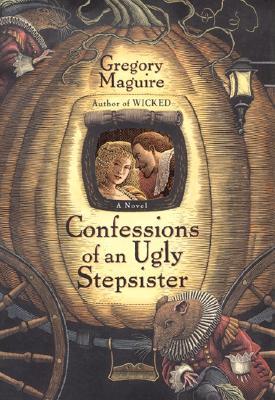
Confessions of an Ugly Stepsister, by Gregory Maguire
This week I'm taking a look at a book I'm actually calling more historical fiction than fantasy, Confessions of an Ugly Stepsister. Much like how Maguire's more famous work, Wicked is a retelling of The Wizard of Oz from the perspective of the villain, Confessions of an Ugly Stepsister is a retelling of the classic story of Cinderella from the perspective of the stepsisters who in many adaptations have very little characterization and are just antagonists to Cinderella. Maguire also takes an interesting approach by making the story completely mundane by excising all of the magic, which makes this book feel a lot more like a historical fiction novel than a fantasy novel, even if it's inspired by a fairy tale.
The story is framed by the reminisces of Ruth, one of the two stepsisters who has discovered that children have begun telling the story of Cinderella, albeit in a far more fanciful and edited form than the family scandal that Ruth remembers. The majority of the story is told from the perspective of Iris, the other stepsister who is described as fairly plain but very intelligent and talented at art, while Ruth struggles with an intellectual disability. The book is set in the early seventeenth century with Ruth and Iris forced to flee England with their mother to Holland after their father was killed by a mob. They first spend time working for a master painter, who with his apprentice Capsar remain good friends with Iris and Ruth, and later Iris is recruited to be a friend for Clara, the only child of a prosperous tulip merchant family who is sheltered in the extreme from the world by her mother. As for the rest of the story, well you can probably guess. Maguire stays faithful to the structure of the story, while putting his own twist on it and keeping the story well grounded in the mundane world.
I think ultimately the most interesting things were the decisions Maguire made to make the story different from the original that we all know by heart. There's some debate as to how wicked Ruth and Iris's mother is, although in my opinion she seems kind of a bad person rather than just morally ambiguous. Maguire does emphasize how physically ugly Ruth and Iris are, which I have to admit gets really repetitive after a while and it made me say, ''No wonder the two of them have such low self-esteem!'' However, they both come across as decent people who are just trying to do their best to survive in the world. Which is an almost total inversion of the ''attractive in body but ugly in spirit'' interpretation which has become common in many modern portrayals.
What's also interesting is the approach to Clara. While in practically all versions Cinderella is portrayed as a gentle and kind-hearted girl, in the book she's portrayed as really a spoiled brat. She's described as incredibly beautiful and since her family is wealthy she's had the luxury of never having to help her family or work to survive, opposed to Ruth and Iris. In addition, thanks to her mother she's incredibly coddled to the point of not being allowed to leave the house, which has definitely stunted her emotional development despite her being well into her teens. Although Clara has her good aspects, she comes across as an incredibly frustrating character as well. Overall Maguire does a pretty good job of showing people as not all good or all bad, even if he inverts the major characters the most.
The setting of early seventeenth century Holland is also interesting and the tulip mania actually plays a slight role in the story which makes it much more interesting. I actually spent some time wondering if there had been a made-for-tv movie adaptation that I only half-remembered until I could finally get to a computer and look it up. (Short answer, yes, there was a tv movie and I'm not crazy, at least not for that reason.) It's very distinct from any of the other interpretations of Cinderella that have been produced through the years and gives the book a distinct flavor which I appreciated.
The biggest weakness for this book is I think it kind of dragged at various points. We have the disadvantage in this story of knowing how the story ends so a lot of the suspense is either gone or tied up in ''how do we get from this point that's unfamiliar to the familiar point?'' And once we start venturing into familiar territory I just felt like we were just killing time until the climax, which made the story feel much longer than it probably was.
Overall I think this book is interesting. I honestly was a little disappointed to find it was strongly mundane and there were almost no fantasy elements whatsoever, but it's an interesting approach. Portraying the story of Cinderella as an old family scandal that became town gossip and then faded into memory as myth is an interesting and somewhat plausible origin story. Overall, I liked the book, even if I felt it dragged in the middle. Although it doesn't have magic if you like fairy tales this might be worth your effort.
- Kalpar
The story is framed by the reminisces of Ruth, one of the two stepsisters who has discovered that children have begun telling the story of Cinderella, albeit in a far more fanciful and edited form than the family scandal that Ruth remembers. The majority of the story is told from the perspective of Iris, the other stepsister who is described as fairly plain but very intelligent and talented at art, while Ruth struggles with an intellectual disability. The book is set in the early seventeenth century with Ruth and Iris forced to flee England with their mother to Holland after their father was killed by a mob. They first spend time working for a master painter, who with his apprentice Capsar remain good friends with Iris and Ruth, and later Iris is recruited to be a friend for Clara, the only child of a prosperous tulip merchant family who is sheltered in the extreme from the world by her mother. As for the rest of the story, well you can probably guess. Maguire stays faithful to the structure of the story, while putting his own twist on it and keeping the story well grounded in the mundane world.
I think ultimately the most interesting things were the decisions Maguire made to make the story different from the original that we all know by heart. There's some debate as to how wicked Ruth and Iris's mother is, although in my opinion she seems kind of a bad person rather than just morally ambiguous. Maguire does emphasize how physically ugly Ruth and Iris are, which I have to admit gets really repetitive after a while and it made me say, ''No wonder the two of them have such low self-esteem!'' However, they both come across as decent people who are just trying to do their best to survive in the world. Which is an almost total inversion of the ''attractive in body but ugly in spirit'' interpretation which has become common in many modern portrayals.
What's also interesting is the approach to Clara. While in practically all versions Cinderella is portrayed as a gentle and kind-hearted girl, in the book she's portrayed as really a spoiled brat. She's described as incredibly beautiful and since her family is wealthy she's had the luxury of never having to help her family or work to survive, opposed to Ruth and Iris. In addition, thanks to her mother she's incredibly coddled to the point of not being allowed to leave the house, which has definitely stunted her emotional development despite her being well into her teens. Although Clara has her good aspects, she comes across as an incredibly frustrating character as well. Overall Maguire does a pretty good job of showing people as not all good or all bad, even if he inverts the major characters the most.
The setting of early seventeenth century Holland is also interesting and the tulip mania actually plays a slight role in the story which makes it much more interesting. I actually spent some time wondering if there had been a made-for-tv movie adaptation that I only half-remembered until I could finally get to a computer and look it up. (Short answer, yes, there was a tv movie and I'm not crazy, at least not for that reason.) It's very distinct from any of the other interpretations of Cinderella that have been produced through the years and gives the book a distinct flavor which I appreciated.
The biggest weakness for this book is I think it kind of dragged at various points. We have the disadvantage in this story of knowing how the story ends so a lot of the suspense is either gone or tied up in ''how do we get from this point that's unfamiliar to the familiar point?'' And once we start venturing into familiar territory I just felt like we were just killing time until the climax, which made the story feel much longer than it probably was.
Overall I think this book is interesting. I honestly was a little disappointed to find it was strongly mundane and there were almost no fantasy elements whatsoever, but it's an interesting approach. Portraying the story of Cinderella as an old family scandal that became town gossip and then faded into memory as myth is an interesting and somewhat plausible origin story. Overall, I liked the book, even if I felt it dragged in the middle. Although it doesn't have magic if you like fairy tales this might be worth your effort.
- Kalpar
Thursday, December 8, 2016
Speaker for the Dead, by Orson Scott Card
This week I'm taking a look at the sort-of sequel to Ender's Game which I reviewed quite some time ago when the movie came out. Speaker for the Dead is, in Card's own words, the book he actually meant to write and Ender's Game was meant sort of as a prologue. Card himself is aware of the irony that Ender's Game is by far the most widely read of his works and Speaker for the Dead is left playing second fiddle.
That being said, I think Speaker for the Dead is a great example of how science-fiction as a genre can be serious literature that talks about serious themes which seem to be relegated to''real'' literary fiction more often than not. This isn't to say that Ender's Game doesn't deal with serious topics as well, but I would say that Speaker for the Dead feels much more serious than its predecessor. An analogy I heard once was that Ender's Game is kind of like The Hobbit to the later three books which are more like The Lord of the Rings. They're all within the same universe and share characters, but there's a definite tonal shift between the two. I'm definitely sensing the tonal shift and I feel like Speaker for the Dead, and most likely its sequels Xenocide and Children of the Mind, are going to be more mature than Ender's Game.
Plot-wise the book is set some three thousand years after the events of Ender's Game and the Third Bugger War where humanity destroyed the buggers for good and humanity has scattered among a hundred colony worlds. Ender is remembered as the Xenocide, the worst monster in all of human history, while the most revered is possibly the first Speaker for the Dead who wrote The Hive Queen and the Hegemon which made humanity realize the barbarity of their extermination of the buggers and led them to repent the act. The irony that these were the same person is not lost on Ender Wiggin, who is only in his mid thirties thanks to the time-dilation of interstellar travel, wandering from world to world with his sister Valentine.
Events on the colony world Lusitania have drawn Ender's attention because humanity has made contact with another sentient species, referred to by humans as the piggies. Conscious of their collective sin of exterminating the buggers, humanity has tried to compensate in the other direction by making very limited contact with the piggies and keeping them safe from human contamination. However when one of the xenographers who has been studying the piggies turns up dead, apparently ritually murdered by the piggies, Ender fears humanity may let their more ruthless instincts get the better of them.
Further complicating this is the existence of Jane, a sentient AI created by the ansible network which links the disparate colonies with instantaneous communication. Jane is very aware that humanity has feared the emergence of an AI and has only revealed herself to Ender, the one individual who wouldn't immediately react with fear to her presence. Jane hopes that someday humanity might be ready for her to come out into the open, but she'll need Ender's help to get humanity to that point.
I have to say, despite the disparate plots going on at once, this book is really good. I was engaged throughout the book and although there are plenty of rough corners, I ended up enjoying it. As I said earlier, this is a great example of how science-fiction can talk about serious topics just as well as ''real'' literature. According to Card he just had the idea of someone telling the truth at a person's funeral, his idea for the Speaker for the Dead. He noticed that so often after someone passes on we tend to lie about the person, in the tradition of never speaking ill of the dead. So he thought it would be interesting, if perhaps painful, to tell the truth instead. From this idea has spawned a book that's about so much more than death and secrets and the lies that come with it. There's humanity, what it means to be human, compassion, empathy, and a whole host of other emotions which make this a really interesting book.
As I said, there are some rough edges around the book. One of the things I found really weird about the book was how dated it felt for a distant space future, especially since the book was written in the 1980's. The Brazilian colonists on Lusitania may strongly represent the Brazilians Card encountered during his missionary work there, but I've no way of knowing if they're indicative of Brazilians today or even thirty years ago. There's a major plot point that revolves around the fact one character can't marry another because then he'd have access to all the information she had because husband and wife are considered legally the same. Even for the eighties this feels outdated since it's well past Second Wave Feminism and much of the fights of First Wave Feminism in the early 1900's was to allow women to maintain a distinct legal identity from their husband. It just feels incredibly weird to me that this would be the case in the space future.
Overall I highly recommend this book, and I can say it is popular for a reason. If you've read Ender's Game but for whatever reason never got around to the sequels, I can say at least Speaker for the Dead is well worth the effort. If you haven't read Ender's Game, I would recommend starting there because it's a pretty short read and it will fill you in on a lot of details before you start Speaker for the Dead.
- Kalpar
That being said, I think Speaker for the Dead is a great example of how science-fiction as a genre can be serious literature that talks about serious themes which seem to be relegated to''real'' literary fiction more often than not. This isn't to say that Ender's Game doesn't deal with serious topics as well, but I would say that Speaker for the Dead feels much more serious than its predecessor. An analogy I heard once was that Ender's Game is kind of like The Hobbit to the later three books which are more like The Lord of the Rings. They're all within the same universe and share characters, but there's a definite tonal shift between the two. I'm definitely sensing the tonal shift and I feel like Speaker for the Dead, and most likely its sequels Xenocide and Children of the Mind, are going to be more mature than Ender's Game.
Plot-wise the book is set some three thousand years after the events of Ender's Game and the Third Bugger War where humanity destroyed the buggers for good and humanity has scattered among a hundred colony worlds. Ender is remembered as the Xenocide, the worst monster in all of human history, while the most revered is possibly the first Speaker for the Dead who wrote The Hive Queen and the Hegemon which made humanity realize the barbarity of their extermination of the buggers and led them to repent the act. The irony that these were the same person is not lost on Ender Wiggin, who is only in his mid thirties thanks to the time-dilation of interstellar travel, wandering from world to world with his sister Valentine.
Events on the colony world Lusitania have drawn Ender's attention because humanity has made contact with another sentient species, referred to by humans as the piggies. Conscious of their collective sin of exterminating the buggers, humanity has tried to compensate in the other direction by making very limited contact with the piggies and keeping them safe from human contamination. However when one of the xenographers who has been studying the piggies turns up dead, apparently ritually murdered by the piggies, Ender fears humanity may let their more ruthless instincts get the better of them.
Further complicating this is the existence of Jane, a sentient AI created by the ansible network which links the disparate colonies with instantaneous communication. Jane is very aware that humanity has feared the emergence of an AI and has only revealed herself to Ender, the one individual who wouldn't immediately react with fear to her presence. Jane hopes that someday humanity might be ready for her to come out into the open, but she'll need Ender's help to get humanity to that point.
I have to say, despite the disparate plots going on at once, this book is really good. I was engaged throughout the book and although there are plenty of rough corners, I ended up enjoying it. As I said earlier, this is a great example of how science-fiction can talk about serious topics just as well as ''real'' literature. According to Card he just had the idea of someone telling the truth at a person's funeral, his idea for the Speaker for the Dead. He noticed that so often after someone passes on we tend to lie about the person, in the tradition of never speaking ill of the dead. So he thought it would be interesting, if perhaps painful, to tell the truth instead. From this idea has spawned a book that's about so much more than death and secrets and the lies that come with it. There's humanity, what it means to be human, compassion, empathy, and a whole host of other emotions which make this a really interesting book.
As I said, there are some rough edges around the book. One of the things I found really weird about the book was how dated it felt for a distant space future, especially since the book was written in the 1980's. The Brazilian colonists on Lusitania may strongly represent the Brazilians Card encountered during his missionary work there, but I've no way of knowing if they're indicative of Brazilians today or even thirty years ago. There's a major plot point that revolves around the fact one character can't marry another because then he'd have access to all the information she had because husband and wife are considered legally the same. Even for the eighties this feels outdated since it's well past Second Wave Feminism and much of the fights of First Wave Feminism in the early 1900's was to allow women to maintain a distinct legal identity from their husband. It just feels incredibly weird to me that this would be the case in the space future.
Overall I highly recommend this book, and I can say it is popular for a reason. If you've read Ender's Game but for whatever reason never got around to the sequels, I can say at least Speaker for the Dead is well worth the effort. If you haven't read Ender's Game, I would recommend starting there because it's a pretty short read and it will fill you in on a lot of details before you start Speaker for the Dead.
- Kalpar
Tuesday, December 6, 2016
Ashes of Victory, by David Weber
This week I'm continuing with the Honor Harrington series with what's the ninth book, Ashes of Victory. The biggest thing I've noticed with this series is I'm only continuing to read it because I like the characters and I want to see what happens to them as time goes on. I hate to say it, but I've noticed the writing has gotten weaker over time and while I'm still enjoying the series and getting to see Honor and the cast of eight million other characters do lots of cool stuff, I can see where there are some problems coming up. The biggest is the issue of show don't tell, which has been happening a lot as the series progresses. And like Sursum Ursa said, there's a lot of exposition being thrown around as well. Well, and Honor's taking a back seat when she's...you know...the main character. On the one hand it kind of makes sense because she's a full admiral and a duchess now and intimately involved in the political operations of not only Manticore but Grayson as well, but on the other I kind of miss seeing her out in the field, leading ships into battle.
Usual disclaimer, I'll be talking with spoilers after this point in the review. Well, okay, I kind of spoiled earlier but there's no helping this. Honestly if you're not this far into the series you're probably not going to be impressed with this book because it's...okay. Like, I liked it but it's mostly because I liked the characters more than anything else. Also I'm starting to ramble. Anyway, spoilers, beware, so on and so forth.
So I'll briefly cover what happens to Honor over the course of the book. After successfully managing the largest prison break in history, evacuating some half a million people from the prison camps on Hades, Honor has returned to wild acclaim by the members of the Alliance. Because she lost her cybernetic implants, Honor is going to be spending considerable time recuperating and gets sent back to Manticore to teach tactics at the military academy at Saganami Island. She's also given a new duchy since her cousin was granted the previous Earldom of Harrington, and gets some people to work on sign language for treecats which allow them to communicate with humans, something previously not possible. So it's a pretty full docket and Honor's very much on the sidelines for most of the book.
So if Honor's on the bench, where is the rest of the action happening? Well quite frankly all over the place. You've got the Alliance military, in all its disparate locations, who finally have enough of the new weapons to make a decisive change in the war and are getting ready for the next big push. There are plots going on within Grayson which becomes a major issue later in the book. And there are plots galore going on back in Haven as distrust between Pierre and Secretary of War McQueen continues to grow. It's very complex to say the least so it kind of feels like a bridge between what was happening earlier and what Weber has planned afterwards. But that remains to be seen on my end.
As I said, my biggest problem is Weber tends to tell us things rather than show them. The very best example I have in this book is the battle between McQueen and Pierre that finally breaks out in the capital of Haven and leaves Oscar Saint-Just as the man in charge of the People's Republic of Haven. Now, this is a huge event. Pierre's been in this series, at least being mentioned, since book one. We've been watching McQueen manage the Navy and get them back on the offensive, along with her own plans knowing that Pierre and Saint-Just are planning to betray her when they no longer need her. McQueen isn't really as prepared as she'd like to be, but she knows she doesn't have the luxury of waiting anymore.
I mean, this is huge! McQueen launches her coup, there's fighting in the streets, Pierre gets killed by a band of marines, and Saint-Just only manages to escape with his life. McQueen locks down in the Octagon, the military nerve center of the PRH, and takes numerous hostages to prevent Saint-Just from storming the place. Unfortunately, she hadn't counted on him planting a nuke in the basement and actually using it to resolve the situation. This is a huge change in the political scene for the universe.
...but we find out about it after the fact. Like...this is what's so insanely frustrating. We get to see McQueen give the launch order and then later we're told what happened. Pierre and McQueen both die offscreen and it feels very glossed-over. This book would have been so much more interesting if Weber had taken the time to actually write out the events of the coup, at least some of them, than telling us what happened. And there are plenty of other examples, not just in this book but in other books as well. The taking of Trevor's Star which happened between books was another good example which confused me then. Like, I get that there's a lot going on and Weber's created an insanely detailed universe, but I feel like it's starting to get to be too much and we're just getting lists of things that are happening rather than actual events.
There's also a lot of people standing or sitting around talking about things. I noticed it less because I was reading the book rather than listening to it, but that was a huge complaint I had about the Dune series which made me stop listening to it entirely. So I guess it's a good thing that I'm reading these books rather than listening to them. Because it's just a lot of people sitting around and talking about things happening. I think this is a problem of space opera specifically, but somehow I still love the genre in spite of that problem.
Overall the book's okay. I think I enjoyed it because I've come to expect a ton of long debates about politics or economics and less space battle action. And there is a lot less space battle action in this book than in most of the other ones. It's definitely one of the less strong of the books and I think newcomers to the series aren't going to start here, but if you're interested in the series and you've made it this far, well you're probably willing to go a little further.
- Kalpar
Usual disclaimer, I'll be talking with spoilers after this point in the review. Well, okay, I kind of spoiled earlier but there's no helping this. Honestly if you're not this far into the series you're probably not going to be impressed with this book because it's...okay. Like, I liked it but it's mostly because I liked the characters more than anything else. Also I'm starting to ramble. Anyway, spoilers, beware, so on and so forth.
So I'll briefly cover what happens to Honor over the course of the book. After successfully managing the largest prison break in history, evacuating some half a million people from the prison camps on Hades, Honor has returned to wild acclaim by the members of the Alliance. Because she lost her cybernetic implants, Honor is going to be spending considerable time recuperating and gets sent back to Manticore to teach tactics at the military academy at Saganami Island. She's also given a new duchy since her cousin was granted the previous Earldom of Harrington, and gets some people to work on sign language for treecats which allow them to communicate with humans, something previously not possible. So it's a pretty full docket and Honor's very much on the sidelines for most of the book.
So if Honor's on the bench, where is the rest of the action happening? Well quite frankly all over the place. You've got the Alliance military, in all its disparate locations, who finally have enough of the new weapons to make a decisive change in the war and are getting ready for the next big push. There are plots going on within Grayson which becomes a major issue later in the book. And there are plots galore going on back in Haven as distrust between Pierre and Secretary of War McQueen continues to grow. It's very complex to say the least so it kind of feels like a bridge between what was happening earlier and what Weber has planned afterwards. But that remains to be seen on my end.
As I said, my biggest problem is Weber tends to tell us things rather than show them. The very best example I have in this book is the battle between McQueen and Pierre that finally breaks out in the capital of Haven and leaves Oscar Saint-Just as the man in charge of the People's Republic of Haven. Now, this is a huge event. Pierre's been in this series, at least being mentioned, since book one. We've been watching McQueen manage the Navy and get them back on the offensive, along with her own plans knowing that Pierre and Saint-Just are planning to betray her when they no longer need her. McQueen isn't really as prepared as she'd like to be, but she knows she doesn't have the luxury of waiting anymore.
I mean, this is huge! McQueen launches her coup, there's fighting in the streets, Pierre gets killed by a band of marines, and Saint-Just only manages to escape with his life. McQueen locks down in the Octagon, the military nerve center of the PRH, and takes numerous hostages to prevent Saint-Just from storming the place. Unfortunately, she hadn't counted on him planting a nuke in the basement and actually using it to resolve the situation. This is a huge change in the political scene for the universe.
...but we find out about it after the fact. Like...this is what's so insanely frustrating. We get to see McQueen give the launch order and then later we're told what happened. Pierre and McQueen both die offscreen and it feels very glossed-over. This book would have been so much more interesting if Weber had taken the time to actually write out the events of the coup, at least some of them, than telling us what happened. And there are plenty of other examples, not just in this book but in other books as well. The taking of Trevor's Star which happened between books was another good example which confused me then. Like, I get that there's a lot going on and Weber's created an insanely detailed universe, but I feel like it's starting to get to be too much and we're just getting lists of things that are happening rather than actual events.
There's also a lot of people standing or sitting around talking about things. I noticed it less because I was reading the book rather than listening to it, but that was a huge complaint I had about the Dune series which made me stop listening to it entirely. So I guess it's a good thing that I'm reading these books rather than listening to them. Because it's just a lot of people sitting around and talking about things happening. I think this is a problem of space opera specifically, but somehow I still love the genre in spite of that problem.
Overall the book's okay. I think I enjoyed it because I've come to expect a ton of long debates about politics or economics and less space battle action. And there is a lot less space battle action in this book than in most of the other ones. It's definitely one of the less strong of the books and I think newcomers to the series aren't going to start here, but if you're interested in the series and you've made it this far, well you're probably willing to go a little further.
- Kalpar
Thursday, December 1, 2016
Magna Carta: The Birth of Liberty, by Dan Jones
Today I'm looking at another book from Dan Jones, in this case Magna Carta: The Birth of Liberty, which was written as part of the celebrations last year over the eight-hundredth anniversary of the issuance of Magna Carta by King John of England in 1215. To historians, though, the excitement over Magna Carta seems largely misplaced. Put within the context of the era, it was an attempt at a negotiated peace between King John and his rebelling barons, a peace which did not last a month before John was repudiating Magna Carta and trying to exert his will over his barons once again. Furthermore Magna Carta is overwhelmingly concerned with the rights of the nobility concerning the king and the limited rights it granted freemen, as Jones points out, would have affected maybe twenty percent of England's entire population in 1215. Jones argues rather eloquently that the Fourth Lateran Council, which condemned trial by ordeal, should be more remembered than Magna Carta. And yet somehow this obscure document has earned an almost sacred status.
The majority of the book focuses on putting Magna Carta within the proper historical context. As Jones is a medieval historian this makes a lot of sense because that's the subject that he's studied the most and has the most expertise talking about. Jones does a very good job of explaining the history of heavy-handed governance and taxation, started by Henry II and Richard I to finance their perpetual wars, which finally came to a head under the less successful and less charismatic John. Jones does spend time going into subjects such as medieval siegecraft which give a fuller understanding of the story, but may not entirely relate to Magna Carta specifically. And since I've already listened to The Plantagenets from the same author, who of course covers Magna Carta in that book as well, a lot of the subject matter was review for me.
Ultimately I did find myself wishing that Jones had spent more time talking about the evolution of Magna Carta in the intervening eight hundred years and why it has developed such a significance. When pointing out that it is mostly a medieval document concerned with issues such as scutage and feudal inheritances, it seems very strange indeed that Magna Carta has such significance today. The last chapter of the book very briefly covers how Magna Carta went from an embarrassment best ignored by the sixteenth century, to a key constitutional argument for opponents of Charles I's attempts at absolute royal authority during the English Civil War. Even as the numerous clauses in Magna Carta became obsolete, principles such as trial by jury, due process of law, and a vague notion of representation in exchange for taxation, became part of English tradition, as well as the traditions of numerous countries settled by English colonists. This is a huge subject which could be its own book, or even multiple books, but I think it would be interesting to listen to or read about.
I think if you've already read The Plantagenets or even seen Monarchy with David Starkey (who actually taught Dan Jones!) then you'll find a lot of the stuff in Magna Carta a review because it talks mostly about John's reign more than anything else. It's still very good writing from Jones who is becoming one of my other favorite English historians and if you want a much shorter book focusing just on this subject matter then this is a good choice. But I still recommend The Plantagenets over this one.
- Kalpar
The majority of the book focuses on putting Magna Carta within the proper historical context. As Jones is a medieval historian this makes a lot of sense because that's the subject that he's studied the most and has the most expertise talking about. Jones does a very good job of explaining the history of heavy-handed governance and taxation, started by Henry II and Richard I to finance their perpetual wars, which finally came to a head under the less successful and less charismatic John. Jones does spend time going into subjects such as medieval siegecraft which give a fuller understanding of the story, but may not entirely relate to Magna Carta specifically. And since I've already listened to The Plantagenets from the same author, who of course covers Magna Carta in that book as well, a lot of the subject matter was review for me.
Ultimately I did find myself wishing that Jones had spent more time talking about the evolution of Magna Carta in the intervening eight hundred years and why it has developed such a significance. When pointing out that it is mostly a medieval document concerned with issues such as scutage and feudal inheritances, it seems very strange indeed that Magna Carta has such significance today. The last chapter of the book very briefly covers how Magna Carta went from an embarrassment best ignored by the sixteenth century, to a key constitutional argument for opponents of Charles I's attempts at absolute royal authority during the English Civil War. Even as the numerous clauses in Magna Carta became obsolete, principles such as trial by jury, due process of law, and a vague notion of representation in exchange for taxation, became part of English tradition, as well as the traditions of numerous countries settled by English colonists. This is a huge subject which could be its own book, or even multiple books, but I think it would be interesting to listen to or read about.
I think if you've already read The Plantagenets or even seen Monarchy with David Starkey (who actually taught Dan Jones!) then you'll find a lot of the stuff in Magna Carta a review because it talks mostly about John's reign more than anything else. It's still very good writing from Jones who is becoming one of my other favorite English historians and if you want a much shorter book focusing just on this subject matter then this is a good choice. But I still recommend The Plantagenets over this one.
- Kalpar
Subscribe to:
Posts (Atom)